
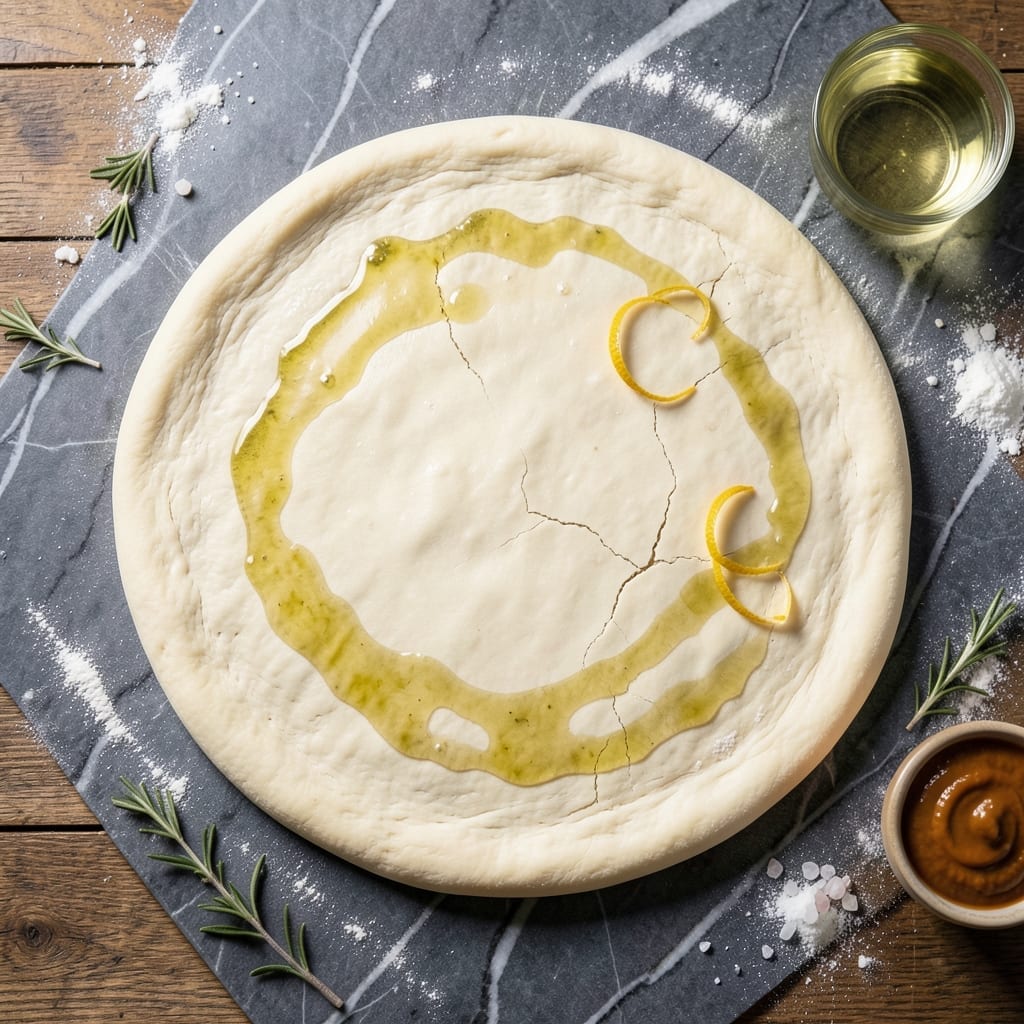
This pizza dough recipe delivers a chewy crust with those coveted airy bubbles on top, all with minimal effort. The secret lies in a slow fermentation process that develops flavor and texture naturally.
With just a few simple ingredients and 24 hours of resting time, you’ll achieve pizzeria-quality results at home. The dough stretches easily and bakes into a crisp yet tender base perfect for any topping.
Ingredients for Pizza Dough Recipe Food
Minimal ingredients, maximum flavor. This is what pizza dreams are made of.
| Ingredient | Amount | Notes |
|---|---|---|
| Bread Flour 🌾 | 3 ½ cups | High protein content preferred |
| Active Dry Yeast 🍞 | ¼ oz | One packet, about 2.25 tsp |
| Sea Salt 🧂 | 2 tsp | Fine grain for even distribution |
| Lukewarm Water 💧 | 1 ½ cups | 105-110°F for yeast activation |
| Extra-Virgin Olive Oil 🫒 | 2 tbsp | For elasticity and flavor |
| Granulated Sugar 🍚 | 1 tsp | Feeds the yeast for fermentation |
| Semolina Flour 🌾 | ¼ cup | For dusting work surface |
| All-Purpose Flour 🌾 | ½ cup | For adjusting dough consistency |
| Cornmeal 🌽 | ¼ cup | For pizza peel and baking |
The flour is non-negotiable here. King Arthur Bread Flour is my go-to for that perfect chew—higher protein content develops the gluten structure you need. Yeast should be fresh; check the expiration date (old yeast won’t rise properly). Fleet Farm or Costco have good bulk options if you bake often. Water temperature matters—too hot kills the yeast, too cold slows activation. A kitchen thermometer is worth the $5 investment.
No bread flour? All-purpose in a pinch, but add an extra 1 tbsp vital wheat gluten per cup. Short on time? Instant yeast cuts fermentation but won’t develop as much flavor. Sugar can be swapped for honey at equal amounts. Olive oil is flexible—any neutral oil works, but extra-virgin adds that signature pizza parlor taste. Semolina and cornmeal are optional but add texture and prevent sticking.
Dough keeps 3 days refrigerated in an oiled bowl (flavor improves daily). Freeze for 1 month in portions—thaw overnight in the fridge. Bring to room temp before shaping. Always cover with a damp towel to prevent crusting.
Why You’ll Love This Recipe
- Five Ingredients: That’s it—flour, yeast, salt, water, olive oil. No hunting for specialty items.
- Crisp Yet Chewy: The bread flour gives that perfect bite, while the olive oil adds just the right richness.
- Endless Toppings: I’ve done everything from classic margherita to breakfast pizza with eggs and bacon.
- Freezer Friendly: Honestly, I double the batch and freeze half for those last-minute pizza cravings.
Instructions
Here’s the method. Straightforward, tested, works every time.
Step 1: Activate the Yeast and Mix the Dough
In a small bowl, combine the 0.25 oz Active Dry Yeast, 1 tsp Granulated Sugar, and 1.5 cups Lukewarm Water at 105-110°F. Let it sit for 5-10 minutes until foamy—this confirms the yeast is active and ready to work.
In a large mixing bowl, whisk together the 3.5 cups Bread Flour, 0.5 cup All-Purpose Flour, and 2 tsp Sea Salt. Create a well in the center and pour in the yeast mixture and 2 tbsp Extra-Virgin Olive Oil. Use a wooden spoon to combine until a shaggy dough forms.
Step 2: Knead Until Smooth and Elastic
Turn the dough out onto a surface lightly dusted with 0.25 cup Semolina Flour. Knead for 8-10 minutes by hand, pushing the dough away with the heel of your hand and folding it back over itself repeatedly.
The dough is ready when it feels smooth, elastic, and slightly tacky but not sticky. If it sticks to your hands or the surface, add a bit more semolina flour, but use a light touch—too much flour makes the dough tough.
Step 3: First Rise in a Warm Environment
Lightly oil the large mixing bowl and place the dough inside, turning once to coat it in oil. Cover with a damp kitchen towel or plastic wrap. Let it rise in a warm, draft-free spot for 1.5-2 hours, or until doubled in size.
I like to place it in an oven turned off with the light on—this creates a consistently warm environment. The dough should spring back slowly when gently pressed, indicating it’s properly proofed.
Step 4: Shape and Second Rise
Punch down the dough to release the air, then turn it out onto a lightly floured surface. Divide it into 4 equal portions for individual pizzas. Roll each portion into a ball and place them on a tray dusted with 0.25 cup Cornmeal to prevent sticking.
Cover the dough balls with a damp towel and let them rest for 30-45 minutes at room temperature. This second rise ensures an airy, bubbly texture in the finished crust, giving you that signature chewy bite with a crispy exterior.
Step 5: Preheat and Prepare for Baking
Place a pizza stone or inverted baking sheet in the oven and preheat to 500°F for at least 30 minutes. The stone must be scorching hot to achieve a professional-quality crust.
While the oven heats, stretch each dough ball into a round on a surface lightly dusted with cornmeal. Work from the center outward, leaving a slightly thicker edge for the crust. This ensures an even bake and prevents thin, overcooked spots.
Pro Tips For Making Pizza Dough Recipe Food
- Test Your Yeast: I learned this the hard way—always bloom your active dry yeast in the lukewarm water with a pinch of sugar first. If it doesn’t bubble within 5 minutes, your dough won’t rise.
- Use High-Protein Flour: Bread flour isn’t just a suggestion—its higher protein content (12-14%) gives pizza dough that chewy, elastic texture you’re after.
- Skip Cold Water: Lukewarm water (around 105-110°F) wakes up the yeast without killing it. Too hot, and you’ll ruin the rise; too cold, and the dough takes forever.
- Oil the Bowl: Coat your rising bowl with a little extra-virgin olive oil before the first proof—it keeps the dough from sticking and makes cleanup a breeze.
Serving Suggestions for This Dish
🥘 Plating Styles
For a casual vibe, serve your pizza dough creation on a wooden cutting board or rustic stone platter to highlight its artisanal charm. For formal settings, a sleek white ceramic plate with minimal garnishes keeps the focus on the crust’s texture. Buffet-style? Arrange sliced pieces on a tiered stand for easy access and visual appeal.
🌿 Garnishing Techniques
Enhance your dish with fresh basil leaves or a sprinkle of red pepper flakes for a pop of color and flavor. Drizzle with olive oil or a balsamic glaze for a gourmet touch. Edible flowers or microgreens add an elegant, Instagram-worthy finish.
🍕 Portion Sizes
For individual servings, roll the dough into personal-sized rounds (6-8 inches). Family-style? Opt for a large 14-inch pie and let guests slice their own. Mini pizzas (4 inches) are perfect for appetizers or kids’ meals.
⏰ Serving Temperature
Let the dough rest for 2-3 minutes after baking to set the crust. Slice while warm for gooey cheese and a crisp base. For the best texture, serve immediately—pizza dough is at its peak fresh out of the oven!
Nutrition Facts

- 6 Egg Cake Recipe with Oil: Light as Air With Buttery Moisture - October 4, 2026
- 4 Bean Casserole Recipe: One-Pan Heartiness With Smoky Paprika Depth - October 4, 2026
- 3-Ingredient Keto Mug Cake Recipe: Microwave Magic in 2 Minutes - October 4, 2026