
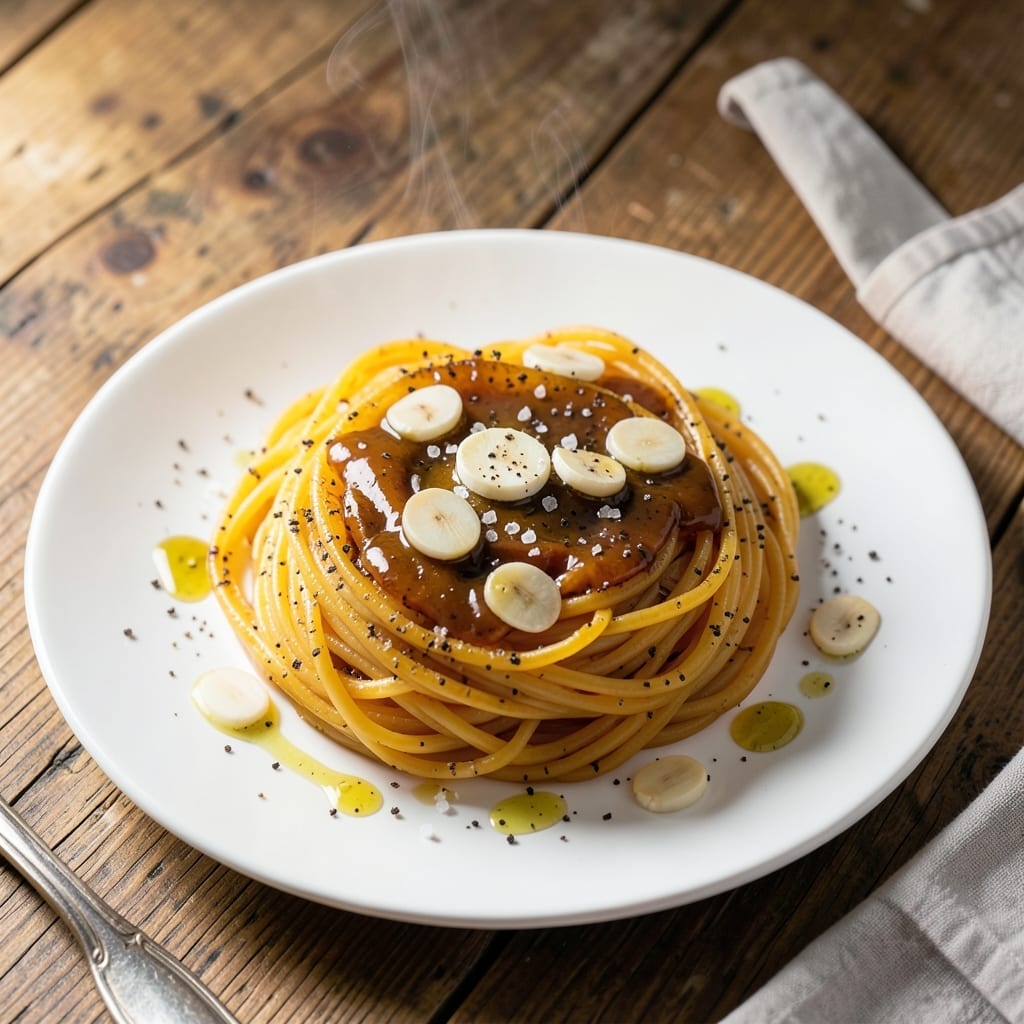
This spaghetti squash recipe transforms a simple vegetable into a satisfying noodle-like dish with minimal effort. The strands come out perfectly tender, ready to soak up rich flavors.
With just a few ingredients and 45 minutes of roasting, you’ll have a low-carb alternative that pairs beautifully with garlicky butter or your favorite sauce.
Ingredients for Spaghetti Squash Recipe Spaghetti
Minimal ingredients, maximum flavor. Just what you need for noodle-like strands ready to shine.
| Ingredient | Amount | Notes |
|---|---|---|
| Spaghetti Squash 🎃 | 2 whole | Medium-sized, about 4 lbs total |
| Extra-Virgin Olive Oil 🫒 | 2 tbsp | For roasting and richness |
| Garlic Cloves 🧄 | 4 cloves | Minced for garlicky butter |
| Unsalted Butter 🧈 | 4 tbsp | Melted for garlicky butter |
| Kosher Salt 🧂 | 1 tsp | Diamond Crystal preferred |
| Freshly Ground Black Pepper 🌶️ | ½ tsp | For seasoning to taste |
| Parmesan Cheese 🧀 | ½ cup | Freshly grated for serving |
| Fresh Parsley 🌿 | ¼ cup | Chopped, for garnish |
| Red Pepper Flakes 🌶️ | ¼ tsp | Optional for heat |
| Marinara Sauce 🍅 | 1 ½ cups | Quality jarred or homemade |
The squash is the star here. Look for firm, heavy spaghetti squash with smooth, unblemished skin—usually around 3-4 pounds each. Whole Foods and Trader Joe’s have great organic options if that’s your thing. Smaller squash can be underripe and stringy, while giant ones might be watery. I grab mine from the farmers market when they’re in season (fall through winter), but any grocery store will do in a pinch.
Out of marinara? Crushed tomatoes with a pinch of oregano works in a snap. No fresh garlic? Garlic powder at half the amount saves the day (but fresh is better). If you’re avoiding dairy, nutritional yeast gives that cheesy vibe without Parmesan. The butter can be swapped for olive oil if you’re going fully plant-based, though the flavor shifts slightly. Parsley not on hand? Basil or chives work too (whatever’s growing in your garden).
Roasted squash keeps 4-5 days in the fridge, though it’s best fresh. Reheat in a skillet with a splash of water to revive the strands. Freeze cooked squash for up to 3 months—just thaw before reheating. I like to roast a few extra squash on Sunday for easy meals all week.
Why You’ll Love This Recipe
- One Pan Magic: I roast the squash whole, then just scrape and toss with garlic and butter—minimal mess, maximum flavor.
- Rich and Simple: The olive oil and butter soak into the strands, and the garlic gives it that warm, savory depth I crave.
- Meal Prep Hero: I make a big batch on Sunday and it keeps beautifully for quick lunches all week long.
- Budget Friendly: Spaghetti squash costs pennies per serving compared to pasta, and it stretches further than you’d expect.
Step-by-Step Instructions for Spaghetti Squash
Here’s how to transform these squashes into perfect noodle-like strands with rich flavor.
Step 1: Roast the Spaghetti Squash
Preheat your oven to 400°F. I always start by halving the 2 whole Spaghetti Squash lengthwise with a sharp chef’s knife—use a towel for grip if they’re slippery. Scoop out the seeds and stringy pulp with a spoon, then brush the cut sides with 2 tbsp Extra-Virgin Olive Oil.
Sprinkle the cavities with 1 tsp Kosher Salt and 0.5 tsp Freshly Ground Black Pepper, then place them cut-side down on a rimmed baking sheet. Roast for 35-40 minutes until the flesh is tender when pierced with a fork and the edges are golden brown.
Step 2: Prepare the Garlicky Butter
While the squash roasts, mince the 4 cloves Garlic Cloves finely. In a small saucepan, melt the 4 tbsp Unsalted Butter over low heat. Add the minced garlic and cook for 1-2 minutes, stirring constantly, until it’s fragrant but not browned.
If you let the garlic brown, it’ll turn bitter, so keep the heat gentle. I sometimes add a pinch of the 0.25 tsp Red Pepper Flakes here for a subtle kick. Remove from heat and set aside—the residual heat will keep it warm until the squash is ready.
Step 3: Shred and Combine
When the squash is done, let it cool for 5 minutes—just enough so you can handle it but it’s still warm. Use a fork to scrape the flesh into long, spaghetti-like strands directly into a large serving bowl. The strands should separate easily when the squash is properly roasted.
Pour the garlicky butter over the warm squash strands and toss gently to coat. The heat from the squash will help the flavors meld together beautifully. If you’re serving immediately, the butter will create a glossy, flavorful coating.
Step 4: Add Sauce and Finish
Warm the 1.5 cups Marinara Sauce in a small saucepan or microwave. Pour it over the buttered squash strands and toss to combine evenly. The sauce should cling to the strands without making the dish soupy—if it seems too thick, add a splash of water to loosen it.
Top with 0.5 cup Parmesan Cheese and 0.25 cup Fresh Parsley. The cheese will melt slightly from the warmth of the squash and sauce. Serve immediately while the strands are still hot and the flavors are vibrant.
Pro Tips For Making Spaghetti Squash Recipe Spaghetti
- Roast Cut-Side Down: Place the halved squash cut-side down on the baking sheet—this traps steam, softens the flesh evenly, and prevents dry, stringy strands. I learned this the hard way after too many chewy batches.
- Salt the Squash First: Sprinkle the cut sides with kosher salt before roasting, about 1/2 teaspoon per half. It draws out excess moisture so your “spaghetti” doesn’t turn to mush.
- Skip the Overcrowding: Give each squash half at least 2 inches of space on the pan. Crowding steams instead of roasts, and you’ll end up with soggy strands instead of tender ones.
- Mince Garlic Fine: Finely mince the garlic cloves instead of slicing—they’ll cook through in the butter and oil without burning, and you won’t get harsh, bitter bites in your finished dish.
Troubleshooting spaghetti squash recipe spaghetti
🥘 Too Dry or Tough?
If your spaghetti squash turns out dry or tough, it’s likely undercooked or overcooked. Undercooking leaves the strands firm and chewy, while overcooking can sap moisture, making them brittle.
Quick Fix: Roast at 400°F (200°C) for 30-40 minutes until tender but still slightly firm. For already cooked squash, toss with a splash of broth or olive oil to restore moisture.
🍳 Squash Strands Falling Apart?
Overcooking or cutting the squash too thin can cause the strands to break. The flesh needs time to soften just enough to separate into noodle-like strands without collapsing.
Quick Fix: Roast halves cut-side down to steam the flesh evenly. Let it cool slightly before scraping with a fork for intact, long strands.
⏰ Bland or Weak Flavor?
Spaghetti squash has a mild taste that can seem bland without proper seasoning. Skipping salt, herbs, or aromatics during cooking often leads to a dull result.
Quick Fix: Brush halves with olive oil, salt, and pepper before roasting. Finish with garlic, butter, or fresh herbs to enhance the natural sweetness.
🔥 Watery or Soggy Texture?
Excess moisture in the squash or improper draining can make your dish soggy. This often happens with larger squashes or if you skip the step of patting it dry.
Quick Fix: After roasting, use a paper towel to blot excess liquid. For extra crispness, broil for 2-3 minutes or sauté the strands in a pan.
Nutrition Facts

- 6 Egg Cake Recipe with Oil: Light as Air With Buttery Moisture - October 4, 2026
- 4 Bean Casserole Recipe: One-Pan Heartiness With Smoky Paprika Depth - October 4, 2026
- 3-Ingredient Keto Mug Cake Recipe: Microwave Magic in 2 Minutes - October 4, 2026