
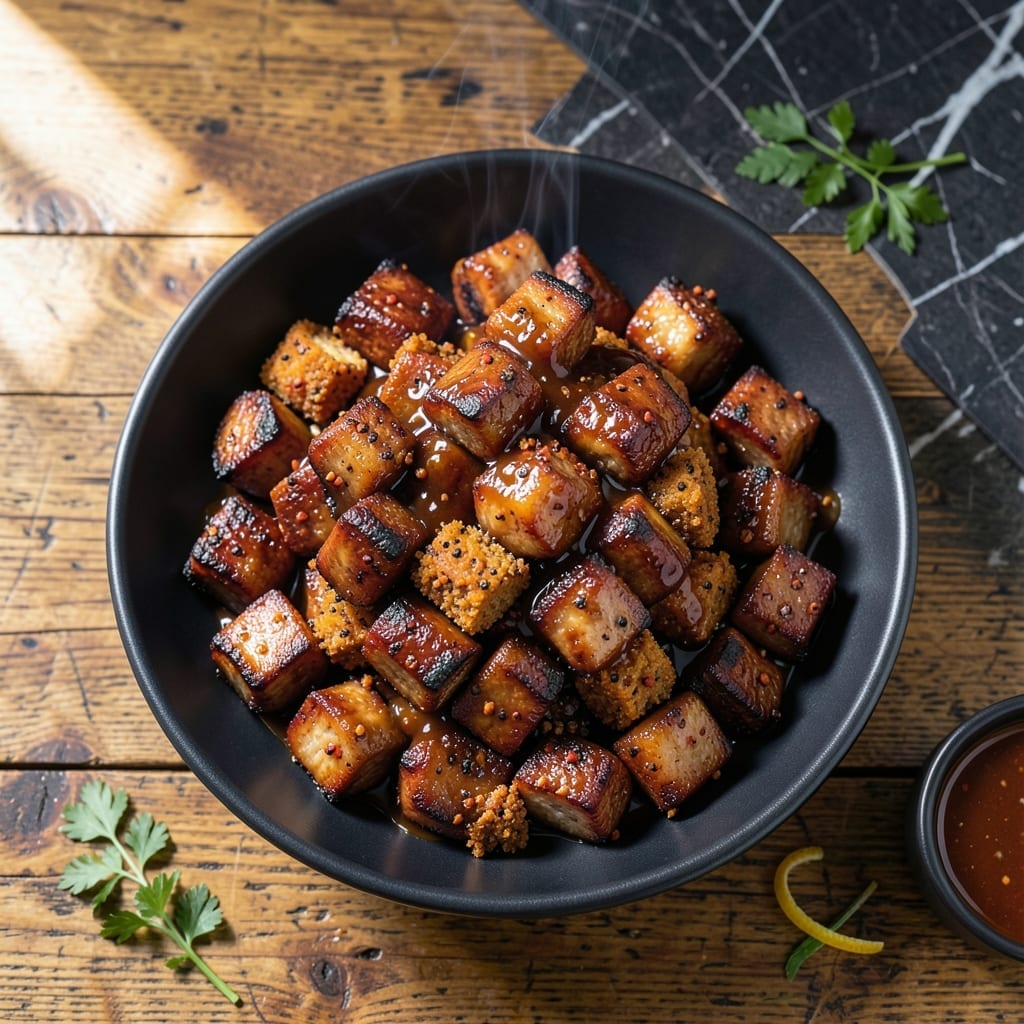
This recipe transforms pork belly into irresistibly caramelized, bite-sized morsels that capture the essence of true BBQ perfection. The process involves slow smoking, precise seasoning, and a final glaze that locks in smoky sweetness.
I’ve refined the technique to ensure every piece achieves that ideal balance of tender interior and crispy, sticky exterior. The key is patience—low heat coaxes the fat to render slowly while building layers of flavor.
What emerges is a dish with deep, complex notes: smoky from the wood, sweet from the rub, and rich from the pork itself. Each bite delivers a burst of texture and taste that’s hard to forget.
Perfect for gatherings or a weekend project, this method guarantees restaurant-quality results at home. Follow the steps closely for the best outcome.
Ingredients for Pork Belly Burnt Ends Bbq
Slow-smoked pork belly meets sweet and smoky BBQ rub for irresistible caramelized bites.
| Ingredient | Amount | Notes |
|---|---|---|
| Pork Belly 🥓 | 2 lb | Skin-on or skinless, cubed |
| Brown Sugar 🍚 | ½ cup | Light or dark variety |
| Kosher Salt 🧂 | 2 tbsp | Diamond Crystal preferred |
| Black Pepper 🌶️ | 1 tbsp | Freshly ground for best flavor |
| Paprika 🌶️ | 1 tbsp | Smoked or sweet variety |
| Chili Powder 🌶️ | 1 tsp | Adjust for heat preference |
| Garlic Powder 🧄 | 1 tbsp | Not garlic salt |
| Onion Powder 🧅 | 1 tbsp | Balances sweetness in rub |
| BBQ Sauce 🍯 | 1 ½ cups | Quality store-bought or homemade |
| Apple Cider Vinegar 🍏 | ¼ cup | Balances richness of pork |
| Honey 🍯 | ¼ cup | For sticky glaze finish |
| Unsalted Butter 🧈 | 4 tbsp | For final glaze |
| Wood Chips 🪵 | 2 cups | Hickory or applewood preferred |
The pork belly is non-negotiable—look for skin-on at a good butcher or Costco for best results. You want good marbling throughout (the fat is what makes it work). Most grocery stores carry it frozen, but fresh is ideal. If buying pre-cubed, ensure the pieces are uniform in size for even cooking. Diamond Crystal kosher salt is the standard in professional kitchens for its clean flavor and texture.
No pork belly? Pork shoulder at half the quantity is your best backup, though the texture won’t be identical. Brown sugar can be swapped for turbinado or coconut sugar—just dissolve it first. Short on BBQ sauce? Ketchup plus a dash of liquid smoke gets you close. The vinegar is key for cutting the richness, but white vinegar works too in a pinch.
Pork belly freezes beautifully for up to 6 months. Once cooked, burnt ends keep 4-5 days in the fridge (if they last that long). Reheat in a skillet or oven to restore the crispy exterior. Leftovers? Perfect for tacos or loaded nachos.
Why You’ll Love This Recipe
- Set It and Forget: I cube the pork belly, toss it with the dry rub, and let the smoker do the rest. Honestly, it’s almost hands-off.
- Sweet & Smoky: That brown sugar caramelizes with the paprika into a sticky, crave-worthy glaze on every bite.
- Crowd Pleaser: I serve these at backyard gatherings and they disappear before the burgers even hit the table.
- Leftovers Gold: The flavor deepens overnight, so I always make extra for next-day sandwiches.
Step-by-Step Instructions for Pork Belly Burnt Ends
Here’s the proven method for achieving tender, caramelized pork belly with a smoky finish.
Step 1: Season and Smoke the Pork Belly
Pat the 2 lb Pork Belly dry with paper towels. In a bowl, combine the 0.5 cup Brown Sugar, 2 tbsp Kosher Salt, 1 tbsp Black Pepper, 1 tbsp Paprika, 1 tsp Chili Powder, 1 tbsp Garlic Powder, and 1 tbsp Onion Powder.
Rub the mixture evenly over all surfaces of the pork belly, pressing it in firmly. Let it sit at room temperature for 30 minutes while you prepare your smoker. Soak the 2 cups Wood Chips in water for at least 20 minutes to ensure steady smoke.
Step 2: Smoke the Pork Belly to Tenderness
Preheat your smoker to 225°F using the soaked wood chips. Place the pork belly directly on the grates, fat-side up. Smoke undisturbed for 3-4 hours until the internal temperature reaches 165°F and the exterior forms a dark, flavorful bark.
Maintain a consistent temperature throughout the smoke. Avoid opening the smoker unnecessarily—this disrupts the cooking environment and extends the process. The pork belly should develop a deep reddish-brown color and firm texture when properly smoked.
Step 3: Cube and Sauce the Pork Belly
Remove the pork belly from the smoker and let it rest for 10 minutes. Cube it into 1-inch pieces. In a bowl, whisk together the 1.5 cups BBQ Sauce, 0.25 cup Apple Cider Vinegar, and 0.25 cup Honey until smooth.
Toss the cubed pork belly in the sauce mixture, ensuring each piece is thoroughly coated. This step infuses the meat with tangy, sweet flavors that will caramelize beautifully during the final cooking phase.
Step 4: Finish with a Caramelized Glaze
Return the sauced pork belly cubes to the smoker or a preheated 350°F oven. Cook for an additional 30-45 minutes, stirring occasionally, until the sauce thickens and the edges of the cubes become dark and caramelized.
During the last 5 minutes, dot the top with the 4 tbsp Unsalted Butter to add richness and enhance the glaze. The burnt ends are ready when the sauce has reduced to a sticky, glossy coating and the pork is tender enough to pull apart with a fork.
Pro Tips For Making Pork Belly Burnt Ends Bbq
- Cube Evenly First: Cut the pork belly into 1-inch cubes before seasoning—this ensures every piece gets maximum bark and renders fat consistently. I learned this the hard way after pulling apart uneven chunks that cooked at different rates.
- Dry the Surface: Pat the pork belly cubes completely dry with paper towels before applying the brown sugar rub. Sounds tedious, but it helps the seasoning stick and forms a better crust.
- Low and Slow First: Start the pork belly at 225°F for 2 hours to render the fat before cranking the heat to caramelize the sugar. Skipping this step leaves you with chewy, not crispy, burnt ends.
- Double the Rub: Use twice as much brown sugar as you think you need—pork belly can handle it, and the extra caramelization is what makes these burnt ends shine. I was skeptical until I tried it.
Regional Styles of pork belly burnt ends bbq
Kansas City Style
This is the classic approach I learned from pitmasters in KC. They use a sweet, thick BBQ sauce with molasses notes—like Sweet Baby Ray’s—and smoke with hickory wood at 225°F for that deep, robust flavor. The burnt ends are sauced heavily and cooked until sticky. 🔥
Texas Twist
In Texas, they often go heavier on the pepper and chili powder in the rub, sometimes adding cumin for a Southwestern kick. The sauce is thinner, vinegar-based, and the pork belly is smoked at a slightly higher 250°F for a firmer bark. I love the boldness of this style.
Carolina Influence
Eastern Carolina brings a tangy, vinegar-based sauce with no sugar added. They use applewood for a lighter smoke and finish with a splash of apple cider vinegar for brightness. The result is less sweet but incredibly balanced and refreshing.
Memphis Dry Rub
Skip the sauce entirely and focus on a powerful dry rub. Memphis-style burnt ends rely on a heavy coat of paprika, garlic powder, and brown sugar for a crust that’s both spicy and sweet. The pork is smoked low and slow, then served with sauce on the side. 💛
Competition Style
For BBQ competitions, I’ve seen teams inject the pork belly with a mix of apple juice and honey before smoking. They use a layered approach: a base rub, a mid-cook spritz with apple cider vinegar, and a final glaze with butter and sauce. This builds complex, award-winning flavors.
Nutrition Facts
Frequently Asked Questions
What’s the best wood for smoking?
Hickory delivers the classic bold smoke flavor most love. For a milder, sweeter profile, try apple or cherry wood. Avoid mesquite—it can overpower the pork’s natural taste.
How do I know when they’re done?
Look for an internal temp of 195-203°F and a dark, sticky exterior. The cubes should pull apart easily with a fork but still hold their shape.
Can I make these in the oven?
Yes! Smoke the belly first or use 1 tsp liquid smoke in the rub. Then bake at 275°F for 3 hours, finish with sauce at 350°F for 30 minutes.
Why are my burnt ends tough?
Usually from cooking too hot or not long enough. Stick to 225°F and give it time—the fat needs to render slowly for tenderness.

- 6 Egg Cake Recipe with Oil: Light as Air With Buttery Moisture - October 4, 2026
- 4 Bean Casserole Recipe: One-Pan Heartiness With Smoky Paprika Depth - October 4, 2026
- 3-Ingredient Keto Mug Cake Recipe: Microwave Magic in 2 Minutes - October 4, 2026