
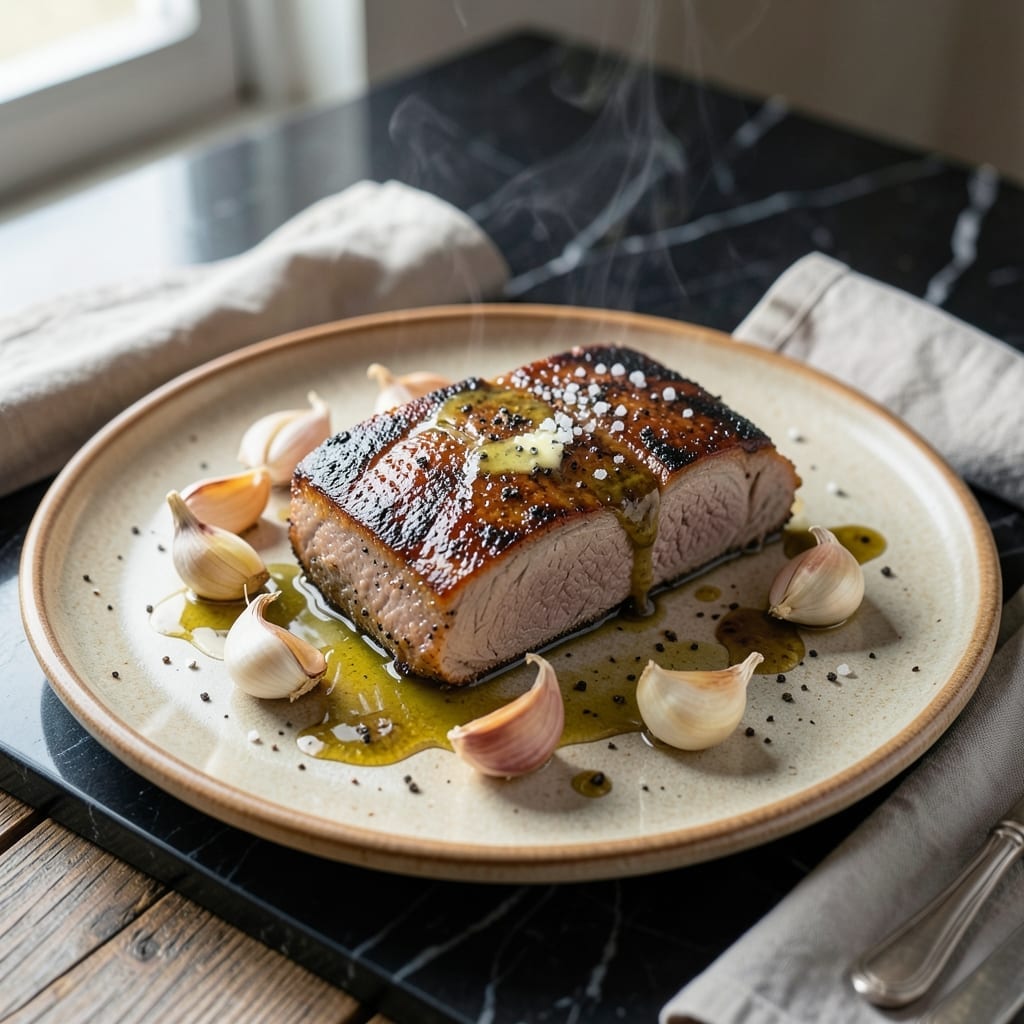
This stove top pork loin delivers juicy, flavorful results without the oven. I developed this technique for busy weeknights when I need reliable, impressive results with minimal effort.
The secret lies in a hot sear followed by gentle cooking. This creates a golden crust while maintaining tender, moist meat throughout. A simple herb-infused pan sauce ties everything together beautifully.
You’ll achieve perfectly cooked pork with a restaurant-quality sear and a sauce that enhances every bite. The process is straightforward yet yields exceptional flavor and texture.
Ideal for family dinners or special occasions when you want to impress without complicated methods. This method consistently produces excellent results.
Ingredients for Pork Loin Recipe Stove Top
Simple ingredients with bold results. Pantry staples meet fresh herbs for this winner.
| Ingredient | Amount | Notes |
|---|---|---|
| Boneless Pork Loin 🥩 | 2 lb | Trimmed of excess fat |
| Kosher Salt 🧂 | 1 ½ tsp | Diamond Crystal preferred |
| Freshly Ground Black Pepper 🌶️ | 1 tsp | Coarse grind for texture |
| Olive Oil 🫒 | 2 tbsp | Divided, for searing and sauce |
| Unsalted Butter 🧈 | 2 tbsp | For pan sauce richness |
| Garlic Cloves 🧄 | 4 cloves | Minced for sauce |
| Fresh Rosemary 🌿 | 2 tbsp | Chopped, stems removed |
| Fresh Thyme 🍃 | 2 tsp | Leaves stripped from stems |
| Dry White Wine 🍷 | ½ cup | For deglazing pan |
| Low-Sodium Chicken Broth 🥣 | ¾ cup | For pan sauce base |
| Dijon Mustard 🟡 | 1 tbsp | For sauce tang |
| Honey 🍯 | 1 tsp | To balance acidity |
The pork loin is the star—look for a center-cut piece with even thickness (about 2-3 inches) for consistent cooking. Whole Foods or Costco have great options, but most supermarkets carry it too. Avoid pre-marinated versions; you want to control the seasoning. The fat cap should be trimmed to about 1/4-inch (the butcher will do this for free if you ask). Fresh herbs make a difference here, so grab a bunch of both rosemary and thyme—they’ll keep in the fridge for 5 days wrapped in damp paper towels.
No white wine? Substitute apple cider vinegar mixed with water (1:3 ratio) or just use all chicken broth. Dried herbs work in a pinch—use one-third the amount of fresh. For the mustard, whole-grain or yellow mustard can stand in, but Dijon’s sharpness cuts through the richness best. Honey can be swapped for maple syrup if you prefer, though it’ll darken the sauce more. The butter is non-negotiable for that glossy finish (trust me on the full-fat version).
Cooked pork keeps beautifully in the fridge for 4-5 days or freezes for 3 months. Slice before storing for easy portions. The pan sauce can be made ahead and reheated gently—it’ll thicken slightly but loosens right up with a splash of broth (worth the extra minute).
Why You’ll Love This Recipe
- One Pan Wonder: I love that I only need a skillet, some olive oil, and butter to get this started—no fancy equipment.
- Crispy, Juicy Perfection: The butter and olive oil combo gives it the most incredible golden crust while keeping the inside tender.
- Weeknight Hero: Honestly, it’s my go-to for busy evenings when I need something reliable and fast.
- Leftovers for Days: That pork loin stretches into sandwiches, tacos, or salads—so I’m set for tomorrow’s lunch too.
Step-by-Step Instructions for Pork Loin Stove Top
Here is the method for achieving a perfect sear with a rich herb pan sauce.
Step 1: Season and Sear the Pork Loin
Pat the 2 lb boneless pork loin dry with paper towels. Season generously with 1.5 tsp kosher salt and 1 tsp freshly ground black pepper, pressing the seasoning into the meat so it adheres well. This step ensures a flavorful crust.
Heat 1 tbsp olive oil in a large, heavy skillet over medium-high heat until it shimmers. Add the pork loin and sear for 4-5 minutes per side until deep golden brown and a crust forms. The meat should release easily from the pan when ready to flip.
Step 2: Rest the Pork and Prepare Aromatics
Transfer the seared pork to a plate and tent loosely with foil. Let it rest while you prepare the sauce base. In the same skillet, reduce heat to medium and add the remaining 1 tbsp olive oil. Sauté the 4 cloves minced garlic cloves for 30 seconds until fragrant.
Add the 2 tbsp chopped fresh rosemary and 2 tsp fresh thyme leaves, stirring for another 30 seconds until the herbs release their aroma. Be careful not to let the garlic burn—it should be golden, not brown.
Step 3: Deglaze and Build the Pan Sauce
Pour in the 0.5 cup dry white wine to deglaze the pan, scraping up all the browned bits from the bottom with a wooden spoon. Let the wine simmer for 2-3 minutes until it reduces by about half. This step captures all the concentrated pork flavor.
Add the 0.75 cup low-sodium chicken broth, 2 tbsp unsalted butter, 1 tbsp Dijon mustard, and 1 tsp honey. Stir until the butter melts and the sauce begins to thicken slightly, about 3-4 minutes. The sauce should coat the back of a spoon.
Step 4: Finish Cooking the Pork and Serve
Return the pork loin to the skillet, spooning the sauce over it. Reduce heat to medium-low, cover, and cook for 8-10 minutes, turning the pork occasionally to coat it in the sauce. The internal temperature should reach 145°F for perfect doneness.
Transfer the pork to a cutting board and let it rest for 5-10 minutes before slicing. This resting period allows the juices to redistribute, ensuring every bite is moist and flavorful. Serve the sliced pork with the herb pan sauce spooned over the top.
Pro Tips For Making Pork Loin Recipe Stove Top
- Sear it Hot: Crank the heat to medium-high and get that pan screaming hot before adding the pork loin—about 2 tablespoons of olive oil should shimmer but not smoke. I learned this the hard way after too many pale, sad-looking sears.
- Dry the Meat: Pat the pork loin completely dry with paper towels before seasoning; even a little moisture steams instead of sears. Sounds tedious, but it’s the only way to get that golden crust.
- Don’t Overcrowd: Resist the urge to flip or move the pork for at least 3-4 minutes per side—this is how you get an even brown, not a gray, boiled look.
- Add Butter Late: Toss in the unsalted butter only in the last 2 minutes of cooking, then baste the pork with it. After burning three batches, I finally figured out butter burns at high heat—this way, you get rich flavor without bitterness.
Troubleshooting This Recipe
Pork Too Dry
If your pork turns out dry, it likely overcooked. Use a meat thermometer and pull it at 145°F internal temp—it’ll rise to 150°F while resting. Also, avoid pressing the meat with your tongs during cooking. 🌡️
Sauce Too Thin
If your pan sauce is watery, simmer it uncovered for 2-3 extra minutes after removing the pork. A cornstarch slurry (1 tsp cornstarch + 1 tbsp water) stirred in at the end works too. I always keep cornstarch in my pantry for this.
Sauce Breaking
If your sauce separates or looks greasy, it overheated. Remove from heat and whisk in 1 tsp cold water or a splash of broth to bring it back together. Lower the heat next time and stir frequently.
Weak Sear
For a better crust, ensure your pan is ripping hot before adding the pork and don’t move it for at least 4 minutes per side. Use a heavy skillet like Lodge cast iron for even heat.
Bitter Sauce
If your sauce tastes bitter, the garlic likely burned. Next time, cook garlic on medium heat for just 30 seconds. A pinch of honey or brown sugar can help balance any bitterness in the current batch. 💡
Uneven Cooking
If your pork cooks unevenly, it may be too thick. Butterflying it to an even 1.5-inch thickness helps. Or, rotate it every 2 minutes while searing to ensure even browning and cooking.
Nutrition Facts
Frequently Asked Questions
What’s the ideal internal temperature for stove top pork loin?
Pull it at 145°F internal temperature. It will rise to 150°F while resting. This ensures juicy, tender meat without overcooking.
Can I use a nonstick pan for searing?
Avoid nonstick for this recipe. A heavy cast iron or stainless steel skillet creates a better sear and handles high heat. Nonstick won’t develop the same crust.
How long should the pork rest before slicing?
Let it rest for 5-10 minutes after cooking. This allows juices to redistribute throughout the meat, keeping every slice moist and flavorful.
What if I don’t have white wine for the sauce?
Substitute with apple cider vinegar mixed with water (1:3 ratio) or use all chicken broth. The acidity helps balance the richness of the butter.

- 6 Egg Cake Recipe with Oil: Light as Air With Buttery Moisture - October 4, 2026
- 4 Bean Casserole Recipe: One-Pan Heartiness With Smoky Paprika Depth - October 4, 2026
- 3-Ingredient Keto Mug Cake Recipe: Microwave Magic in 2 Minutes - October 4, 2026