
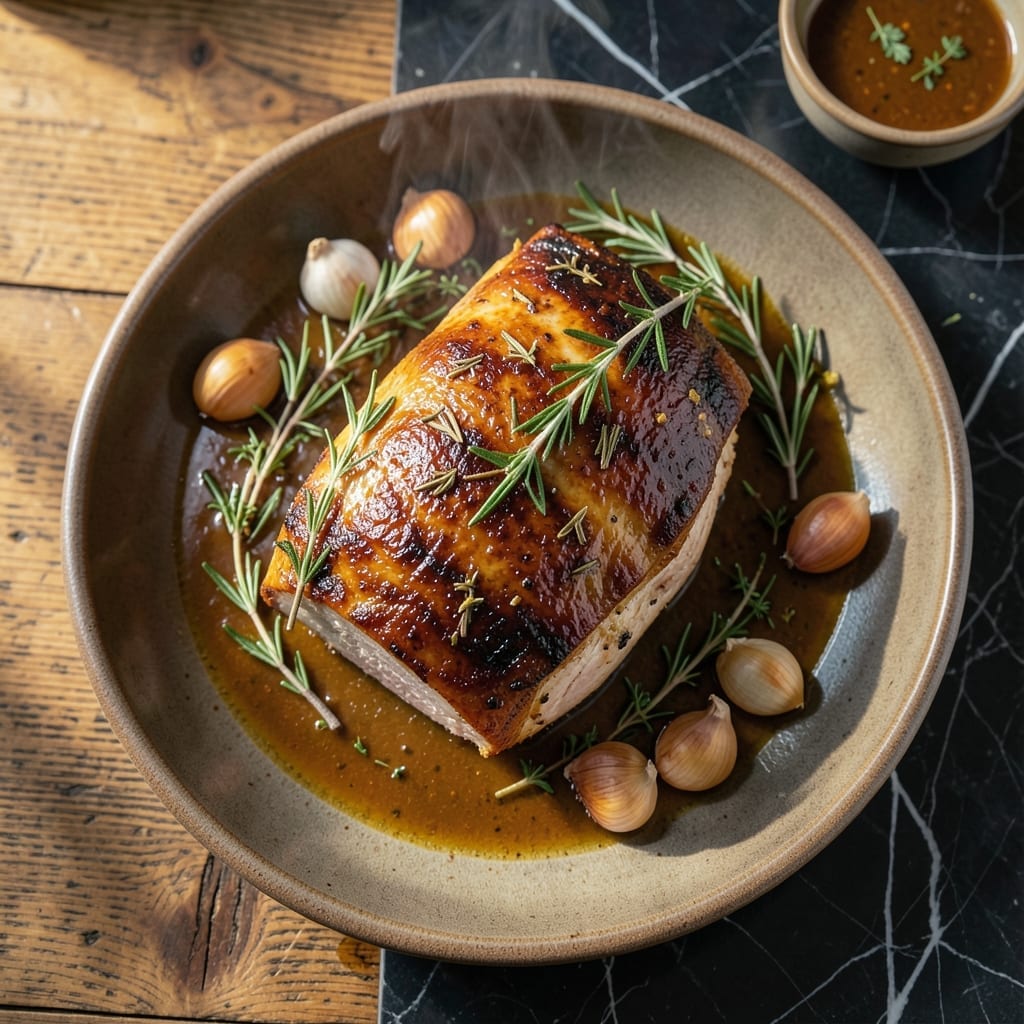
Achieving fork-tender pork roast in your oven comes down to proper seasoning and patience. This method transforms a simple cut into a centerpiece worthy of any dinner table.
The herb crust creates a fragrant seal that locks in juices while forming a golden, crispy exterior. Slow roasting at 325°F ensures the meat stays moist and tender throughout.
What emerges is a roast with a perfectly browned crust giving way to juicy, flavorful meat that falls apart with minimal effort. The herbs infuse every bite with aromatic depth.
Pair with roasted vegetables or mashed potatoes to complete the meal. Here’s how to make it perfectly every time.
Ingredients for Pork Roast Recipe Oven
Transform a simple pork shoulder into a fragrant, herb-crusted masterpiece with these ingredients.
| Ingredient | Amount | Notes |
|---|---|---|
| Pork Shoulder Roast 🍖 | 3 lb | Bone-in, well-marbled preferred |
| Fresh Rosemary 🌿 | 2 tbsp | Finely chopped, stems discarded |
| Fresh Thyme 🍃 | 2 tbsp | Finely chopped, stems discarded |
| Garlic Cloves 🧄 | 6 cloves | Minced, fresh preferred |
| Dijon Mustard 🟡 | 3 tbsp | Whole grain for texture |
| Extra-Virgin Olive Oil 🫒 | 2 tbsp | Divided for crust and pan |
| Kosher Salt 🧂 | 1 ½ tbsp | Diamond Crystal preferred |
| Freshly Ground Black Pepper 🌶️ | 1 tbsp | Coarse grind for crust |
| Dry White Wine 🍷 | ½ cup | For deglazing pan |
| Low-Sodium Chicken Stock 🥣 | 1 cup | Homemade or quality boxed |
| Unsalted Butter 🧈 | 2 tbsp | For basting, room temperature |
| Yellow Onion 🧅 | 1 whole | Medium, roughly chopped |
| Carrots 🥕 | 3 whole | Medium, peeled and chunked |
| Celery Stalks 🥬 | 2 whole | Trimmed and chunked |
The pork shoulder is non-negotiable for fork-tender results—bone-in, well-marbled cuts from Whole Foods or a trusted butcher deliver the best texture. Fresh herbs matter here; organic rosemary and thyme from the produce section have superior aroma. For the Dijon, Maille or Grey Poupon offer consistent quality. Don’t substitute yellow mustard; the sharpness of Dijon balances the richness of the pork.
No fresh herbs? Dried at one-third the amount, but rehydrate in a bit of warm stock first. Out of white wine? Apple cider vinegar diluted with water works in a pinch (use 2 tbsp vinegar + 6 tbsp water). For the stock, Better Than Bouillon is a solid backup. Skip the butter for basting if avoiding dairy—olive oil works, though it lacks the same richness.
Store raw pork in the fridge for up to 3 days or freeze for 6 months. The herb crust can be prepped a day ahead—keep it covered in the fridge. Leftovers? They reheat beautifully and keep for 4-5 days refrigerated or 3 months frozen.
Why You’ll Love This Recipe
- Set It and Forget: Honestly, you rub the pork with mustard, toss on the herbs, and the oven does the rest.
- Herb-Crusted Heaven: That crispy rosemary-thyme crust with the garlic-Dijon punch? Ridiculously good.
- Feeds the Week: One roast, three meals—tacos, sandwiches, or straight from the pan with veggies.
- Pocket-Friendly Feast: Pork shoulder is cheap, but with fresh herbs and a slow roast, it tastes like a Sunday splurge.
Step-by-Step Instructions for Pork Roast Oven
This method ensures a perfectly tender roast with a flavorful herb crust every time.
Step 1: Prepare the Herb Crust
In a small bowl, combine the 2 tbsp Fresh Rosemary, 2 tbsp Fresh Thyme, 6 cloves Garlic Cloves, 3 tbsp Dijon Mustard, 1 tbsp Extra-Virgin Olive Oil, 1.5 tbsp Kosher Salt, and 1 tbsp Freshly Ground Black Pepper. Stir until it forms a thick, aromatic paste.
This blend infuses the pork with deep, herbal notes and creates a beautiful crust. The Dijon mustard acts as both a binder and a flavor enhancer, while the fresh herbs provide a bright, earthy aroma. Make sure to chop the herbs finely for even distribution.
Step 2: Sear and Season the Pork
Pat the 3 lb Pork Shoulder Roast dry with paper towels to ensure a good sear. Rub the herb mixture all over the surface, pressing it in so it adheres well. Heat the remaining 1 tbsp Extra-Virgin Olive Oil in a large Dutch oven over medium-high heat.
Sear the pork on all sides until the crust turns deep golden brown, about 3-4 minutes per side. This step locks in juices and builds a flavorful foundation. Remove the pork and set it aside briefly while you prepare the aromatics.
Step 3: Build the Braising Liquid
In the same Dutch oven, add the roughly chopped 1 whole Yellow Onion, 3 whole Carrots, and 2 whole Celery Stalks. Sauté for 5 minutes until the vegetables begin to soften and brown slightly. This adds a subtle sweetness and depth to the braising liquid.
Pour in the 0.5 cup Dry White Wine and scrape up any browned bits from the bottom of the pot. Let it simmer for 2 minutes until reduced by half. Add the 1 cup Low-Sodium Chicken Stock and bring to a gentle simmer.
Step 4: Roast to Perfection
Return the pork to the Dutch oven, spooning some of the vegetables and liquid over the top. Cover and transfer to a preheated 325°F oven. Roast for 2.5 to 3 hours, basting occasionally with the pan juices and adding the 2 tbsp Unsalted Butter halfway through for extra richness.
The pork is done when it reaches an internal temperature of 195°F and a fork slides in effortlessly. At this point, the collagen has broken down, ensuring a melt-in-your mouth texture. If the liquid reduces too much during cooking, add a splash of water or stock to maintain moisture.
Step 5: Rest and Serve
Transfer the pork to a cutting board, tent loosely with foil, and let it rest for 15-20 minutes. This allows the juices to redistribute, ensuring every bite is moist and flavorful. Skim excess fat from the braising liquid if desired, and serve the pork with the vegetables and pan juices spooned over the top.
The result is a fork-tender roast with a rich, herbaceous crust and a deeply flavorful sauce. The vegetables will have absorbed the pork’s savory essence, making them a perfect accompaniment.
Pro Tips For Making Pork Roast Recipe Oven
- Start Hot, Finish Low: Sear the pork shoulder at 450°F for 20 minutes to get that crust, then drop to 325°F for the rest—this locks in flavor and keeps it juicy.
- Score the Fat: Cut 1/4-inch slits into the fat cap before rubbing with Dijon and herbs so the seasoning actually penetrates the meat.
- Don’t Rush the Rest: Let the roast sit under foil for at least 15 minutes after pulling it out—it reabsorbs the juices instead of leaving them on the cutting board.
- Smash the Garlic: Crush the garlic cloves with the flat of your knife before stuffing them into the slits—this releases more flavor without burning.
Perfect Pairings for pork roast recipe oven
Starch Sides
Creamy mashed potatoes soak up the rich pan juices beautifully—use Yukon Golds for the perfect texture. I also love serving this with roasted fingerling potatoes tossed with rosemary and garlic for a rustic touch. 💛
Vegetable Pairings
Roasted Brussels sprouts with a balsamic glaze complement the pork’s richness. Toss 1 lb halved sprouts with 2 tbsp olive oil and roast at 400°F for 20 minutes until crispy.
Green Options
A simple kale salad with lemon and Parmesan cuts through the meat’s richness. Massage 4 cups chopped kale with 1 tbsp olive oil and 1 tbsp lemon juice for a bright, fresh contrast.
Bread Choices
Warm crusty bread or dinner rolls are perfect for mopping up the braising liquid. I prefer sourdough from a local bakery, lightly toasted and brushed with garlic butter.
Wine Pairings
A medium-bodied Pinot Noir from Oregon pairs beautifully with the herb crust. For white wine lovers, a crisp Chardonnay or Sauvignon Blanc balances the pork’s richness. 🍷
Beer Options
An amber ale or brown ale complements the dish’s depth. I enjoy New Belgium Fat Tire for its caramel notes that match the roasted flavors. Avoid heavy stouts that overpower the pork.
Nutrition Facts
Frequently Asked Questions
What internal temperature should I aim for?
Cook until the pork reaches 195°F internally for that perfect fall-apart texture. This ensures the collagen breaks down completely. Use a meat thermometer for accuracy.
Can I use a different cut of pork?
Pork shoulder is ideal, but pork butt works similarly. Avoid lean cuts like tenderloin—they’ll dry out. Stick with well-marbled, tougher cuts that benefit from slow cooking.
How do I prevent the crust from burning?
Cover the roast for the first 2 hours, then uncover for the last 30-60 minutes to crisp the crust. Baste with pan juices to keep it moist and flavorful.
What if my roast isn’t tender after the suggested time?
If it’s not fork-tender, continue cooking at 325°F in 30-minute increments until it reaches the right texture. Low and slow is key for tough cuts.

- 6 Egg Cake Recipe with Oil: Light as Air With Buttery Moisture - October 4, 2026
- 4 Bean Casserole Recipe: One-Pan Heartiness With Smoky Paprika Depth - October 4, 2026
- 3-Ingredient Keto Mug Cake Recipe: Microwave Magic in 2 Minutes - October 4, 2026