
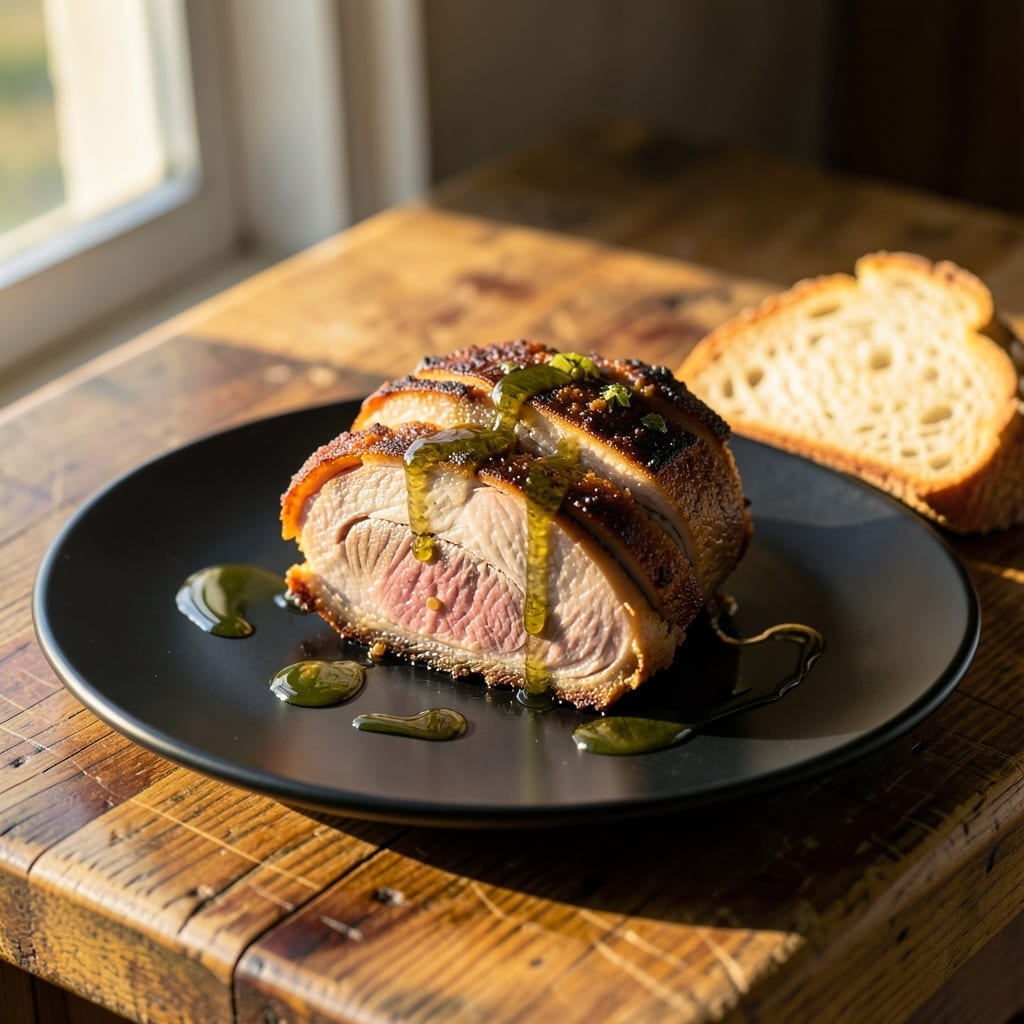
This slow-braised pork shoulder transforms tough cuts into fall-apart tender perfection with Asian five-spice complexity.
Low and slow cooking allows the flavors to meld deeply, ensuring every bite delivers rich, aromatic satisfaction.
Ingredients for Pork Shoulder Recipe Asian
Slow-braised pork shoulder meets bold Asian spices for melt-in-your-mouth results every time.
| Ingredient | Amount | Notes |
|---|---|---|
| Pork Shoulder 🥩 | 3 lb | Bone-in, skin-on preferred |
| Asian Five-Spice Powder 🌿 | 1 tbsp | Freshly ground for potency |
| Soy Sauce 🫒 | ½ cup | Low-sodium preferred |
| Brown Sugar 🍚 | ½ cup | Light or dark variety |
| Rice Vinegar 🍶 | ¼ cup | Unseasoned for balance |
| Garlic Cloves 🧄 | 6 cloves | Peeled and smashed |
| Fresh Ginger 🌿 | 2 tbsp | Peeled and grated |
| Star Anise Pods ⭐ | 2 whole | Lightly crushed |
| Dried Shitake Mushrooms 🍄 | 4 pieces | Rehydrated and sliced |
| Scallions 🧅 | 4 whole | Thinly sliced, white and green parts separated |
| Sesame Oil 🫒 | 1 tbsp | Toasted variety preferred |
| Chicken Stock 🍲 | 2 cups | Low-sodium or homemade |
| Cornstarch 🌾 | 1 tbsp | Mixed with water for slurry |
| Kosher Salt 🧂 | 1 tsp | Diamond Crystal preferred |
| Black Pepper 🌶️ | ½ tsp | Freshly ground |
The pork shoulder is the foundation—bone-in, skin-on cuts yield the most tender results. Seek out well-marbled pieces at Whole Foods or local butchers for optimal fat content, which renders down during the long cook. Five-spice powder loses potency quickly, so buy from Penzeys or bulk sections where turnover is high. The star anise and shiitake mushrooms add depth (found at Asian markets for best quality).
No five-spice? Mix equal parts cinnamon, cloves, fennel, star anise, and Szechuan peppercorns. Substitute hoisin sauce for brown sugar if needed, though it’ll darken the sauce. Dried porcini mushrooms work in place of shiitake. For a gluten-free version, tamari replaces soy sauce seamlessly. The ginger and garlic are non-negotiable—fresh only (no powders). Chicken stock can be swapped for vegetable stock without issue.
Braise leftovers in their liquid for up to 5 days—flavors intensify beautifully. Freeze portions for 3 months (shred before freezing for easy reheating). Reheat gently to avoid drying out. The rendered fat skims off easily once chilled for gravy or dumplings (don’t waste it).
Why You’ll Love This Recipe
- Set and Forget: The pork shoulder slow-cooks while I do other things, no babysitting required.
- Sweet-Savory Magic: That five-spice with soy and brown sugar gives it this deep, caramelized crust that’s honestly ridiculous.
- Feeds a Crowd: I made this for my in-laws and had enough left for sandwiches the next day.
- Budget Hero: Pork shoulder is cheap, and this recipe turns it into something that tastes like a weekend splurge.
Step-by-Step Instructions for Asian Pork Shoulder
Master the technique for fall-apart tender pork with complex aromatic depth every time.
Step 1: Sear and Season the Pork Shoulder
Pat the 3 lb Pork Shoulder completely dry with paper towels to ensure proper browning. Season all sides aggressively with the 1 tsp Kosher Salt and 0.5 tsp Black Pepper, then rub in the 1 tbsp Asian Five-Spice Powder until the meat is evenly coated.
Heat the 1 tbsp Sesame Oil in a Dutch oven over medium-high heat until shimmering. Sear the pork on all sides for 8-10 minutes total until deeply browned. This creates the flavor foundation for your braise. Remove the pork and set aside.
Step 2: Build the Aromatic Braising Liquid
In the same pot, add the 4 pieces Dried Shitake Mushrooms (rehydrated and sliced), 6 cloves Garlic Cloves (smashed), and 2 tbsp Fresh Ginger (grated). Sauté for 2-3 minutes until fragrant, being careful not to let the garlic burn.
Add the 2 whole Star Anise Pods (lightly crushed), 0.5 cup Soy Sauce, 0.5 cup Brown Sugar, and 0.25 cup Rice Vinegar. Stir to dissolve the sugar, then pour in the 2 cups Chicken Stock. The liquid should come about halfway up the pork when returned to the pot.
Step 3: Slow-Braise to Tenderness
Return the pork to the pot, along with any accumulated juices. The liquid should just cover the bottom third of the meat. Bring to a gentle simmer, then reduce heat to low. Cover and braise for 2.5-3 hours, turning the pork occasionally.
You’ll know it’s ready when the meat yields easily to a fork and the internal temperature reaches 195-200°F. The 4 whole Scallions (white parts) can be added during the last 30 minutes of cooking for a fresh onion note without overpowering the dish.
Step 4: Thicken and Finish the Sauce
Carefully transfer the pork to a cutting board. Skim excess fat from the braising liquid, then bring it to a boil over medium-high heat. Mix the 1 tbsp Cornstarch with 1 tablespoon water to create a slurry, then whisk it into the simmering liquid.
Cook for 2-3 minutes until the sauce thickens enough to coat the back of a spoon. Taste and adjust seasoning if needed. Shred the pork using two forks, discarding any large fat chunks, and return it to the pot to coat in the sauce. Garnish with the scallion green parts before serving.
Pro Tips For Making Pork Shoulder Recipe Asian
- Low and Slow: Cook the pork shoulder at 275°F for 4-5 hours—rushing it with higher heat dries out the meat and turns the brown sugar bitter.
- Score the Fat: Cut 1/4-inch deep crosshatches into the fat cap so the five-spice, soy, and sugar penetrate deeper and form a sticky crust.
- Reduce the Sauce: After braising, simmer the pan juices for 5-7 minutes to thicken the soy-vinegar-sugar mixture into a glossy glaze that clings to the pork.
- Rest Before Slicing: Let the shoulder rest 15 minutes under foil after cooking so the juices redistribute—cutting too soon sends them all over the cutting board.
Troubleshooting Perfect Results
🔥 Too Dry or Tough?
Overcooking or insufficient liquid can leave pork shoulder dry. Low and slow is key for Asian-style braising—too high heat evaporates moisture quickly.
Quick Fix: Shred the meat and mix it back into the braising liquid. Simmer for 10-15 minutes to reabsorb flavors and moisture.
🍳 Sauce Too Thin or Bland?
If the sauce lacks depth, it may need reduction or seasoning adjustment. Asian braises rely on concentrated flavors from soy, ginger, and spices.
Quick Fix: Remove the pork, boil the sauce to thicken, then stir in a splash of oyster sauce or a pinch of sugar for balance.
⏰ Pork Not Tender Enough?
Insufficient cooking time or skipping the sear can result in chewy meat. Collagen in pork shoulder needs time to break down into gelatin.
Quick Fix: Return the pork to the pot, add more liquid (broth or water), cover, and braise for another 1-2 hours on low heat.
🌡️ Uneven Cooking?
Large cuts may cook unevenly if not flipped or submerged properly. Heat distribution matters, especially in slow cooking.
Quick Fix: Rotate the pork halfway through cooking and ensure it’s mostly covered in liquid for even tenderness.
Nutrition Facts

- 6 Egg Cake Recipe with Oil: Light as Air With Buttery Moisture - October 4, 2026
- 4 Bean Casserole Recipe: One-Pan Heartiness With Smoky Paprika Depth - October 4, 2026
- 3-Ingredient Keto Mug Cake Recipe: Microwave Magic in 2 Minutes - October 4, 2026