
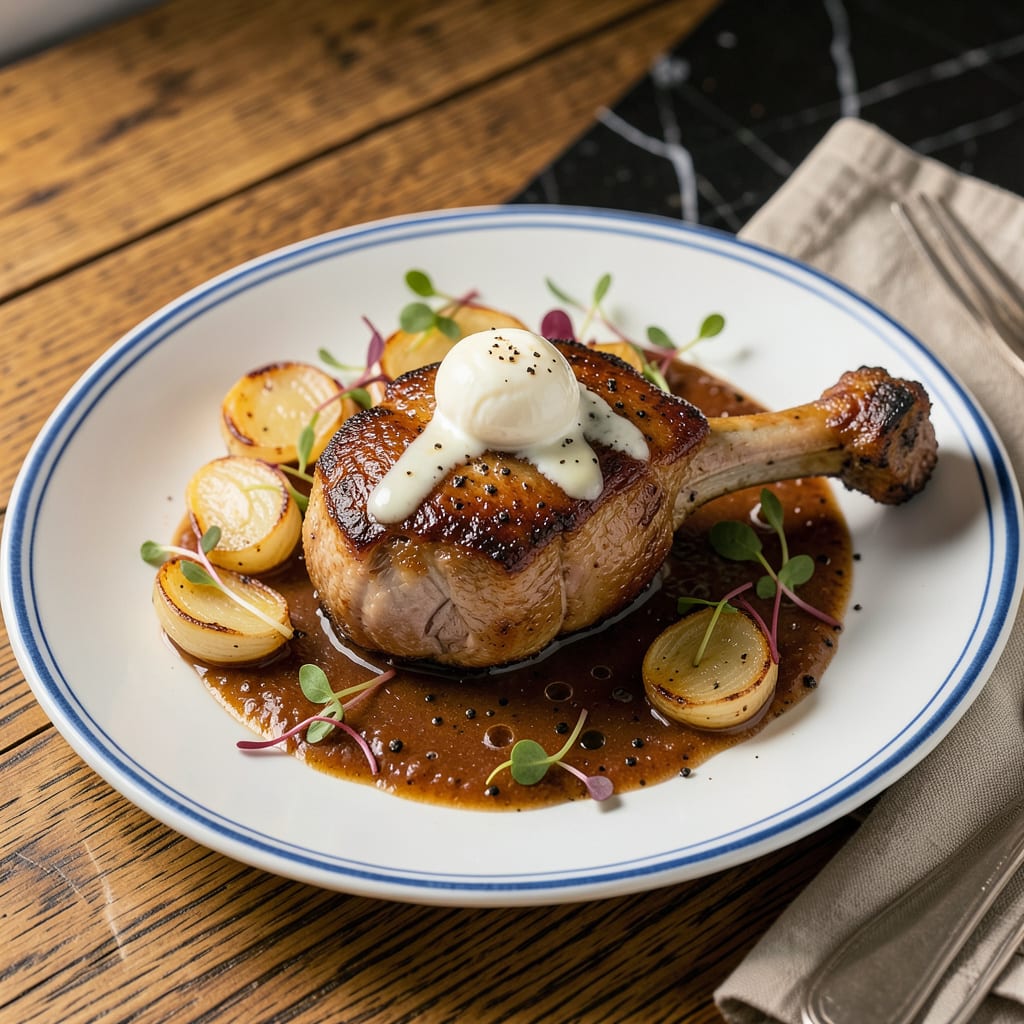
Perfectly braised pork chops deliver fall-off-the-bone tenderness with minimal effort, transforming an affordable cut into a restaurant-worthy meal. This one-pan method relies on precise technique rather than complicated ingredients—searing creates a flavorful crust while gentle braising ensures juicy, tender meat every time.
The key lies in balancing heat and moisture. A hot sear develops deep flavor, while the braising liquid (broth, wine, or even apple cider) breaks down connective tissue without drying the meat. By the time it finishes, you’ll have pork so tender it nearly dissolves at the touch of a fork, all while creating a rich, velvety pan sauce in the same vessel.
Ingredients for Braised Pork Chop
These twelve ingredients transform affordable pork chops into restaurant-quality perfection through precise braising technique.
| Ingredient | Amount | Notes |
|---|---|---|
| Bone-In Pork Chops 🥩 | 4 whole | 1-inch thick, rib or loin cut |
| Kosher Salt 🧂 | 1 ½ tsp | Diamond Crystal preferred for precision |
| Freshly Ground Black Pepper 🌶️ | 1 tsp | Coarse grind for optimal crust |
| Extra-Virgin Olive Oil 🫒 | 2 tbsp | High smoke point variety |
| Unsalted Butter 🧈 | 2 tbsp | European-style for richer flavor |
| Shallots 🧅 | 2 whole | Finely minced for even distribution |
| Garlic Cloves 🧄 | 4 cloves | Thinly sliced for maximum infusion |
| Fresh Thyme Sprigs 🌿 | 4 whole | Stems removed, leaves reserved |
| Dry White Wine 🍷 | ½ cup | Sauvignon Blanc or Pinot Grigio |
| Low-Sodium Chicken Stock 🥘 | 1 cup | Homemade preferred for depth |
| Dijon Mustard 🟡 | 1 tbsp | Whole-grain for textural contrast |
| Apple Cider Vinegar 🍏 | 1 tbsp | Balances richness of braising liquid |
| Heavy Cream 🥛 | ¼ cup | Full-fat for velvety finish |
| Fresh Flat-Leaf Parsley 🌿 | ¼ cup | Chopped for bright garnish |
The pork chops require bone-in, 1-inch thick cuts—either rib or loin—for optimal texture and flavor. Whole Foods or local butchers typically offer the best selection, though well-stocked supermarkets carry suitable options. Kosher salt should be Diamond Crystal for consistent seasoning; table salt will over-salt the dish. For the braising liquid, dry white wine provides essential acidity—opt for a crisp Sauvignon Blanc or Pinot Grigio rather than oaky Chardonnays. The thyme and parsley should be vibrant green with no wilting, indicating freshness.
Substitutions must maintain the dish’s balance. Apple cider can replace wine (use equal volume plus 1 tsp vinegar), though flavor complexity will diminish. For alcohol-free preparation, white grape juice with lemon juice approximates the acidity. Shallots are preferable to onions for their delicate sweetness, but yellow onion at half the quantity works in a pinch. Heavy cream may be substituted with full-fat coconut milk for dairy-free versions, though the sauce will have a slightly different mouthfeel. Vegetable stock can replace chicken stock for vegetarian adaptations.
Storage requires attention to food safety. Raw pork keeps 2 days refrigerated or 6 months frozen (vacuum-sealed). The finished dish maintains quality for 3 days refrigerated; reheat gently to preserve texture. Braising liquid can be prepared 24 hours ahead and refrigerated—reheat before adding pork. Never reuse braising liquid that has cooled with raw pork; always bring to a full boil if repurposing. Fresh herbs should be wrapped in damp paper towels and stored in airtight containers for maximum shelf life.
Why You’ll Love This Recipe
- One-Pan Magic: I love that this comes together in a single skillet—sear the chops, deglaze with butter, and let them braise while you set the table. No mountain of dishes, just rich flavor with minimal cleanup.
- Buttery, Juicy Perfection: That combo of olive oil and butter when browning the chops? It creates this insane crust while keeping the meat fork-tender. The salt and pepper aren’t just seasoning—they form this crispy, flavor-packed bark that’ll have you licking the bone.
- Weeknight to Weekend: Honestly, I’ve served this for rushed Tuesdays and fancy Sunday suppers. The bone-in chops look impressive (like you slaved over them), but the hands-off braising means you’re free to toss a salad or pour wine while they cook.
- Leftovers? Yes, Please: Here’s what sold me—they taste even better the next day. Shred the cold pork into tacos, slice it over greens, or reheat gently in the braising juices for a sandwich that’ll ruin deli meat for you forever. Zero waste, all reward.
Step-by-Step Instructions for Braised Pork Chops
This method transforms tough cuts into succulent, tender meat with richly developed flavors in a single pan.
Step 1: Sear the Pork Chops for Maximum Flavor
Pat the bone-in pork chops completely dry with paper towels. This ensures proper browning rather than steaming. Season both sides aggressively with the 1.5 tsp kosher salt and 1 tsp freshly ground black pepper. The coarse grind creates a better crust than fine pepper.
Heat the 2 tbsp extra-virgin olive oil in a large, heavy skillet over medium-high heat until shimmering. Add the pork chops and sear undisturbed for 4-5 minutes per side until deeply browned. You’ll know they’re ready to flip when they release easily from the pan. Transfer to a plate and set aside.
Step 2: Develop the Aromatic Base
Reduce heat to medium and add the 2 tbsp unsalted butter to the same skillet. Once melted, add the 2 whole shallots (finely minced) and cook for 2-3 minutes until softened but not browned. Add the 4 cloves garlic (thinly sliced) and fresh thyme leaves from the 4 whole fresh thyme sprigs, cooking for 30 seconds until fragrant.
This aromatic foundation builds complexity in the final sauce. Be careful not to burn the garlic—it should just turn golden at the edges. The residual fond from the pork chops will dissolve into this mixture, creating depth of flavor.
Step 3: Deglaze and Braise to Tenderness
Pour in the 0.5 cup dry white wine and increase heat to medium-high. Scrape the bottom of the pan with a wooden spoon to release all the browned bits. Simmer for 2-3 minutes until the liquid reduces by half. Add the 1 cup low-sodium chicken stock, 1 tbsp Dijon mustard, and 1 tbsp apple cider vinegar, stirring to combine.
Return the pork chops to the pan along with any accumulated juices. The liquid should come about halfway up the chops. Reduce heat to low, cover, and simmer gently for 20-25 minutes, turning the chops halfway through. They’re done when the meat pulls away slightly from the bone and registers 145°F internally.
Step 4: Finish with Creamy Pan Sauce
Transfer the pork chops to a serving platter and tent with foil. Increase heat to medium-high and simmer the braising liquid for 3-4 minutes until slightly reduced. Stir in the 0.25 cup heavy cream and cook for 1-2 minutes until the sauce coats the back of a spoon.
The sauce should have a velvety consistency that clings to the pork. Taste and adjust seasoning if needed, though the initial salting should be sufficient. Remove from heat and stir in half of the 0.25 cup fresh flat-leaf parsley (chopped) for brightness.
Step 5: Plate and Serve with Pan Sauce
Spoon the creamy pan sauce over the pork chops, allowing it to pool slightly on the plate. Garnish with the remaining chopped parsley. The sauce should be rich but balanced by the acidity from the vinegar and brightness from the fresh herbs.
Serve immediately while the sauce is still glossy. The pork should be tender enough to cut with a fork but still hold its shape, with the bone acting as a natural handle. Pair with crusty bread to soak up the luxurious sauce.
Best Sauces and Condiments for This Dish
Classic Mustard-Cream Sauce
The pan sauce you create during braising is already perfect, but I love enhancing it with an extra 1 tsp whole-grain Dijon mustard stirred in at the end. This amplifies the tangy depth while keeping the sauce velvety. The mustard seeds add subtle texture that contrasts beautifully with the tender pork. 💛
Apple-Cider Reduction
For a seasonal twist, replace the white wine with ½ cup apple cider when deglazing. Simmer it down with the braising liquid until syrupy, then finish with cream. The natural sweetness caramelizes slightly, creating a sauce that pairs wonderfully with roasted sweet potatoes.
Herb-Infused Butter
Whisk 2 tbsp cold unsalted butter and 1 tbsp chopped fresh tarragon into the finished sauce off-heat. The butter creates a glossy emulsion while tarragon’s anise notes brighten the rich pork flavors. I use this version when serving with buttery mashed potatoes.
Spicy Chili Glaze
Stir 1 tsp gochujang (Korean chili paste) and 1 tsp honey into the reduced braising liquid before adding cream. This creates a sweet-spicy glaze that cuts through the richness. The heat builds gradually, so it’s perfect for those who enjoy subtle warmth.
Mushroom-Thyme Gravy
After removing the pork, sauté 1 cup sliced cremini mushrooms in the pan until golden. Proceed with the sauce as written, adding 2 extra thyme sprigs during reduction. The mushrooms absorb the braising liquid, creating a hearty gravy with umami depth.
Bright Gremolata Topping
Combine ¼ cup chopped parsley, 1 tbsp lemon zest, and 1 minced garlic clove in a small bowl. Sprinkle this vibrant gremolata over the plated pork and sauce. The citrus cuts through the richness while adding fresh, herby brightness to each bite. ✨
Nutrition Facts
Frequently Asked Questions
Why use bone-in chops instead of boneless?
Bone-in chops stay juicier during braising and develop richer flavor. The bone acts as an insulator, preventing the meat from drying out. Plus, collagen from the bone breaks down into the sauce, creating a more luxurious texture.
Can I make this ahead of time?
The dish actually improves when made 1 day ahead. Store pork and sauce separately in airtight containers in the fridge. Reheat gently in a covered skillet with 2 tbsp water to prevent drying.
What if my sauce is too thin?
Simmer uncovered for 3-5 minutes to reduce. For quicker thickening, mix 1 tsp cornstarch with 1 tbsp cold water, then stir into the sauce. Avoid boiling after adding cream to prevent separation.
Is it safe to eat at 145°F?
Yes, 145°F is the USDA-recommended safe temperature for pork. The meat will be slightly pink but perfectly safe. For well-done, cook to 160°F, though it may be less tender. Always use a meat thermometer for accuracy.

- 6 Egg Cake Recipe with Oil: Light as Air With Buttery Moisture - October 4, 2026
- 4 Bean Casserole Recipe: One-Pan Heartiness With Smoky Paprika Depth - October 4, 2026
- 3-Ingredient Keto Mug Cake Recipe: Microwave Magic in 2 Minutes - October 4, 2026