
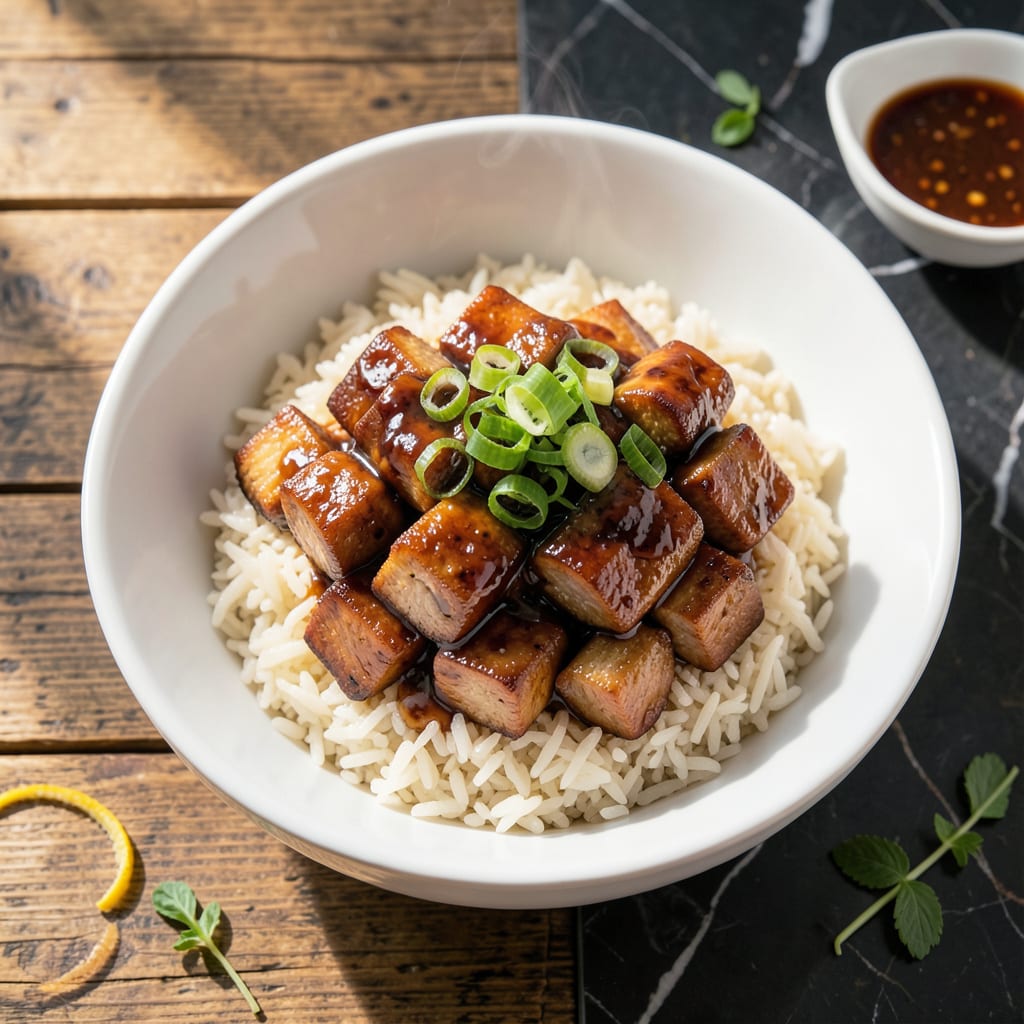
This Cantonese-style creation brings unmatched comfort to your table with tender pork and fluffy rice cooked together in one pot.
The technique locks in savory flavors while keeping the rice light and separate. It is a reliable method for a satisfying, home-style meal.
Ingredients for Pork Steamed Rice
Tender pork and fluffy rice create this comforting Cantonese-style one-pot wonder with everyday ingredients.
| Ingredient | Amount | Notes |
|---|---|---|
| Jasmine Rice 🍚 | 2 cups | Rinsed until water runs clear |
| Pork Shoulder 🥩 | 1 lb | Cut into 1-inch cubes |
| Light Soy Sauce 🫒 | 3 tbsp | Low-sodium preferred for balance |
| Dark Soy Sauce 🫒 | 1 tbsp | For depth and color |
| Oyster Sauce 🫒 | 2 tbsp | Vegetarian oyster sauce if needed |
| Shaoxing Wine 🍶 | 2 tbsp | Dry sherry as substitute |
| Garlic Cloves 🧄 | 4 cloves | Minced finely for even distribution |
| Ginger 🌿 | 1 tbsp | Freshly grated for brightness |
| Green Onions 🧅 | 4 whole | Thinly sliced for garnish |
| Sesame Oil 🫒 | 1 tsp | Toasted for aroma |
| White Pepper 🧂 | ½ tsp | Ground, for authentic flavor |
| Sugar 🧈 | 1 tsp | Balances savory notes |
| Chicken Stock 🍲 | 1 ½ cups | Low-sodium for control |
| Neutral Oil 🫒 | 1 tbsp | For searing pork |
The pork shoulder is non-negotiable for that melt-in-your-mouth texture. Look for well-marbled cuts at Asian markets or your butcher—avoid lean tenderloin. Jasmine rice is traditional (the fragrant kind from Thailand), but long-grain white works too. Rinsing the rice removes excess starch, which keeps it light and separate. Don’t skip this step. The soy sauces should be Chinese brands like Pearl River Bridge or Lee Kum Kee for authentic flavor.
No Shaoxing wine? Dry sherry at a 1:1 ratio works perfectly. Vegetarian? Mushroom stir-fry sauce replaces oyster sauce beautifully. Out of green onions? Chives or scallions add a similar fresh bite. The chicken stock can be swapped for water in a pinch, but the depth of flavor won’t be as rich. If you’re watching sodium, use low-sodium versions of all sauces and stock.
This dish tastes even better the next day as flavors meld. Store leftovers in an airtight container for up to 4 days in the fridge. Reheat with a splash of water to restore moisture. Not ideal for freezing—the rice texture suffers, but the pork holds up well if you must.
Why You’ll Love This Recipe
- One Pot Wonder: I love that everything cooks together—just layer pork shoulder and jasmine rice, then let the steam do the work.
- Umami Bomb: The mix of light and dark soy sauce with oyster sauce creates this deep, savory richness that soaks into every grain.
- Meal Prep Hero: Honestly, it reheats beautifully—I make a big batch on Sunday and it’s ready for lunches all week.
- Budget Friendly: Pork shoulder is affordable, and a little goes a long way when paired with rice and those bold sauces.
Step-by-Step Instructions for Pork Steamed Rice
Master the technique for this comforting dish with perfectly tender pork and fluffy rice every time.
Step 1: Marinate the Pork Shoulder
In a bowl, combine the 1 lb pork shoulder with 3 tbsp light soy sauce, 1 tbsp dark soy sauce, 2 tbsp oyster sauce, 2 tbsp Shaoxing wine, 1 tsp sugar, 0.5 tsp white pepper, and 1 tsp sesame oil. Mix until the pork is evenly coated.
Add 4 cloves minced garlic and 1 tbsp grated ginger, then toss to incorporate. I always let this marinate for at least 30 minutes—this ensures the flavors penetrate deeply. The pork should look glossy and smell fragrant when it’s ready.
Step 2: Sear the Pork for Depth of Flavor
Heat 1 tbsp neutral oil in a wok or large skillet over medium-high heat. When the oil shimmers, add the marinated pork in a single layer. Sear undisturbed for 2-3 minutes until the edges develop a deep golden-brown crust.
Stir-fry for another 2 minutes until the pork is cooked through but still tender. The pork should release easily from the pan and appear evenly browned. Remove from heat and set aside—this searing step locks in juices and adds complexity to the final dish.
Step 3: Prepare the Jasmine Rice Layer
Rinse the 2 cups jasmine rice until the water runs clear—this removes excess starch and prevents gummy rice. Drain thoroughly, then spread the rice evenly in a heatproof dish or rice cooker. The rice should form a smooth, level layer without clumps.
Pour the seared pork and all its juices over the rice, distributing it evenly. This ensures every bite is infused with flavor. Add 1.5 cups chicken stock and gently stir to combine, making sure the liquid is absorbed uniformly.
Step 4: Steam to Perfection
Cover the dish tightly with a lid or foil to trap steam. If using a stovetop, bring to a boil over high heat, then reduce to low heat and steam for 20-25 minutes. For a rice cooker, use the standard setting.
Resist the urge to lift the lid during cooking—this maintains the necessary steam for even cooking. The rice is done when the liquid is fully absorbed and the grains are tender and fluffy. The pork should be melt-in-your-mouth tender, and the rice should have a slight sheen from the rendered flavors.
Step 5: Finish and Garnish
Once cooked, let the dish rest covered for 5 minutes. This allows the rice to set and the flavors to meld. Fluff the rice gently with a fork, then garnish with thinly sliced green onions for a fresh, vibrant finish.
The final dish should have a harmonious balance of savory pork and fragrant rice, with each grain distinct yet cohesive. Serve immediately in bowls, ensuring each portion has a generous amount of pork and rice.
Pro Tips For Making Pork Steamed Rice
- Parboil the Pork: Simmer the pork shoulder for 10-12 minutes before slicing to guarantee tender, melt-in-your-mouth texture in the finished dish.
- Rinse the Rice: Wash the jasmine rice until the water runs clear—this removes excess starch and prevents a gummy, sticky result.
- Balance the Soy: Use a 2:1 ratio of light soy sauce to dark soy sauce for seasoning; the dark adds color but can overpower if used too heavily.
- Steam Low and Slow: Keep the heat at medium-low after adding the liquid, and resist peeking—lifting the lid releases steam and messes with the cooking time.
Regional Styles of This pork steamed rice
Cantonese Classic
In Guangdong, this dish is called zhu fan and is a staple at family gatherings. The pork is often marinated longer—overnight in some homes—with extra hoisin sauce for sweetness. The rice is cooked in a clay pot over charcoal for a smoky depth. 🗺️
Taiwanese Adaptation
Taiwanese versions use minced pork instead of cubes, creating a looser texture. They add shiitake mushrooms for umami and often top with a fried egg. The rice is slightly stickier, almost like a savory porridge.
Thai Fusion Twist
Thai cooks incorporate lemongrass and kaffir lime leaves into the pork marinade. They swap light soy for fish sauce and finish with cilantro and lime wedges. The result is bright and aromatic. ✨
Vietnamese Style
Called cơm thịt, this version uses ground pork and adds carrots and peas to the rice. The marinade includes fish sauce and black pepper, giving it a distinct savory-sweet profile.
Singaporean Hainanese
Hainanese-style uses chicken instead of pork, but the technique remains similar. The rice is cooked in chicken fat and broth, then served with ginger sauce and chili. It’s comforting and fragrant.
Nutrition Facts
Frequently Asked Questions
Can I use a different cut of pork?
Pork shoulder is ideal for its fat content, but pork belly works too for extra richness. Avoid lean cuts like tenderloin—it dries out during steaming. For a lighter option, try pork loin but marinate longer.
What if I don’t have a rice cooker?
Use a heavy pot with a tight lid on the stovetop. Bring to a boil, then reduce to low heat for 20-25 minutes. A clay pot works beautifully for authentic results.
How do I prevent mushy rice?
Rinse the rice thoroughly until water runs clear to remove excess starch. Use the correct liquid ratio (1.5 cups stock per 2 cups rice) and avoid lifting the lid while cooking.

- 6 Egg Cake Recipe with Oil: Light as Air With Buttery Moisture - October 4, 2026
- 4 Bean Casserole Recipe: One-Pan Heartiness With Smoky Paprika Depth - October 4, 2026
- 3-Ingredient Keto Mug Cake Recipe: Microwave Magic in 2 Minutes - October 4, 2026