
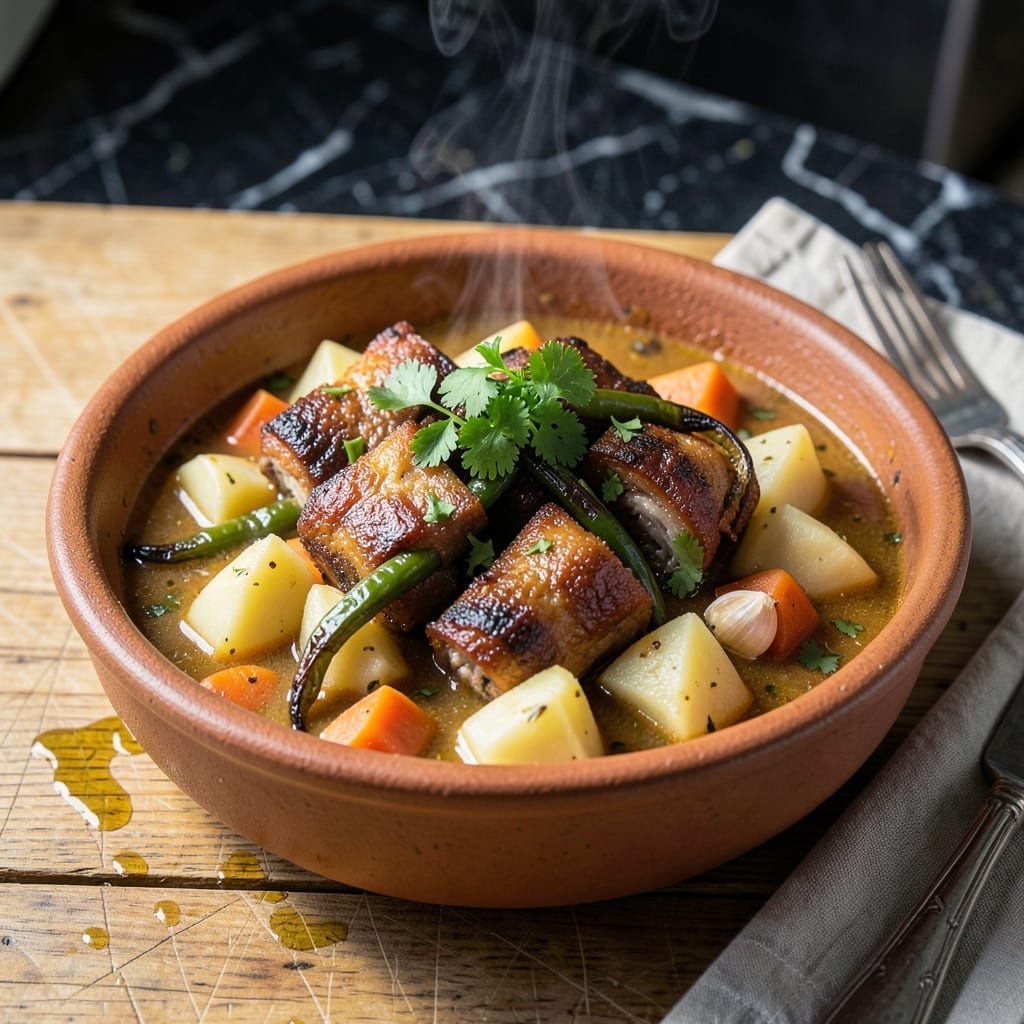
This traditional dish carries the rich culinary heritage of Puerto Rico in every bite. The slow simmering process transforms simple ingredients into a deeply flavorful, tender creation that honors island traditions.
What makes this recipe special is its reliance on time-tested techniques. The pig feet are cleaned thoroughly, then simmered with aromatic vegetables and spices until the meat falls effortlessly from the bone. This method ensures every piece absorbs the complex flavors.
The result is a dish that’s both hearty and comforting, with meat so tender it melts in your mouth. The broth develops a rich, savory depth that makes this more than just a meal—it’s an experience.
Perfect for family gatherings or special occasions, this recipe brings authentic Puerto Rican flavors to your table. The process requires patience, but the reward is well worth the wait.
Ingredients for Puerto Rican Pig Feet
Traditional Puerto Rican ingredients transform into a rich, slow-simmered dish with deep island flavors.
| Ingredient | Amount | Notes |
|---|---|---|
| Pig Feet 🐖 | 2 lb | Split and thoroughly cleaned |
| Yellow Onion 🧅 | 1 whole | Large, quartered |
| Green Bell Pepper 🌶️ | 1 whole | Diced into large pieces |
| Garlic Cloves 🧄 | 6 cloves | Peeled and smashed |
| Recao (Culantro) 🌿 | ½ cup | Chopped, stems included |
| Fresh Cilantro 🌿 | ½ cup | Chopped, for garnish |
| Dried Oregano 🍃 | 2 tsp | Spanish or Mexican variety |
| Bay Leaves 🌿 | 2 whole | Dried, whole leaves |
| Ground Cumin 🌿 | 1 tsp | Toasted for depth |
| Salt 🧂 | 2 tbsp | Diamond Crystal kosher preferred |
| Black Peppercorns 🌶️ | 1 tsp | Whole, crushed |
| Olive Oil 🫒 | 2 tbsp | Extra-virgin for richness |
| Potatoes 🥔 | 2 whole | Yukon Gold, peeled and cubed |
| Carrots 🥕 | 2 whole | Peeled and cut into chunks |
| Water 💧 | 8 cups | Or enough to cover pig feet |
Sourcing the pig feet is critical. Latin markets or butcher shops often carry them pre-cleaned and split—ask for ‘patitas de cerdo.’ Look for fresh, pink feet without strong odor. The recao (culantro) is non-negotiable for authenticity; find it at Latin American grocers or grow it yourself. Spanish oregano has a more robust flavor than Mediterranean—Badia or Goya brands are reliable.
No recao? Cilantro plus a touch of mint mimics some of the flavor profile. Out of pig feet? Beef shank or oxtail offers similar gelatinous texture, though the taste differs. For the potatoes, sweet potatoes add a nice twist. If you can’t find whole black peppercorns, use one-third the amount of pre-ground. The slow simmer can’t be rushed—low and steady wins here.
This tastes even better the next day after flavors meld overnight. Store in the fridge for up to 4 days or freeze for 3 months. Reheat gently to preserve the tender texture of the meat (worth the extra minute). Always skim excess fat from the broth before serving.
Why You’ll Love This Recipe
- Set and Forget: I toss everything in one pot, and the slow simmer does all the work.
- Garlic-Culantro Magic: The garlic and recao blend into this deep, aromatic broth that soaks right into the meat.
- Feeds the Whole Crew: I make a big batch for Sunday dinner, and it’s just as good reheated for tacos or rice bowls.
- Budget Stretcher: Pig feet are cheap, and this turns them into a hearty meal that lasts for days.
Step-by-Step Instructions for Puerto Rican Pig Feet
Master this slow-simmered technique for tender meat and rich, aromatic broth every time.
Step 1: Sear and Aromatize the Base
Heat the 2 tbsp Olive Oil in a large, heavy pot over medium-high heat. Add the 2 lb Pig Feet and sear for 3-4 minutes per side until deeply browned. This builds the flavor foundation for your broth.
Remove the pig feet and set aside. In the same pot, add the 1 whole Yellow Onion (quartered), 1 whole Green Bell Pepper (diced), 6 cloves Garlic Cloves (smashed), 0.5 cup Recao (Culantro), 2 tsp Dried Oregano, 2 whole Bay Leaves, and 1 tsp Ground Cumin. Sauté for 2-3 minutes until fragrant and the vegetables begin to soften.
Step 2: Build the Broth and Simmer
Return the seared pig feet to the pot. Add the 2 whole Potatoes (cubed), 2 whole Carrots (chunked), 1 tsp Black Peppercorns (crushed), and 2 tbsp Salt. Pour in the 8 cups Water, ensuring the pig feet are fully submerged.
Bring to a boil over high heat, then reduce to a gentle simmer. Skim off any foam or impurities that rise to the surface during the first 10 minutes. This keeps your broth clean and clear.
Step 3: Slow Cook to Tenderness
Cover the pot partially and maintain a low simmer for 2 to 2.5 hours. Check occasionally and add a bit more water if the level drops below the pig feet. The meat should become fork-tender and nearly fall off the bone when done.
The broth will deepen in color and take on a rich, savory aroma. You’ll know it’s ready when the pig feet can be easily pierced with a fork and the potatoes and carrots are soft and fully infused with flavor.
Step 4: Finish and Serve
Remove the pig feet from the broth and let them cool slightly. Shred the meat from the bones, discarding any tough skin or cartilage. Strain the broth to remove solids, then return the shredded meat to the pot.
Adjust seasoning with additional salt if needed. Ladle into bowls and garnish with the 0.5 cup Fresh Cilantro. Serve hot with crusty bread or white rice to soak up the flavorful broth.
Pro Tips For Making Puerto Rican Pig Feet
- Boil Then Fry: Start by boiling the pig feet until tender—about 1.5 to 2 hours—before frying or stewing. I learned this the hard way after serving tough meat that nobody could chew.
- Clean the Feet Well: Scrub the pig feet thoroughly under cold water with a brush and vinegar or lemon juice to remove any lingering hair or impurities. Sounds tedious, but it actually changes the outcome.
- Skip the Overcrowding: Don’t cram all the pig feet into the pot at once—give them room to cook evenly, or they’ll steam instead of brown. After burning three batches, I finally figured out spacing matters.
- Use Fresh Recao: Fresh recao (culantro) makes a real difference compared to dried—it’s more aromatic and brightens the sofrito. My grandmother swore by this, and she was right.
Essential Equipment for Great puerto rican pig feet
Heavy Pot Requirement
For this slow-simmered dish, a heavy-bottomed pot is non-negotiable. I use my 7-quart Le Creuset Dutch oven because it distributes heat evenly and prevents scorching. A stainless steel stockpot works too, but avoid thin aluminum—it burns easily. 🔥
Precision Knife Work
A sharp 8-inch chef’s knife makes quick work of the vegetables. I prefer Wüsthof Pro for its durability. For the pig feet, a sturdy cleaver helps split them if your butcher hasn’t already. Keep your knives sharp—it’s safer and more efficient.
Long-Tongued Skimmer
You’ll need a fine-mesh skimmer to remove foam and impurities during the first 10 minutes of simmering. I use a stainless steel skimmer with a long handle to avoid burns. This simple tool keeps your broth clean and flavorful.
Instant-Read Thermometer
While not traditional, I recommend a digital thermometer to monitor water temperature. The ideal simmer is between 180-190°F. My ThermoWorks Thermapen gives instant readings, ensuring perfect results every time.
Wooden Spoon Essentials
A wooden spoon is perfect for stirring without scratching your pot. I love the feel of a good olive wood spoon—it’s gentle on cookware and comfortable in hand. Plus, it won’t conduct heat like metal utensils. 💛
Serving Tools
For serving, a ladle and tongs are essential. I use a 1-cup stainless steel ladle for the broth and 12-inch tongs for the pig feet. These tools make plating beautiful, hearty portions easy and safe.
Nutrition Facts
Frequently Asked Questions
How long should I simmer the pig feet?
Simmer for 2 to 2.5 hours on low heat. The meat is ready when it falls off the bone easily. Avoid boiling, as it can make the meat tough.
Where can I find recao for authenticity?
Look for recao (culantro) at Latin American grocery stores or specialty markets. If unavailable, substitute with cilantro plus a hint of mint.
Can I use a slow cooker instead of a pot?
Yes! Cook on low for 6-8 hours or high for 4-5 hours. A heavy pot is traditional, but a slow cooker works well for hands-off cooking.
What if my broth turns cloudy?
Skim foam during the first 10 minutes of simmering. For clearer broth, strain through cheesecloth after cooking. Cloudiness doesn’t affect flavor.

- 5-Gallon Apple Mash Recipe: Slow-Simmered Spice Infusion for Crowds - October 4, 2026
- 5 Star Pineapple Upside Down Cake Recipe: Caramelized Rings and Buttery Streusel Crown - October 4, 2026
- 5 Qt Dutch Oven Bread Recipe: Artisan Crust With No-Knead Ease - October 4, 2026