
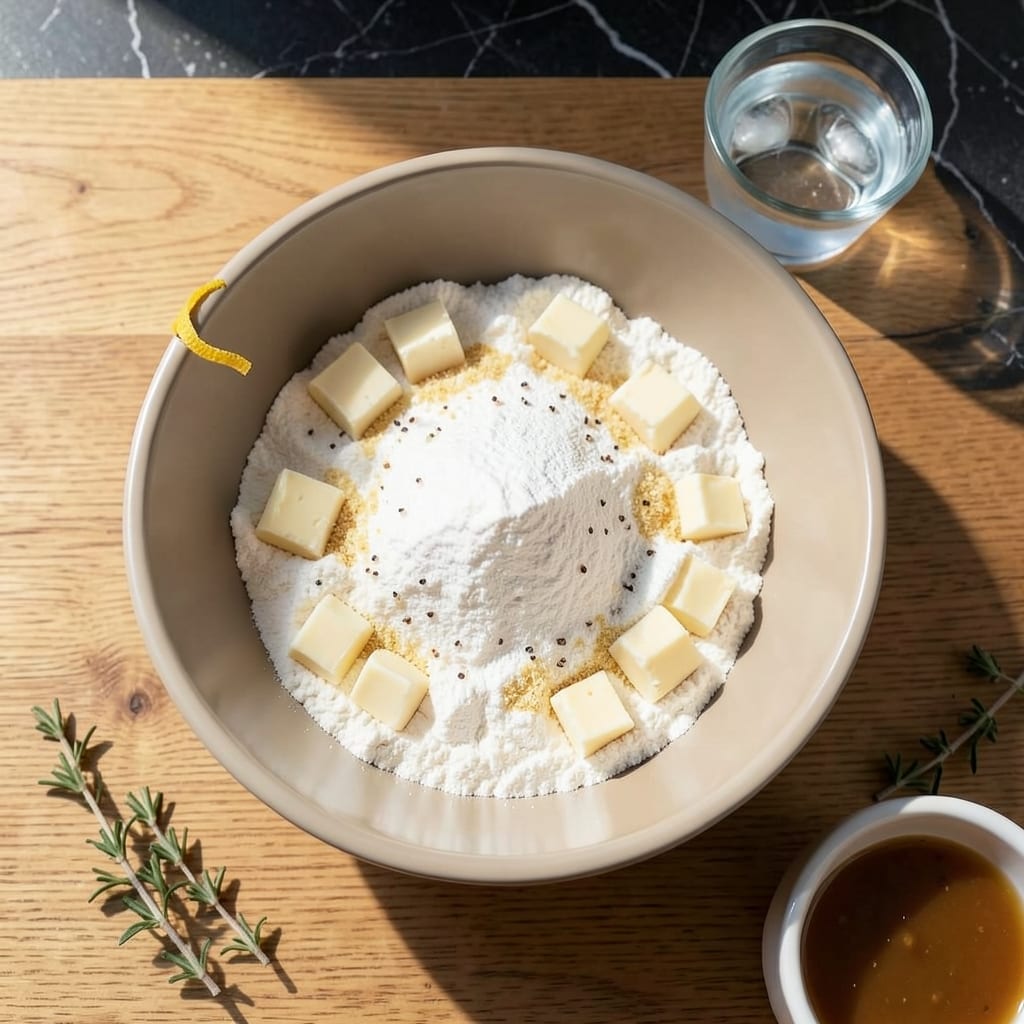
This pie crust delivers flaky results without the traditional chilling step, saving you time and effort. The secret lies in a precise mixing method that prevents gluten development while maintaining delicate layers.
Using cold butter and ice water is essential, but the dough comes together so quickly that refrigeration becomes unnecessary. The technique ensures a tender, flaky texture that rivals any chilled crust.
You’ll achieve a golden, crisp base perfect for both sweet and savory pies. The process is streamlined for efficiency, making it ideal for last-minute baking projects.
This method proves that exceptional pie crust doesn’t require hours of preparation—just the right approach and a few quick steps.
Ingredients for Quick Pie Crust Recipe (no Refrigeration)
Six staple ingredients yield a tender, flaky crust without the wait. Precision matters most here.
| Ingredient | Amount | Notes |
|---|---|---|
| All-Purpose Flour 🌾 | 2 ½ cups | Spoon and level for accuracy |
| Unsalted Butter 🧈 | 1 cup | Cold, cut into 1/2-inch cubes |
| Ice Water 💧 | ½ cup | Plus 1-2 tbsp as needed |
| Granulated Sugar 🍚 | 2 tsp | Optional, for sweet crusts |
| Salt 🧂 | 1 tsp | Fine sea salt preferred |
| White Vinegar 🍶 | 1 tsp | Or apple cider vinegar |
The butter must stay cold—use European-style for higher fat content if available. King Arthur Flour is ideal for its consistent protein content, but any all-purpose works. Cut the butter into uniform cubes (about 1/2-inch) so it disperses evenly. Ice water is non-negotiable; tap water at room temp will warm the dough too fast. For the most reliable results, measure your flour by weight if possible (300g for 2.5 cups).
No vinegar? Lemon juice at the same amount works equally well—it tenderizes the gluten. For a richer crust, swap 1/4 cup of water for cold buttermilk. If you’re out of unsalted butter, use salted but reduce the added salt by half. The sugar is optional, but a touch helps with browning for sweet pies. Skip it entirely for savory applications like quiche.
Dough can be rolled immediately or rested briefly. Wrapped tightly, it keeps in the fridge for 2 days or freezes for 3 months. For best flakiness, use within a few hours—though this method was designed to skip chilling entirely. Baked crusts hold at room temperature for 1 day in an airtight container.
Why You’ll Love This Recipe
- No Chill Needed: I love that I can mix, roll, and bake this crust without waiting for dough to chill—perfect for last-minute pie cravings.
- Buttery Perfection: The cold butter and sugar create that flaky, crisp texture I crave in every bite.
- Endless Possibilities: Sweet or savory, this crust works for fruit pies, quiches, or even hand pies for potlucks.
- Budget Friendly: All-purpose flour and basic pantry staples keep costs low, and it makes enough for two pies.
Step-by-Step Instructions for Quick Pie Crust
Follow this streamlined method to achieve perfect flakiness without any chilling time.
Step 1: Combine Dry Ingredients
In a large mixing bowl, whisk together the 2.5 cups All-Purpose Flour, 2 tsp Granulated Sugar, and 1 tsp Salt until evenly distributed. The sugar, while optional for sweet applications, adds a subtle caramelization to the crust’s edges during baking.
Ensure the flour is spooned and leveled for accuracy—compacted flour can lead to a dense crust. This dry mixture creates the structural foundation for your flaky layers, so take care to break up any lumps in the flour before proceeding.
Step 2: Cut in the Cold Butter
Add the 1 cup Unsalted Butter, cut into ½-inch cubes, to the dry ingredients. Using a pastry cutter or your fingertips, work the butter into the flour until the mixture resembles coarse crumbs with some pea-sized butter pieces remaining. These visible butter chunks are essential—they create steam pockets during baking that separate the dough into distinct, flaky layers.
Work quickly to prevent the butter from melting, which would compromise the texture. If the butter begins to soften, briefly chill the bowl in the freezer for 2-3 minutes before continuing.
Step 3: Incorporate the Liquid
Create a well in the center of the flour-butter mixture. Pour in the 0.5 cup Ice Water and 1 tsp White Vinegar. The vinegar tenderizes the gluten by interfering with its formation, ensuring a more delicate crust.
Using a fork, gently stir the mixture just until the dough begins to come together. The dough will appear shaggy and slightly dry—that’s correct. Avoid overmixing, which develops gluten and results in a tough crust. If the dough doesn’t hold when pressed, add 1-2 tbsp of additional ice water, a tablespoon at a time.
Step 4: Form and Roll the Dough
Turn the dough onto a lightly floured surface and gently press it into a cohesive mass. Divide it into two equal portions for a double-crust pie or use as one piece for a single crust. Flatten each portion into a 1-inch thick disc.
Roll the dough from the center outward, applying even pressure to maintain a uniform thickness of about ⅛ inch. If the dough cracks, press the edges together with your fingers. This method bypasses the traditional resting period by handling the dough minimally, preventing gluten overdevelopment.
Step 5: Blind Bake or Fill and Bake
For a pre-baked crust, transfer the rolled dough to your pie dish, crimp the edges, and prick the bottom all over with a fork. Line with parchment paper, fill with pie weights or dried beans, and bake at 375°F for 15 minutes. Remove the weights and parchment, then bake for an additional 5-7 minutes until the crust is light golden brown.
For a filled pie, add your filling to the unbaked crust and proceed with the recipe’s baking instructions. The crust will develop a beautiful, flaky texture with a rich golden hue, ready in a fraction of the time of traditional methods.
Pro Tips For Making Quick Pie Crust Recipe (No Refrigeration)
- Chill Your Butter: Even though this is a no-refrigeration crust, use ice-cold butter straight from the fridge and work quickly—warm butter means tough crust.
- Measure Water Carefully: Start with 3-4 tablespoons of ice water, then add more a teaspoon at a time; too much makes the dough sticky and hard to handle.
- Skip Overworking: I learned this the hard way—stop mixing as soon as the dough comes together, or you’ll end up with a dense, chewy crust instead of flaky.
- Use a Fork: Cut the butter into the flour with a fork instead of your hands to keep the heat low and the texture light.
Wine and Beer Pairings for These Flavors
Sweet Wine Pairings
For fruit-filled pies, I love a Moscato d’Asti from Italy. Its light effervescence and notes of peach and apricot complement the buttery crust beautifully. The low alcohol content (5-6% ABV) makes it perfect for daytime dessert pairings. 🍷
Dessert Wine Match
A chilled glass of Sauternes from Bordeaux creates a luxurious pairing with sweet pies. The honeyed apricot and citrus flavors balance the richness of the crust. I find Château d’Yquem offers the perfect harmony, though it’s an investment.
Beer for Sweet Pies
Try a Belgian lambic like Lindemans Framboise with berry pies. The raspberry notes echo the filling while the tartness cuts through the buttery layers. The 2.5-3% ABV keeps it light and refreshing.
Coffee Pairing
For a non-alcoholic option, serve with a cold brew coffee from Stumptown. The smooth, low-acid profile enhances the crust’s flakiness without overpowering. I often add a splash of cream to match the richness.
Savory Pie Options
With quiche or pot pie, a crisp Sauvignon Blanc from New Zealand works wonders. The citrus and herb notes complement savory fillings while respecting the delicate crust. I prefer Kim Crawford for its consistent quality.
Dark Beer Alternative
A dry stout like Guinness pairs surprisingly well with meat pies. The roasted malt flavors contrast nicely with the buttery pastry. The carbonation helps cleanse the palate between bites. 💫
Nutrition Facts
Frequently Asked Questions
Can I use shortening instead of butter?
Yes, use the same amount of cold shortening. It creates a flakier texture but less flavor. Butter gives better taste, while shortening offers more consistent layers.
Why is vinegar added to the dough?
Vinegar tenderizes the gluten, preventing toughness. It doesn’t affect taste but helps create a more delicate, flaky texture. Even 1 tsp makes a noticeable difference.
What if my dough cracks while rolling?
Press the edges together with your fingers and continue. If it persists, let it rest for 5 minutes at room temperature before trying again. Avoid overworking the dough.
How do I prevent a soggy bottom crust?
Blind bake at 375°F for 15 minutes first. For filled pies, sprinkle breadcrumbs or crushed cornflakes on the unbaked crust before adding filling.

- 6 Egg Cake Recipe with Oil: Light as Air With Buttery Moisture - October 4, 2026
- 4 Bean Casserole Recipe: One-Pan Heartiness With Smoky Paprika Depth - October 4, 2026
- 3-Ingredient Keto Mug Cake Recipe: Microwave Magic in 2 Minutes - October 4, 2026