
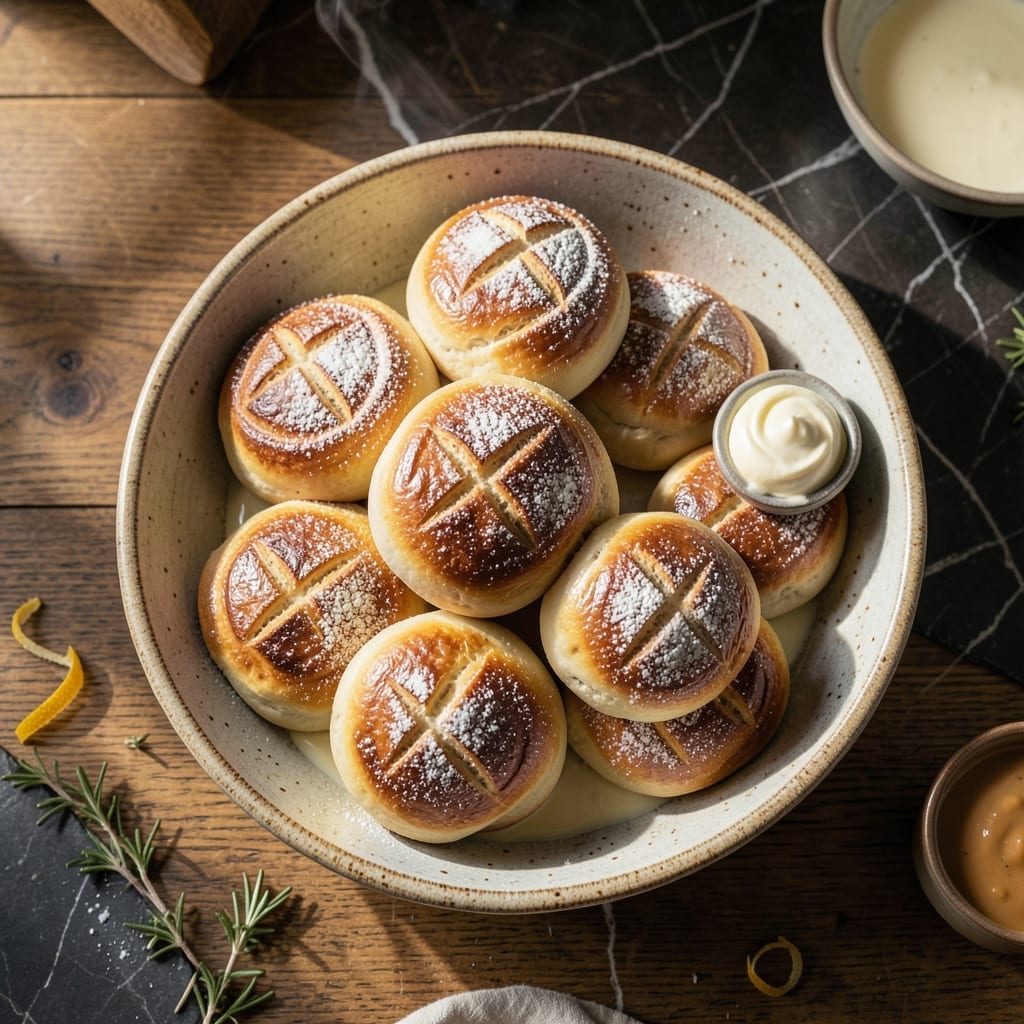
There’s nothing like pulling apart a warm, bakery-style roll fresh from the oven. These soft, pillowy creations rise high and stay tender for days.
I’ve refined this method to ensure consistent results, with a dough that’s easy to work with and a texture that rivals any artisanal bakery. The secret lies in the perfect balance of yeast, butter, and a touch of sugar.
After just 2 hours of rising, you’ll bake golden rolls that are light, airy, and irresistibly buttery. Their tall, domed shape and delicate crumb make them a standout at any meal.
Serve warm with butter or save for sandwiches—they’ll stay fresh and soft. This is the kind of recipe that becomes a family favorite.
Ingredients for Quincy’s Big Fat Yeast Roll
These simple ingredients create bakery-style rolls with perfect rise and tender texture every time.
| Ingredient | Amount | Notes |
|---|---|---|
| All-Purpose Flour 🌾 | 4 ½ cups | Plus extra for dusting |
| Active Dry Yeast 🍞 | 2 ¼ tsp | One packet plus a quarter |
| Granulated Sugar 🍚 | ¼ cup | For activating yeast |
| Warm Water 💧 | 1.125 cups | Around 110°F |
| Whole Milk 🥛 | ¾ cup | Warmed slightly |
| Unsalted Butter 🧈 | ½ cup | Melted and cooled |
| Large Egg 🥚 | 1 whole | Room temperature |
| Salt 🧂 | 1 ½ tsp | Fine sea salt |
| Vanilla Extract 🌿 | 1 tsp | Pure, not imitation |
| Olive Oil 🫒 | 1 tbsp | For greasing bowl |
The yeast is critical here. Fleischmann’s or Red Star brands are reliable and widely available at most supermarkets. Check the expiration date—old yeast won’t activate properly. For the flour, King Arthur or Gold Medal all-purpose both work beautifully. The milk adds richness; whole milk gives the best texture, but 2% works in a pinch (just don’t use skim).
No milk? Buttermilk at the same amount adds a nice tang. Short on yeast? Don’t substitute—just make a smaller batch. The sugar can be swapped for honey or maple syrup at the same quantity. If you’re out of eggs, skip it—these rolls still rise well without. Butter is non-negotiable for that bakery flavor, but vegan butter works if needed.
Dough rises best in a warm, draft-free spot. Covered tightly, it’ll keep in the fridge for up to 24 hours before shaping. Baked rolls stay fresh for 3 days at room temperature or freeze for 1 month. Reheat in a damp paper towel in the microwave for that just-baked feel.
Why You’ll Love This Recipe
- No-Fuss Dough: I mix the yeast, sugar, warm water, and milk, then let the flour do the rest—no fancy steps.
- Buttery Richness: The whole milk makes these rolls so tender and rich, I don’t even need extra butter.
- Feeds a Crowd: I make a double batch for Sunday dinner, and there’s still enough for sandwiches the next day.
Step-by-Step Instructions for Big Fat Yeast Rolls
Here’s the method. Straightforward, tested, works every time.
Step 1: Activate the Yeast and Prepare Wet Ingredients
In a small bowl, combine the 2.25 tsp Active Dry Yeast with the 0.25 cup Granulated Sugar and all 1.125 cups Warm Water. Stir lightly and let it sit for 5-7 minutes until it becomes frothy and bubbly—this confirms the yeast is active and ready to work.
Meanwhile, warm the 0.75 cup Whole Milk slightly, then whisk it together with the 1 whole Large Egg, 0.5 cup Unsalted Butter (melted and cooled), 1 tsp Vanilla Extract, and 1.5 tsp Salt in a large mixing bowl. The butter should be cool enough that it won’t kill the yeast when combined.
Step 2: Combine Wet and Dry Ingredients
Once the yeast mixture is frothy, pour it into the bowl with the wet ingredients. Add 4.5 cups All-Purpose Flour one cup at a time, mixing with a wooden spoon or dough whisk until a shaggy dough forms. You’ll notice the dough pulling away from the sides of the bowl as it comes together.
Switch to a stand mixer fitted with a dough hook and knead on medium speed for 6-8 minutes, or knead by hand on a lightly floured surface for 8-10 minutes. The dough should be smooth, elastic, and slightly tacky but not sticky. If it sticks to your hands, add a light dusting of flour, 1 tablespoon at a time.
Step 3: First Rise Until Doubled in Size
Lightly grease a large bowl with the 1 tbsp Olive Oil, then transfer the dough into it, turning once to coat all sides. Cover the bowl with a clean kitchen towel or plastic wrap and place it in a warm, draft-free spot. Let it rise for 1 to 1.5 hours, or until the dough has doubled in volume.
You’ll know it’s ready when it springs back slowly when poked lightly with a finger. If your kitchen is cool, this may take a bit longer—don’t rush it. Patience here ensures light, airy rolls.
Step 4: Shape and Second Rise
Punch down the risen dough to release the air, then turn it out onto a lightly floured surface. Divide the dough into 12 equal portions (about 3.5 oz each) and roll each into a smooth ball. Place the rolls in a greased 9×13-inch baking pan, spacing them slightly apart so they have room to expand.
Cover the pan with the kitchen towel again and let the rolls rise for another 45-60 minutes, or until they’ve puffed up and nearly doubled in size. They should look soft and pillowy, and when gently pressed, they should spring back slowly.
Step 5: Bake to Golden Perfection
Preheat your oven to 375°F. Once the rolls have completed their second rise, bake them for 18-22 minutes, or until they’re a deep golden brown on top and sound hollow when tapped lightly.
Remove the pan from the oven and brush the tops with a little extra melted butter if desired. Let them cool in the pan for 5-10 minutes before serving warm. The rolls should pull apart easily, revealing soft, fluffy interiors with a tender crust.
Pro Tips For Making Quincy’S Big Fat Yeast Roll
- Proof the Yeast: Always bloom your active dry yeast in the warm water with a pinch of sugar first—if it doesn’t bubble within 5-10 minutes, your rolls won’t rise, and I learned this the hard way after wasting a whole batch of dough.
- Warm the Milk: Take the chill off your whole milk before mixing—cold milk can shock the yeast and slow down the rise, so I just microwave it for 20-30 seconds until it’s lukewarm.
- Don’t Overflour: Resist the urge to dump in extra all-purpose flour while kneading; the dough should be slightly sticky, and adding too much will make your rolls dense instead of light and fluffy.
- Use a Scale: Sounds weird, but weighing your flour (about 120g per cup) guarantees consistency—I used to scoop straight from the bag and my rolls were hit or miss until I switched.
Perfect Pairings for This Dish
Comfort Meal Pairings
These rolls shine alongside classic comfort foods. I love serving them with slow-cooked pot roast and rich gravy—they soak up every last drop. For Sunday dinner, pair with roast chicken, mashed potatoes, and green beans for a timeless meal. 💛
Holiday Feast Ideas
For Thanksgiving or Christmas, these rolls are a must. Serve warm with herb-roasted turkey, cranberry sauce, and all the fixings. They also make incredible slider buns for leftover turkey or ham the next day.
Breakfast Favorites
Turn leftover rolls into cinnamon roll French toast by soaking slices in custard and pan-frying. Or split and toast them for breakfast sandwiches with eggs, cheese, and bacon. A drizzle of honey butter takes them over the top.
Soup and Salad Companions
A warm roll transforms simple soups into a meal. Try with tomato basil soup or hearty beef stew. For lighter fare, pair with a crisp kale Caesar salad—the contrast in textures is perfect. 🥗
Sweet Pairings
For dessert-style serving, split rolls and fill with vanilla ice cream and fresh berries. Or toast and top with Nutella and banana slices for a quick treat. The slight sweetness in the dough makes them versatile.
Nutrition Facts
Frequently Asked Questions
Can I make the dough the night before?
Yes! After kneading, place the dough in a greased bowl, cover tightly, and refrigerate for up to 24 hours. The next day, let it warm to room temperature before shaping. This slow rise enhances flavor.
Why didn’t my rolls rise properly?
Common culprits are expired yeast, water that’s too hot (above 110°F), or a cold rising environment. Ensure yeast is fresh and bubbly before mixing. A warm oven with the light on works as a perfect rising spot.
Can I freeze the baked rolls?
Cool completely, then freeze in an airtight container for up to 1 month. To serve, thaw at room temperature, then warm in a 350°F oven for 5-10 minutes.
How do I get the rolls extra soft?
Brush the tops with melted butter right after baking. Also, avoid overbaking—pull them out when they’re just golden brown. Storing in a sealed container with a slice of bread keeps them soft longer.

- 6 Egg Cake Recipe with Oil: Light as Air With Buttery Moisture - October 4, 2026
- 4 Bean Casserole Recipe: One-Pan Heartiness With Smoky Paprika Depth - October 4, 2026
- 3-Ingredient Keto Mug Cake Recipe: Microwave Magic in 2 Minutes - October 4, 2026