
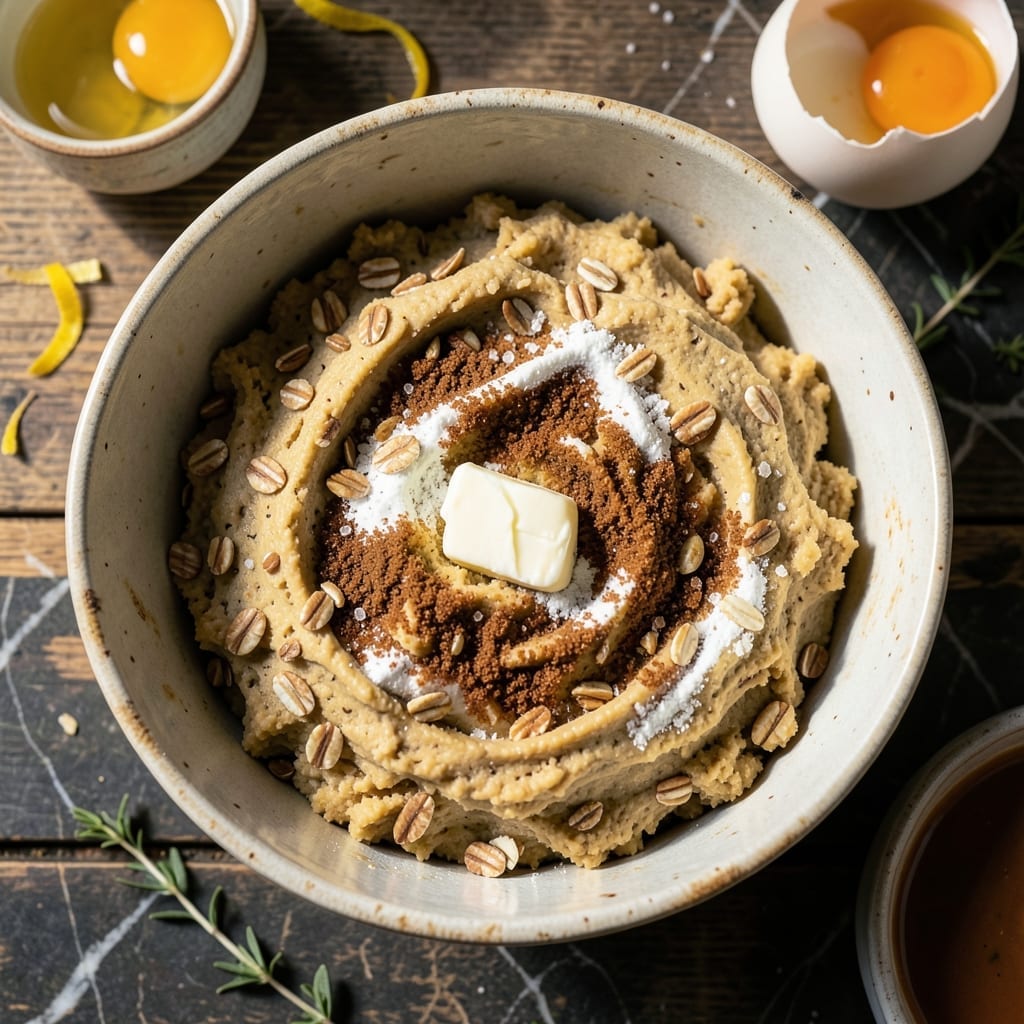
These cookies deliver the perfect balance of chewy texture and nutty crunch that defines the classic ranger style. A simple combination of oats, flour, and toasted nuts creates layers of flavor in every bite.
The secret lies in creaming the butter and sugar thoroughly before adding the dry ingredients. This ensures a tender base that holds up to the hearty add-ins. The toasted nuts add depth and a satisfying crunch that contrasts beautifully with the soft oats.
Baking at 350°F for exactly 12 minutes produces edges that are just golden while keeping the centers soft. The result is a cookie that stays fresh for days and only improves as the flavors meld.
This version stays true to the original while offering foolproof results for home bakers. The dough comes together quickly with standard pantry ingredients.
Ingredients for Ranger Cookies Recipe Pioneer Woman
Standard pantry ingredients create these classic cookies with chewy oat texture and nutty crunch.
| Ingredient | Amount | Notes |
|---|---|---|
| Old-Fashioned Rolled Oats 🌾 | 3 cups | Not instant or quick oats |
| All-Purpose Flour 🌾 | 1 ½ cups | Spoon and level method |
| Unsalted Butter 🧈 | 1 cup | Softened to room temperature |
| Granulated Sugar 🧂 | 1 cup | For creaming with butter |
| Packed Brown Sugar 🧂 | 1 cup | Light or dark variety |
| Large Eggs 🥚 | 2 whole | Room temperature preferred |
| Vanilla Extract 💧 | 2 tsp | Pure vanilla for best flavor |
| Baking Soda 🧂 | 1 tsp | For proper rise and spread |
| Baking Powder 🧂 | ½ tsp | Ensures even texture |
| Salt 🧂 | ½ tsp | Table salt or kosher |
| Chopped Nuts 🌰 | 1 ½ cups | Pecans or walnuts, toasted |
| Coconut 🥥 | 1 cup | Sweetened flaked or shredded |
The oats are non-negotiable here—old-fashioned rolled oats give that signature chew. Quaker Oats is my go-to, but any brand works. The nuts should be toasted first (350°F for 8-10 minutes) to deepen their flavor. For flour, King Arthur or Gold Medal deliver consistent results. Don’t skip the room-temperature butter—cold butter won’t cream properly with the sugars.
No nuts? Chocolate chips or dried fruit at the same volume. Out of brown sugar? Use all granulated plus 1 tbsp molasses per cup. For a gluten-free version, 1:1 GF flour blend works well (add 1/2 tsp xanthan gum). The coconut can be omitted, but it adds that classic ranger cookie texture. Sweetened flaked is traditional, but unsweetened works too.
Dough keeps in the fridge for 3 days or freezes beautifully for 3 months. Baked cookies stay fresh in an airtight container for 5 days. For best texture, let them cool completely on the baking sheet before storing (worth the extra minute).
Why You’ll Love This Recipe
- One Bowl Wonder: I love that I can mix everything in a single bowl—no fussing with extra dishes when the oats and butter come together so smoothly.
- Chewy Crisp Edges: The combo of brown sugar and oats gives these cookies that perfect chewy center with just the right amount of crisp around the edges.
- Freezer Friendly: I always double the batch because these freeze beautifully, so I can pull out fresh-baked cookies anytime.
- Budget Stretcher: Oats and flour keep the cost low, but the buttery, sweet flavor makes them taste like a splurge.
Step-by-Step Instructions for Ranger Cookies
Here’s the tested method for chewy, nut-packed cookies with perfect texture every time.
Step 1: Cream Butter and Sugars for Light Texture
In a large mixing bowl, beat the 1 cup Unsalted Butter with the 1 cup Granulated Sugar and 1 cup Packed Brown Sugar on medium speed for 3-4 minutes. The mixture should become pale and fluffy, with visible air incorporated.
This creaming step is non-negotiable—it aerates the dough, creating pockets that expand during baking for a tender crumb. Stop when the sugar granules appear mostly dissolved and the butter has lightened in color.
Step 2: Incorporate Eggs and Vanilla
Add the 2 whole Large Eggs one at a time, beating well after each addition. Then mix in the 2 tsp Vanilla Extract. Beat for 1 additional minute until the mixture is smooth and emulsified.
Scrape down the bowl sides with a spatula to ensure all the butter-sugar mixture gets incorporated. The batter should look glossy and slightly thickened at this stage.
Step 3: Combine Dry Ingredients and Mix
In a separate bowl, whisk together the 1.5 cups All-Purpose Flour, 1 tsp Baking Soda, 0.5 tsp Baking Powder, and 0.5 tsp Salt. Gradually add this to the wet ingredients while mixing on low speed, just until combined.
Overmixing develops gluten, which would make the cookies tough. Stop as soon as the flour disappears into the dough.
Step 4: Fold in Oats, Nuts, and Coconut
Using a wooden spoon or spatula, stir in the 3 cups Old-Fashioned Rolled Oats, 1.5 cups Chopped Nuts, and 1 cup Coconut. Distribute them evenly throughout the dough so every bite has texture.
The dough will be thick and slightly sticky. If it seems too loose, let it rest for 10 minutes to hydrate the oats before scooping.
Step 5: Bake to Golden Brown Perfection
Drop 2-tablespoon portions of dough onto parchment-lined baking sheets, spacing them 2 inches apart. Bake at 350°F for 10-12 minutes until the edges are golden brown but the centers still look slightly underdone.
Let the cookies cool on the baking sheet for 5 minutes before transferring to a wire rack. They’ll firm up as they cool, developing that signature chewy texture with crisp edges.
Pro Tips For Making Ranger Cookies Recipe Pioneer Woman
- Chill the Dough: After burning a batch, I learned this the hard way—let the dough rest in the fridge for at least 30 minutes before baking. It keeps the cookies from spreading too thin and helps the oats toast evenly.
- Cream Butter Thoroughly: Beat the unsalted butter with both sugars for a full 3-4 minutes until light and fluffy. I was skeptical until I tried it, but this step actually changes the texture of the cookies.
- Skip Pre-Toasting Oats: Sounds weird, but it works: don’t toast the rolled oats beforehand. They’ll soften just right during baking and give you that perfect chewy bite Pioneer Woman’s recipe is known for.
- Use Room-Temp Butter: Pull the butter out at least an hour before baking—it should give slightly when pressed. My grandmother swore by this, and she was right: cold butter makes dense, flat cookies.
Essential Equipment for This Dish
Stand Mixer
A stand mixer is your best friend for this dough. I use my KitchenAid 5-Quart with the paddle attachment—it handles the thick, sticky mixture without strain. Creaming the butter and sugars takes 3-4 minutes on medium speed for perfect aeration.
Baking Sheets
Invest in heavy-gauge aluminum baking sheets (I love Nordic Ware). They distribute heat evenly, preventing burnt bottoms. Line with parchment paper for easy release and quicker cleanup between batches.
Cookie Scoop
A 2-tablespoon cookie scoop ensures uniform portions for even baking. The OXO Good Grips model has a comfortable handle and release mechanism. Space dough balls 2 inches apart to allow for spreading.
Cooling Racks
Wire cooling racks are essential for proper air circulation as cookies firm up. I use stackable Wilton racks to save counter space. Let cookies rest on the baking sheet for 5 minutes before transferring. 💪
Measuring Tools
For accurate dry ingredient measurements, use nested measuring cups and the spoon-and-level method. A kitchen scale is even better—1 cup of flour should weigh about 120 grams.
Toasting Setup
Toast your nuts on a separate sheet at 350°F for 8-10 minutes before adding to the dough. A rimmed baking sheet prevents them from rolling off. Let cool completely to avoid melting the butter in your dough.
Nutrition Facts
Frequently Asked Questions
Can I use quick oats instead of old-fashioned?
Quick oats will work but the texture will be less chewy. For best results, stick with old-fashioned rolled oats as they hold their shape better during baking.
Why toast the nuts first?
Toasting at 350°F for 8-10 minutes deepens the nutty flavor and adds crunch. It also prevents the nuts from tasting raw in the finished cookies.
How do I store the dough overnight?
Cover the dough tightly in an airtight container and refrigerate for up to 3 days. Let it sit at room temperature for 30 minutes before scooping for easier handling.
What if my cookies spread too much?
Chill the dough for 30 minutes before baking and ensure your oven is properly preheated to 350°F. Using parchment paper also helps control spreading.

- 6 Egg Cake Recipe with Oil: Light as Air With Buttery Moisture - October 4, 2026
- 4 Bean Casserole Recipe: One-Pan Heartiness With Smoky Paprika Depth - October 4, 2026
- 3-Ingredient Keto Mug Cake Recipe: Microwave Magic in 2 Minutes - October 4, 2026