
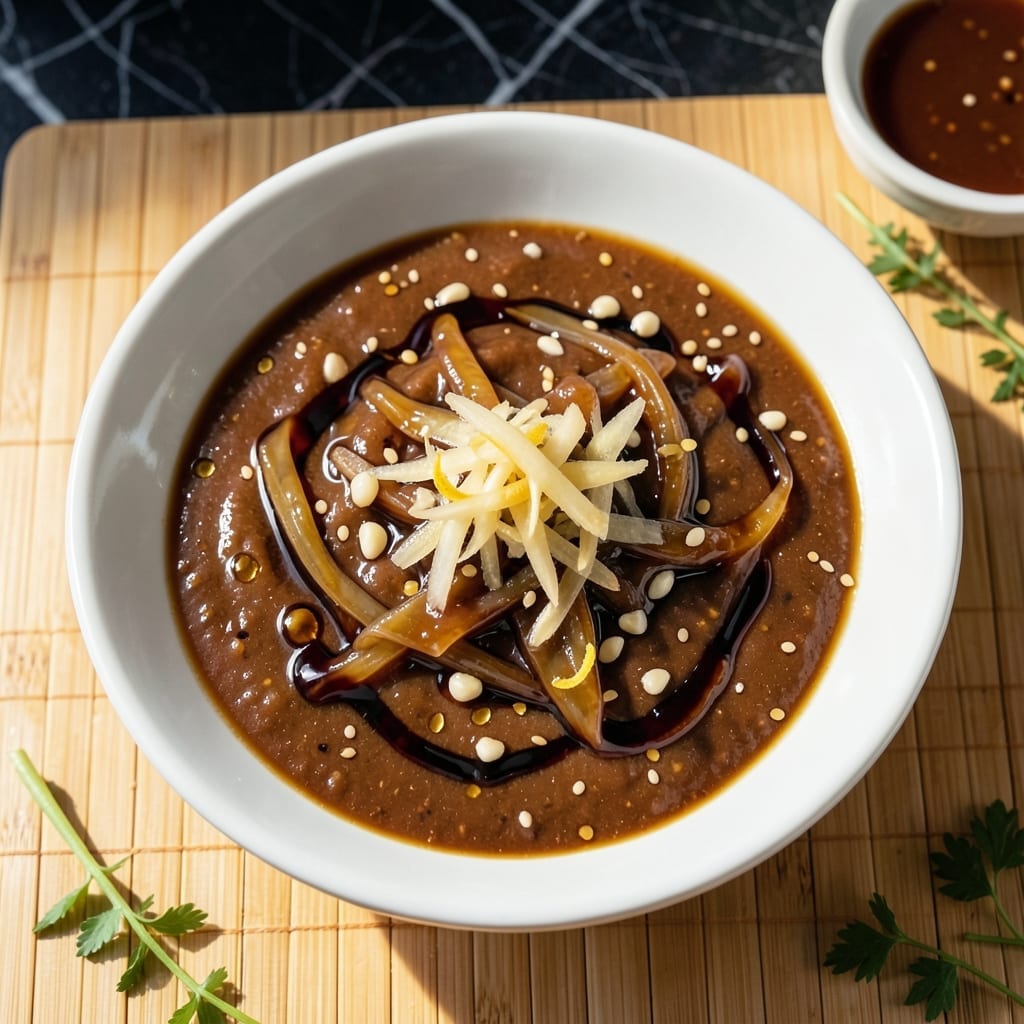
This dressing transforms ordinary coleslaw into a vibrant, restaurant-quality side. The balance of tangy, sweet, and umami flavors creates a perfect complement to crunchy cabbage.
Easy to make in 5 minutes, this emulsion stays fresh in the fridge for up to a week. Use it for slaw, marinades, or as a bold salad dressing.
Ingredients for Recipe for Asian Coleslaw Dressing
Nine simple ingredients create this vibrant, tangy, and umami-packed dressing for crisp slaw.
| Ingredient | Amount | Notes |
|---|---|---|
| Rice Vinegar 🍶 | ⅓ cup | Unseasoned variety preferred |
| Soy Sauce 🥢 | 3 tbsp | Low-sodium or tamari for gluten-free |
| Sesame Oil 🫒 | 1 ½ tbsp | Toasted for nutty flavor |
| Maple Syrup 🍁 | 2 tbsp | Or agave nectar as substitute |
| Fresh Ginger 🌿 | 1 tbsp | Peeled and finely grated |
| Garlic Cloves 🧄 | 2 cloves | Peeled and minced |
| Toasted Sesame Seeds 🌰 | 1 tbsp | Plus extra for garnish |
| Neutral Oil 🫒 | ½ cup | Like grapeseed or avocado oil |
| Lime Juice 🍋 | 1 tbsp | Freshly squeezed preferred |
The soy sauce is the backbone here. Kikkoman or San-J tamari are reliable brands—look for low-sodium if watching your intake. Rice vinegar should be unseasoned (no added sugar or salt) for clean acidity. Trader Joe’s and most Asian markets stock both. Fresh ginger is non-negotiable—dried just doesn’t deliver the same bright punch. Grab it from the produce section (look for firm, smooth skin).
No maple syrup? Agave or date syrup work in a 1:1 swap. Short on sesame oil? Toast regular sesame seeds in neutral oil for a similar flavor. For gluten-free, tamari replaces soy sauce perfectly. The neutral oil can be any mild-flavored oil you have on hand. Lime juice adds brightness—bottled in a pinch, but fresh is always better.
This emulsion keeps beautifully in the fridge for 7 days. Store in a sealed jar and give it a good shake before each use. The flavors actually deepen over time. Freezing isn’t recommended—it can cause separation.
Why You’ll Love This Recipe
- 5-Minute Whisk: I just dump everything in a jar, shake, and it’s ready—no blender, no fuss.
- Umami Bomb: The soy sauce and sesame oil hit that sweet-savory balance I crave every time.
- Meals for Days: I drizzle this on salads, grain bowls, even roasted veggies—it never gets old.
- Fridge Staple: Honestly, it keeps for a week, so I always have a flavor boost on hand.
Step-by-Step Instructions for Asian Coleslaw Dressing
Here’s the method for creating this tangy, nutrient-rich emulsion with perfect consistency.
Step 1: Prepare the Aromatic Base
In a medium bowl, combine the 1 tbsp Fresh Ginger (peeled and finely grated) and 2 cloves Garlic Cloves (peeled and minced). I use a microplane for the ginger to achieve a fine, paste-like texture that blends seamlessly into the dressing.
Add the 3 tbsp Soy Sauce and 0.33 cup Rice Vinegar to the ginger-garlic mixture. Whisk these together until fully combined. The vinegar’s sharpness will mellow as it melds with the other ingredients, creating a balanced tangy base.
Step 2: Incorporate the Sweet and Nutty Elements
Stir in the 2 tbsp Maple Syrup and 1.5 tbsp Sesame Oil. The maple syrup adds natural sweetness that counteracts the acidity, while the toasted sesame oil contributes its signature nutty aroma. Use a small whisk to ensure these thicker ingredients fully integrate.
Next, add the 1 tbsp Lime Juice. Freshly squeezed works best here, as bottled lime juice can have a harsh, artificial taste. The lime brightens the flavor profile and enhances the dressing’s vibrant character.
Step 3: Emulsify with Neutral Oil
Now comes the critical step: slowly drizzle in the 0.5 cup Neutral Oil while whisking constantly. This gradual incorporation is what creates a stable emulsion. I recommend using grapeseed or avocado oil for their neutral flavors and high smoke points.
Whisk vigorously for 1-2 minutes until the mixture thickens and becomes creamy. You’ll notice the color lighten and the texture transform from separated to cohesive. If it separates, don’t worry—just whisk it back together.
Step 4: Finish and Adjust Consistency
Finally, stir in the 1 tbsp Toasted Sesame Seeds. These add a subtle crunch and visual appeal to the finished dressing. Taste and adjust seasoning if needed—though with the precise measurements, this shouldn’t be necessary.
Let the dressing sit for 10 minutes before using. This allows the flavors to meld completely. If it’s too thick, you can thin it with a teaspoon of water, but the emulsion should hold perfectly for drizzling over coleslaw.
Pro Tips For Making Recipe For Asian Coleslaw Dressing
- Grate Ginger Fine: Use a microplane for the fresh ginger—it releases more juice and blends smoothly into the dressing without gritty bits.
- Bloom the Sesame Oil: Warm the sesame oil slightly before mixing; it helps the flavors meld faster and deepens the nuttiness.
- Balance the Sweetness: Taste after adding maple syrup—if it’s too sweet, a splash of rice vinegar or soy sauce will bring it back into harmony.
- Whisk, Don’t Shake: I learned this the hard way—whisking the dressing emulsifies it better than shaking, so it clings to the slaw instead of pooling at the bottom.
Regional Styles of These Flavors
Thai Style 🥘
Thai-style Asian coleslaw dressing often features a vibrant mix of fish sauce, lime juice, and palm sugar, creating a perfect balance of sweet, sour, and umami. Fresh herbs like cilantro and mint are commonly added for a bright, aromatic touch. A hint of chili paste or bird’s eye chili gives it a spicy kick, reflecting Thailand’s love for bold flavors.
Japanese Style 🍳
In Japan, the dressing leans toward a lighter, more delicate profile with rice vinegar, soy sauce, and sesame oil as the base. Mirin or a touch of honey adds subtle sweetness, while grated ginger and garlic provide depth. Some variations include miso paste for an earthy, savory note.
Korean Style 🔥
Korean-style dressings are known for their fermented flavors, often incorporating gochujang (fermented chili paste) or doenjang (fermented soybean paste). These add a rich, funky depth to the dressing. Sesame seeds and green onions are staple garnishes, while pear or apple puree may be used to sweeten and thicken the mix.
Chinese Style 🥢
Chinese versions typically highlight black vinegar, soy sauce, and hoisin sauce for a deep, tangy-sweet flavor. A touch of five-spice powder or Sichuan peppercorns can introduce warmth or a slight numbing heat. Peanut butter or chili oil are sometimes blended in for extra richness and texture.
Nutrition Facts

- 6 Egg Cake Recipe with Oil: Light as Air With Buttery Moisture - October 4, 2026
- 4 Bean Casserole Recipe: One-Pan Heartiness With Smoky Paprika Depth - October 4, 2026
- 3-Ingredient Keto Mug Cake Recipe: Microwave Magic in 2 Minutes - October 4, 2026