
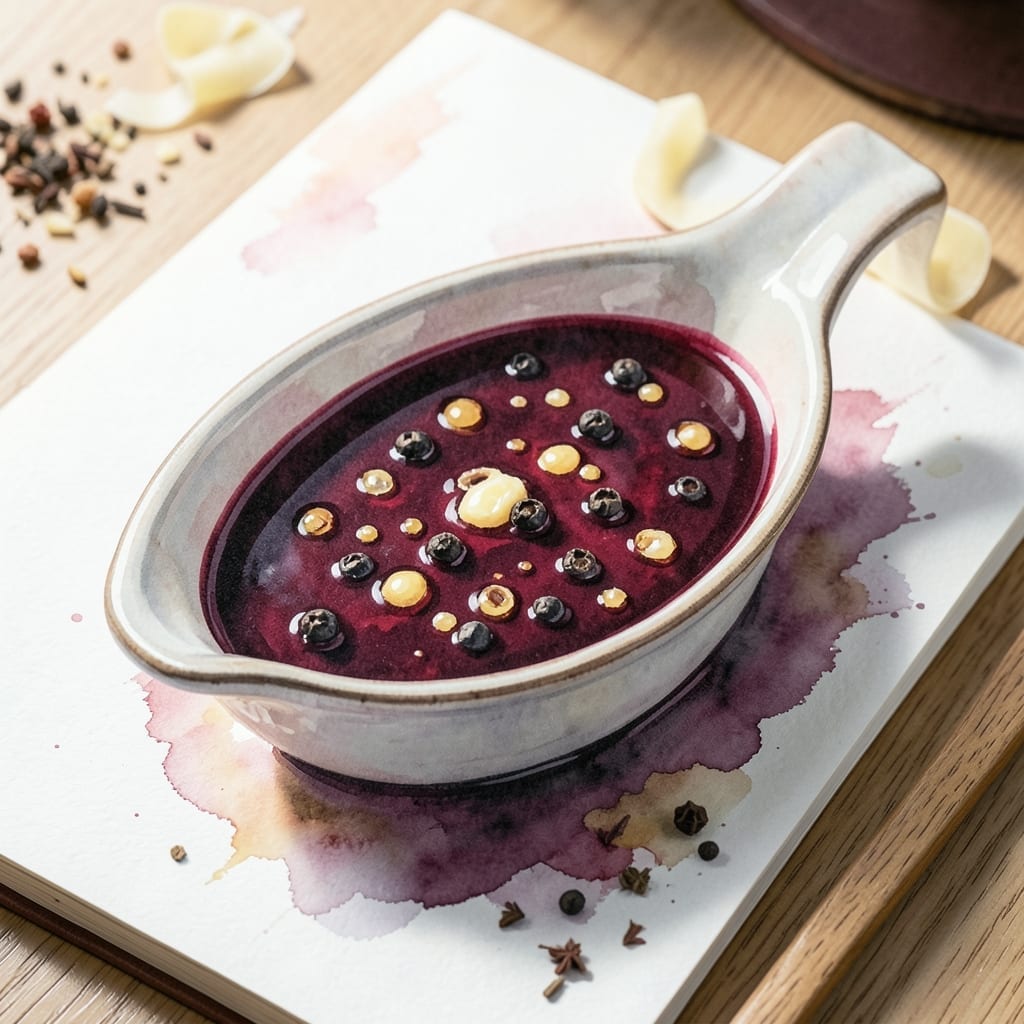
This classic French reduction transforms red wine into a rich, complex sauce that elevates any dish it touches. The process requires patience and attention to detail, but the results are unmatched in flavor and sophistication.
The foundation lies in reducing red wine with shallots, beef stock, and a splash of vinegar until it reaches a velvety consistency. A finish of cold butter creates a glossy, luxurious texture that clings beautifully to meats or vegetables.
This sauce demands quality ingredients—dry red wine, fresh shallots, and rich stock form the base of its deep, layered taste. The reduction process concentrates these flavors into something far greater than the sum of its parts.
Once mastered, you’ll have a versatile sauce that enhances steaks, roasts, or even simple grilled vegetables with authentic French flair.
Ingredients for Recipe for Bordelaise Sauce
Quality ingredients transform simple components into a sophisticated French sauce with depth and elegance.
| Ingredient | Amount | Notes |
|---|---|---|
| Dry Red Wine 🍷 | 2 cups | Bold, full-bodied variety |
| Shallots 🧅 | ½ cup | Finely minced |
| Beef Stock 🥩 | 1 ½ cups | High-quality, low-sodium |
| Red Wine Vinegar 🧄 | 2 tbsp | Balances acidity |
| Unsalted Butter 🧈 | ½ cup | Cold, cubed for finishing |
| Black Peppercorns 🌶️ | 1 tsp | Freshly cracked |
| Fresh Thyme Sprigs 🌿 | 2 whole | Optional, for depth |
| Bay Leaf 🍃 | 1 whole | Dried, for aroma |
The wine is non-negotiable here. Cabernet Sauvignon or Merlot deliver the bold, dry profile this sauce demands. Total Wine or a well-stocked grocery store will have options. Shallots should be firm and dry—avoid any with soft spots. For the beef stock, homemade is ideal, but Better Than Bouillon or a high-end boxed brand works in a pinch. Fresh thyme and bay leaf add layers, but don’t skip them if you want authenticity.
No red wine? Substitute with 1.5 cups beef stock plus 0.5 cup balsamic vinegar—not ideal, but it’ll work. Shallots can be replaced with yellow onion at half the quantity, though the flavor will be sharper. Dairy-free? Vegan butter works for finishing, but the texture won’t be as rich. Skip the thyme if you must, but the bay leaf adds a subtle complexity that’s hard to replicate.
This sauce is best used fresh but can be refrigerated for up to 3 days. Reheat gently to avoid breaking the emulsion. For longer storage, freeze in ice cube trays for up to 1 month. The butter will separate upon thawing, but a quick whisk brings it back together.
Why You’ll Love This Recipe
- One-Pot Wonder: I love that I only need one saucepan—shallots sizzle, wine reduces, and butter finishes it all in the same pot.
- Deep, Rich Taste: The red wine and beef stock create this velvety, savory depth that clings to steak like it was made for it.
- Steakhouse at Home: Honestly, I make this for weeknight dinners but it feels fancy enough for date night.
- Budget Stretcher: A little wine and stock go a long way—this sauce transforms cheaper cuts into something special.
Step-by-Step Instructions for Bordelaise Sauce
Master this classic French technique for a rich, deeply flavored sauce that elevates any steak.
Step 1: Reduce the Wine and Aromatics
In a heavy saucepan, combine the 2 cups Dry Red Wine, 0.5 cup Shallots, 1 tsp Black Peppercorns, 2 whole Fresh Thyme Sprigs, and 1 whole Bay Leaf. Bring to a gentle simmer over medium-high heat.
Allow the mixture to reduce by half, which should take about 10-12 minutes. You’ll notice the liquid darken and the shallots soften as the alcohol cooks off. Stir occasionally to prevent sticking, but avoid breaking up the shallots too much—you want them to maintain some texture.
Step 2: Add Vinegar and Beef Stock
Pour in the 2 tbsp Red Wine Vinegar and 1.5 cups Beef Stock. Return to a simmer and continue reducing until the liquid has thickened enough to coat the back of a spoon, approximately 15-20 minutes.
The sauce should be syrupy but not overly thick at this stage. The vinegar adds a subtle acidity that balances the richness of the wine and stock. Keep an eye on the heat—if it’s too high, the sauce may reduce too quickly and develop a bitter edge.
Step 3: Strain and Finish with Butter
Remove the sauce from heat and strain it through a fine-mesh sieve into a clean saucepan, pressing gently on the shallots to extract their flavor. Discard the solids—they’ve served their purpose in infusing the reduction.
Return the strained sauce to low heat and whisk in the 0.5 cup Unsalted Butter, a few cubes at a time, until fully incorporated. The butter should melt smoothly, creating a glossy, velvety finish. Avoid letting the sauce boil after adding the butter, as this could cause it to separate.
Step 4: Adjust and Serve
Taste the sauce and adjust seasoning if needed, though the reduction process should have concentrated the flavors beautifully. The sauce should be rich, slightly tangy, and deeply aromatic from the wine and herbs.
Serve immediately over grilled steaks, roasted beef, or even as a luxurious topping for mashed potatoes. The sauce will thicken slightly as it cools, so keep it warm until ready to use. For best results, prepare it just before serving to preserve its fresh, vibrant character.
Pro Tips For Making Recipe For Bordelaise Sauce
- Reduce the Wine First: Simmer the red wine until it’s reduced by at least half before adding anything else—I learned this the hard way after ending up with a thin, watery sauce.
- Mince Shallots Finely: Tiny, even pieces mean more flavor in every bite and no awkward chunks in your finished bordelaise. Sounds tedious, but it’s worth the 2 extra minutes.
- Skip the Vinegar Splash: Resist the urge to add all the red wine vinegar at once; drizzle it in at the end and taste as you go—too much makes the sauce harsh.
- Finish With Cold Butter: Take the pan off the heat and whisk in cold, cubed unsalted butter for a glossy, rich finish. Hot butter just melts into the sauce and breaks it.
Storing and Reheating Leftovers
Refrigerator Storage
Let this sauce cool completely, then transfer to an airtight container. It will keep in the fridge for up to 3 days. The flavors will meld beautifully overnight, but I recommend using it quickly for the freshest taste. ❄️
Freezer Storage
For longer storage, freeze in ice cube trays for up to 1 month. Once solid, transfer cubes to a freezer bag. This lets you portion exactly what you need for future meals.
Reheating Gently
Warm the sauce over low heat in a small saucepan, stirring constantly. Avoid boiling, as high heat can cause the butter to separate. If it looks thin, simmer for 1-2 minutes to thicken.
Reviving Separated Sauce
If the butter separates after storage, don’t worry. Just whisk in 1-2 tsp cold water or stock off the heat. The emulsion will come back together smoothly with a little patience.
Make-Ahead Tip
You can prepare the reduction base (before adding butter) up to 2 days ahead. Store it in the fridge, then finish with butter just before serving. This saves time while preserving freshness. 💡
Nutrition Facts
Frequently Asked Questions
Can I use a different type of wine?
Use a bold, dry red like Cabernet Sauvignon or Merlot for best results. Avoid sweet wines, as they won’t reduce properly and will make the sauce cloying. A quality Pinot Noir can work in a pinch.
Why does my sauce look separated?
This happens if the butter gets too hot. Remove from heat and whisk in 1-2 tsp cold water to bring it back together. Keep heat low when adding butter to prevent splitting.
How do I adjust the thickness?
If too thin, simmer for 1-2 minutes longer. If too thick, whisk in a splash of warm stock. The sauce should coat the back of a spoon but still be pourable.
Can I make this ahead of time?
Prepare the reduction base up to 2 days ahead and refrigerate. Finish with butter just before serving for the freshest taste and smoothest texture.

- 6 Egg Cake Recipe with Oil: Light as Air With Buttery Moisture - October 4, 2026
- 4 Bean Casserole Recipe: One-Pan Heartiness With Smoky Paprika Depth - October 4, 2026
- 3-Ingredient Keto Mug Cake Recipe: Microwave Magic in 2 Minutes - October 4, 2026