
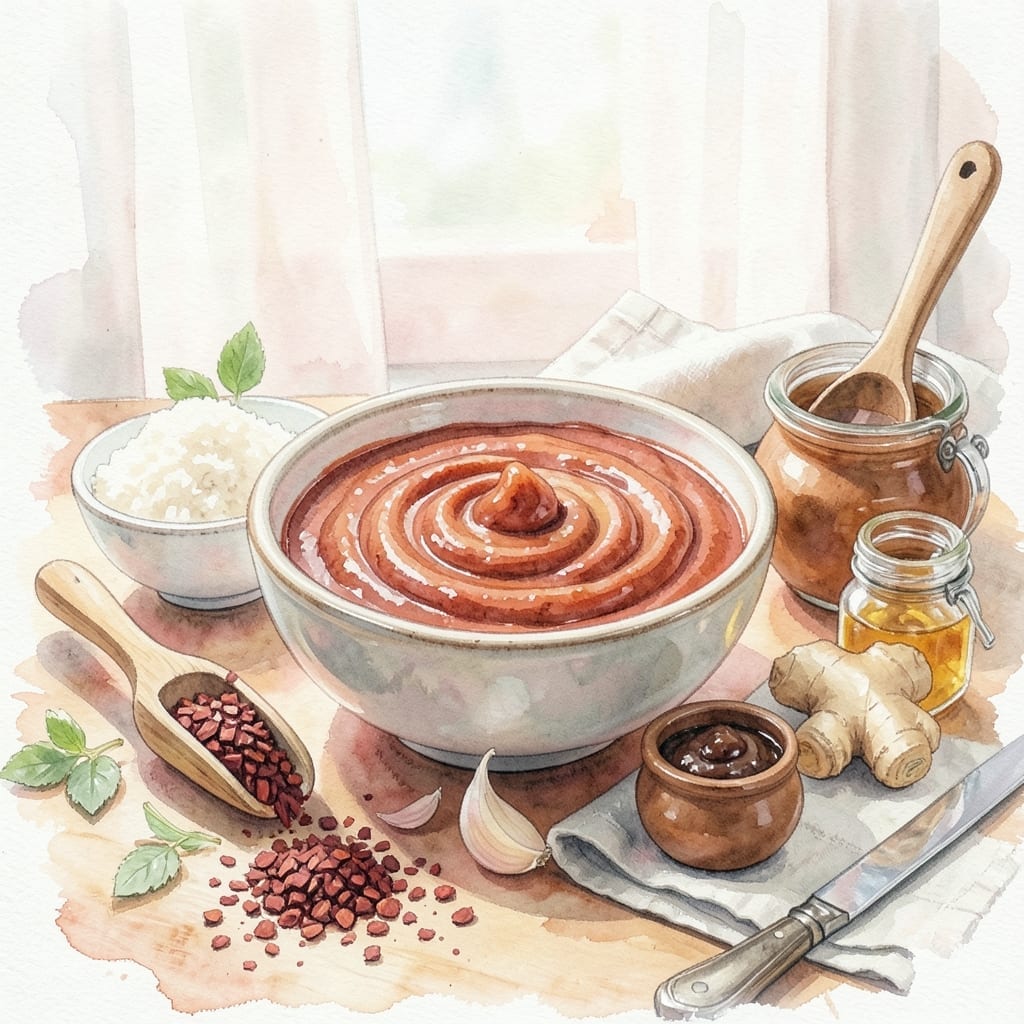
Few condiments deliver the complex balance of heat, sweetness, and umami quite like this versatile paste. I’ve refined these variations to highlight its depth while keeping preparation effortless.
Each version starts with the same fermented chili base, then branches into unique profiles—some bright with citrus, others rich with sesame or garlic. The paste keeps for weeks, ready to transform everything from marinades to dressings.
Use it to glaze proteins, stir into soups, or swirl into mayonnaise for an instant flavor boost. The possibilities are limited only by your imagination.
Small batches mean fresh flavors and the freedom to experiment. This is the kind of staple that earns a permanent spot in your kitchen.
Ingredients for Gochujang Paste Recipe Ideas
Nine ingredients transform into this bold, fermented Korean paste with endless possibilities.
| Ingredient | Amount | Notes |
|---|---|---|
| Gochugaru Chili Flakes 🌶️ | ½ cup | Korean red pepper flakes, medium heat |
| Glutinous Rice Flour 🌾 | ¼ cup | Also called sweet rice flour |
| Fermented Soybean Paste 🫘 | 2 tbsp | Doenjang or miso for umami |
| Garlic Cloves 🧄 | 6 cloves | Freshly minced for best flavor |
| Fresh Ginger 🌿 | 1 tbsp | Peeled and finely grated |
| Brown Sugar 🍚 | 2 tbsp | Or coconut sugar for depth |
| Soy Sauce 🫒 | 1 tbsp | Low-sodium preferred for balance |
| Rice Vinegar 🍯 | 1 tbsp | Adds bright acidity to the paste |
| Sesame Oil 🫒 | 1 tsp | Toasted for nutty aroma |
The gochugaru is everything here—look for Korean markets or H Mart for the real deal (medium or hot depending on your tolerance). Sweet rice flour thickens it perfectly; don’t sub regular rice flour. Doenjang adds that deep umami, but white miso works in a pinch. Garlic and ginger should be fresh; jarred just doesn’t compare (the paste’s complexity suffers).
Need a quick swap? Gochujang sauce can replace the chili flakes and rice flour combo, but you’ll lose some texture. No doenjang? Extra miso plus a dash of soy sauce gets you close. Brown sugar can be maple syrup or agave—just reduce other liquids slightly. For a nutty twist, add 1 tsp toasted sesame seeds.
This keeps 3-4 weeks in the fridge in a sealed jar. The flavors actually deepen over time. Freeze portions in ice cube trays for 6 months if you won’t use it up quickly. Always use a clean spoon to avoid contamination (worth the extra minute).
Why You’ll Love This Recipe
- Minimal Effort: I throw everything into one bowl, mix, and let it ferment—no fancy techniques required.
- Deep Umami Bomb: The fermented soybean paste and gochugaru flakes create that rich, funky-sweet heat I crave.
- Endless Uses: Honestly, I slather it on grilled meats, stir into soups, or even mix into mayo for a quick dip.
- Pantry St Staple: One batch lasts me weeks in the fridge, and it’s cheaper than buying pre-made every time.
Step-by-Step Instructions for Gochujang Paste
This method delivers authentic flavor with perfect balance between heat, sweetness, and umami every time.
Step 1: Toast the Gochugaru Chili Flakes
Heat a dry skillet over medium-low heat. Add the 0.5 cup Gochugaru Chili Flakes and toast for 2-3 minutes, stirring constantly until you notice the color deepen slightly and the aroma becomes more pronounced.
This step enhances the chili’s natural oils and intensifies its flavor without burning. Watch carefully—chili flakes can go from toasted to burnt in seconds. Remove from heat immediately once fragrant and transfer to a mixing bowl to cool.
Step 2: Create the Aromatic Base
In the same skillet (no need to clean it), combine the 6 cloves Garlic Cloves and 1 tbsp Fresh Ginger with 1 tsp Sesame Oil. Sauté over medium heat for 1-2 minutes until the mixture becomes fragrant but hasn’t browned.
The sesame oil adds a nutty depth that complements the spice beautifully. You’ll know it’s ready when the raw garlic smell mellows into something sweeter. Transfer this aromatic mixture to the bowl with the toasted chili flakes.
Step 3: Build the Paste Foundation
Add the 2 tbsp Fermented Soybean Paste, 0.25 cup Glutinous Rice Flour, 2 tbsp Brown Sugar, 1 tbsp Soy Sauce, and 1 tbsp Rice Vinegar to the chili-garlic mixture. The fermented soybean paste provides the essential umami backbone that defines authentic gochujang.
The glutinous rice flour will thicken the paste naturally as it hydrates. Use a silicone spatula to fold everything together until no dry spots remain. The mixture should look thick and slightly glossy at this point.
Step 4: Develop the Flavors
Cover the bowl and let the paste rest at room temperature for 30-60 minutes. This waiting period allows the glutinous rice flour to fully absorb the liquids and the flavors to meld together properly.
You’ll notice the paste darkens slightly and the texture becomes more cohesive. The rice vinegar’s acidity will balance the sweetness from the brown sugar, while the soy sauce enhances the fermented soybean paste’s savory notes.
Step 5: Adjust and Store
Give the paste a final stir. If it seems too thick, you can thin it with a teaspoon of water, but I’ve found this ratio produces the ideal spreadable consistency. The paste should be thick enough to hold its shape but still easy to scoop.
Transfer to a clean jar and store in the refrigerator for up to 3 months. The flavors will continue to develop over time, becoming more complex and mellow. Always use a clean spoon to prevent contamination and extend its shelf life.
Pro Tips For Making Gochujang Paste Recipe Ideas
- Toast the rice flour: Dry-toast the glutinous rice flour in a pan over medium heat for 2-3 minutes until fragrant—I learned this the hard way after my first batch tasted raw and starchy.
- Bloom the gochugaru: Heat the chili flakes in a little oil for 30 seconds before adding liquids; it deepens the flavor and removes any bitterness from the flakes.
- Grate the ginger: Sounds tedious, but freshly grated ginger (about 1 tablespoon) blends into the paste better than minced and prevents fibrous bits in the final product.
- Skip the lumps: Whisk the fermented soybean paste into warm water first to dissolve it completely before mixing—this prevents stubborn clumps that refuse to smooth out.
Storing and Reheating Leftovers
Refrigerator Storage
Transfer your paste to a clean glass jar with a tight lid—I prefer 8-ounce mason jars. Store in the fridge at 40°F or below for up to 3 months. The flavors deepen beautifully over time. ❄️
Freezer Storage
For longer storage, portion into ice cube trays and freeze for up to 6 months. Once solid, transfer cubes to a freezer bag. Thaw only what you need in the fridge overnight.
Thawing Tips
Move frozen paste to the fridge 12 hours before use. For quick thawing, place the sealed jar in a bowl of cold water, changing water every 30 minutes. Never microwave—it can separate the paste.
Room Temperature Use
Let refrigerated paste sit at room temp for 15-20 minutes before using. This makes it easier to scoop and blend. The cold can mute flavors slightly, so warming helps restore its full character.
Preventing Contamination
Always use a clean, dry spoon when scooping. Never double-dip or use wet utensils. I keep a dedicated mini silicone spatula in my jar to avoid cross-contamination.
Reviving Dried Paste
If your paste thickens over time, stir in 1 tsp warm water at a time until it reaches your desired consistency. The glutinous rice flour will reabsorb moisture beautifully. 💡
Nutrition Facts
Frequently Asked Questions
How long does homemade paste last?
Stored in a clean jar in the fridge, it stays fresh for up to 3 months. For longer storage, freeze in portions for up to 6 months.
Can I adjust the spice level?
Reduce gochugaru for milder heat or add 1 tsp honey to balance. Taste as you go for perfect customization.
What’s the best way to use this paste?
Try it as a marinade for meats, stir into soups, or mix with mayo for a spicy dip. Its versatility shines in both cooking and finishing dishes.
Why did my paste separate?
Separation can happen if stored too long or exposed to temperature changes. Stir well before use, or add 1 tsp warm water to restore texture.

- 6 Egg Cake Recipe with Oil: Light as Air With Buttery Moisture - October 4, 2026
- 4 Bean Casserole Recipe: One-Pan Heartiness With Smoky Paprika Depth - October 4, 2026
- 3-Ingredient Keto Mug Cake Recipe: Microwave Magic in 2 Minutes - October 4, 2026