
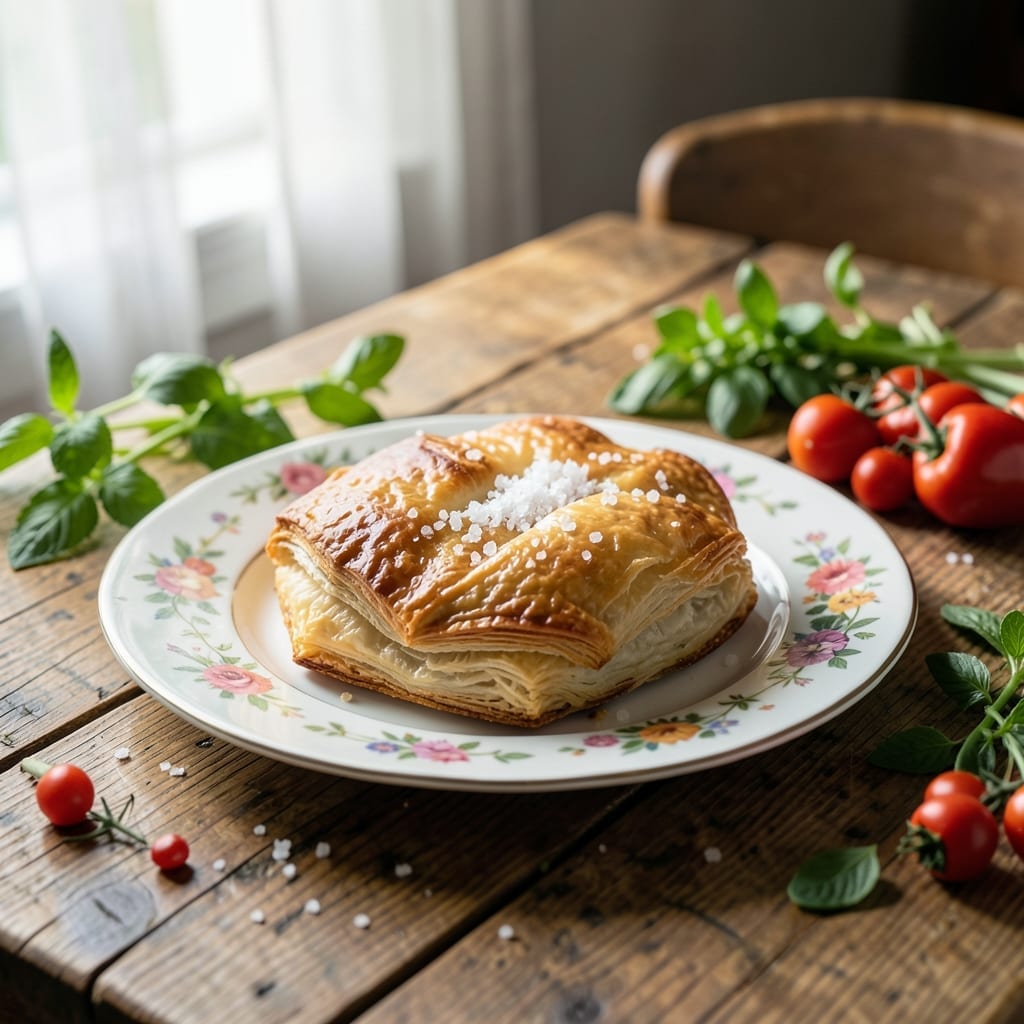
Achieving a flaky crust requires precise technique and patience. This method delivers layers so delicate they separate with the lightest touch.
Cold butter and minimal handling are key to creating those perfect, paper-thin layers that define an exceptional crust. The result is a golden, buttery foundation for any dish.
Ingredients for Recipe for Flaky Crust
Precision begins with these essential components for a buttery, layered foundation.
| Ingredient | Amount | Notes |
|---|---|---|
| All-Purpose Flour 🌾 | 2 ½ cups | Plus extra for dusting work surface |
| Unsalted Butter 🧈 | 1 cup | Cold, cut into small cubes |
| Ice Water 💧 | ½ cup | Plus 1 tbsp as needed |
| Fine Sea Salt 🧂 | 1 tsp | Diamond Crystal preferred |
| Granulated Sugar 🍚 | 1 tsp | Optional, for sweet applications |
| White Vinegar 🍶 | 1 tsp | Or apple cider vinegar |
| Baking Powder 🧂 | ½ tsp | For slight lift in some applications |
The butter must remain cold throughout the process—European-style butters like Plugrá or Kerrygold offer higher fat content for superior flakiness. King Arthur Flour provides consistent protein levels for reliable results. Measure your flour by weight if possible (1 cup = 120g), as volume can vary significantly based on how it’s scooped. The vinegar tenderizes the gluten, but its presence should be undetectable in the final product.
For a whole wheat version, substitute one-third of the all-purpose flour with white whole wheat flour. The cold water can be replaced with vodka for an even flakier crust (alcohol evaporates during baking, reducing gluten formation). If avoiding alcohol, chilled buttermilk adds tenderness. Sugar can be omitted for savory applications or increased to 1 tbsp for sweeter preparations.
The dough can be refrigerated for up to 2 days or frozen for 1 month. For best results, wrap tightly in plastic wrap to prevent drying. Bring to room temperature for 10 minutes before rolling to prevent cracking. Baked crusts keep at room temperature for 1 day or freeze for 3 months.
Why You’ll Love This Recipe
- Five Ingredients Only: That’s it—flour, butter, ice water, salt, sugar. No hunting for specialty items at the store.
- Buttery Layers: The cold butter and ice water create those golden, crisp sheets that shatter with every bite.
- Freezer Friendly: I double the batch, roll it out, and freeze for pies, galettes, or even quick turnovers later.
- Pocketbook Pleaser: A pound of flour and a stick of butter cost pennies but taste like a bakery masterpiece.
Step-by-Step Instructions for Flaky Crust
Master the technique of creating delicate, buttery layers that separate beautifully with every bite.
Step 1: Combine Dry Ingredients for Foundation
In a large mixing bowl, whisk together the 2.5 cups All-Purpose Flour, 1 tsp Fine Sea Salt, 1 tsp Granulated Sugar, and 0.5 tsp Baking Powder until evenly distributed. This aerates the flour and ensures your base is uniform before adding fat.
Real talk: the baking powder adds subtle lift, while the vinegar tenderizes the gluten. Diamond Crystal salt dissolves quickly, preventing gritty pockets in your finished crust. Don’t skip whisking—this prevents dense spots where ingredients clump.
Step 2: Cut in Cold Butter for Layered Texture
Add the 1 cup Unsalted Butter (cold, cut into small cubes) to the flour mixture. Using a pastry cutter or your fingertips, work the butter into the flour until the mixture resembles coarse crumbs with pea-sized butter pieces visible. This creates the flaky layers we’re after.
Here’s the thing—cold butter is non-negotiable. If it warms and melts, you’ll lose the distinct layers that make crust flaky. Work quickly and handle the dough as little as possible. You should see visible butter flecks throughout; these will create steam pockets during baking.
Step 3: Incorporate Liquid Ingredients Strategically
Create a well in the center of your flour-butter mixture. Add the 1 tsp White Vinegar and 0.5 cup Ice Water gradually, mixing gently with a fork until the dough just begins to come together. The vinegar tenderizes the gluten, while the ice water keeps everything cold.
Don’t be tempted to add all the liquid at once. Start with 0.5 cup Ice Water and add the additional 1 tbsp only if the dough seems too dry to hold together. The mixture should look shaggy, not smooth—overworking develops gluten, which makes crust tough instead of flaky.
Step 4: Chill and Rest for Optimal Texture
Turn the dough out onto a lightly floured surface (using extra All-Purpose Flour from your ingredients) and gently shape it into a disk. Wrap it tightly in plastic wrap and refrigerate for at least 1 hour. This resting period allows the gluten to relax and the butter to firm up.
I’ve found that chilling for 2 hours or even overnight yields the most distinct layers. The cold temperature solidifies the butter, ensuring it creates maximum steam during baking. When you roll out the dough later, you’ll see beautiful marbling from the butter—this is your visual confirmation of future flakiness.
Pro Tips For Making Recipe For Flaky Crust
- Chill Everything: Keep your butter, water, and even the flour cold—work quickly and handle the dough as little as possible to prevent the butter from melting into the flour.
- Cut Butter Evenly: Use a pastry cutter or your fingers to work the butter into the flour until it resembles coarse crumbs with pea-sized butter pieces—this creates the flaky layers.
- Skip Warm Water: Ice water is non-negotiable; warm water softens the butter and ruins the flakiness. I learned this the hard way after a few dense crusts.
- Rest the Dough: Give it a solid 30 minutes in the fridge after shaping—this relaxes the gluten and makes rolling easier, even if you’re impatient like me.
Pro Cooking Tips for This Dish
💡 Chill Your Ingredients
For a flaky crust, start with cold butter and ice water. Cold fat creates steam during baking, which puffs up the layers. Cut butter into small cubes and chill for 30 minutes before mixing. This prevents it from melting into the dough too soon.
🎯 Don’t Overwork the Dough
Handle the dough as little as possible to avoid developing gluten, which can make your crust tough. Mix just until the ingredients come together. If the dough cracks while rolling, patch it gently—no kneading!
✨ Use the Right Flour
All-purpose flour works, but for extra flakiness, try a low-protein flour like pastry or cake flour. These create a tender texture. If using all-purpose, avoid high-gluten varieties for best results.
🌡️ Bake at High Heat
Preheat your oven to 425°F (220°C) for a golden, crisp crust. A hot oven ensures quick steam formation, lifting the layers. For extra browning, brush the crust with egg wash before baking.
Nutrition Facts

- 6 Egg Cake Recipe with Oil: Light as Air With Buttery Moisture - October 4, 2026
- 4 Bean Casserole Recipe: One-Pan Heartiness With Smoky Paprika Depth - October 4, 2026
- 3-Ingredient Keto Mug Cake Recipe: Microwave Magic in 2 Minutes - October 4, 2026