
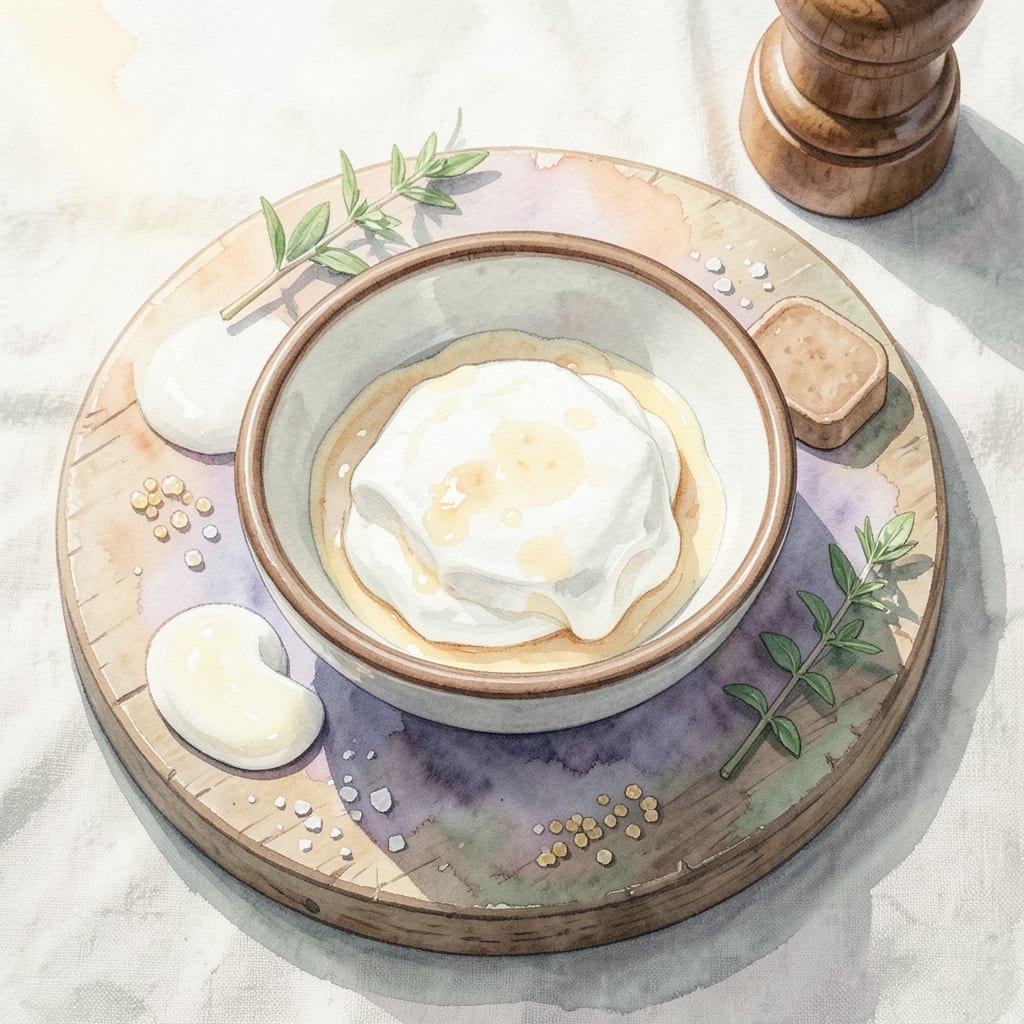
Making fresh mozzarella at home transforms how you think about cheese. This method delivers stretchy, creamy curds with minimal equipment and just a few ingredients.
The process begins with heating milk and adding rennet, then carefully stretching the curds in warm whey. The key is maintaining the right temperature throughout each step.
What emerges is homemade mozzarella with a delicate texture and mild, milky flavor that outshines any store-bought version. The satisfaction of pulling your first batch is unmatched.
Use it immediately in caprese salads or melt it on pizza. The difference is undeniable.
Ingredients for Recipe for Fresh Mozzarella
Minimal ingredients, maximum reward for this homemade cheese adventure.
| Ingredient | Amount | Notes |
|---|---|---|
| Whole Milk 🥛 | 1 cup | Not ultra-pasteurized, full-fat |
| Heavy Cream 🥛 | ¼ cup | Full-fat for richness |
| Citric Acid 🧪 | ¼ tsp | Dissolved in water first |
| Rennet Tablets 🧈 | ¼ whole | Vegetarian rennet preferred |
| Ice Cubes ❄️ | 2 cups | For cooling curds quickly |
| Kosher Salt 🧂 | ½ tsp | Diamond Crystal preferred |
| Water 💧 | ¼ cup | For citric acid solution |
| Cheese Salt 🧂 | ¼ tsp | Fine grain, optional |
| Calcium Chloride 🧪 | 0.125 tsp | Dissolved in water, optional |
| Distilled Water 💧 | ½ cup | For rennet dilution |
The milk is non-negotiable—whole, non-ultra-pasteurized is essential for proper curd formation. Organic Valley or local dairy farm options work well. Avoid store brands with added stabilizers. The rennet must be vegetarian (check New England Cheesemaking for reliable supply). Citric acid and calcium chloride are specialty items but last indefinitely—Amazon or homebrew shops stock them.
No rennet? Lemon juice or vinegar can work in a pinch but yields a crumbly, ricotta-like cheese instead of stretchy mozzarella. Skipping calcium chloride? Your curds may be softer. The heavy cream boosts fat content for creamier texture—substitute with additional whole milk if needed. Temperature precision is critical, so use a candy thermometer.
Fresh mozzarella is best used immediately but keeps in lightly salted whey for 5 days. For longer storage, vacuum-seal and freeze for up to 3 months. The texture changes slightly after freezing but melts beautifully on pizza.
Why You’ll Love This Recipe
- Few Ingredients: I love that this only needs milk, cream, citric acid, rennet, and ice—no fancy groceries or last-minute store runs.
- Cloud-Like Creaminess: The fresh mozzarella is so soft and milky, it melts in your mouth like nothing store-bought ever could.
- Weeknight Project: Honestly, it’s fun to make on a lazy Sunday but still quick enough for a Tuesday if I’m craving caprese.
- Stretches Further: One batch gives me enough for salads, pizzas, and snacks—saving me a trip to the specialty cheese counter.
Step-by-Step Instructions for Fresh Mozzarella
Master the technique for producing smooth, elastic curds that transform into perfect homemade cheese.
Step 1: Prepare the Acid and Rennet Solutions
Dissolve the 0.25 tsp Citric Acid in the 0.25 cup Water in a small bowl, stirring until completely clear with no visible particles. This acid solution will help develop the proper curd structure for stretching.
In a separate container, crush the 0.25 whole Rennet Tablets and dissolve it in the 0.5 cup Distilled Water. If using 0.125 tsp Calcium Chloride, dissolve it in 2 tablespoons of the distilled water first, then add the rennet. Let both solutions sit while you heat the milk.
Step 2: Heat and Acidify the Milk Mixture
Combine the 1 cup Whole Milk and 0.25 cup Heavy Cream in a stainless steel pot. Heat over medium-low heat until the mixture reaches 55°F, stirring gently to prevent scorching.
Add the citric acid solution and continue heating slowly to 90°F. Maintain this temperature for 30 seconds, stirring constantly. You’ll notice the milk beginning to thicken slightly—this indicates proper acidification.
Step 3: Form and Cut the Curds
Add the rennet solution to the warm milk and stir gently for 30 seconds. Cover and let set undisturbed for 5-10 minutes until a clean break forms when you insert a knife at an angle and lift.
Once a firm curd has formed, cut it into ½-inch cubes using a long knife. Heat the curds to 105°F over medium-low heat, stirring gently to prevent sticking. Maintain this temperature for 5-10 minutes until the curds are firm enough to hold their shape when pressed.
Step 4: Drain and Stretch the Curds
Drain the curds in a colander lined with cheesecloth, reserving some of the whey. Transfer the curds to a microwave-safe bowl and microwave for 30-45 seconds. Drain any accumulated whey, then fold the curds gently to distribute heat.
Repeat the microwaving and folding process 2-3 times until the curds reach 135°F and become smooth and elastic. At this point, the curds should stretch like taffy when pulled. If they’re too stiff, microwave for an additional 10-15 seconds.
Step 5: Shape and Season the Mozzarella
Once the curds are properly stretched, shape them into a ball (or smaller portions) using your hands. If the curds are too hot to handle, wear food-safe gloves or use a spoon to help shape them.
Submerge the shaped cheese in a bowl of ice water with the 2 cups Ice Cubes for 10-15 minutes to cool and set the shape. Remove from the ice bath and pat dry. Sprinkle with 0.5 tsp Kosher Salt or 0.25 tsp Cheese Salt for flavor. Your fresh mozzarella is now ready to enjoy.
Pro Tips For Making Recipe For Fresh Mozzarella
- Use Raw Milk: I learned this the hard way—ultra-pasteurized milk won’t coagulate properly. Stick with fresh, raw milk or high-quality whole milk that hasn’t been ultra-pasteurized for best curd formation.
- Dissolve Citric Acid First: Mix the citric acid into cold water before adding to the milk—this prevents clumping and ensures even acid distribution, which is non-negotiable for smooth curds.
- Maintain Exact Temps: Heat the milk to 90°F before adding rennet, then hold at 105°F after cutting the curds. Even a 5-degree swing can ruin the texture, and I’ve ruined batches by rushing this.
- Shock the Curds: After draining, drop the curds into ice water for 10 minutes—this stops the cooking process and makes them easier to stretch. Skip this and your mozzarella will be grainy.
Best Sauces and Condiments for This Dish
Classic Tomato Sauce
Simmer 1 cup San Marzano tomatoes with 2 tbsp olive oil, 3 garlic cloves, and fresh basil. The acidity cuts through the cheese’s richness beautifully. I always add a pinch of sugar to balance the tomatoes. 🍅
Pesto Drizzle
Blend 2 cups fresh basil, ¼ cup pine nuts, ½ cup Parmesan, and ½ cup olive oil for a vibrant topping. The herbal notes complement the mild, milky flavor of your homemade cheese perfectly.
Balsamic Glaze
Reduce 1 cup balsamic vinegar by half over medium heat for a sweet-tart syrup. Drizzle over sliced mozzarella with tomatoes for a caprese salad upgrade. It adds depth without overpowering the cheese.
Olive Tapenade
Pulse 1 cup Kalamata olives, 2 anchovies, 1 tbsp capers, and 3 tbsp olive oil for a briny contrast. The salty, umami flavors create an irresistible pairing with fresh mozzarella. 💫
Honey and Chilli
Mix 2 tbsp wildflower honey with ½ tsp chili flakes for a sweet-spicy dip. This unexpected combo enhances the cheese’s creaminess while adding a subtle kick.
Garlic Infused Oil
Warm ½ cup olive oil with 4 crushed garlic cloves until fragrant. Cool slightly before drizzling over warm mozzarella. The aromatic oil soaks into the cheese beautifully.
Nutrition Facts
Frequently Asked Questions
Why does my cheese not stretch?
This usually means the curds didn’t reach 135°F during stretching. Return them to the microwave for 10-15 seconds and try again. Also, ensure you used non-ultra-pasteurized milk.
Can I use store-bought milk?
Only if it’s labeled whole and not ultra-pasteurized. Ultra-pasteurized milk won’t form proper curds. Organic or farm-fresh works best for reliable results.
How do I store leftover mozzarella?
Submerge in lightly salted whey in an airtight container in the fridge for up to 5 days. For longer storage, vacuum-seal and freeze for up to 3 months.
What can I use instead of rennet?
In a pinch, lemon juice or vinegar can create curds, but they’ll be crumbly like ricotta, not stretchy. For true mozzarella texture, vegetarian rennet is essential.

- 6 Egg Cake Recipe with Oil: Light as Air With Buttery Moisture - October 4, 2026
- 4 Bean Casserole Recipe: One-Pan Heartiness With Smoky Paprika Depth - October 4, 2026
- 3-Ingredient Keto Mug Cake Recipe: Microwave Magic in 2 Minutes - October 4, 2026