
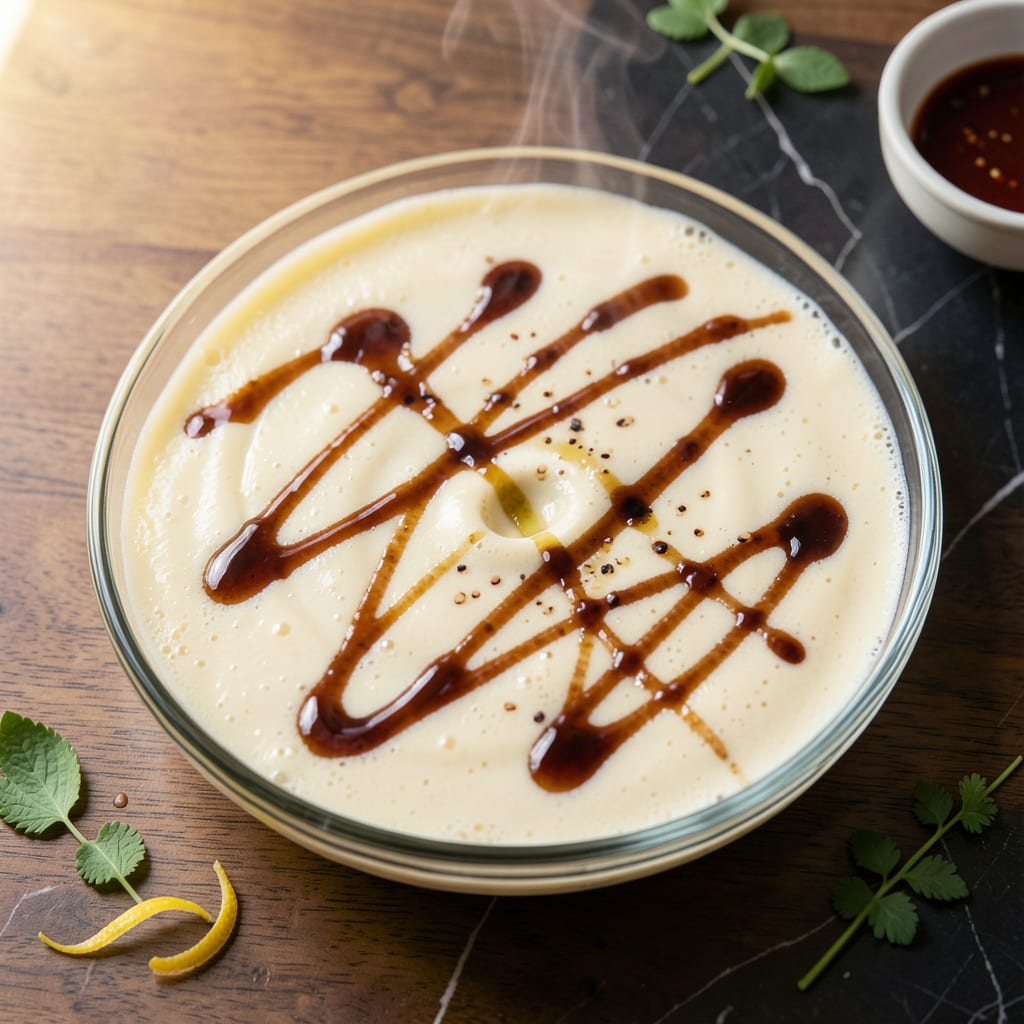
This traditional steamed egg custard delivers a cloud-like texture with rich, savory depth that’s surprisingly simple to achieve at home.
With just a few ingredients and a foolproof steaming method, you’ll create a dish that’s silky smooth and perfectly balanced—every time.
Ingredients for Recipe for Steamed Egg Custard
A handful of humble ingredients transform into this velvety, savory custard masterpiece.
| Ingredient | Amount | Notes |
|---|---|---|
| Large Eggs 🥚 | 6 whole | Room temperature for smoothest texture |
| Chicken Stock 🍲 | 2 cups | Low-sodium preferred for balance |
| Water 💧 | 1 cup | Filtered for cleanest flavor |
| Soy Sauce 🫕 | 1 tbsp | Light or all-purpose variety |
| Sesame Oil 🫒 | ½ tsp | Toasted for depth of flavor |
| Salt 🧂 | ½ tsp | Fine sea salt recommended |
| White Pepper 🌶️ | ¼ tsp | Freshly ground for best aroma |
| Green Onions 🧅 | 2 whole | Thinly sliced for garnish |
| Ginger Root 🌿 | ½ tsp | Freshly grated for zing |
| Shaoxing Wine 🍶 | 1 tbsp | Or substitute dry sherry |
| Vegetable Oil 🫒 | 1 tsp | For greasing steaming dish |
The eggs are the foundation here. Optimal quality requires fresh, large eggs at room temperature—cold eggs can create air pockets. Organic or pasture-raised from Whole Foods or your local farmers market will yield the richest color and flavor. The chicken stock should be low-sodium to prevent oversalting; Swanson or Kitchen Basics are reliable grocery store options.
No Shaoxing wine? Dry sherry at equal quantity works perfectly. For a non-alcoholic option, additional chicken stock with a splash of rice vinegar mimics the depth. If green onions aren’t available, chives at one-to-one ratio offer a similar mild bite. The sesame oil is potent—toasted variety is essential for that nutty finish (skip if using dark sesame oil).
This custard is best served immediately but holds well for 2 days refrigerated. Re-steam briefly to restore the silky texture. The mixture can be prepped one day ahead—just whisk before steaming. Always use filtered water to avoid any mineral aftertaste.
Why You’ll Love This Recipe
- One Bowl Wonder: I just whisk eggs, stock, and a splash of soy sauce—no chopping, no fuss.
- Silky Umami Bomb: The sesame oil swirls into the custard for a rich, savory depth that’s ridiculously good.
- Breakfast or Dinner: Honestly, I serve this steamed custard for lazy mornings or as a light dinner with rice.
- Pennies Per Serving: Eggs and pantry staples stretch so far, I’ll be real: this might be my most budget-friendly dish.
Step-by-Step Instructions for Steamed Egg Custard
Master the technique for achieving that silky, cloud-like texture with rich savory depth.
Step 1: Prepare the Steaming Apparatus and Aromatics
Begin by selecting a heatproof dish that fits inside your steamer with the lid on. I use a 9-inch glass pie plate for this quantity. Lightly grease the dish with the 1 tsp Vegetable Oil to prevent sticking, then set it aside.
Thinly slice the 2 whole Green Onions and finely grate the 0.5 tsp Ginger Root. These aromatics will infuse the custard with subtle complexity. Have all your ingredients measured and ready—this is a mise en place moment where organization matters.
Step 2: Whisk the Egg Base to Silky Smoothness
Crack all 6 whole Large Eggs into a large bowl. I always use room temperature eggs here—cold eggs won’t incorporate as smoothly with the warm liquids. Whisk vigorously for 1-2 minutes until the mixture is completely homogeneous with no visible streaks of white or yolk.
The key is creating a smooth emulsion before adding the liquids. This prevents the custard from developing a grainy texture. You’re aiming for a pale, slightly frothy mixture that ribbons off the whisk.
Step 3: Combine Liquids and Seasonings
In a separate bowl, combine the 2 cups Chicken Stock, 1 cup Water, 1 tbsp Soy Sauce, 0.5 tsp Sesame Oil, 0.5 tsp Salt, 0.25 tsp White Pepper, and 1 tbsp Shaoxing Wine. Warm this mixture gently until it reaches about 110°F—just warm to the touch.
Slowly pour the warm liquid mixture into the beaten eggs while whisking constantly. This tempering method prevents the eggs from curdling. The final mixture should be the consistency of heavy cream, with a pale caramel color from the soy sauce.
Step 4: Strain and Steam to Perfection
Pour the custard mixture through a fine-mesh sieve into your prepared dish. This straining step eliminates any potential lumps and ensures that ultra-smooth texture. Sprinkle the sliced green onions and grated ginger evenly over the surface—they’ll infuse during steaming.
Cover the dish with aluminum foil, then place it in your steamer. Bring the water to a rolling boil, then reduce to maintain a steady, vigorous steam. Cover the steamer and cook for 15-18 minutes until the custard is just set—it should jiggle slightly in the center like soft gelatin.
Step 5: Rest and Serve
Carefully remove the dish from the steamer and let it rest for 5 minutes before serving. This allows the custard to finish setting and reach its ideal texture. The surface should be glossy with no cracks, and a knife inserted in the center should come out clean.
Serve warm in the dish or portion into individual bowls. The custard should be tremulous yet hold its shape, with the aromatic green onions and ginger providing a bright contrast to the rich, savory egg base. Any leftovers can be refrigerated and gently reheated in a steamer.
Pro Tips For Making Recipe For Steamed Egg Custard
- Strain the Eggs: Whisk your eggs through a fine mesh strainer before mixing with stock—this removes any stubborn bits and guarantees that silky smooth texture. I learned this the hard way after serving lumpy custard to my in-laws.
- Use Warm Stock: Always mix your eggs with warm (not hot) chicken stock to prevent curdling. Cold stock makes the custard grainy, and nobody wants that.
- Cover with Foil: Cover your steaming dish with foil to prevent water droplets from falling in and ruining the surface. Sounds weird, but it works.
- Steam Low and Slow: Keep the heat at a gentle simmer—too high and your custard will set unevenly or develop air pockets. My first few attempts looked like Swiss cheese until I figured this out.
Serving Suggestions for Leftovers
Garnish with Freshness
I always finish this dish with a sprinkle of the reserved green onions right before serving. The bright, crisp texture cuts through the custard’s richness beautifully. Add a few drops of toasted sesame oil on top for a nutty aroma that enhances the savory depth. 💛
Pair with Rice
Serve over steamed jasmine or basmati rice to soak up every silky bite. The custard’s velvety texture pairs perfectly with the fluffy grains, making each mouthful satisfying. I recommend 1 cup cooked rice per serving for balance.
Add a Side of Pickles
For a traditional touch, offer a small dish of pickled vegetables on the side. The tangy crunch contrasts wonderfully with the smooth custard. Quick-pickled cucumbers or radishes work especially well.
Serve in Ramekins
For an elegant presentation, divide the custard into individual 6-ounce ramekins before steaming. This creates perfect single servings with a restaurant-quality look. Guests will love the personal touch.
Garnish each ramekin with a drizzle of sesame oil and a sprinkle of white pepper for visual appeal. ✨
Accompany with Tea
A light green tea like jasmine or sencha complements the custard’s delicate flavors. The subtle floral notes cleanse the palate between bites. Serve the tea hot for a cozy, comforting meal.
Nutrition Facts
Frequently Asked Questions
Why do my eggs get lumpy?
Lumps usually mean the eggs weren’t fully whisked or the liquid was too hot when combined. Always whisk eggs until completely smooth and warm liquids to just 110°F before mixing. Straining the mixture helps too.
Can I use a different stock?
Yes! Vegetable or seafood stock works well. For a lighter flavor, use all water with a pinch more salt. Just ensure it’s low-sodium to control the seasoning.
How do I know when it’s done?
The custard should jiggle slightly in the center like gelatin after 15-18 minutes. A knife inserted should come out clean. Oversteaming causes cracks.
Can I make this ahead?
Prepare the mixture up to a day in advance, but steam just before serving. Refrigerated leftovers keep for 2 days—re-steam briefly to revive.

- 6 Egg Cake Recipe with Oil: Light as Air With Buttery Moisture - October 4, 2026
- 4 Bean Casserole Recipe: One-Pan Heartiness With Smoky Paprika Depth - October 4, 2026
- 3-Ingredient Keto Mug Cake Recipe: Microwave Magic in 2 Minutes - October 4, 2026