
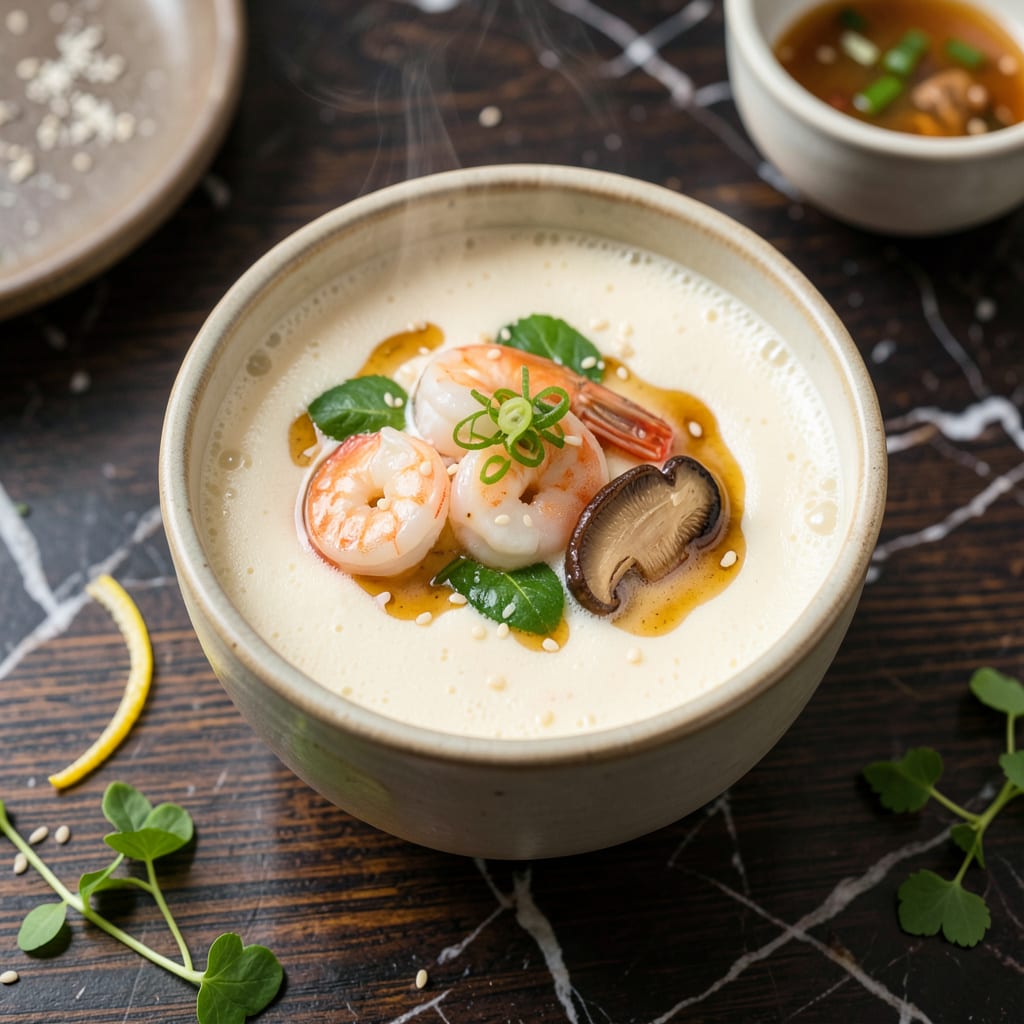
This delicate custard represents the pinnacle of Japanese cooking precision. The secret lies in the perfect ratio of eggs to dashi, creating a velvet-smooth texture that’s both light and deeply satisfying.
Achieving the ideal consistency requires gentle, even steaming. The result is a dish that’s elegant in its simplicity yet complex in flavor, with subtle umami notes from the dashi shining through each silky bite.
Ingredients for Japanese Steamed Egg Custard
Simple Japanese pantry staples create this elegant, silky custard with perfect balance and depth.
| Ingredient | Amount | Notes |
|---|---|---|
| Large Eggs 🥚 | 6 whole | Room temperature preferred |
| Dashi Stock 🍲 | 2 ½ cups | Awase or kombu dashi |
| Soy Sauce 🫒 | 2 tbsp | Light or regular variety |
| Mirin 🍶 | 2 tbsp | Sweet rice wine for cooking |
| Sake 🍶 | 1 tbsp | Dry variety preferred |
| Granulated Sugar 🍚 | 1 tsp | Balances umami flavors |
| Salt 🧂 | ½ tsp | Fine sea salt preferred |
| Neutral Oil 🛢️ | 1 tsp | For greasing ramekins |
| Bonito Flakes 🐟 | ½ cup | For enhanced dashi flavor |
| Kelp 🌿 | 1 piece | 4-inch square for dashi |
| Green Onions 🧅 | 2 whole | Thinly sliced for garnish |
| Water 💧 | ½ cup | For steaming if needed |
The dashi is non-negotiable for authentic flavor. Kombu kelp and bonito flakes make the best base—find them at Asian markets or well-stocked grocery stores like H Mart. Use fresh eggs (room temperature) for the smoothest texture. I prefer awase dashi for its complexity, but kombu-only works if you’re vegetarian. The soy sauce should be Japanese-style (lighter than Chinese varieties).
No mirin? Substitute 1 tbsp sugar + 1 tbsp water. Out of sake? Dry white wine works in a pinch. For a stronger umami punch, add a dash of msg (available at Japanese grocers). If you can’t find bonito flakes, instant dashi granules are an acceptable shortcut. The custard can be made without sugar, but it enhances the other flavors beautifully.
Best served immediately after steaming. Leftovers keep in the fridge for 2 days, but the texture changes slightly. Re-steam briefly to revive. The dashi can be made ahead and stored for 1 week refrigerated or 1 month frozen. Always strain before using for a crystal-clear broth.
Why You’ll Love This Recipe
- One Bowl Wonder: I just whisk eggs with dashi, soy, mirin, and sake—no chopping, no fuss.
- Silky Umami Bomb: The custard’s texture is like velvet, and that dashi-soy depth? Ridiculously good.
- Breakfast or Midnight Snack: Honestly, I’ve served it with rice for dinner and straight from the fridge at 2 AM.
- Pennywise Protein: Six eggs and pantry staples feed four. Between us, it’s my cheap luxury.
Step-by-Step Instructions for Japanese Steamed Egg Custard
This method ensures a silky texture with balanced umami flavor in every bite.
Step 1: Prepare the Dashi Base
Combine the 2.5 cups Dashi Stock with 0.5 cup Bonito Flakes and 1 piece Kelp in a saucepan. Heat over medium-low until it just begins to simmer, then remove from heat and let steep for 10 minutes.
Strain through a fine-mesh sieve, pressing gently on the solids to extract maximum flavor. Discard the bonito and kelp. This creates a clean, aromatic base that defines the custard’s depth.
Step 2: Mix the Custard Ingredients
In a large bowl, whisk together the 6 whole Large Eggs until no streaks remain. Gradually pour in the strained dashi while whisking constantly to create a smooth, uniform mixture.
Add the 2 tbsp Soy Sauce, 2 tbsp Mirin, 1 tbsp Sake, 1 tsp Granulated Sugar, and 0.5 tsp Salt. Whisk for 1 minute more until fully incorporated and slightly frothy on top. The mixture should be pale and velvety.
Step 3: Strain and Portion the Mixture
Pour the custard mixture through a fine-mesh sieve into a large measuring cup or pitcher. This removes any lumps and ensures an ultra-smooth texture in the final dish.
Divide the strained mixture evenly among four heatproof ramekins or small bowls. Lightly brush the interior of each with 1 tsp Neutral Oil to prevent sticking. Cover each with a piece of parchment paper, gently pressed to touch the surface.
Step 4: Steam to Silky Perfection
Place the ramekins in a steamer basket or on a rack set over a pot of simmering 0.5 cup Water. The water level should be 1-2 inches below the rack to prevent direct contact with the heat source.
Cover the pot with a tight-fitting lid and steam over medium-low heat for 15-18 minutes. The custard is done when the edges are set but the center still has a slight jiggle, like soft gelatin. Avoid overcooking, as this creates a firm, rubbery texture.
Remove from the steamer and let cool for 5 minutes before serving. The custard will continue to set slightly as it rests.
Step 5: Garnish and Serve
Thinly slice the 2 whole Green Onions just before serving. Sprinkle a portion over each custard, adding a fresh, mild bite that complements the rich, savory base.
Serve warm in the ramekins with a small spoon. The ideal texture is tender yet holds its shape, with a glossy surface and a delicate, melt-in-your-mouth quality that showcases the dashi’s subtle umami notes.
Pro Tips For Making Japanese Steamed Egg Custard
- Strain the Eggs: I learned this the hard way—pushing the beaten eggs through a fine-mesh strainer removes any stringy bits, guaranteeing that silky-smooth texture chawanmushi is famous for.
- Warm the Dashi: After ruining a batch with cold liquid, I now heat the dashi to just below boiling before mixing; it prevents the eggs from seizing up and keeps the custard tender.
- Cover with Foil: Skip the lid and tent the ramekins with foil instead—it traps the right amount of steam without letting condensation drip back in and water down the custard.
- Use Room-Temp Eggs: Straight-from-the-fridge eggs make the mixture cloudy; I pull mine out 30 minutes early so they blend evenly with the warm dashi for a crystal-clear finish.
Perfect Pairings for This Recipe
Traditional Accompaniments
Serve with steamed white rice to soak up the delicate broth. The neutral flavor and soft texture create a perfect canvas for the custard’s umami richness. I love the contrast of temperatures between warm custard and room-temperature rice. 🍚
Pickled Vegetables
Tsukemono (Japanese pickles) add a refreshing crunch and tangy bite that cuts through the richness. Try quick-pickled cucumbers or beni shoga (red ginger) for authentic flavor pairing.
Green Tea Pairing
A hot cup of sencha or genmaicha complements the savory notes beautifully. The tea’s grassy, slightly bitter profile cleanses your palate between bites. I prefer Ito En brand for consistent quality.
Miso Soup
A light miso soup with tofu and wakame seaweed makes a complete meal. The soup’s umami depth mirrors the custard’s flavors while adding variety in texture. Use white miso for a milder taste.
Sake Recommendation
For an elevated experience, pair with dry junmai sake served chilled. The clean, crisp finish enhances the custard’s delicate flavors. I recommend Dassai 39 or Hakkaisan for their smooth profiles.
Garnish Variations
Beyond green onions, try toasted sesame seeds or shredded nori for added depth. A drizzle of yuzu zest adds a bright citrus note that brightens the dish beautifully. 🌟
Nutrition Facts
Frequently Asked Questions
Can I use chicken broth instead of dashi?
You can, but the flavor will differ significantly. Dashi provides the authentic umami depth that defines this dish. Use low-sodium chicken broth and add 1 tsp soy sauce to compensate.
How do I prevent bubbles from forming on the surface?
Strain the mixture thoroughly and avoid over-whisking the eggs. Skim any foam off the top before steaming. Covering with parchment paper also helps create a smooth, glossy finish.
Why did my custard turn out rubbery?
Oversteaming is the most common cause. Remove from heat as soon as the center has a slight jiggle. The custard continues setting as it cools. 15-18 minutes is ideal.
Can I make this in a microwave?
Yes, but results vary. Use 50% power in 1-minute intervals, checking frequently. The texture won’t be as silky as traditional steaming.

- 6 Egg Cake Recipe with Oil: Light as Air With Buttery Moisture - October 4, 2026
- 4 Bean Casserole Recipe: One-Pan Heartiness With Smoky Paprika Depth - October 4, 2026
- 3-Ingredient Keto Mug Cake Recipe: Microwave Magic in 2 Minutes - October 4, 2026