
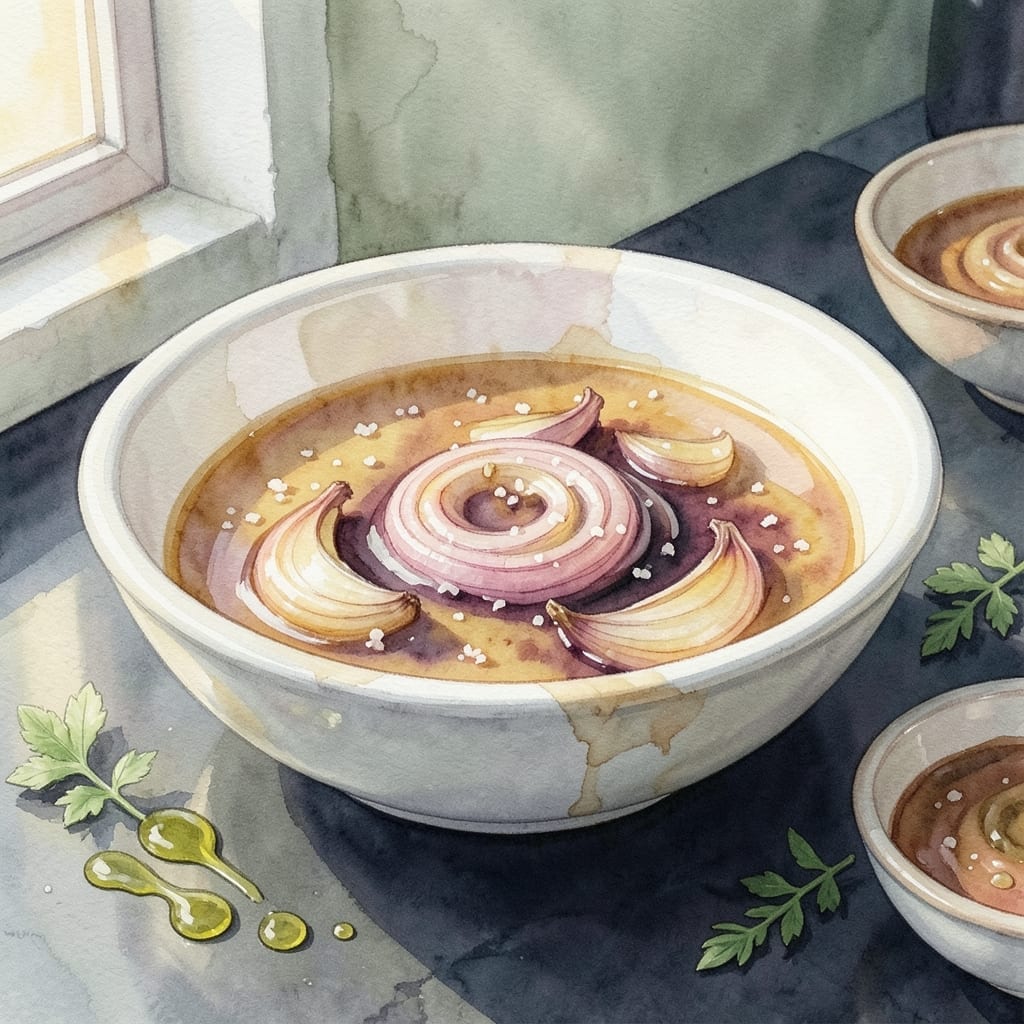
This caramelized onion sauce transforms ordinary dishes into something extraordinary. The slow cooking process coaxes out natural sweetness while building layers of deep, umami-rich flavor that elevate everything from burgers to grilled meats.
What makes this recipe special is its versatility and simplicity—just onions, a touch of sugar, and patience. The onions melt down into a glossy, jam-like consistency that’s both sweet and savory, with a richness that’s hard to resist.
You’ll end up with a sauce so versatile it works as a glaze, dip, or topping. Its balanced sweetness complements everything from sandwiches to roasted vegetables, adding depth to every bite.
Store in the fridge for up to a week, or freeze for longer shelf life. This sauce is a game-changer for any home cook.
Ingredients for Recipe for Sweet Onion Sauce
Nine ingredients transform into this glossy, jam-like sauce with deep caramelized flavor.
| Ingredient | Amount | Notes |
|---|---|---|
| Yellow Onions 🧅 | 4 whole | Thinly sliced for even caramelization |
| Extra-Virgin Olive Oil 🫒 | 3 tbsp | For initial sautéing of onions |
| Granulated Sugar 🍚 | 2 tbsp | Balances natural onion sweetness |
| Balsamic Vinegar 🍷 | 3 tbsp | Adds depth and acidity |
| Red Wine Vinegar 🍷 | 1 tbsp | Brightens the sauce flavor |
| Vegetable Broth 🥕 | ½ cup | Low-sodium preferred for control |
| Salt 🧂 | 1 tsp | Diamond Crystal kosher salt preferred |
| Black Pepper 🌶️ | ½ tsp | Freshly ground for best flavor |
| Garlic Cloves 🧄 | 3 cloves | Minced for aromatic depth |
| Fresh Thyme 🌿 | 1 tbsp | Chopped, or 1 tsp dried |
The onions are the foundation—use yellow onions for their balanced sweetness and sulfur content (which aids caramelization). Vidalia onions work too if you want extra sweetness. Source quality extra-virgin olive oil from Trader Joe’s or a specialty grocer. The vinegars should be aged for complexity; Colavita makes reliable balsamic. For the broth, Imagine Foods or Pacific brands are consistently vegan and flavorful.
No yellow onions? Sweet onions or shallots work in a pinch (adjust sugar down by half). Out of balsamic? Apple cider vinegar with 1 tsp brown sugar approximates the depth. For a shortcut, pre-sliced onions (frozen works too) save time—just thaw and drain well. The thyme can be omitted if necessary, but it adds a subtle earthiness that rounds out the sauce beautifully.
Finished sauce keeps in the fridge for up to 1 week in an airtight container. For longer storage, freeze in ice cube trays for portion control. The flavor actually deepens after 24 hours, so make it a day ahead if possible. Always reheat gently to preserve that glossy texture.
Why You’ll Love This Recipe
- One-Pot Wonder: I just throw the onions in with olive oil, sugar, and vinegars—no fancy steps, no mess.
- Sweet-Tangy Magic: The balsamic and red wine vinegar turn those onions into this deep, caramelized goodness that’s honestly addictive.
- Pairs With Everything: I’ve drizzled it on burgers, stirred it into pasta, even spooned it over ice cream. Yes, ice cream.
- Stays Fresh for Days: A batch lasts me a week in the fridge, and it only gets better as the flavors meld.
Step-by-Step Instructions for Sweet Onion Sauce
Master the technique of slow caramelization and balanced reduction for a versatile sauce.
Step 1: Caramelize the Yellow Onions
Heat the 3 tbsp extra-virgin olive oil in a heavy-bottomed saucepan over medium-low heat. Add the 4 whole yellow onions, thinly sliced, spreading them evenly across the pan. The low heat is crucial—it prevents burning while allowing the natural sugars to slowly develop.
Sprinkle the 2 tbsp granulated sugar and 1 tsp salt over the onions and stir to combine. Cook for 20-25 minutes, stirring occasionally, until the onions turn a deep amber brown and reduce to about one-third of their original volume. The sugar accelerates the caramelization process, while the salt enhances flavor development.
Step 2: Deglaze and Build Depth
Once the onions are deeply caramelized, pour in the 3 tbsp balsamic vinegar and 1 tbsp red wine vinegar. Use a wooden spoon to scrape up any browned bits from the bottom of the pan—these concentrated flavors are essential for complexity.
The mixture will bubble vigorously as the vinegars deglaze the pan. Allow it to simmer for 3-4 minutes until the liquid reduces by half and the onions absorb the tangy, fruity notes of the vinegars. The balsamic provides sweetness and depth, while the red wine vinegar adds brightness to balance the richness.
Step 3: Incorporate Aromatics and Broth
Add the 3 cloves garlic cloves, minced, and 1 tbsp fresh thyme to the pan. Stir constantly for 1 minute to bloom the aromatics without burning the garlic—you want its pungent sharpness to mellow into sweetness.
Pour in the 0.5 cup vegetable broth and 0.5 tsp black pepper. Stir well to combine, then bring the mixture to a gentle simmer. The broth thins the sauce temporarily, allowing the flavors to meld while the liquid reduces to your desired consistency.
Step 4: Reduce to Sauce Consistency
Reduce the heat to low and let the mixture simmer for 10-15 minutes, stirring occasionally. As the liquid evaporates, the sauce will thicken and become glossy, coating the back of a spoon. Watch for the sauce to reach a syrupy consistency that still flows easily when tilted.
Taste and adjust the seasoning if needed, though the caramelization and reduction process should have concentrated the flavors perfectly. The final sauce should balance sweet, tangy, and savory notes with a rich, velvety texture that clings beautifully to any dish.
Pro Tips For Making Recipe For Sweet Onion Sauce
- Caramelize Slowly: Cook the onions on medium-low heat for at least 30 minutes—I learned this the hard way after burning two batches trying to rush the process. The sugar will melt evenly and the onions will turn that perfect deep amber.
- Slice Evenly: Cut the yellow onions into uniform ¼-inch slices so they soften at the same rate. After ending up with half burnt, half raw onions my first time, I finally got serious about consistency.
- Deglaze Properly: Use the balsamic and red wine vinegar to scrape up all those browned bits from the pan—they’re packed with flavor. I used to skip this and wondered why my sauce lacked depth.
- Balance the Vinegars: Start with a 2:1 ratio of balsamic to red wine vinegar, then adjust to taste. Sounds weird, but it works: the balsamic adds sweetness while the red wine vinegar keeps it from being cloying.
Pro Cooking Tips for recipe for sweet onion sauce
Low and Slow Wins
Patience is key with this sauce—I never rush the caramelization. Keep the heat at medium-low to avoid burning the onions, which would add bitterness. The 20-25 minute cook time transforms them into a deep amber color with natural sweetness.
Deglaze Properly
When adding the 3 tbsp balsamic vinegar and 1 tbsp red wine vinegar, scrape up every browned bit from the pan. Those fond bits pack intense flavor that defines this sauce. Let it simmer for 3-4 minutes to meld the tangy notes.
Aromatics Timing
Add the 3 minced garlic cloves and 1 tbsp thyme only after the onions are fully caramelized. Cooking them too early can cause burning. Just 1 minute of stirring releases their fragrance without bitterness.
Consistency Check
The sauce should coat the back of a spoon but still flow easily. If it thickens too much during the 10-15 minute reduction, add a splash of vegetable broth. I use a heavy-bottomed saucepan for even heat distribution. 🔥
Seasoning Balance
Taste before finalizing—the caramelization process concentrates flavors beautifully. If needed, adjust with a pinch of salt or a drizzle of balsamic vinegar for acidity. The sauce should balance sweet, tangy, and savory notes perfectly.
Pro Equipment Tip
Invest in a wooden spoon for deglazing and a light-colored saucepan to monitor caramelization. I prefer All-Clad stainless steel for its even heating and durability. It makes a noticeable difference in the final texture.
Nutrition Facts
Frequently Asked Questions
Can I use red onions instead of yellow?
Red onions work but will give a slightly sharper, more pungent flavor. Stick with yellow onions for classic sweetness, or use Vidalia onions for extra sweetness if available.
How long does it take to caramelize the onions?
Plan for 20-25 minutes over medium-low heat. Rushing with higher heat risks burning. Stir occasionally for even cooking and deep amber color development.
What if my sauce is too thick?
Thin it with a splash of vegetable broth or water. Simmer for 2-3 minutes to incorporate fully. The sauce should coat a spoon but still flow easily.
Can I make this sauce ahead?
Yes! The flavor deepens after 24 hours. Store in an airtight container in the fridge for up to 1 week, or freeze for longer storage.

- 6 Egg Cake Recipe with Oil: Light as Air With Buttery Moisture - October 4, 2026
- 4 Bean Casserole Recipe: One-Pan Heartiness With Smoky Paprika Depth - October 4, 2026
- 3-Ingredient Keto Mug Cake Recipe: Microwave Magic in 2 Minutes - October 4, 2026