
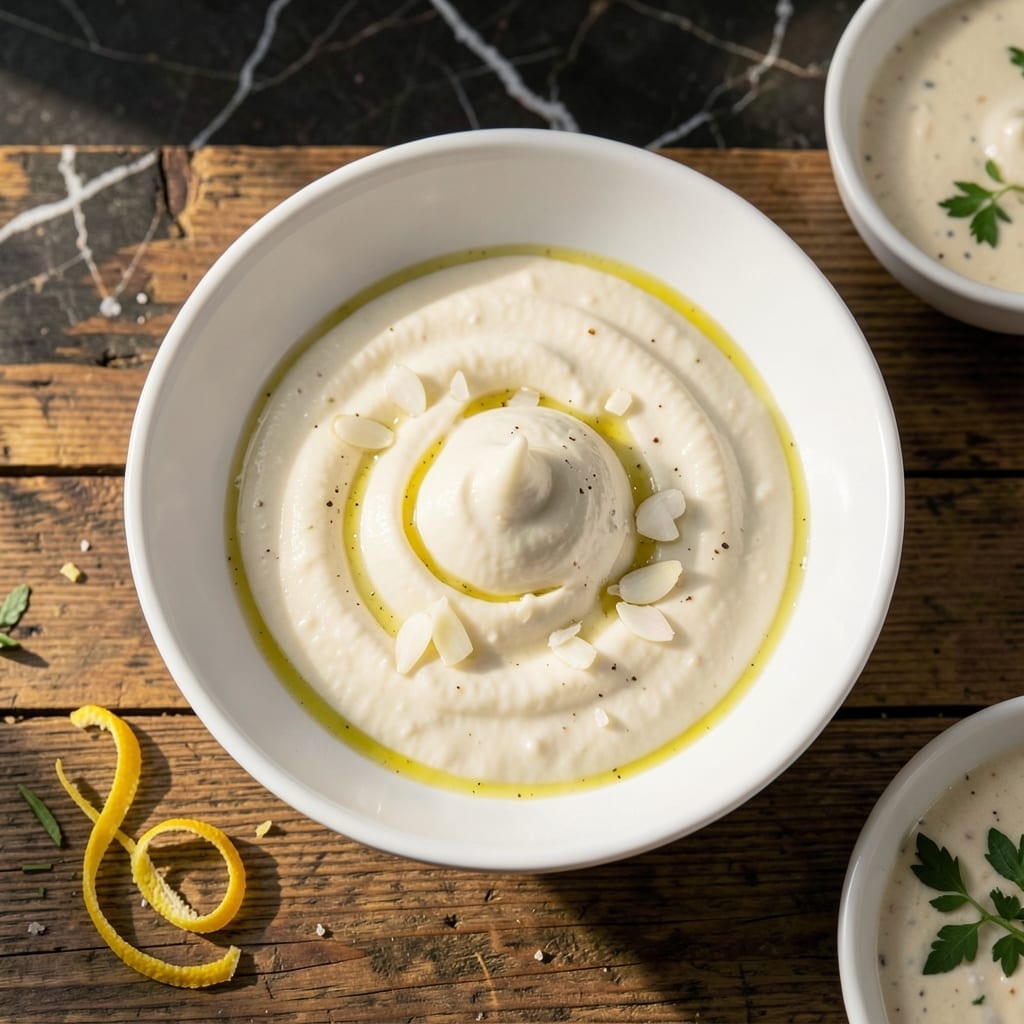
This Lebanese garlic spread delivers bold flavor that transforms any dish with its creamy, tangy richness.
With just a few simple ingredients and proper emulsification, you’ll create a versatile sauce perfect for dipping, spreading, or enhancing meats and vegetables.
Ingredients for Recipe for Toum Sauce
Six ingredients transform into this bold, creamy Lebanese spread with proper technique and patience.
| Ingredient | Amount | Notes |
|---|---|---|
| Garlic Cloves 🧄 | 12 cloves | Fresh, peeled, stems removed |
| Neutral Oil 🫒 | 2 cups | Grapeseed, sunflower, or light olive oil |
| Lemon Juice 🍋 | ¼ cup | Freshly squeezed preferred |
| Ice Water 💧 | ¼ cup | As needed for emulsification |
| Sea Salt 🧂 | 1 tsp | Fine grain for even distribution |
| Citric Acid 🍋 | ¼ tsp | Optional for extra tang |
The garlic is non-negotiable—fresh cloves only, never jarred or powdered. Look for firm, plump bulbs with vibrant purple streaks when possible. Store-bought pre-peeled garlic works in a pinch (check Trader Joe’s for organic), but fresh tastes brighter. The oil must be completely neutral; grapeseed oil is ideal for its high smoke point and clean flavor. Avoid extra-virgin olive oil—it’s too assertive for this emulsion.
No neutral oil? Light olive oil or avocado oil can work, but avoid anything with strong flavor. Short on lemon juice? White vinegar or lime juice at half the amount gets you close. The ice water is critical—cold stabilizes the emulsion. If your sauce breaks, whip in another tablespoon of water while blending. For extra creaminess, some add a teaspoon of aquafaba (chickpea brine).
Toum keeps 1 week in the fridge in a clean jar. The flavor mellows over time. Freezing isn’t recommended—emulsions separate when thawed. Always use a spotless blender or food processor to prevent spoilage.
Why You’ll Love This Recipe
- Five Minute Magic: I can blend this together faster than it takes to heat up the oven.
- Garlic Explosion: The raw garlic and lemon juice pack a punch that’s bold without being overpowering.
- Drizzle on Everything: Honestly, it’s my secret weapon for sandwiches, grilled meats, even roasted veggies.
- Stays Fresh: A jar lasts me a week in the fridge, and it’s still just as zesty and creamy.
Step-by-Step Instructions for Toum Sauce
Master this emulsion technique and you will achieve a creamy, stable garlic sauce with restaurant-quality texture.
Step 1: Prepare and Season the Garlic Base
In the bowl of a food processor, combine the 12 cloves Garlic Cloves with the 1 tsp Sea Salt and 0.25 tsp Citric Acid. Pulse until the mixture forms a fine, uniform paste, stopping to scrape down the sides as needed. The salt helps break down the garlic fibers while the citric acid enhances the bright, tangy flavor.
This step is crucial—under-processed garlic will create a gritty texture in your final sauce. You want a completely smooth paste that looks almost like a thick puree. The garlic’s pungent aroma should be strong but balanced by the salt.
Step 2: Begin the Emulsion with Lemon Juice
With the food processor running on low speed, drizzle in the 0.25 cup Lemon Juice through the feed tube. This initial liquid helps create the foundation for your emulsion. The mixture will look broken at first, but as the lemon juice incorporates, it will begin to thicken and turn pale yellow.
Process for 30-45 seconds until the garlic and lemon juice form a thick, creamy base. The acid from the lemon juice not only contributes flavor but also helps stabilize the emulsion. If the mixture appears too thick, resist the urge to add oil just yet.
Step 3: Slowly Incorporate the Neutral Oil
With the processor still running, begin adding the 2 cups Neutral Oil in a very slow, thin stream through the feed tube. This is the most critical step—adding the oil too quickly will cause the sauce to break. The stream should be so slow that it takes 8-10 minutes to incorporate all the oil.
As you add the oil, you will see the mixture transform from a thin liquid to a thick, creamy, white emulsion. Stop the processor periodically to scrape down the sides and ensure even incorporation. The sauce should become glossy and hold its shape when the processor is turned off.
Step 4: Adjust Consistency with Ice Water
Once all the oil is incorporated, check the consistency. If the sauce is too thick, add the 0.25 cup Ice Water, 1 tablespoon at a time, with the processor running. The ice water helps thin the sauce to the perfect spreadable consistency without breaking the emulsion.
Taste and adjust seasoning if needed, though the initial salt should be sufficient. The final sauce should be smooth, creamy, and stable, with a bright white color and a strong garlic flavor balanced by the lemon’s acidity. If the sauce does begin to separate, simply blend it again until smooth.
Pro Tips For Making Recipe For Toum Sauce
- Chill the Garlic: Soak the peeled garlic cloves in ice water for 10 minutes before blending—it mellows the harshness and prevents that bitter aftertaste I used to get.
- Drizzle Slowly: Add the oil in a thin, steady stream while blending, about 1 tablespoon every 10 seconds, or the emulsion will break and you’ll end up with a sad, separated mess.
- Use Fresh Lemon: Bottled lemon juice works in a pinch, but fresh lemon juice brightens the toum in a way the bottled stuff just can’t—I learned this the hard way after a few dull batches.
- Start with Salt: Add the sea salt to the garlic before the oil—it helps break down the cloves faster and distributes the seasoning evenly, so you’re not left with salty pockets.
Troubleshooting recipe for toum sauce
Too Dry or Tough?
If your toum sauce feels dense or crumbly, it’s likely due to insufficient oil or over-blending the garlic before adding the oil. Garlic releases moisture, but without enough oil, the emulsion breaks.
Quick Fix: Slowly drizzle in more neutral oil (like grapeseed or vegetable) while blending until it reaches a smooth, creamy consistency.
Sauce Separated or Oily?
Separation happens when the oil and garlic mixture don’t emulsify properly, often because the oil was added too quickly or the garlic wasn’t blended enough initially.
Quick Fix: Start over with a fresh batch, blending the garlic and lemon juice first, then very slowly adding oil in a thin stream. A splash of ice water can help stabilize it.
Too Bitter or Harsh?
Overly sharp flavors usually mean the garlic wasn’t fresh or the lemon juice was too concentrated. Old garlic can develop a bitter edge, and too much acidity can overwhelm.
Quick Fix: Balance the flavors with a pinch of sugar or a teaspoon of honey. Use fresh, high-quality garlic and adjust lemon juice to taste.
Not Fluffy Enough?
A light, airy toum needs proper emulsification and patience. If it’s flat, you may have skipped blending the garlic into a paste before adding oil or used a dull blade.
Quick Fix: Use a high-speed blender or food processor, blend the garlic and lemon into a smooth paste first, then add oil drop by drop at the start. This builds the emulsion gradually.
Nutrition Facts

- 6 Egg Cake Recipe with Oil: Light as Air With Buttery Moisture - October 4, 2026
- 4 Bean Casserole Recipe: One-Pan Heartiness With Smoky Paprika Depth - October 4, 2026
- 3-Ingredient Keto Mug Cake Recipe: Microwave Magic in 2 Minutes - October 4, 2026