
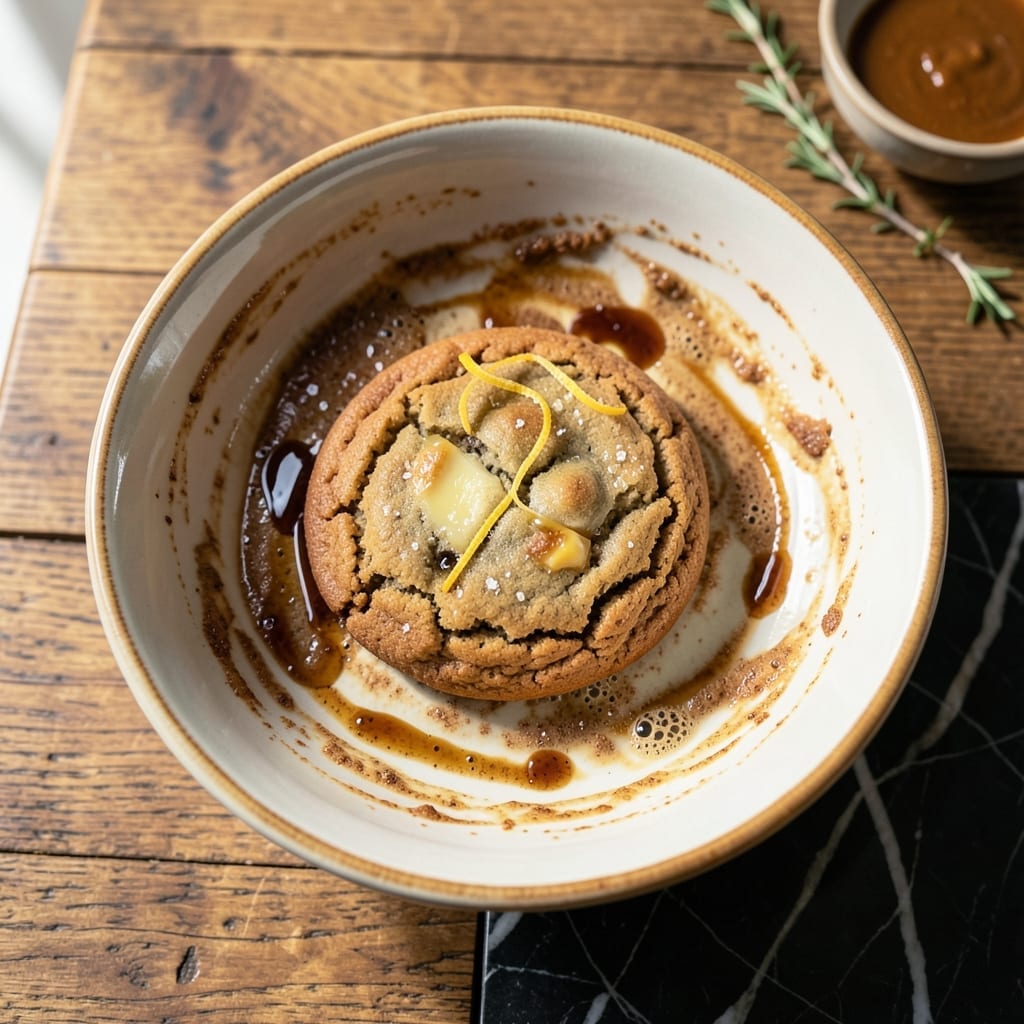
When you need cookies fast, this microwave method delivers warm, soft results in minutes. No oven required.
Simple ingredients come together quickly for a treat that’s ready to eat almost instantly. Perfect for satisfying sudden cravings.
Ingredients for Recipe of Cookies in Microwave Oven
Nine pantry staples transform into warm, chewy cookies without an oven.
| Ingredient | Amount | Notes |
|---|---|---|
| All-Purpose Flour 🌾 | 1 cup | Spoon and level for accuracy |
| Granulated Sugar 🍚 | ½ cup | White or raw cane works |
| Light Brown Sugar 🟤 | ¼ cup | Packed firmly into cup |
| Unsalted Butter 🧈 | ½ cup | Melted and cooled slightly |
| Large Egg 🥚 | 1 whole | Room temperature preferred |
| Vanilla Extract 🌿 | 1 tsp | Pure extract for best flavor |
| Baking Soda 🧂 | ¼ tsp | Ensures proper rise in microwave |
| Salt 🧂 | ¼ tsp | Fine sea salt preferred |
| Semi-Sweet Chocolate Chips 🍫 | ¾ cup | Or chop chocolate bar |
| Old-Fashioned Rolled Oats 🌾 | ½ cup | Optional for chewy texture |
The butter matters here. Use unsalted so you control the salt content—Land O’Lakes and Kerrygold are reliable. Brown sugar adds moisture for that soft texture; Domino or C&H work well. For flour, King Arthur all-purpose is the gold standard (and their measurements are consistent). If you’re using self-rising flour, omit the baking soda and salt entirely.
No brown sugar? White sugar plus 1 tbsp molasses per cup does the trick. Egg-free? Flax egg (1 tbsp ground flax + 3 tbsp water) binds just fine in this method. Chocolate chips can be swapped for M&M’s or chopped nuts—whatever you’ve got. The vanilla extract is non-negotiable though; imitation vanilla lacks depth. For gluten-free, 1:1 baking flour works but texture will differ.
Dough keeps 3 days covered in the fridge, or freeze scooped portions for 3 months. Baked cookies stay fresh 4-5 days in an airtight container. Microwave times may vary—start with 1 minute and adjust as needed (don’t overbake).
Why You’ll Love This Recipe
- One Mug Wonder: I mix the flour, sugars, butter, and egg right in a mug—no bowls, no mess, just 2 minutes in the microwave.
- Buttery Sweetness: The combo of brown and granulated sugar with melted butter gives that bakery-style richness in every bite.
- Dorm Room Hero: Honestly, this saved me in college—no oven, no problem, just warm cookies whenever the craving hits.
- Budget Friendly: A single egg and pantry staples make a batch so cheap I can afford to “test” one (or three) straight from the mug.
Step-by-Step Instructions for Cookies in Microwave Oven
This method delivers soft, chewy cookies in minutes with professional results.
Step 1: Mix Wet and Dry Ingredients
In a microwave-safe bowl, whisk together the 0.5 cup Unsalted Butter (melted and cooled), 0.5 cup Granulated Sugar, and 0.25 cup Light Brown Sugar until smooth. Add the 1 whole Large Egg and 1 tsp Vanilla Extract, beating until fully incorporated. The mixture should be pale and slightly thickened.
In a separate bowl, combine the 1 cup All-Purpose Flour, 0.25 tsp Baking Soda, and 0.25 tsp Salt. Whisk until no lumps remain. Gradually add the dry mixture to the wet ingredients, stirring just until combined—overmixing develops gluten, which makes cookies tough.
Step 2: Fold in Mix-Ins
Using a silicone spatula, gently fold in the 0.75 cup Semi-Sweet Chocolate Chips and 0.5 cup Old-Fashioned Rolled Oats. Distribute them evenly throughout the dough. The oats add chewiness, while the chocolate chips provide rich pockets of melted chocolate.
If the dough feels too sticky, chill it for 5 minutes in the freezer. This brief rest makes it easier to portion and prevents excessive spreading during microwaving. The dough should hold its shape when scooped but still be soft.
Step 3: Portion and Shape the Dough
Divide the dough into 4 equal portions (about 2 tablespoons each) and roll them into balls. Place 2 portions on a microwave-safe plate, leaving at least 2 inches between them—microwave cookies spread more than oven-baked ones.
Flatten each ball slightly with the palm of your hand. This ensures even cooking and a uniform texture. For best results, use a plate that’s at least 10 inches in diameter to accommodate spreading.
Step 4: Microwave and Check for Doneness
Microwave on high power for 45-60 seconds. Start checking at 45 seconds—the edges should look set but the centers will still appear slightly underdone. Microwaves vary, so watch closely to avoid overcooking.
The cookies are done when the edges are lightly golden and the tops look dry but still soft to the touch. They’ll continue to set as they cool, so don’t wait for them to firm up completely in the microwave.
Step 5: Cool and Serve
Let the cookies rest on the plate for 2-3 minutes. They’ll firm up as they cool, but will remain soft and chewy. Transfer to a wire rack if you prefer a slightly firmer texture.
Repeat with the remaining dough portions. Serve warm for gooey chocolate pockets, or let cool completely for a firmer bite. These are best enjoyed fresh but can be stored in an airtight container for up to 3 days.
Pro Tips For Making Recipe Of Cookies In Microwave Oven
- Melt Butter First: Softening butter in the microwave first makes mixing easier—I learned this the hard way after struggling with cold, chunky dough.
- Use Short Bursts: Microwave the dough in 15-20 second bursts to avoid overcooking; after burning three batches, I finally figured out the timing.
- Skip the Egg: For a faster version, omit the egg if you’re out—sounds weird, but it works for a simpler, still-tasty cookie.
- Flatten the Dough: Press the dough into a flat disc before microwaving—my grandmother swore by this, and she was right: it cooks more evenly.
Common Mistakes When Making This Recipe
🔥 Overcrowding the Plate
Using too many cookie portions on a single plate can lead to uneven cooking. Microwaves circulate heat differently than ovens, and crowded cookies may not cook through or could merge into one giant, undercooked mess.
Fix: Leave at least 1 inch between each cookie. Cook in batches if needed to ensure even heat distribution.
🍳 Skipping the Parchment Paper
Placing cookie dough directly on a plate often results in stuck-on messes or burnt bottoms. Microwaves can heat plates unevenly, causing parts of the cookie to overcook while others stay raw.
Fix: Always line your microwave-safe plate with parchment paper. It prevents sticking and promotes even cooking.
⏰ Overcooking the Dough
Microwaves cook fast, and it’s easy to leave cookies in too long, turning them hard or dry. Unlike oven baking, microwave cookies continue cooking slightly after removal due to residual heat.
Fix: Start with the minimum suggested time (e.g., 45-60 seconds), then check and add time in 10-second increments until done.
🌡️ Ignoring Dough Consistency
Dry or overly sticky dough can ruin texture. Microwave cookies need slightly moister dough than oven-baked ones to stay soft, as microwaves tend to dry out foods faster.
Fix: Use a recipe tailored for microwaves, and add 1-2 teaspoons of milk if the dough seems too dry. Mix until just combined.
Nutrition Facts

- 6 Egg Cake Recipe with Oil: Light as Air With Buttery Moisture - October 4, 2026
- 4 Bean Casserole Recipe: One-Pan Heartiness With Smoky Paprika Depth - October 4, 2026
- 3-Ingredient Keto Mug Cake Recipe: Microwave Magic in 2 Minutes - October 4, 2026