
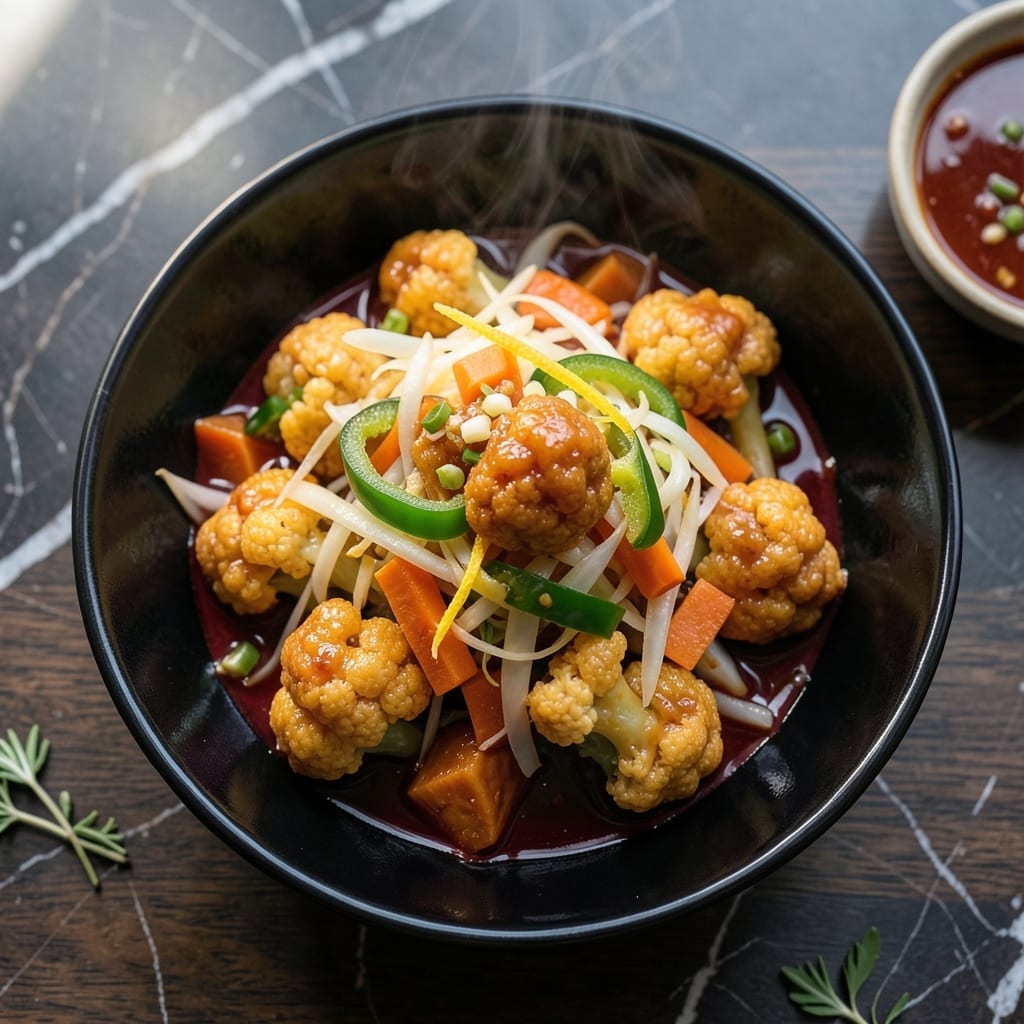
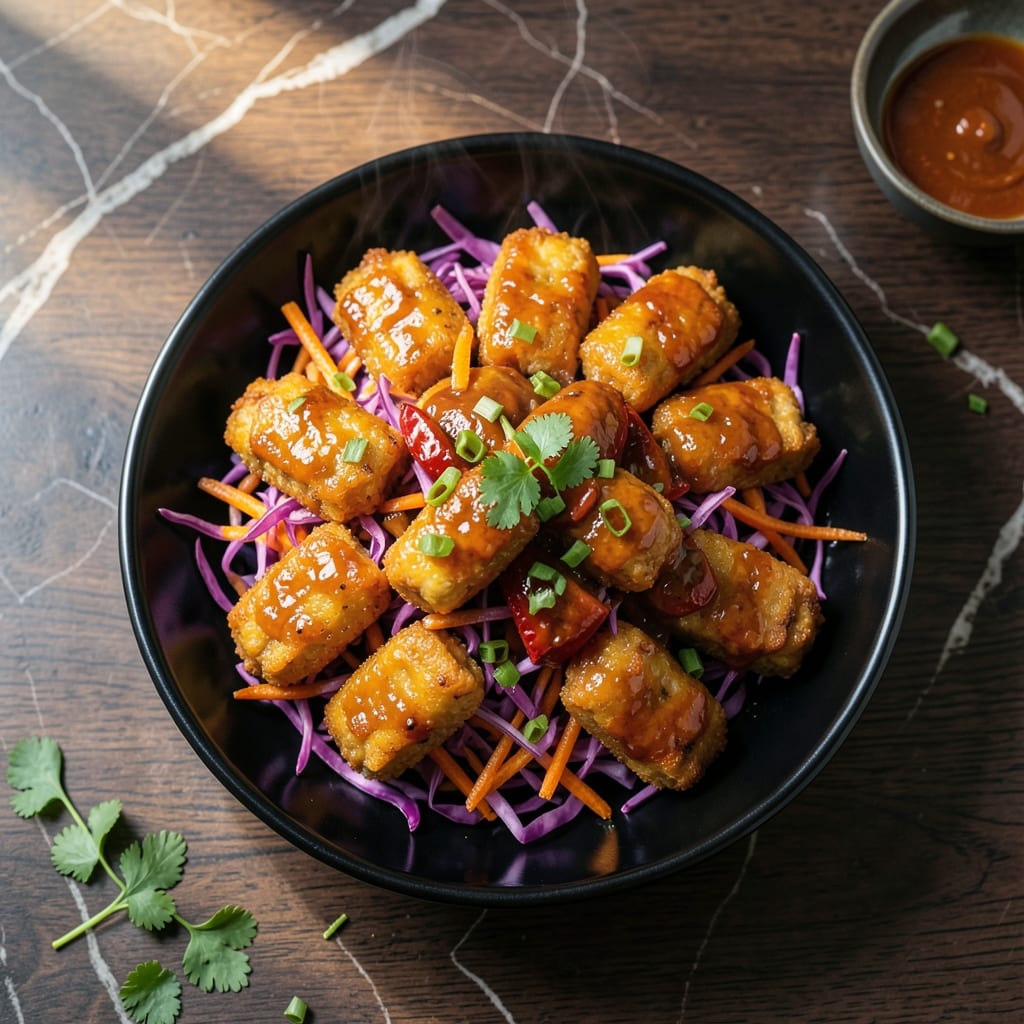
This Indo-Chinese classic delivers crispy fried balls coated in a tangy, slightly sweet sauce that’s impossible to resist.
I perfected this technique to ensure the vegetable balls stay light and airy inside while maintaining their signature crunch outside.
Ingredients for Recipe of Making Manchurian
Pantry staples and fresh vegetables create these Indo-Chinese crispy bites with signature crunch.
| Ingredient | Amount | Notes |
|---|---|---|
| Cabbage 🥬 | 3 cups | Finely shredded, tightly packed |
| Carrots 🥕 | ¾ cup | Finely grated or julienned |
| Green Bell Pepper 🌶️ | ½ cup | Finely diced, seeds removed |
| All-Purpose Flour 🌾 | ¾ cup | For binding vegetable mixture |
| Cornstarch 🌾 | ¼ cup | For extra crispiness |
| Soy Sauce 🫒 | 2 tbsp | Low-sodium preferred for balance |
| Vegetable Oil 🛢️ | 2 cups | For deep frying, neutral flavor |
| Garlic Cloves 🧄 | 6 cloves | Minced finely for sauce |
| Fresh Ginger 🌿 | 1 tbsp | Peeled and grated finely |
| Green Onions 🧅 | 4 whole | Thinly sliced, white and green parts separated |
| Tomato Ketchup 🍅 | ½ cup | For tangy base in sauce |
| Red Chili Sauce 🌶️ | 2 tbsp | Adjust quantity for spice preference |
| White Vinegar 💧 | 1 tbsp | Or substitute with apple cider vinegar |
| Granulated Sugar 🍚 | 1 tbsp | Balances tanginess in sauce |
| Salt 🧂 | 1 tsp | Divided, adjust to taste |
The vegetables are the foundation here. Fresh cabbage should be crisp and heavy for its size—avoid pre-shredded bags (they wilt too quickly). Carrots and bell peppers from Whole Foods or your local farmers market often have superior texture. The cornstarch is non-negotiable for that restaurant-style crunch—Bob’s Red Mill is widely available and reliable. Use cold vegetables straight from the fridge to keep the mixture firm while shaping.
No cornstarch? Potato starch or arrowroot powder work at a 1:1 ratio. Out of red chili sauce? Sriracha mixed with a pinch of sugar gets you close. The soy sauce can be tamari for gluten-free needs. Fresh ginger and garlic are ideal, but jarred minced (in a pinch) works—just drain the liquid well. For extra heat, add 1 tsp of minced green chili to the sauce.
The vegetable balls freeze beautifully before frying—shape, then freeze on a tray before transferring to a bag for up to 3 months. Sauce keeps for 1 week in the fridge. Reheat fried balls in the oven to maintain crispiness. Always fry in small batches to avoid dropping oil temperature (that’s the secret to keeping them light).
Why You’ll Love This Recipe
- Minimal Chopping Required: I just shred cabbage, grate carrots, and dice the bell pepper—no fancy knife skills needed.
- That Saucy Crunch: The cornstarch coating gives it that perfect crispy bite, while the veggies stay juicy inside.
- Feeds a Crowd Cheap: Honestly, a head of cabbage and a few carrots stretch into enough manchurian for a family dinner.
- Tastes Better Day Two: Between us, the leftovers soak up even more flavor overnight—if they last that long.
Step-by-Step Instructions for Indo-Chinese Crispy Manchurian
Master the technique for achieving perfectly crispy vegetable balls with a glossy, tangy sauce every time.
Step 1: Prepare the Vegetable Mixture
In a large mixing bowl, combine the 3 cups Cabbage, 0.75 cup Carrots, and 0.5 cup Green Bell Pepper. I recommend finely shredding the cabbage and julienning the carrots for uniform texture. Sprinkle ½ tsp Salt over the vegetables and mix well.
Let this mixture sit for 5-7 minutes to draw out excess moisture. After resting, squeeze out all the liquid—this is critical for achieving crispy manchurian balls. The drier the mixture, the better the final texture will be.
Step 2: Form and Fry the Manchurian Balls
To the vegetable mixture, add the 0.75 cup All-Purpose Flour, 0.25 cup Cornstarch, and the remaining ½ tsp Salt. Mix until a thick, cohesive batter forms. The cornstarch is essential for that signature crispiness.
Heat the 2 cups Vegetable Oil in a deep, heavy-bottomed pan to 350°F. While the oil heats, shape the mixture into 12-15 equal-sized balls. Test the oil temperature by dropping a small piece of batter in—it should sizzle and rise immediately.
Fry the balls in batches for 4-5 minutes until they turn golden brown and crispy all over. Use a slotted spoon to transfer them to a paper towel-lined plate to drain excess oil.
Step 3: Create the Manchurian Sauce
In a separate pan, heat 1 tbsp Vegetable Oil over medium-high heat. Add the 6 cloves Garlic Cloves and 1 tbsp Fresh Ginger, sautéing for 30 seconds until fragrant. Be careful not to burn the aromatics—this would make the sauce bitter.
Add the white parts of the 4 whole Green Onions and cook for another 30 seconds. Then stir in the 2 tbsp Soy Sauce, 0.5 cup Tomato Ketchup, 2 tbsp Red Chili Sauce, 1 tbsp White Vinegar, and 1 tbsp Granulated Sugar.
Step 4: Combine and Finish
Simmer the sauce for 2-3 minutes until it thickens slightly and develops a glossy sheen. Taste and adjust seasoning if needed—you want a balance of tangy, sweet, and spicy flavors.
Add the fried manchurian balls to the sauce and gently toss to coat evenly. Cook for an additional 1-2 minutes to allow the flavors to meld. The balls should maintain their crispiness while absorbing some of the sauce’s flavor.
Garnish with the green parts of the Green Onions and serve immediately. The contrast between the crispy exterior and the soft, flavorful interior with the tangy sauce is what makes this dish exceptional.
Pro Tips For Making Recipe Of Making Manchurian
- Drain the Veggies: After grating cabbage and carrots, squeeze out every last drop of water with your hands—I learned this the hard way when my first few manchurian balls fell apart in the oil.
- Chill the Mix: Let the veggie-flour batter rest in the fridge for 15-20 minutes before shaping; it holds together way better and fries up crispier.
- Hot Oil Test: Drop a tiny piece of batter into the oil first—if it sizzles and floats immediately, the temperature’s right for perfectly golden manchurian.
- Double-Fry for Crisp: Fry the balls once at medium heat, rest them 2 minutes, then fry again at high heat for that restaurant-style crunch without burning the inside.
Regional Styles of This Dish
🍳 Indian Style
In India, Manchurian is a beloved Indo-Chinese dish with a crispy, deep-fried exterior and a tangy, spicy sauce. The base often includes cabbage, carrots, and spring onions, mixed with flour or cornstarch for binding. The sauce is a zesty blend of soy sauce, chili sauce, vinegar, and garlic, giving it a bold, umami-rich flavor. Historically, this style emerged as a fusion of Chinese techniques with Indian spices, making it a staple in street food culture.
🥘 Nepalese Style
Nepalese Manchurian leans toward a spicier and lighter version, often using freshly ground timur (Sichuan pepper) for an extra kick. The fritters are typically smaller, with a finer chop of vegetables like bell peppers and green beans. The sauce is less sweet, relying on tomato and green chili for heat, reflecting Nepal’s love for bold, fiery flavors.
🔥 Chinese Style
In China, Manchurian stays closer to its roots with a focus on steamed or pan-fried dumplings rather than deep-fried balls. The filling often includes minced pork or shrimp, seasoned with ginger, garlic, and scallions. The sauce is lighter, featuring soy-based or clear broths, and is served as a soup or with a delicate dipping sauce.
✨ Tibetan Style
Tibetan Manchurian incorporates yak meat or cheese for a unique twist, blending it with traditional vegetables. The dish is often less saucy, with a dry, crispy texture, and served with spicy chili oil or a tangy tomato-based dip. This style highlights the region’s high-altitude ingredients and love for hearty, warming dishes.
Nutrition Facts

- 6 Egg Cake Recipe with Oil: Light as Air With Buttery Moisture - October 4, 2026
- 4 Bean Casserole Recipe: One-Pan Heartiness With Smoky Paprika Depth - October 4, 2026
- 3-Ingredient Keto Mug Cake Recipe: Microwave Magic in 2 Minutes - October 4, 2026