
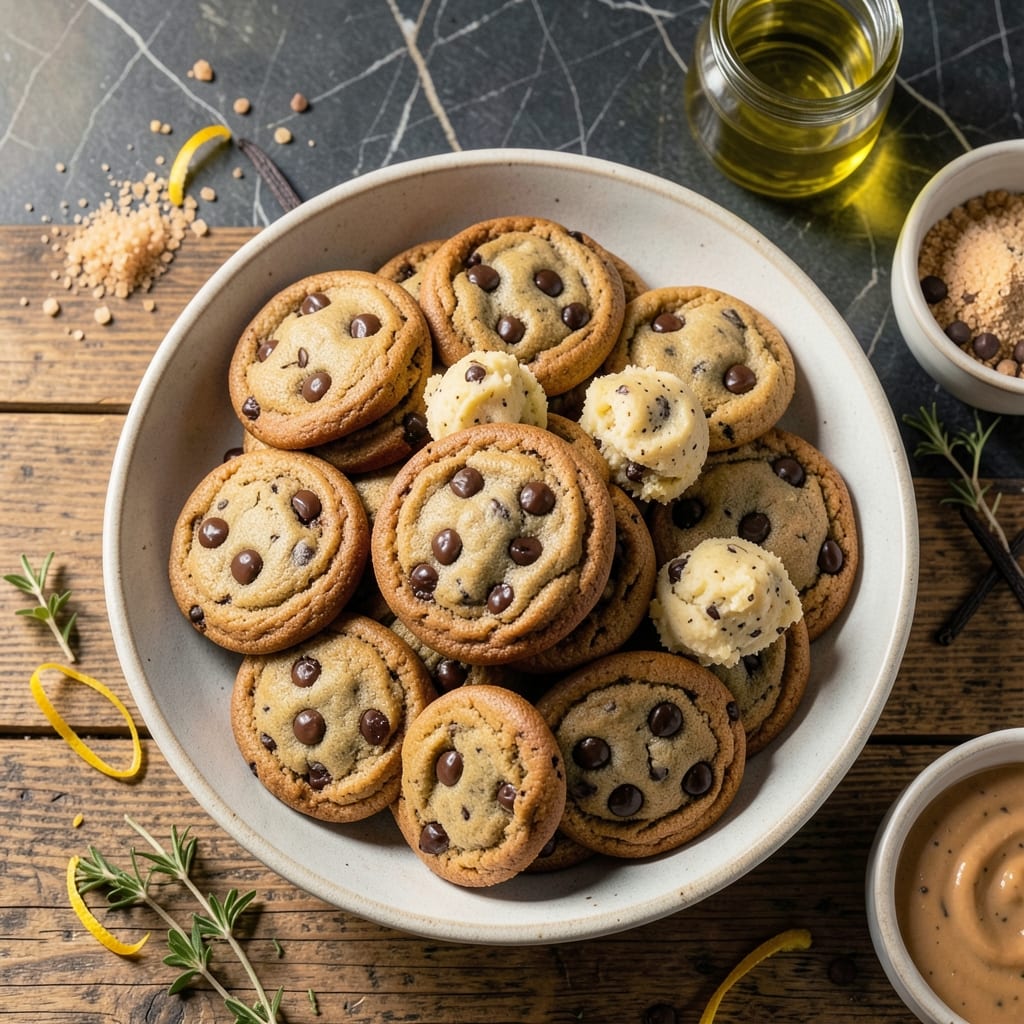
I’ve perfected a chewy chocolate chip cookie without butter or baking soda, proving you don’t need tradition to get rich flavor. The olive oil swap adds depth while keeping the texture soft and indulgent.
This method relies on simple ingredients and precise timing to achieve bakery-style results. The cookies stay tender and packed with chocolate in every bite.
Ingredients for Chocolate Chip Cookie Recipe Without Butter or Baking Soda
Simple ingredients create chewy, rich cookies with an olive oil swap.
| Ingredient | Amount | Notes |
|---|---|---|
| All-Purpose Flour 🌾 | 2 ½ cups | Sifted for best texture |
| Extra-Virgin Olive Oil 🫒 | ¾ cup | High-quality for depth |
| Light Brown Sugar 🧈 | 1 cup | Packed firmly into cup |
| Granulated Sugar 🏳️ | ½ cup | White sugar preferred |
| Unsweetened Applesauce 🍎 | ½ cup | Room temperature for mixing |
| Vanilla Extract 🌿 | 2 tsp | Pure vanilla, not imitation |
| Salt 🧂 | 1 tsp | Fine sea salt recommended |
| Ground Cinnamon 🌶️ | ½ tsp | Optional for warmth |
| Baking Powder 🧂 | 1 tsp | Ensures proper rise |
| Semi-Sweet Chocolate Chips 🍫 | 1 ½ cups | Vegan chocolate chips required |
| Chopped Walnuts 🌰 | ½ cup | Optional for crunch |
The olive oil is non-negotiable here—use a high-quality extra-virgin for the best depth of flavor. I recommend California Olive Ranch or Bertolli for consistency. The flour should be all-purpose; King Arthur is my go-to. For the chocolate, Enjoy Life or Pascha brands offer excellent vegan chips that melt beautifully.
No applesauce? Mashed banana at a 1:1 ratio works, though it adds a hint of flavor. Swap the sugars for coconut sugar if preferred, but the texture may differ slightly. For the oil, melted coconut oil can substitute, though it may firm up in cooler temps. Skip the walnuts if allergies are a concern, or swap for pecans or almonds.
Store the dough in the fridge for up to 3 days, or freeze for 1 month in an airtight container. Baked cookies keep at room temperature for 5 days. Always bring ingredients to room temperature before mixing for even texture.
Why You’ll Love This Recipe
- One-Bowl Wonder: I mix everything in a single bowl—no creamings, no softening butter, just dump and stir.
- Rich & Fruity: The olive oil adds this deep, almost caramelized note while applesauce keeps them moist.
- Lunchbox Hero: Honestly, these stay soft for days, so I bake a batch Sunday and we’re set for the week.
- Pantry MVP: No butter, no baking soda—just staples I always have, so cookie cravings never catch me off guard.
Step-by-Step Instructions for Chocolate Chip Cookies Without Butter or Baking Soda
This method produces perfectly chewy cookies with a rich depth of flavor from the olive oil swap.
Step 1: Mix Wet Ingredients for Smooth Emulsion
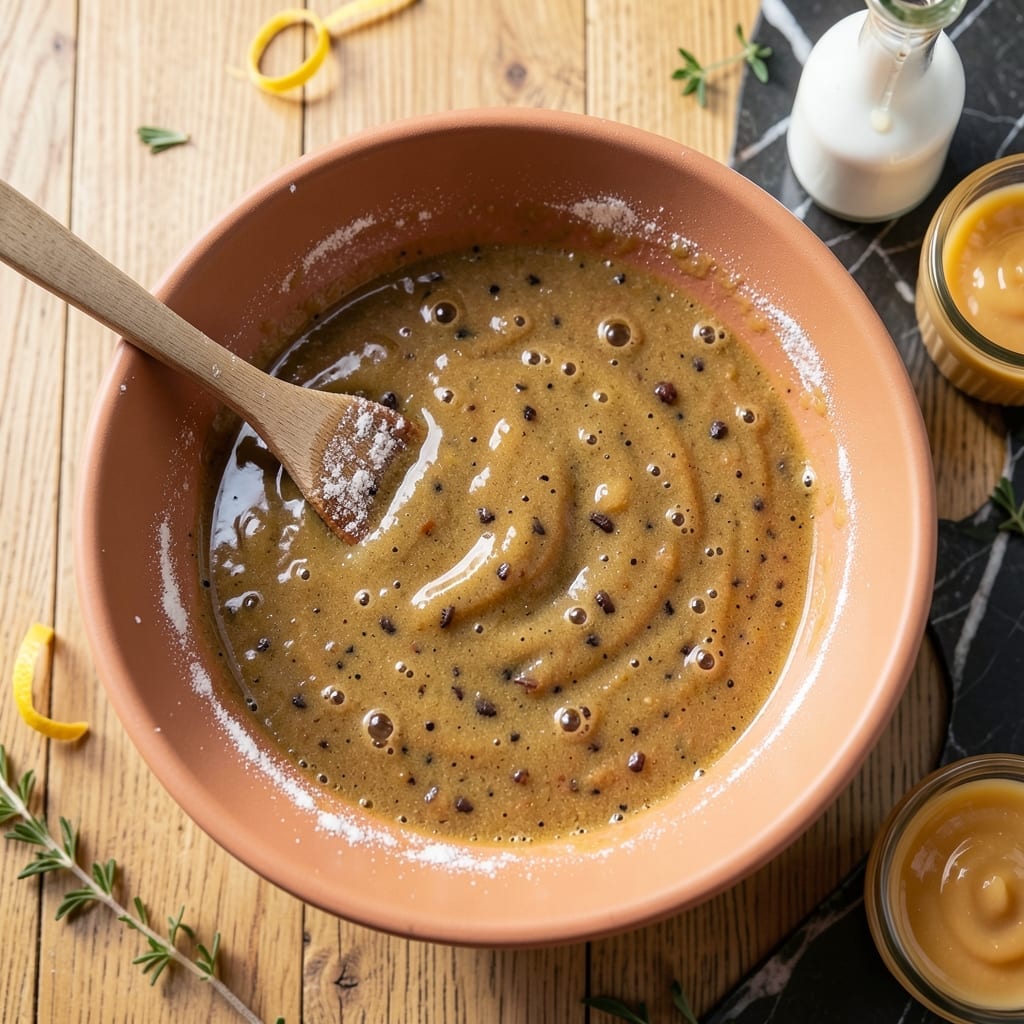
In a large mixing bowl, whisk together the 0.75 cup Extra-Virgin Olive Oil and both sugars—the 1 cup Light Brown Sugar and 0.5 cup Granulated Sugar—until fully combined and slightly thickened. The olive oil should be at room temperature to emulsify properly.
Add the 0.5 cup Unsweetened Applesauce and 2 tsp Vanilla Extract, whisking vigorously for 1-2 minutes until the mixture is smooth and pale. This step is crucial for aerating the dough and developing the cookie’s structure without traditional butter.
Step 2: Combine Dry Ingredients for Even Distribution
In a separate bowl, sift the 2.5 cups All-Purpose Flour with the 1 tsp Salt, 0.5 tsp Ground Cinnamon, and 1 tsp Baking Powder. Sifting prevents clumps and ensures the leavening agent is evenly distributed throughout the flour.
I always recommend sifting even if your flour appears lump-free—it incorporats air, which contributes to a lighter texture in the final cookies. The cinnamon adds a subtle warmth that complements the chocolate beautifully.
Step 3: Create the Dough and Fold in Add-Ins
Gradually add the dry ingredients to the wet mixture in 3 additions, folding gently with a spatula after each. Mix just until the flour disappears—overworking the dough develops gluten, which can make the cookies tough instead of tender.
Fold in the 1.5 cups Semi-Sweet Chocolate Chips and 0.5 cup Chopped Walnuts (if using) until evenly distributed. The dough will be thicker than traditional cookie dough due to the olive oil base, but it should still be pliable and slightly sticky.
Step 4: Chill and Portion the Dough
Cover the bowl with plastic wrap and refrigerate for at least 1 hour, or up to 24 hours. Chilling is essential—it allows the flour to fully hydrate and the flavors to meld, while also making the dough easier to handle.
When ready to bake, preheat your oven to 350°F and line baking sheets with parchment paper. Scoop the dough into 2-tablespoon portions (about the size of a golf ball) and place them 2 inches apart on the prepared sheets. The dough won’t spread as much as butter-based recipes, so flatten each ball slightly with your palm.
Step 5: Bake to Golden Perfection
Bake for 10-12 minutes until the edges are light golden brown and the centers still look slightly soft. The cookies will continue to set as they cool on the baking sheet, so don’t overbake—this is the secret to maintaining their chewy texture.
Let the cookies cool on the baking sheet for 5 minutes before transferring to a wire rack. They’ll firm up as they cool but remain wonderfully tender inside. The olive oil gives them a subtle fruity depth that pairs beautifully with the rich chocolate and toasty walnuts.
Pro Tips For Making Chocolate Chip Cookie Recipe Without Butter Or Baking Soda
- Chill the Dough: After mixing, refrigerate the dough for at least 30 minutes—I learned this the hard way when my first batch spread into a single, sad pancake.
- Use Light Olive Oil: Stick to a mild extra-virgin olive oil; the strong, peppery stuff will overpower the chocolate and sugar flavors.
- Measure Applesauce Precisely: Too much applesauce makes cookies cakey, not chewy. Use exactly ½ cup for the right texture, no eyeballing.
- Flatten Slightly Before Baking: These won’t spread like butter-based cookies, so press each dough ball down just a bit with your palm before they go in the oven.
Troubleshooting Perfect Results
🍳 Too Dry or Tough?
If your cookies turn out dry or tough, it’s likely due to overmixing the dough or baking them too long. Olive oil can make cookies dense if not balanced properly with other wet ingredients.
Quick Fix: Mix just until combined and check cookies 2-3 minutes before the recommended bake time. Add a tablespoon of milk or yogurt to the dough for moisture.
🥘 Cookies Spread Too Much?
Excessive spreading often happens when the dough is too warm or lacks structure. Without butter or baking soda, olive oil and alternative leavening agents (like baking powder) may not hold shape as well.
Quick Fix: Chill the dough for 30 minutes before baking. Reduce the oven temperature by 25°F to slow the spread.
⏰ Not Rising Enough?
Without baking soda, cookies may not puff up as expected. If your recipe uses baking powder, ensure it’s fresh—old leavening agents lose potency. Over-substituting liquid ingredients can also weigh down the dough.
Quick Fix: Test your baking powder by mixing a teaspoon with hot water—it should bubble vigorously. Use the exact amount called for in the recipe.
🎯 Uneven Baking?
Hot spots in the oven or uneven dough portions can cause some cookies to brown faster than others. Olive oil’s lower melting point may also contribute to inconsistent texture.
Quick Fix: Rotate the baking sheet halfway through and use a cookie scoop for uniform sizes. For even heat, bake one sheet at a time on the center rack.
Nutrition Facts

- 6 Egg Cake Recipe with Oil: Light as Air With Buttery Moisture - October 4, 2026
- 4 Bean Casserole Recipe: One-Pan Heartiness With Smoky Paprika Depth - October 4, 2026
- 3-Ingredient Keto Mug Cake Recipe: Microwave Magic in 2 Minutes - October 4, 2026