
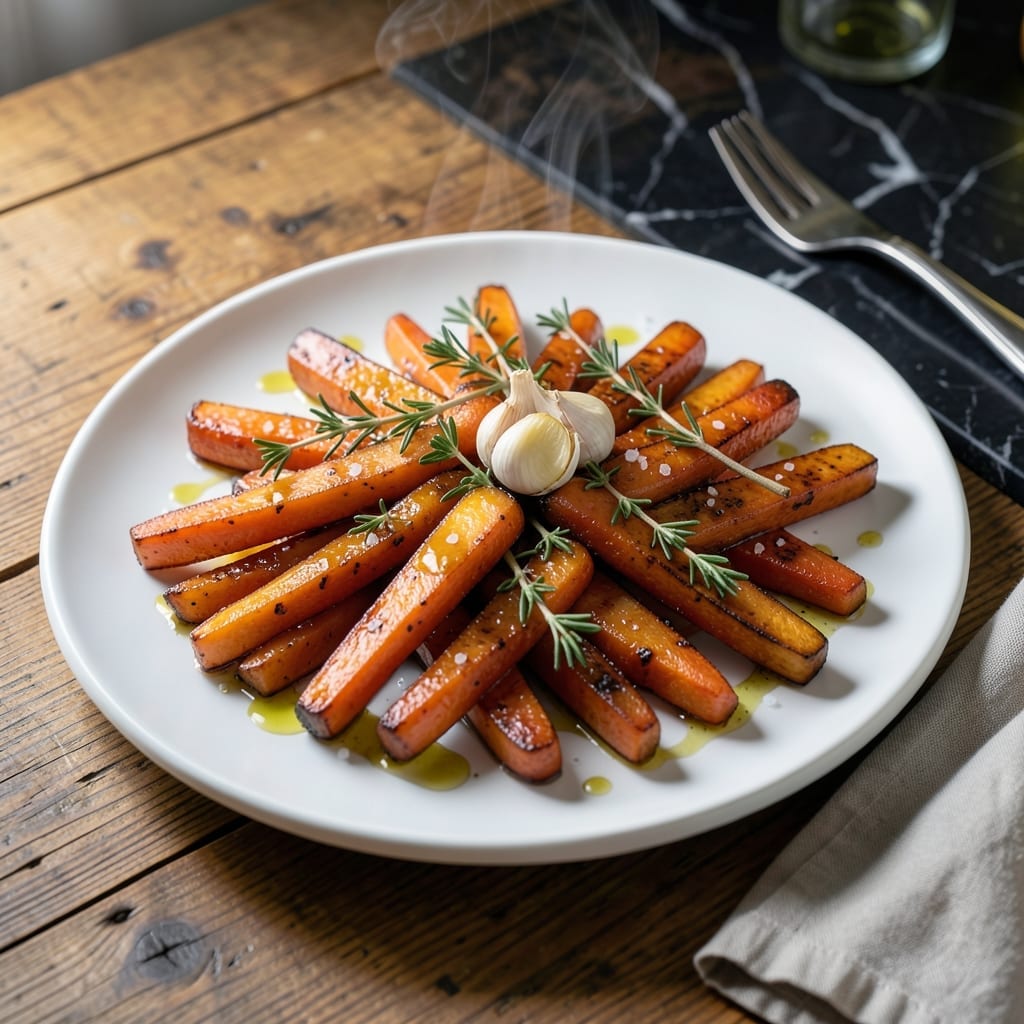
This roasted carrots recipe transforms ordinary vegetables into a caramelized masterpiece with minimal effort. The combination of honey, thyme, and garlic creates a glaze that enhances their natural sweetness while adding depth.
I’ve perfected the method to ensure the carrots are tender inside with crisp, golden edges. A high oven temperature and proper spacing on the baking sheet are key to achieving that ideal texture.
The honey glaze caramelizes beautifully, while fresh thyme and garlic infuse every bite with aromatic flavor. It’s a simple yet impressive side dish that pairs well with any meal.
Ready in under 30 minutes, this recipe proves that even humble carrots can shine with the right technique.
Ingredients for Roasted Carrots
Transform humble carrots into a caramelized masterpiece with these quality ingredients.
| Ingredient | Amount | Notes |
|---|---|---|
| Whole Carrots 🥕 | 2 lb | Peeled, cut into even sticks |
| Extra-Virgin Olive Oil 🫒 | 3 tbsp | Divided for roasting and finishing |
| Maple Syrup 🍁 | 3 tbsp | Replaces honey for vegan |
| Fresh Thyme Sprigs 🌿 | 6 pieces | Leaves stripped from stems |
| Garlic Cloves 🧄 | 4 cloves | Minced finely for even distribution |
| Sea Salt 🧂 | 1 tsp | Fine grain for even seasoning |
| Freshly Ground Black Pepper 🌶️ | ½ tsp | Adjust to taste preference |
| Balsamic Vinegar 💧 | 1 tbsp | For acidity and depth |
| Dijon Mustard 🟡 | 1 tsp | Adds complexity to glaze |
| Smoked Paprika 🌶️ | ½ tsp | Optional for subtle smokiness |
For optimal results, select firm, vibrant carrots—avoid those with cracks or excessive bend. Organic from Whole Foods or your local farmers market often have superior sweetness. The maple syrup is critical here (vegan substitution for honey), so use pure grade A for best caramelization. Fresh thyme is non-negotiable for aromatic depth; dried simply won’t deliver the same brightness.
Swapping maple syrup? Agave nectar works at a 1:1 ratio, though it’s slightly thinner. No fresh thyme? Use dried thyme at one-third the amount, but add it directly to the glaze. For a nutty depth, toasted walnut oil can replace half the olive oil. The balsamic vinegar is flexible—apple cider vinegar offers a milder tang if preferred.
Store unpeeled carrots in the crisper drawer for up to 2 weeks. Once peeled and cut, use within 3-4 days or blanch and freeze. The glaze ingredients keep indefinitely at room temperature. Roast extras—they’re delicious cold in grain bowls or reheated for 3-4 days.
Why You’ll Love This Recipe
- One Pan Wonder: I toss the carrots with olive oil, maple syrup, and thyme, then roast—no chopping, no fuss, just one sheet pan.
- Sweet and Earthy: The maple syrup caramelizes with the garlic and thyme, turning simple carrots into something crave-worthy.
- My Go-To Side: Honestly, it works with grilled chicken, pork chops, or even as a meatless main with quinoa.
- Budget-Friendly Feast: A big bag of carrots costs pennies, and this turns them into a dish that feels anything but cheap.
Step-by-Step Instructions for Roasted Carrots
This method ensures caramelized edges and tender centers with minimal effort.
Step 1: Prepare and Season the Carrots
Preheat your oven to 400°F. Peel the 2 lb whole carrots and cut them into even sticks, about 3 inches long and ½ inch thick. Uniform size guarantees even cooking—thicker pieces won’t soften properly while thinner ones may burn.
Place the carrots on a large rimmed baking sheet. Drizzle with 2 tbsp extra-virgin olive oil (reserving 1 tbsp for later) and toss to coat evenly. The oil creates a barrier that promotes browning while preventing the carrots from drying out.
Step 2: Add Aromatics and Initial Roasting
Sprinkle the carrots with 1 tsp sea salt and 0.5 tsp freshly ground black pepper. Add the minced 4 cloves garlic cloves and the leaves stripped from 6 pieces fresh thyme sprigs, distributing them evenly over the carrots.
Spread the carrots in a single layer with space between each piece—crowding causes steaming instead of roasting. Roast for 20 minutes at 400°F, then give the pan a shake to turn the carrots. You’ll notice the edges beginning to caramelize and the garlic turning golden.
Step 3: Create the Glaze and Finish Roasting
While the carrots roast, prepare the glaze. In a small bowl, whisk together the remaining 1 tbsp extra-virgin olive oil, 3 tbsp maple syrup, 1 tbsp balsamic vinegar, 1 tsp Dijon mustard, and 0.5 tsp smoked paprika until smooth. The vinegar and mustard balance the sweetness while adding depth.
After the initial 20 minutes, drizzle this glaze evenly over the carrots. Toss to coat completely, then spread them back into a single layer. Return to the oven and roast for another 15-20 minutes until the carrots are fork-tender and the glaze has reduced to a sticky coating with deep caramelized edges.
Step 4: Rest and Serve Immediately
Remove the carrots from the oven and let them rest on the pan for 5 minutes. This allows the glaze to set slightly and the flavors to meld. The carrots should be deeply browned in spots with a glossy sheen from the reduced glaze.
Transfer to a serving platter while still warm. The combination of sweet maple, tangy vinegar, and aromatic thyme creates a complex flavor profile that pairs well with any main course. Serve immediately for the best texture—the glaze will thicken slightly as it cools, but the carrots are most flavorful when hot.
Pro Tips For Making Roasted Carrots
- Cut Evenly: Slice carrots into uniform sticks—about 3 inches long and ½-inch thick—so they roast at the same rate. I learned this the hard way after pulling out half-burnt tips and undercooked centers.
- Preheat the Pan: Toss carrots with oil and spread them on a preheated sheet pan. The sizzle when they hit the hot metal kicks off caramelization right away.
- Skip the Crowding: Give each piece space—at least ½-inch apart—or they’ll steam instead of roast. Sounds obvious, but I used to cram them in to save time and ended up with soggy carrots.
- Add Maple Late: Brush on the maple syrup during the last 10 minutes of roasting to prevent burning. I was skeptical until I tried it, and now my carrots come out glossy and sweet, not bitter.
Perfect Pairings for These Flavors
Wine Pairings
An off-dry Riesling from Washington State complements the sweet-tangy glaze beautifully. The subtle sweetness mirrors the maple while the acidity cuts through the richness. I love Chateau Ste. Michelle for this pairing. 🍷
Beer Options
A crisp Belgian-style witbier like Hoegaarden offers citrus notes that harmonize with the thyme. For craft lovers, Allagash White from Maine provides a similar profile with a slightly spicier finish.
A dry cider works surprisingly well too—try Woodchuck Amber for its balanced sweetness and acidity.
Side Dish Ideas
A simple quinoa salad with lemon and parsley provides a light, protein-rich contrast. I toss 1 cup cooked quinoa with 1 tbsp lemon zest and 2 tbsp chopped parsley.
Protein Partners
These carrots pair wonderfully with herb-roasted chicken—the savory notes balance the sweetness. For vegetarians, lentil loaf with its earthy depth creates a satisfying meal. 💛
Finishing Touches
Sprinkle with toasted pecans for crunch, or add crumbled goat cheese for a creamy contrast. A final drizzle of balsamic reduction elevates the presentation with minimal effort.
Nutrition Facts
Frequently Asked Questions
What oven temperature works best?
400°F is ideal for achieving caramelization while keeping the centers tender. This temperature balances browning with even cooking, preventing burnt edges or undercooked centers.
Can I use baby carrots instead?
Yes, but cut them in half lengthwise for even cooking. Baby carrots are thicker, so halving ensures they roast through in the same 15-20 minutes as regular sticks. Avoid whole baby carrots—they’ll stay tough inside.
Why are my carrots not caramelizing?
Crowding the pan or low heat are common culprits. Spread pieces in a single layer with space between each, and ensure your oven reaches 400°F. A light coating of oil and maple syrup also promotes browning.
How long can I store leftovers?
Keep in an airtight container in the fridge for 3-4 days. Reheat in a 350°F oven for 10 minutes to revive the glaze’s stickiness. Avoid microwaving—it makes them soggy.

- 6 Egg Cake Recipe with Oil: Light as Air With Buttery Moisture - October 4, 2026
- 4 Bean Casserole Recipe: One-Pan Heartiness With Smoky Paprika Depth - October 4, 2026
- 3-Ingredient Keto Mug Cake Recipe: Microwave Magic in 2 Minutes - October 4, 2026