
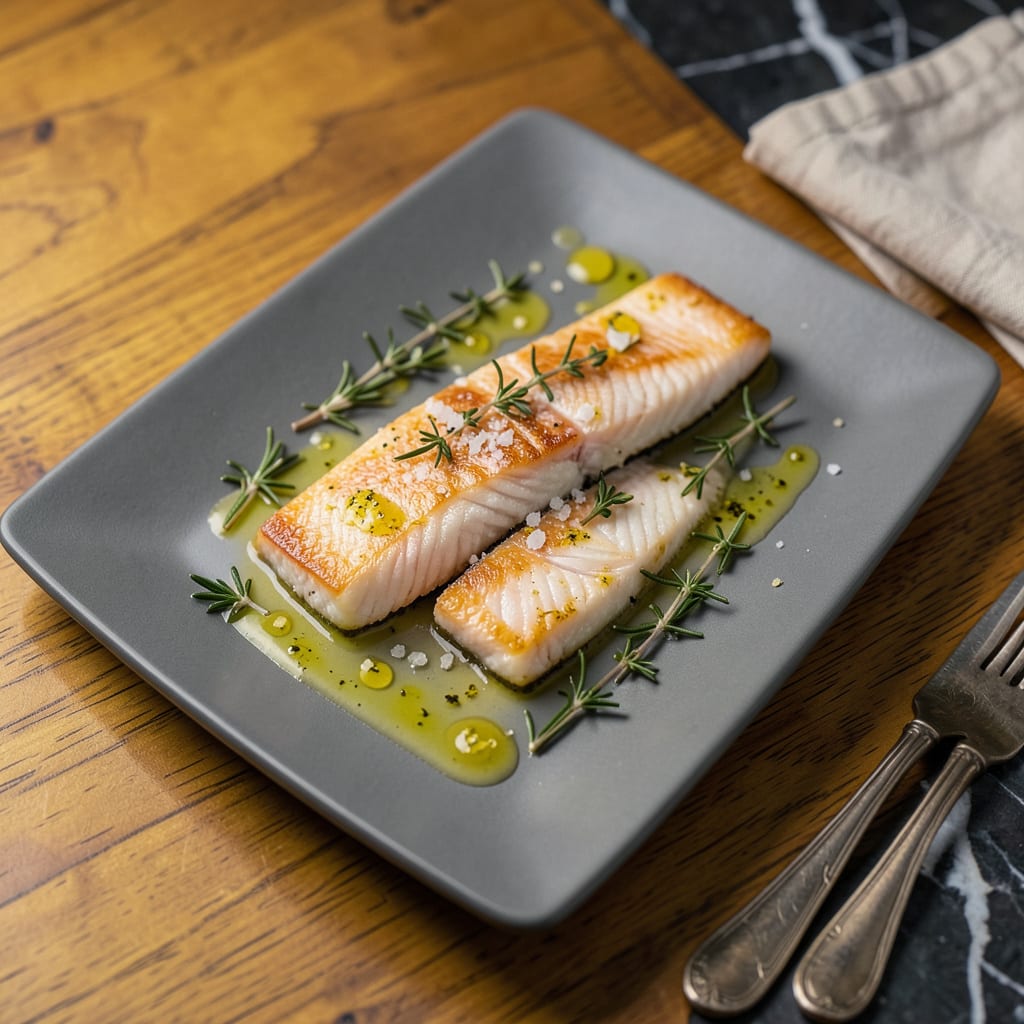
Recreating the signature elegance of Ruth’s Chris at home starts with this Chilean sea bass preparation. The key lies in balancing simplicity with sophisticated flavor—beginning with a delicate marinade of garlic, lemon, and herbs that enhances the fish’s natural richness without overpowering it.
The cooking method is where professional technique makes all the difference. A hot sear in clarified butter creates that coveted crispy skin, while finishing in the oven ensures the interior remains moist and buttery. Paired with a light beurre blanc sauce, this dish delivers restaurant-quality results with precision you can master in your own kitchen.
Ingredients for Ruth Chris Chilean Sea Bass
Elevated yet approachable ingredients create this restaurant-caliber Chilean sea bass with its signature crisp skin and buttery interior.
| Ingredient | Amount | Notes |
|---|---|---|
| Chilean sea bass fillets 🐟 | 4 pieces | 6-8 oz each, skin-on preferred |
| Clarified butter 🧈 | ½ cup | Ghee works as substitute |
| Extra-virgin olive oil 🫒 | 2 tbsp | Cold-pressed for marinade |
| Garlic cloves 🧄 | 6 cloves | Finely minced for marinade |
| Fresh thyme sprigs 🌿 | 4 sprigs | Stems removed, leaves only |
| Fresh rosemary 🌿 | 1 tbsp | Finely chopped for marinade |
| Lemon zest 🍋 | 1 tbsp | From 1 large lemon |
| Fresh lemon juice 🍋 | 2 tbsp | Newly squeezed for brightness |
| Dry white wine 🍷 | ¼ cup | Sauvignon Blanc preferred |
| Kosher salt 🧂 | 1 ½ tsp | Diamond Crystal preferred |
| Freshly ground black pepper 🌶️ | ½ tsp | Medium-coarse grind |
| Shallot 🧅 | 1 whole | Finely diced for beurre blanc |
| Heavy cream 🥛 | ½ cup | Full-fat for sauce consistency |
| Cold unsalted butter 🧈 | 6 tbsp | Cubed for beurre blanc |
| Fresh chives 🌿 | 1 tbsp | Thinly sliced for garnish |
The sea bass quality is paramount for this preparation. Opt for wild-caught Chilean sea bass from reputable purveyors like Whole Foods or FreshDirect, ensuring skin-on fillets for that signature crispness. Clarified butter (or ghee) is essential for achieving the high-heat sear without burning—Trader Joe’s carries affordable options. For the herbs, organic fresh thyme and rosemary from the farmers market provide superior aroma compared to supermarket varieties (the good stuff, not the pre-packaged kind).
No clarified butter? Ghee works identically and has a higher smoke point. Sauvignon Blanc can be substituted with dry vermouth at equal volume. If fresh herbs are unavailable, dried herbs at one-third the quantity may be used, though the flavor profile will be less vibrant. For the beurre blanc, crème fraîche can replace heavy cream for a tangier finish. The lemon component is non-negotiable—Meyer lemons offer a sweeter profile if available seasonally.
Sea bass fillets should be cooked immediately after purchasing for optimal texture. The clarified butter keeps indefinitely at room temperature, while the beurre blanc can be refrigerated for up to 3 days—reheat gently over low heat while whisking. Fresh herbs maintain potency for 5-7 days when wrapped in damp paper towels and stored in sealed containers. The marinade components can be prepped 24 hours ahead, but combine with fish no more than 1 hour before cooking to prevent texture degradation.
Why You’ll Love This Recipe
- Here’s what sold me: the fish reheats beautifully. Just a quick warm in the oven, and that buttery garlic taste holds up. No sad, dried-out seafood here—just a second chance at restaurant-quality dinner.
- One-Pan Magic: Honestly, I love that this comes together in a single skillet. Just sear the bass in that clarified butter and olive oil, toss in the garlic and thyme, and let the pan do the work—no mountain of dishes afterward.
- That Buttery Garlic Bite: The combo of clarified butter, fresh thyme, and garlic cloves creates this rich, aromatic crust on the fish. It’s the kind of flavor that makes you pause mid-bite and think, “Okay, this is why people pay big bucks at steakhouses.”
- Date Night or Tuesday: I’ve served this for anniversaries and also—no shame—on random weeknights when I crave something fancy but can’t be bothered with complicated recipes. The thyme makes it feel special, even if you’re eating in sweatpants.
Step-by-Step Instructions for Chilean Sea Bass
Master the restaurant technique that transforms this delicate fish into a luxurious centerpiece dish.
Step 1: Prepare the Herb-Infused Marinade
In a shallow dish large enough to accommodate the fillets, combine the 2 tablespoons extra-virgin olive oil, 6 cloves minced garlic, 1 tablespoon lemon zest, 2 tablespoons fresh lemon juice, 1 tablespoon chopped rosemary, and the leaves from 4 sprigs fresh thyme. Whisk thoroughly to emulsify the oil with the aromatic ingredients.
The marinade should develop a fragrant citrus-herb aroma within 30 seconds of mixing. This combination of bright lemon and earthy herbs creates the flavor foundation that will penetrate the delicate flesh of the sea bass. The acidity from the lemon juice also helps firm up the fish’s texture during cooking.
Step 2: Marinate and Prep the Sea Bass
Pat the 4 pieces Chilean sea bass fillets completely dry with paper towels, paying special attention to the skin side if left intact. Season both sides evenly with 1.5 teaspoons kosher salt and 0.5 teaspoon freshly ground black pepper. Place the fillets in the marinade, skin-side up, ensuring complete contact with the herb mixture.
Allow the fillets to marinate at room temperature for exactly 15 minutes. This brief marinating period infuses flavor without overpowering the delicate fish. The surface of the fillets should glisten with the marinade but not appear soggy. While marinating, prepare your cooking station with all remaining ingredients measured and ready for immediate use.
Step 3: Sear the Fillets in Clarified Butter
Heat a large, heavy-bottomed skillet over medium-high heat until a drop of water sizzles and evaporates immediately upon contact. Add the 0.5 cup clarified butter and swirl to coat the pan evenly. The butter should shimmer but not smoke – if it begins to brown, reduce heat slightly before proceeding.
Carefully place the marinated fillets in the hot butter, presentation side down first. Cook undisturbed for 3-4 minutes until the edges appear opaque and the surface develops a light golden crust. Gently flip the fillets using a thin spatula, being careful to maintain their integrity. Cook the second side for an additional 2-3 minutes until the fish reaches an internal temperature of 130°F and flakes easily when tested with a fork.
Step 4: Create the Beurre Blanc Sauce
Transfer the cooked fillets to a warm plate and tent loosely with foil. In the same skillet, reduce heat to medium and add the finely diced shallot. Sauté for 1-2 minutes until translucent but not browned. Deglaze the pan with 0.25 cup dry white wine, scraping up any browned bits from the bottom.
Simmer the wine until reduced by half, then add the 0.5 cup heavy cream. Bring to a gentle simmer and cook for 2-3 minutes until slightly thickened. Reduce heat to low and whisk in the 6 tablespoons cold unsalted butter, one tablespoon at a time, allowing each addition to fully incorporate before adding the next. The sauce should develop a velvety texture and pale ivory color.
Step 5: Plate and Garnish Professionally
Pour the beurre blanc sauce through a fine-mesh strainer to remove the shallot pieces, then return the smooth sauce to the skillet. Gently warm the fillets in the sauce for 30 seconds, basting them with the sauce to ensure even coverage. The sauce should cling to the fish without overwhelming its delicate texture.
Transfer each fillet to individual serving plates, spooning the sauce around rather than over the fish to maintain its crisp exterior. Garnish with 1 tablespoon thinly sliced fresh chives scattered diagonally across the plate. Serve immediately while the sauce maintains its silky consistency and the fish remains at its peak temperature. The final presentation should showcase the fillets’ natural elegance with just enough sauce to complement without masking the fish’s inherent qualities.
Pro Cooking Tips for Perfect Results
Perfect Pan Temperature
The secret to that restaurant-quality sear lies in your pan’s heat. I use a heavy stainless steel skillet (my go-to is All-Clad D3) heated over medium-high until a drop of water dances and evaporates instantly. The clarified butter should shimmer like liquid gold but never smoke—if it does, reduce heat immediately. This precise temperature ensures crisp skin without burning the delicate fish. 🔥
Skin-Side Strategy
Always start with the presentation side down first. Press gently with a fish spatula for 10 seconds to prevent curling, then resist the urge to peek. The skin needs undisturbed contact for 3-4 minutes to develop that signature crispness. I learned this the hard way after ruining my first fillet by flipping too soon—patience pays off!
Butter Basting Technique
During the final 2 minutes of cooking, tilt the pan slightly and spoon the hot clarified butter over the fillets continuously. This basting method creates an extra layer of flavor while keeping the fish incredibly moist. Use a large spoon to catch all that golden butter—I prefer a stainless steel ladle for better control.
Sauce Timing
Begin your beurre blanc as soon as the fish comes out of the pan. The residual heat in the skillet helps develop the shallot flavor faster. When whisking in the cold butter, maintain the sauce at 140-160°F—any hotter and it will break. I keep a instant-read thermometer handy to monitor this critical temperature range.
Resting Protocol
Unlike beef, sea bass needs minimal resting—just 2-3 minutes under loose foil. This allows the juices to redistribute without cooling the delicate fish too much. I place the plate near (but not in) my still-warm oven to maintain serving temperature. The fish should still feel warm to the touch when served.
Plating Precision
Use a fish turner (not tongs!) to transfer fillets to plates, preserving their integrity. The sauce should pool around—not over—the fish to maintain crispness. I finish with chives cut on a sharp diagonal for visual appeal. A quick squeeze of fresh lemon just before serving brightens all the flavors beautifully. ✨
Nutrition Facts

- 6 Egg Cake Recipe with Oil: Light as Air With Buttery Moisture - October 4, 2026
- 4 Bean Casserole Recipe: One-Pan Heartiness With Smoky Paprika Depth - October 4, 2026
- 3-Ingredient Keto Mug Cake Recipe: Microwave Magic in 2 Minutes - October 4, 2026