
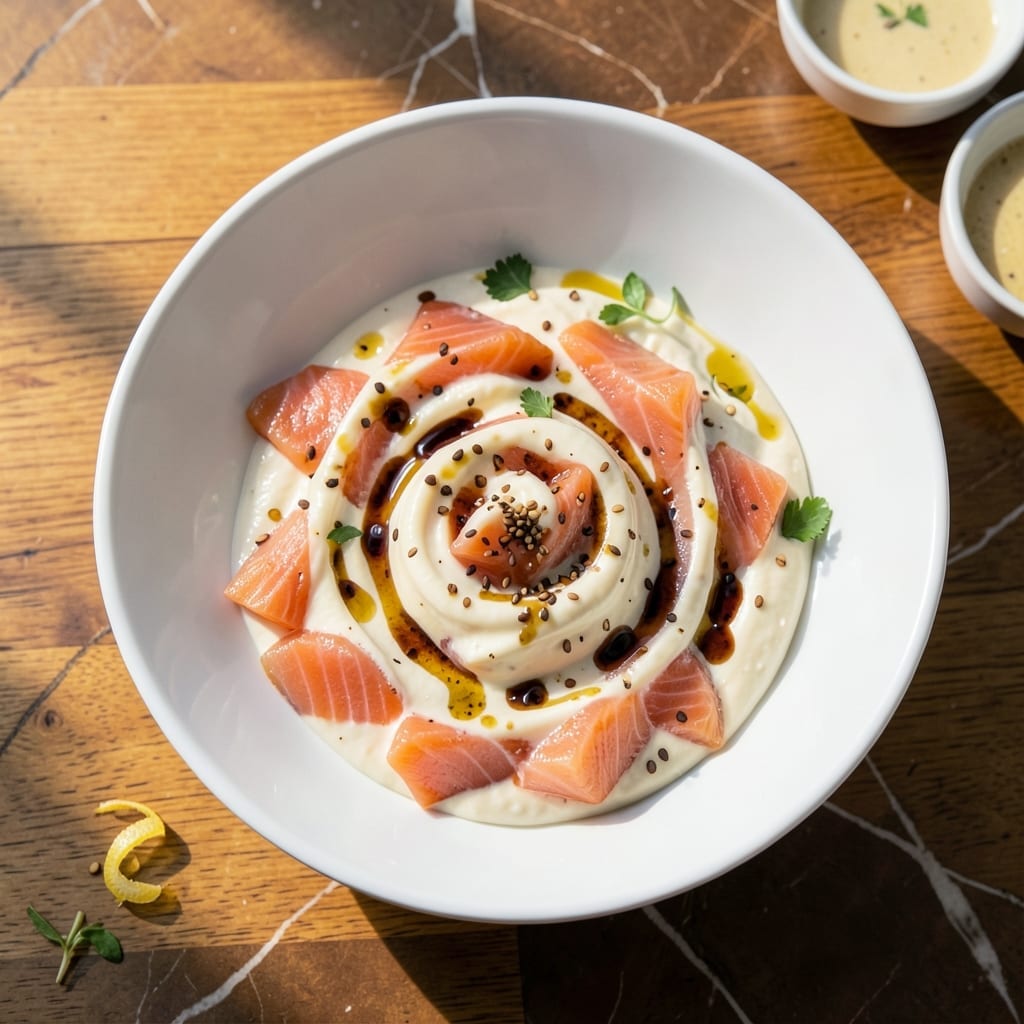
This spread transforms ordinary sushi into something extraordinary with its creamy texture and rich flavor. I developed this recipe after years of experimenting with different ratios to achieve the perfect balance.
The combination of fresh salmon and quality mayonnaise creates a luxurious base that pairs beautifully with rice and nori. A touch of seasoning enhances the natural flavors without overpowering them.
You’ll end up with a smooth, velvety spread that clings perfectly to sushi rolls. The consistent texture makes it ideal for both filling and topping your favorite rolls.
Make a small batch fresh for the best results, as the flavors are most vibrant when served immediately. This recipe will elevate your homemade sushi game.
Ingredients for Salmon Mayo
Nine ingredients create this luxurious, velvety sushi spread with perfect balance.
| Ingredient | Amount | Notes |
|---|---|---|
| Fresh Salmon Fillet 🐟 | ½ lb | Skinless, boneless, finely chopped |
| Mayonnaise 🥚 | ¾ cup | High-quality, full-fat preferred |
| Soy Sauce 🫙 | 1 tbsp | Low-sodium for balance |
| Rice Vinegar 🍶 | 1 tbsp | Unseasoned for acidity |
| Sesame Oil 🫒 | 1 tsp | Toasted for depth of flavor |
| Sugar 🧂 | ½ tsp | Fine granulated for dissolving |
| Fresh Lemon Juice 🍋 | 1 tsp | For brightness and freshness |
| Ground Black Pepper 🌶️ | ¼ tsp | Freshly ground for best flavor |
| Salt 🧂 | ¼ tsp | Fine sea salt preferred |
The salmon is everything here. Fresh wild-caught is ideal—look for bright, glossy fillets at Whole Foods or your local fishmonger. If using previously frozen, thaw it overnight in the fridge (never at room temp). The mayonnaise should be full-fat—Hellmann’s or Kewpie give that ultra-creamy texture that cheap brands can’t match. Don’t skimp on quality here.
No fresh salmon? High-quality canned salmon (packed in water, not oil) works in a pinch—just drain and pat dry. Swap soy sauce for tamari if you need gluten-free. Out of rice vinegar? Apple cider vinegar at half the amount gets you close. The sesame oil adds depth, but if you’re sensitive to its strong flavor, reduce to 1/2 tsp.
Store the spread in an airtight container with plastic wrap pressed directly on the surface. Keeps for 2-3 days in the fridge. Best used fresh, but it’s still good for quick lunches. Don’t freeze—it’ll separate and lose that perfect texture.
Why You’ll Love This Recipe
- Five Minute Mix: I just toss the salmon with mayo, soy sauce, and a splash of rice vinegar—no fancy techniques.
- Umami Bomb: The soy sauce and sesame oil give it that deep, savory kick that makes me sneak bites straight from the bowl.
- Lunchbox Hero: Honestly, this tastes just as good cold the next day stuffed in a wrap or on rice.
- Stretch Your Dollar: One fillet goes a long way when mixed with mayo, and it’s still ridiculously satisfying.
Step-by-Step Instructions for Salmon Mayo
Here’s the method for creating this rich, velvety spread with perfect balance.
Step 1: Prepare the Salmon Base
Start by finely chopping the 0.5 lb fresh salmon fillet into small, uniform pieces. I prefer using a sharp chef’s knife for precision—this ensures the texture blends seamlessly into the mayo. Place the chopped salmon in a mixing bowl and set it aside.
At this stage, the salmon should resemble small cubes, not a paste. This maintains the spread’s chunky yet creamy consistency. If you prefer a smoother texture, you can pulse it briefly in a food processor, but I find hand-chopping gives better control over the final result.
Step 2: Combine Wet Ingredients for Depth
In the same bowl with the salmon, add the 0.75 cup mayonnaise, 1 tbsp soy sauce, 1 tbsp rice vinegar, and 1 tsp sesame oil. These ingredients form the flavor backbone of the spread, delivering umami, tang, and a subtle nutty aroma.
Mix gently with a spatula until just combined. Avoid overmixing—you want the salmon to stay slightly chunky. The soy sauce and rice vinegar should create a glossy sheen, signaling the emulsion is starting to form.
Step 3: Balance Sweetness and Acid
Sprinkle in the 0.5 tsp sugar, 1 tsp fresh lemon juice, 0.25 tsp salt, and 0.25 tsp ground black pepper. The sugar rounds out the sharpness of the vinegar and lemon, while the salt enhances all the flavors.
The lemon juice adds a bright, fresh note that cuts through the richness of the mayonnaise. Stir once more until everything is evenly distributed. Taste and adjust seasoning if needed, but remember the flavors will meld further as it chills.
Step 4: Chill for Optimal Texture
Cover the bowl with plastic wrap and refrigerate for at least 30 minutes. This step is crucial—it allows the flavors to marry and the spread to thicken slightly. The cold also firms up the mayo, making it easier to handle when spreading.
If you’re in a hurry, 15 minutes in the freezer will work, but the texture won’t be as smooth. For best results, let it chill for up to 2 hours. You’ll notice the spread becomes creamier and more cohesive as it rests.
Pro Tips For Making Salmon Mayo
- Pat Dry the Salmon: Use paper towels to thoroughly dry the fillet before cooking—I learned this the hard way after my first few batches turned out soggy instead of crisp.
- Rest Before Mixing: Let the cooked salmon cool for 5 minutes before flaking into the mayo mixture, or it’ll turn the whole thing oily and warm.
- Balance the Soy: Start with half the soy sauce you think you need, taste, then add more—salmon mayo can go from flavorful to overwhelmingly salty fast.
- Toast the Sesame: Swap plain sesame oil for toasted sesame oil; it adds a nutty depth that makes the dish taste like it came from a restaurant.
Wine and Beer Pairings for This Recipe
White Wine Pairings
A crisp Sauvignon Blanc from New Zealand cuts through the richness of this spread with its bright acidity and citrus notes. The grassy, herbal undertones complement the salmon beautifully. I love Kim Crawford for its consistent quality. 🍷
Sparkling Options
Prosecco or Cava work wonderfully, with their effervescence cleansing your palate between bites. The light, fruity notes of La Marca Prosecco pair particularly well with the subtle sweetness in the spread. Serve chilled at 45°F.
Light Beer Choices
A Japanese lager like Sapporo or Asahi offers a clean, crisp finish that doesn’t overpower the delicate flavors. The light maltiness balances the creaminess perfectly. I always keep a few bottles on hand for sushi nights. 🍺
Rosé Recommendations
Dry Provence rosé with its hints of strawberry and melon adds a refreshing contrast. Look for Whispering Angel or Miraval—both are widely available and consistently delicious. Serve at 50°F for best flavor.
Non-Alcoholic Pairing
A chilled green tea with a squeeze of lemon enhances the spread’s freshness. For something sweeter, ginger beer like Fever-Tree adds a spicy kick that cuts through the richness. Both options are perfect for lunch pairings.
Nutrition Facts
Frequently Asked Questions
Can I use canned salmon instead of fresh?
Yes, high-quality canned salmon packed in water works well. Drain it thoroughly and pat dry to remove excess moisture. The texture will be slightly different but still delicious.
How long can I store this spread?
Keep it in an airtight container in the fridge for up to 2-3 days. Press plastic wrap directly on the surface to prevent oxidation. It’s best used fresh for optimal texture and flavor.
Why did my spread turn out watery?
This usually happens if the salmon wasn’t drained well or the mayo was low-fat. Use full-fat mayonnaise and ensure all ingredients are well-drained before mixing. Chilling helps thicken it too.

- 6 Egg Cake Recipe with Oil: Light as Air With Buttery Moisture - October 4, 2026
- 4 Bean Casserole Recipe: One-Pan Heartiness With Smoky Paprika Depth - October 4, 2026
- 3-Ingredient Keto Mug Cake Recipe: Microwave Magic in 2 Minutes - October 4, 2026