
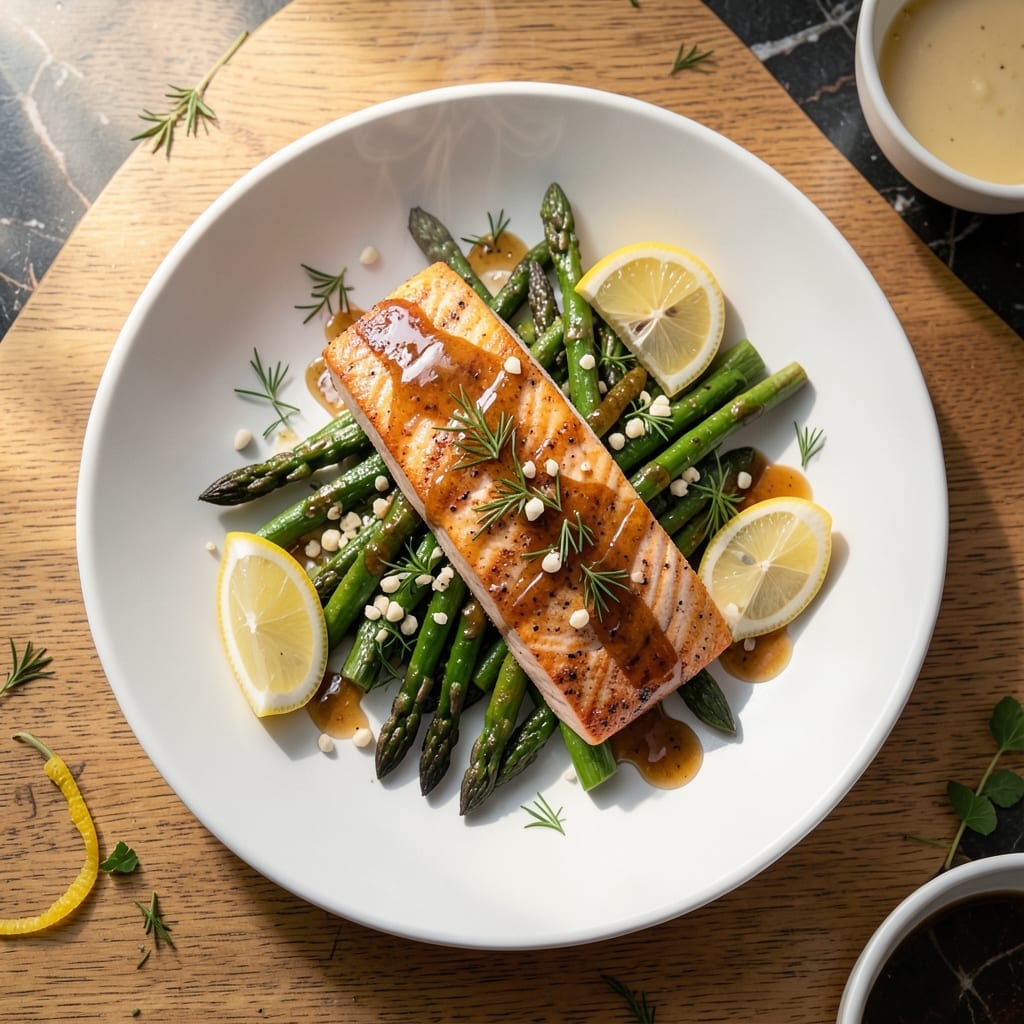
Achieving flaky salmon in the oven is simpler than you think. This method delivers perfect results every time with minimal effort.
The secret lies in precise timing and temperature control. A hot oven and proper seasoning transform ordinary salmon into a restaurant-worthy dish.
You’ll end up with tender, moist fish that separates beautifully at the touch of a fork. The lemon-garlic glaze adds bright, aromatic flavor without overpowering the natural taste of the salmon.
Pair with roasted vegetables or a fresh salad for a complete, impressive meal. This technique works for both weeknight dinners and special occasions.
Ingredients for Salmon Recipe Oven
Quality salmon, bright lemon, and aromatic garlic create this oven-baked perfection with minimal effort.
| Ingredient | Amount | Notes |
|---|---|---|
| Salmon Fillets 🐟 | 1 ½ lb | Skin-on, center-cut preferred |
| Extra-Virgin Olive Oil 🫒 | 2 tbsp | Divided for cooking and glaze |
| Lemon 🍋 | 1 whole | Zested and juiced |
| Garlic Cloves 🧄 | 4 cloves | Minced finely |
| Dijon Mustard 🟡 | 1 tbsp | Smooth variety preferred |
| Honey 🍯 | 1 tbsp | Warm slightly for easy mixing |
| Fresh Dill 🌿 | 2 tbsp | Chopped for garnish |
| Kosher Salt 🧂 | 1 tsp | Divided for seasoning |
| Freshly Ground Black Pepper 🌶️ | ½ tsp | Divided for seasoning |
| Dry White Wine 🍷 | ¼ cup | Optional for deglazing |
| Unsalted Butter 🧈 | 2 tbsp | Cubed for finishing |
| Red Pepper Flakes 🌶️ | ¼ tsp | Optional for heat |
The salmon quality is paramount—opt for wild-caught center-cut fillets with vibrant color and no fishy odor. Whole Foods or Trader Joe’s consistently carry excellent options. Skin-on fillets retain moisture better during cooking. For the lemon, Meyer lemons (when in season) offer a sweeter, more floral note that elevates the glaze beautifully.
No fresh dill? Fresh parsley or chives work as substitutes with different but complementary flavors. For the wine, chicken broth or additional lemon juice can replace it in a pinch. Honey can be swapped with maple syrup for a vegan-friendly option. The Dijon mustard is key for emulsifying the glaze—whole-grain mustard adds texture if you prefer.
The glaze keeps in the fridge for up to 3 days—store in an airtight container. Salmon is best cooked the day of purchase but can be refrigerated for 1-2 days if necessary. Leftovers reheat gently in a 250°F oven to prevent drying out.
Why You’ll Love This Recipe
- One Pan Wonder: I toss everything on a sheet pan—salmon, lemon slices, garlic—pop it in the oven, and walk away. One pan, minimal cleanup.
- Zesty Lemon-Garlic Punch: The Dijon and garlic create this bold, tangy crust that makes the salmon taste like it came from a fancy restaurant. Honestly, I could eat it every week.
- Weeknight Lifesaver: Between us, this is my go-to when I need something fast but impressive for dinner guests or a solo treat.
- Leftover Magic: The flavors deepen overnight, so leftovers taste even better in a salad or wrapped in a tortilla the next day.
Step-by-Step Instructions for Oven-Baked Salmon
This method ensures perfectly flaky salmon with a bright, aromatic lemon-garlic finish every time.
Step 1: Prepare and Season the Salmon Fillets
Pat the 1.5 lb salmon fillets completely dry with paper towels. This is essential—excess moisture prevents proper browning and crisping of the skin. Place the fillets skin-side down on a plate and season both sides with ½ tsp kosher salt and ¼ tsp freshly ground black pepper.
Let the seasoned fillets sit at room temperature for 10-15 minutes while you preheat the oven. This takes the chill off the fish, promoting even cooking and preventing that dreaded dried-out texture. I always check that the flesh has lost its translucent sheen before proceeding.
Step 2: Create the Lemon-Garlic Glaze
In a small bowl, whisk together 1 tbsp extra-virgin olive oil, the zest of 1 whole lemon, the juice of half the lemon, 1 tbsp Dijon mustard, 1 tbsp honey, and 2 minced garlic cloves. The honey may be thick, so warm it slightly by placing the measuring spoon in a cup of hot water for 20 seconds to ease mixing.
Add ¼ tsp red pepper flakes for subtle heat if desired. This glaze should be smooth and slightly thick, coating the back of a spoon. The acid from the lemon balances the richness of the salmon, while the honey adds a touch of caramelization during baking.
Step 3: Sear and Bake to Flaky Perfection
Heat 1 tbsp extra-virgin olive oil in an oven-safe skillet over medium-high heat. When the oil shimmers, place the salmon fillets skin-side up in the pan. Sear undisturbed for 2-3 minutes until the edges turn opaque and the bottom develops a golden crust.
Carefully flip the fillets skin-side down, then transfer the skillet to a preheated 400°F oven. Bake for 8-10 minutes until the salmon reaches an internal temperature of 145°F and flakes easily with a fork. The skin should be crisp, and the flesh should pull apart in moist, tender layers.
Step 4: Finish with Aromatic Butter and Garnish
Remove the skillet from the oven and transfer the salmon to a serving platter. Place the skillet back on the stovetop over medium heat, add ¼ cup dry white wine, and deglaze, scraping up any browned bits. Let the wine reduce by half, then whisk in 2 tbsp cubed unsalted butter until it melts into a glossy sauce.
Pour this pan sauce over the salmon and garnish with the remaining 2 minced garlic cloves, 2 tbsp chopped fresh dill, and a squeeze of the remaining lemon half. The residual heat will mellow the raw garlic slightly while brightening the dish with fresh dill. Serve immediately for the best texture and flavor.
Pro Tips For Making Salmon Recipe Oven
- Preheat the Pan: Always start with a hot oven—400°F is ideal for salmon to cook evenly without drying out. I learned this the hard way after pulling out undercooked centers too many times.
- Pat Dry First: Blot the salmon fillets with a paper towel before seasoning. Sounds tedious, but it guarantees a better sear and helps the olive oil and mustard cling properly.
- Skip Overcrowding: Leave space between fillets on the baking sheet, or they’ll steam instead of roast. After ruining a batch with soggy edges, I now use a second tray if needed.
- Zest the Lemon: Use the zest along with the juice for brighter flavor—it actually changes the outcome. My grandmother swore by this, and she was right.
Storing and Reheating salmon recipe oven
Refrigerator Storage
Let your salmon cool for no more than 2 hours before transferring to an airtight container. I use glass containers with locking lids. Store at 40°F or below for up to 2 days maximum. The flavors actually intensify overnight. ❄️
Freezer Storage
For longer storage, wrap each fillet individually in plastic wrap, then place in a freezer-safe bag. Remove as much air as possible. This method keeps the salmon fresh for up to 3 months without freezer burn.
Oven Reheating
Preheat your oven to 250°F. Place the salmon on a baking sheet, cover with foil, and warm for 10-15 minutes. This gentle method prevents drying out. I always check the internal temperature reaches 145°F before serving.
Stovetop Reheating
Heat a skillet over medium-low heat, add 1 tbsp olive oil, and place the salmon skin-side down. Cover and heat for 3-4 minutes per side. The skin will crisp up beautifully while keeping the flesh moist. 🔥
Microwave Option
For quick reheating, place salmon on a microwave-safe plate, cover with a damp paper towel, and heat on 50% power for 1-2 minutes. Check and repeat in 30-second intervals until warm. This is my go-to for workday lunches.
Nutrition Facts
Frequently Asked Questions
What temperature should the oven be?
Preheat to 400°F for optimal results. This high heat ensures a crispy skin while keeping the inside moist and flaky.
Can I use frozen fillets?
Yes, but thaw completely first in the fridge overnight. Pat very dry before cooking to avoid steaming instead of searing.
How do I know when it’s done?
Check for an internal temp of 145°F. The flesh should flake easily with a fork and appear opaque throughout.
Do I need to use an oven-safe skillet?
Yes, for the sear-to-oven method. If you don’t have one, bake on a parchment-lined sheet pan at the same temp for 12-15 minutes.

- 6 Egg Cake Recipe with Oil: Light as Air With Buttery Moisture - October 4, 2026
- 4 Bean Casserole Recipe: One-Pan Heartiness With Smoky Paprika Depth - October 4, 2026
- 3-Ingredient Keto Mug Cake Recipe: Microwave Magic in 2 Minutes - October 4, 2026