
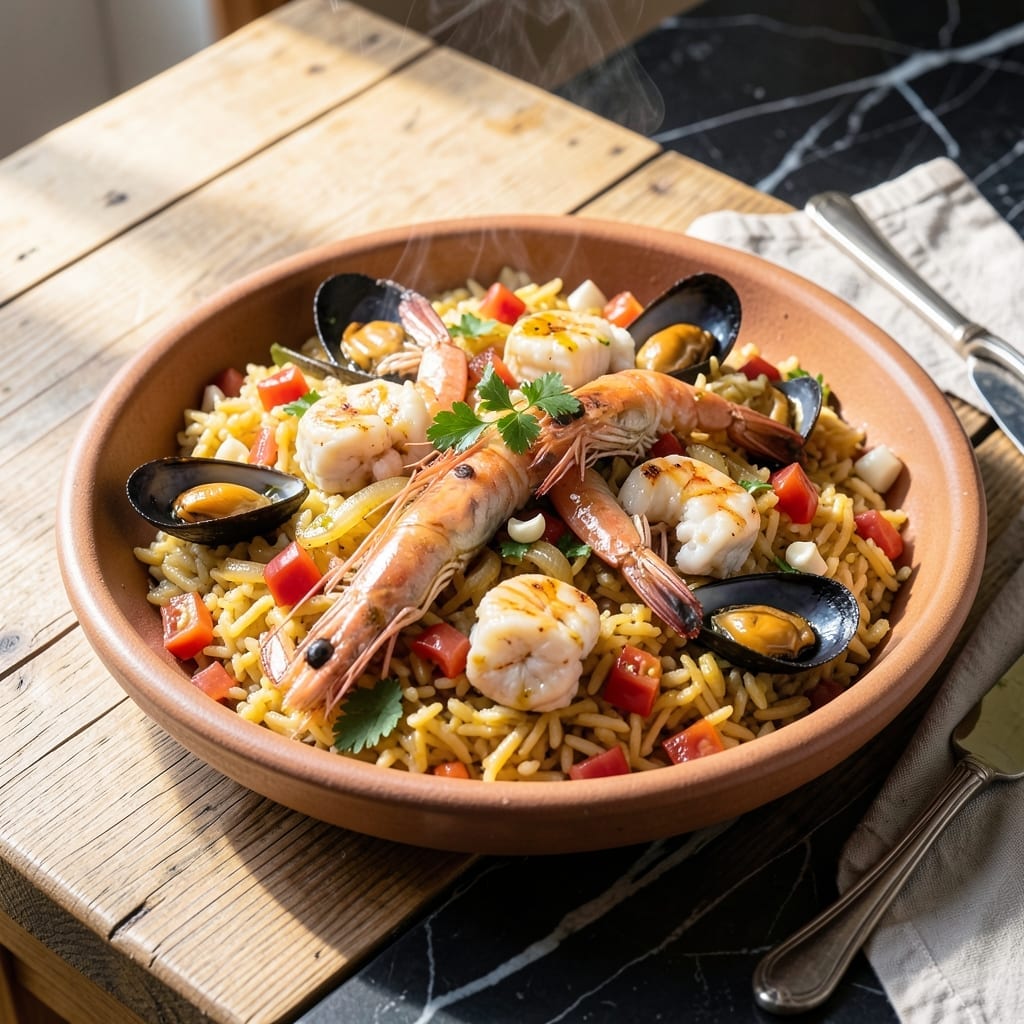
This one-pot Portuguese seafood rice brings coastal flavors straight to your kitchen table.
I developed this recipe to capture the essence of traditional one-pot cooking, where fresh seafood and rice absorb rich, aromatic broth together. The key is layering ingredients properly so every grain soaks up maximum flavor.
What emerges is a dish with tender rice, succulent seafood, and a broth so flavorful you’ll want to savor every last drop. The seafood cooks gently, preserving its natural sweetness while infusing the rice with oceanic depth.
Serve with crusty bread to soak up the delicious broth. Here’s how to make this authentic Portuguese creation.
Ingredients for Seafood Rice Recipe Portuguese
Fresh seafood, fragrant spices, and rice come together for this Portuguese one-pot wonder.
| Ingredient | Amount | Notes |
|---|---|---|
| Arborio Rice 🍚 | 2 cups | Short-grain for creaminess |
| Seafood Stock 🍲 | 4 cups | Low-sodium preferred |
| White Wine 🍷 | ½ cup | Dry variety like Pinot Grigio |
| Garlic Cloves 🧄 | 6 cloves | Minced for maximum flavor |
| Yellow Onion 🧅 | 1 whole | Finely diced |
| Tomatoes 🍅 | 2 whole | Ripe, diced with juices |
| Red Bell Pepper 🌶️ | 1 whole | Diced for color |
| Shrimp 🍤 | 1 lb | Peeled, deveined, 16-20 count |
| Mussels 🦪 | 1 lb | Cleaned and debearded |
| Clams 🦪 | 1 lb | Littleneck or Manila |
| Calamari 🦑 | ½ lb | Sliced into rings |
| Smoked Paprika 🌶️ | 1 tsp | For authentic Portuguese flavor |
| Bay Leaves 🌿 | 2 pieces | Whole, removed before serving |
| Flat-Leaf Parsley 🌿 | ¼ cup | Chopped, for garnish |
| Lemon 🍋 | 1 whole | Zested and juiced |
| Olive Oil 🫒 | 3 tbsp | Extra-virgin for richness |
| Salt 🧂 | 1 tsp | Sea salt or kosher salt |
| Black Pepper 🌶️ | ½ tsp | Freshly ground |
| Saffron Threads 🌼 | ¼ tsp | Optional but traditional (pinch) |
The seafood is the star here. Shrimp should be wild-caught if possible—I grab mine from Whole Foods or a trusted local fishmonger (they’ll clean the mussels and clams for you, which saves time). For the rice, Arborio or Calasparra are traditional choices. Don’t skip the smoked paprika—it’s what gives this its authentic Portuguese kick. Saffron is pricey but worth it for special occasions.
No white wine? Substitute with extra seafood stock plus a tbsp of lemon juice. Mussels and clams giving you pause? Scallops or firm white fish like cod work great too (just adjust cooking time). If you can’t find fresh tomatoes, canned San Marzano are a solid backup. The parsley garnish isn’t just for looks—it adds a fresh finish that balances the richness.
Leftovers? Honestly, they’re even better the next day. Keeps in the fridge for 2-3 days—reheat gently with a splash of stock. For longer storage, freeze without seafood (add fresh when reheating). Serve with crusty bread to soak up every last drop of that flavorful broth.
Why You’ll Love This Recipe
- I’ll be real: using stock and a little fresh seafood keeps it affordable without skimp on that authentic Portuguese taste.
- One-Pot Magic: Honestly, I just dump everything in one pan—Arborio rice, stock, wine—and let it work its magic. Minimal cleanup, maximum flavor.
- Garlic & Wine Depth: The white wine and garlic cloves infuse the rice with this rich, aromatic base that makes every bite taste like a coastal kitchen.
- Feeds a Crowd: Between us, this stretches easily for family dinners or meal prep. Leftovers? Even better the next day.
Step-by-Step Instructions for Seafood Rice
This one-pot method delivers authentic Portuguese flavors with minimal cleanup.
Step 1: Sauté the Aromatics and Spices
Heat the 3 tbsp Olive Oil in a large, heavy pot or Dutch oven over medium heat. Add the 1 whole Yellow Onion (finely diced) and cook for 3-4 minutes until it softens and becomes translucent. Stir in the 6 cloves Garlic Cloves (minced) and the 1 whole Red Bell Pepper (diced), cooking for another 2 minutes until fragrant.
Sprinkle in the 1 tsp Smoked Paprika, 1 tsp Salt, and 0.5 tsp Black Pepper, stirring to coat the vegetables evenly. Add the 2 whole Tomatoes (diced with juices) and cook for 3 minutes until they break down slightly and the mixture thickens. This builds the flavor base that defines the dish.
Step 2: Toast the Rice and Deglaze
Add the 2 cups Arborio Rice to the pot, stirring to coat it in the aromatic oil and vegetable mixture. Toast the rice for 2 minutes—you’ll notice the grains become slightly opaque at the edges. This step enhances the nutty depth of the rice and prevents a gummy texture.
Pour in the 0.5 cup White Wine and the 0.25 tsp Saffron Threads, stirring constantly until the liquid is mostly absorbed. The saffron will begin to infuse the rice with its golden hue and distinctive aroma. Add the 2 pieces Bay Leaves at this stage so their essence develops throughout the cooking process.
Step 3: Add Seafood and Stock
Arrange the 1 lb Shrimp (peeled, deveined), 1 lb Mussels (cleaned and debearded), 1 lb Clams (Littleneck or Manila), and 0.5 lb Calamari (sliced into rings) on top of the rice. Pour in the 4 cups Seafood Stock, ensuring the liquid covers the seafood and rice completely. Bring to a gentle boil, then reduce the heat to low.
Cover the pot and simmer for 18-20 minutes. Resist the urge to stir—the undisturbed cooking allows the rice to develop a creamy consistency while the seafood steams to perfection. The mussels and clams are done when their shells open; discard any that remain closed after cooking.
Step 4: Finish and Garnish
Once the rice is tender and the liquid has been absorbed, remove the pot from the heat. Discard the 2 pieces Bay Leaves. Drizzle the dish with the juice from the 1 whole Lemon (zested and juiced) and sprinkle with the 0.25 cup Flat-Leaf Parsley (chopped).
Let the seafood rice rest, covered, for 5 minutes to allow the flavors to meld. The shrimp should be opaque and pink, the mussels and clams tender, and the rice creamy with a slight bite. Serve immediately, garnished with additional parsley and lemon zest if desired.
Pro Tips For Making Seafood Rice Recipe Portuguese
- Toast the Rice: Cook the Arborio in the onion-garlic mixture for 2-3 minutes until translucent—this builds a nutty base that absorbs the seafood stock better.
- Deglaze Properly: After adding white wine, scrape the bottom of the pan to lift all those browned bits; that’s where the depth of flavor hides.
- Use Hot Stock: Keep your seafood stock simmering in a pot next to the rice—adding cold stock slows cooking and makes the rice gluey.
- Don’t Overcrowd: Add seafood in batches if needed, or it’ll steam instead of sear and turn rubbery in the finished dish.
Regional Styles of These Flavors
Algarve Style
In the Algarve, they use short-grain rice and load it with clams, mussels, and shrimp. The broth is often enriched with tomato paste and piri-piri peppers for heat. I love how the seafood releases its briny sweetness into the rice, creating a dish that tastes like the ocean. 🌊
Lisbon Approach
Lisbon cooks often add linguiça sausage or chorizo for a smoky depth. They also prefer calamari rings and scallops alongside the traditional shellfish. The sausage renders its fat into the dish, adding richness to the Arborio rice.
Porto Tradition
In Porto, they incorporate white fish like cod or hake, flaking it into the rice. The addition of saffron is non-negotiable here, giving the dish its signature golden hue. They also use cilantro instead of parsley for garnish, which adds a citrusy note.
Minho Variation
Minho’s version is lighter, with more vegetables like peas and carrots. They also use white wine more liberally, which brightens the dish. The result is a less seafood-heavy but equally flavorful variation that highlights the region’s agricultural abundance.
This style is perfect for those who prefer a subtler seafood presence. 💛
Nutrition Facts
Frequently Asked Questions
What kind of rice works best?
Use short-grain rice like Arborio or Calasparra for the creamiest texture. These absorb liquid well while maintaining structure. Avoid long-grain varieties as they stay too firm.
Can I use frozen seafood?
Yes, but thaw completely in the fridge first. Pat dry to remove excess moisture that could dilute the broth. Fresh seafood yields the best flavor though.
How do I prevent mushy rice?
Toast the rice in oil first and avoid stirring after adding liquid. Use the exact 2:1 stock-to-rice ratio and keep heat at low during simmering.
What if my mussels don’t open?
Discard any that remain closed after cooking. This means they didn’t cook properly and may be unsafe. Open shells indicate they’re ready to eat.

- 6 Egg Cake Recipe with Oil: Light as Air With Buttery Moisture - October 4, 2026
- 4 Bean Casserole Recipe: One-Pan Heartiness With Smoky Paprika Depth - October 4, 2026
- 3-Ingredient Keto Mug Cake Recipe: Microwave Magic in 2 Minutes - October 4, 2026