
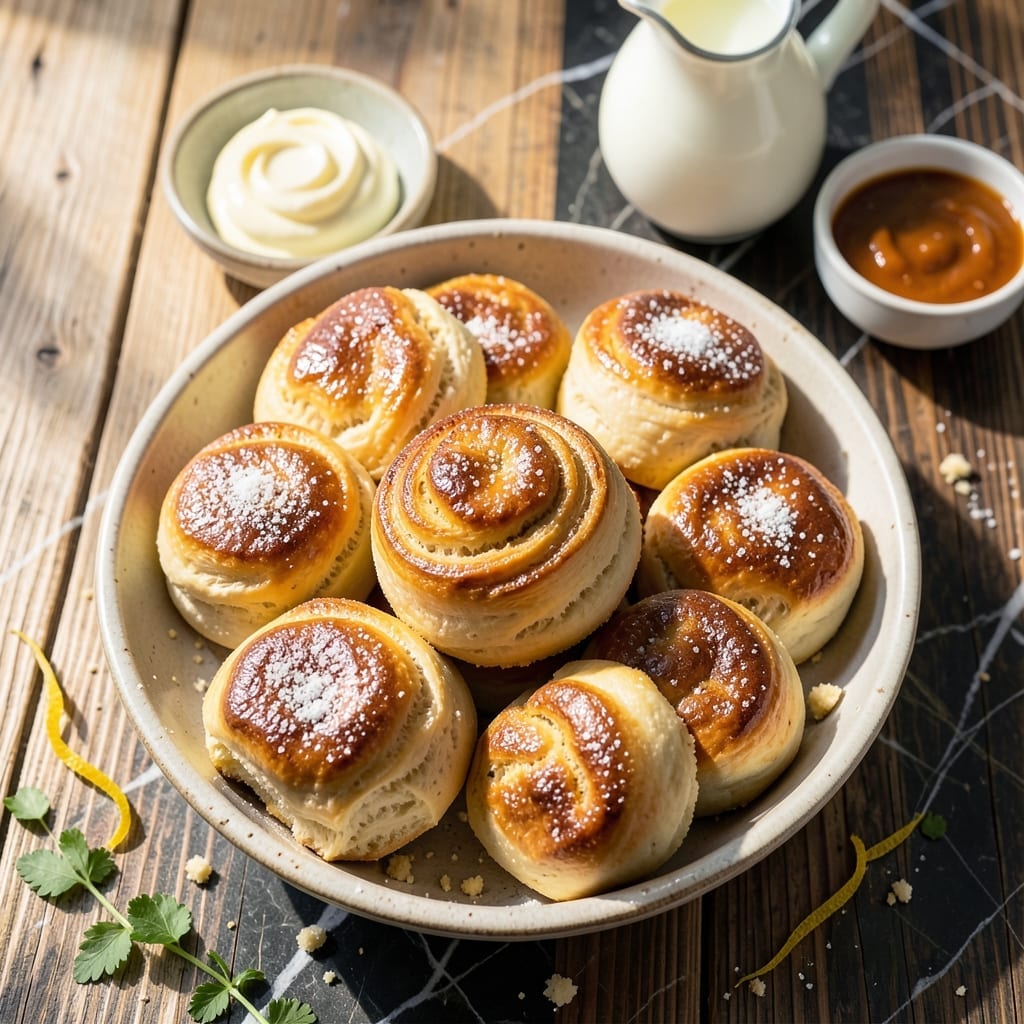
I’ve perfected a method for soft, fluffy dinner rolls using just self-rising flour and a few pantry staples. This approach eliminates the need for yeast while still delivering bakery-quality results at home.
The beauty of this recipe lies in its simplicity. With no proofing required and a total time of 30 minutes, you can have warm rolls on the table faster than driving to the store. The self-rising flour does all the heavy lifting.
What emerges from the oven are golden-brown rolls with a tender crumb and buttery flavor. They’re light enough to pull apart but sturdy enough to hold up to gravy or butter.
Perfect for weeknight dinners or holiday meals when you want homemade bread without the fuss.
Ingredients for Self Rising Flour Dinner Rolls
Just a handful of pantry staples and self-rising flour are all you need.
| Ingredient | Amount | Notes |
|---|---|---|
| Self-Rising Flour 🌾 | 2 cups | All-purpose self-rising, sifted |
| Whole Milk 🥛 | 1 cup | Warm, about 110°F |
| Unsalted Butter 🧈 | ¼ cup | Melted and cooled slightly |
| Granulated Sugar 🍚 | 2 tbsp | Fine white sugar |
| Large Egg 🥚 | 1 whole | Room temperature preferred |
| Salt 🧂 | ½ tsp | Fine sea salt or table salt |
| Vanilla Extract 🌿 | 1 tsp | Pure extract for best flavor |
| Honey 🍯 | 1 tbsp | Optional for slight sweetness |
| Olive Oil 🫒 | 1 tbsp | For greasing the bowl |
| All-Purpose Flour 🌾 | ¼ cup | For dusting work surface |
Self-rising flour is non-negotiable here—White Lily or Martha White are my go-tos (the Southern brands get it right). Skip the generic store brands unless you’ve tested them—they can be hit or miss. The milk needs to be warm, not hot (think bathwater temp). Whole milk gives the best texture, but 2% works in a pinch. Butter should be unsalted so you control the flavor.
No self-rising flour? Make your own: 1 cup all-purpose + 1.5 tsp baking powder + 0.5 tsp salt. Out of milk? Buttermilk or even water in a bind, but the rolls won’t be as rich. Honey can be swapped for maple syrup (vegan option) or skip it entirely. The egg adds richness, but you can use an extra 2 tbsp milk if needed.
Dough keeps in the fridge 24 hours (let it come to room temp before shaping). Baked rolls are best day-of but reheat well—wrap in foil, warm at 350°F for 10 minutes. Freeze shaped dough on a tray, then bag for up to 1 month.
Why You’ll Love This Recipe
- No Fuss Mixing: I just dump the self-rising flour, milk, and egg together—no yeast to proof, no waiting for dough to rise.
- Buttery Clouds: The melted butter and sugar create rolls so tender and rich, they melt in your mouth.
- Dinner to Lunch: I bake a double batch on Sunday and we’re set for sandwiches all week. Honestly, they’re even better the next day.
- Pantry Friendly: With just five ingredients I always have on hand, this is my go-to when I need warm rolls fast.
Step-by-Step Instructions for Self Rising Flour Dinner Rolls
Here’s my no-fail method for soft, fluffy rolls with minimal effort and maximum flavor.
Step 1: Warm the Milk and Melt the Butter
Gently warm the 1 cup Whole Milk to about 110°F—it should feel warm but not hot to the touch. This temperature activates the leavening agents in the 2 cups Self-Rising Flour without killing them.
Meanwhile, melt the 0.25 cup Unsalted Butter in a small saucepan over low heat, then let it cool slightly. You want it warm but not so hot it cooks the egg when combined. This step ensures your rolls will be rich and tender.
Step 2: Mix Wet Ingredients and Sugar
In a large mixing bowl, whisk together the 1 whole Large Egg, 2 tbsp Granulated Sugar, 0.5 tsp Salt, 1 tsp Vanilla Extract, and 1 tbsp Honey until smooth. The sugar and honey add subtle sweetness, while the vanilla deepens the flavor profile.
Slowly pour in the warmed Whole Milk and melted Unsalted Butter, whisking constantly to combine. The mixture should be glossy and uniform. Real talk: this is where the magic starts—don’t rush the whisking.
Step 3: Incorporate the Self-Rising Flour
Gradually add the 2 cups Self-Rising Flour to the wet mixture, stirring with a wooden spoon until just combined. The dough will be sticky but should pull away from the sides of the bowl. Avoid overmixing—this develops gluten and can make your rolls tough.
If the dough feels too wet, resist the urge to add more flour. The Self-Rising Flour already contains the perfect leavening balance, and extra flour will weigh down your rolls. Trust the process.
Step 4: Knead Lightly and First Rise
Turn the dough out onto a surface lightly dusted with 0.25 cup All-Purpose Flour. Knead gently for 2-3 minutes until smooth. The dough should be soft and slightly tacky but not sticky. This brief kneading builds just enough structure for light, airy rolls.
Form the dough into a ball and place it in a bowl greased with 1 tbsp Olive Oil. Cover with a damp towel and let rise in a warm spot for 15-20 minutes until nearly doubled. This quick rise is possible thanks to the self-rising flour.
Step 5: Shape, Second Rise, and Bake
Punch down the dough and divide it into 12 equal portions. Roll each into a smooth ball and place in a greased baking dish, spacing them slightly apart. Cover and let rise for another 10-15 minutes until puffy.
Preheat your oven to 375°F. Bake the rolls for 12-15 minutes until golden brown on top and hollow-sounding when tapped. Brush with additional melted butter if desired, and serve warm. The result? Perfectly soft, homemade rolls with a delicate crumb.
Pro Tips For Making Self Rising Flour Dinner Rolls
- Warm Your Milk: Take the chill off the whole milk before mixing—room temp or slightly warm (about 80°F) activates the leavening in self-rising flour better. I learned this the hard way after my first batch turned out dense.
- Don’t Overmix: Stir just until the dough comes together; overworking it develops gluten and makes the rolls tough. Sounds weird, but it works: a shaggy, slightly sticky dough bakes up light.
- Use Soft Butter: Let the unsalted butter sit out for 30-60 minutes until it yields slightly to pressure. Cold butter won’t cream properly with the sugar, and melted butter changes the texture.
- Check Oven Temp: Preheat to 375°F and verify with an oven thermometer—many home ovens run hot or cold. After burning three batches, I finally figured out my oven was 25°F too hot.
Dietary Considerations for self rising flour dinner rolls
Gluten-Free Adaptation
For gluten-free rolls, swap the self-rising flour for a gluten-free 1:1 baking flour like King Arthur Measure for Measure. Add 1 tsp xanthan gum to improve texture. The dough may be stickier, so use wet hands when shaping. 💪
Dairy-Free Version
Replace whole milk with unsweetened almond milk or oat milk warmed to 110°F. Use vegan butter like Miyoko’s or Earth Balance instead of dairy butter. The results are just as tender and flavorful.
Vegan Adjustments
Skip the large egg and replace it with ¼ cup unsweetened applesauce or 1 tbsp ground flaxseed mixed with 3 tbsp water. Use maple syrup instead of honey for sweetness. These swaps keep the rolls light and fluffy.
Lower Sugar Option
Reduce the granulated sugar to 1 tbsp or omit entirely if you prefer less sweetness. The vanilla extract still adds depth without the sugar. I often make this version for savory meals.
Nut Allergy Note
Ensure all ingredients, especially self-rising flour, are processed in nut-free facilities. Brands like White Lily and Martha White are typically safe, but always double-check labels. 💡
Egg-Free Alternative
For an egg-free version, use ¼ cup plain yogurt or extra milk to replace the egg. The rolls may be slightly denser but still delicious. This works well for those with egg sensitivities.
Nutrition Facts
Frequently Asked Questions
Can I use all-purpose flour instead of self-rising?
Yes! Mix 1 cup all-purpose flour with 1.5 tsp baking powder and 0.5 tsp salt for each cup needed. The texture may vary slightly but works in a pinch.
Why did my rolls turn out dense?
Overmixing the dough or adding extra flour can make rolls tough. Stick to the recipe measurements and knead just until smooth for light, fluffy results.
How do I store leftover rolls?
Keep in an airtight container at room temperature for 2 days. For longer storage, freeze for up to 1 month and reheat at 350°F for 10 minutes.
Can I make these ahead of time?
Shape the dough, cover, and refrigerate for up to 24 hours. Let it come to room temperature before the second rise and baking for best results.

- 6 Egg Cake Recipe with Oil: Light as Air With Buttery Moisture - October 4, 2026
- 4 Bean Casserole Recipe: One-Pan Heartiness With Smoky Paprika Depth - October 4, 2026
- 3-Ingredient Keto Mug Cake Recipe: Microwave Magic in 2 Minutes - October 4, 2026