
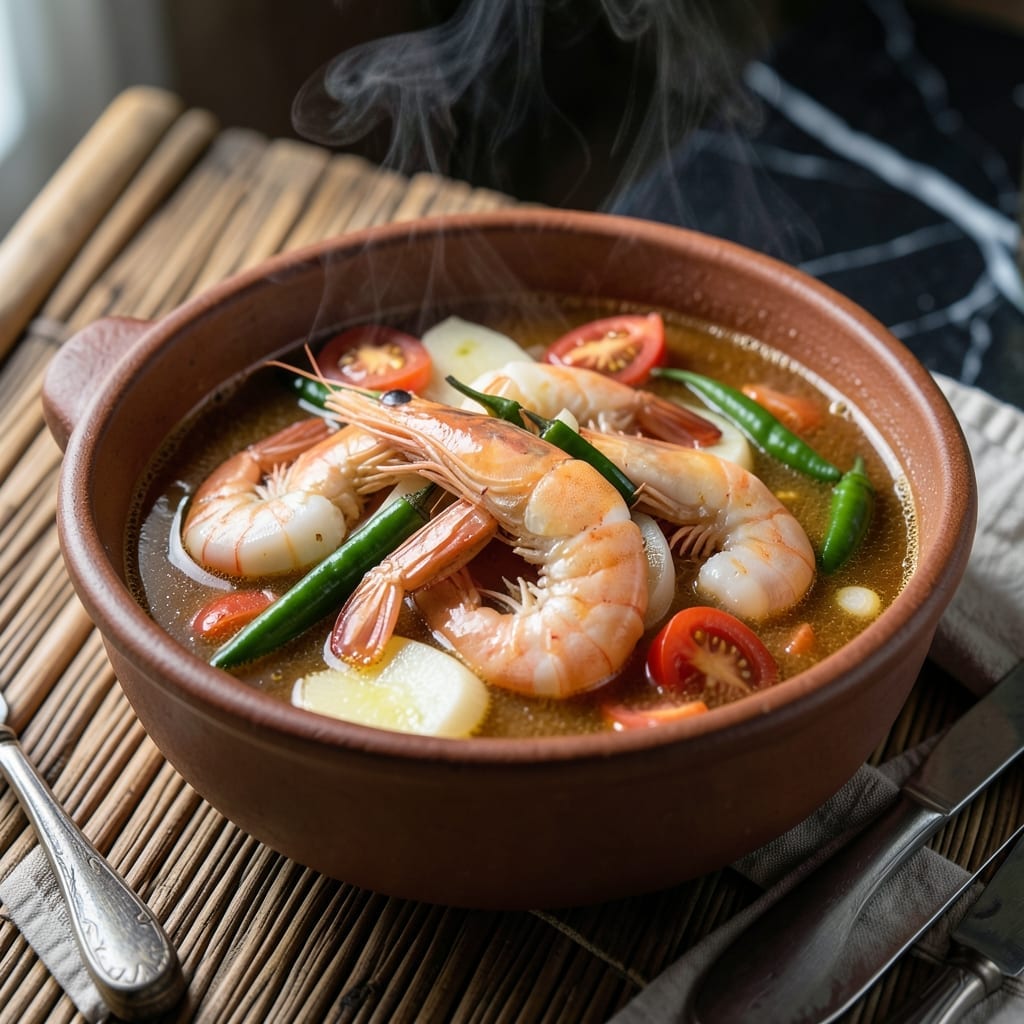
This classic Filipino soup delivers a perfect balance of tangy tamarind broth and plump, juicy shrimp. The sour flavor profile is authentic to traditional sinigang.
A comforting one-pot dish that highlights fresh seafood and bold, bright flavors. Simple ingredients create a deeply satisfying meal.
Ingredients for Shrimp Sinigang Recipe Filipino
Fresh seafood and vibrant vegetables build this authentic Filipino sour soup foundation.
| Ingredient | Amount | Notes |
|---|---|---|
| Large Shrimp 🦐 | 1 ½ lb | Peeled, deveined, tails on |
| Tamarind Paste 🍋 | ½ cup | Or tamarind soup base mix |
| Daikon Radish 🥬 | 1 whole | Peeled, sliced into rounds |
| Medium Tomato 🍅 | 2 whole | Quartered for sour base |
| Medium Onion 🧅 | 1 whole | Peeled, sliced into wedges |
| Long Green Chili 🌶️ | 2 whole | Optional for heat, left whole |
| Fresh Spinach 🥬 | 4 cups | Or kangkong water spinach |
| Garlic Cloves 🧄 | 4 cloves | Minced for aromatic base |
| Fresh Ginger 🌿 | 1 whole | Sliced into thin strips |
| Fish Sauce 🐟 | 2 tbsp | Patis for umami depth |
| Water 💧 | 6 cups | For broth base quantity |
| Salt 🧂 | 1 tsp | Adjust to taste preference |
| Ground Black Pepper 🌶️ | ½ tsp | Freshly ground preferred |
The shrimp quality is paramount for this dish. Wild-caught Gulf shrimp or 16-20 count per pound provide the best texture and flavor. Look for firm, translucent flesh with minimal odor at your seafood counter. Whole Foods and Asian markets typically carry excellent options. The tamarind paste should be pure—avoid versions with added sugar or preservatives. Filipino or Thai brands offer the most authentic flavor profile.
No tamarind paste? Guava puree or calamansi juice can substitute in a pinch, though the flavor will differ slightly. For the daikon, turnips or white radishes work as alternatives. Kangkong (water spinach) is traditional, but bok choy or regular spinach are acceptable. The chili is optional—remove seeds for milder heat. If using tamarind soup base packets, adjust quantity to taste as brands vary in concentration.
This soup reheats beautifully and often tastes better the next day. Store leftovers in an airtight container in the refrigerator for up to 3 days. The flavors will continue to develop, but the shrimp texture is best consumed fresh. Not suitable for freezing due to the shrimp’s delicate texture.
Why You’ll Love This Recipe
- One-Pot Wonder: I toss everything in—shrimp, tamarind, radish—and let it simmer. Cleanup is just one pot.
- Tangy Comfort: The tamarind paste gives that sour kick I crave, balanced by sweet shrimp and crisp daikon.
- Weeknight Hero: Honestly, it’s ready before my kids finish arguing over who sets the table.
- Leftovers Win: Tastes even better the next day, and the shrimp stay plump. Between us, I make extra on purpose.
Step-by-Step Instructions for Shrimp Sinigang
Master the technique for this iconic Filipino soup with its signature sour broth and tender seafood.
Step 1: Build the Aromatic Base
In a large pot, combine the 6 cups water with the 1 whole daikon radish (peeled and sliced into rounds), 2 whole medium tomato (quartered), and 1 whole medium onion (sliced into wedges). Bring to a boil over medium-high heat.
Add the 4 cloves garlic cloves (minced) and 1 whole fresh ginger (sliced into thin strips). These aromatics form the flavor foundation. Simmer for 5 minutes until the daikon begins to soften and the broth becomes fragrant.
Step 2: Develop the Sour Broth
Stir in the 0.5 cup tamarind paste until fully dissolved. This is the soul of sinigang—its tangy depth defines the dish. Reduce heat to medium and let it simmer for 8-10 minutes to meld the flavors.
Season with 1 tsp salt and 0.5 tsp ground black pepper. Taste and adjust the sourness—add a bit more tamarind paste if you prefer a sharper tang. The broth should balance bright acidity with subtle sweetness from the vegetables.
Step 3: Add the Shrimp and Vegetables
Gently add the 1.5 lb large shrimp (peeled, deveined, tails on) to the broth. Cook for 3-4 minutes until the shrimp turn opaque pink and curl into a C-shape. Avoid overcooking—they should remain plump and tender.
Add the 2 whole long green chili (left whole for subtle heat) and 4 cups fresh spinach. Stir in the 2 tbsp fish sauce for umami depth. Simmer for 2 more minutes until the spinach wilts and the chili infuses the broth.
Step 4: Final Adjustments and Serving
Remove from heat and let the soup rest for 2 minutes. This allows the flavors to settle and the shrimp to finish cooking gently in the residual heat. Skim off any foam that rises to the surface for a clean presentation.
Ladle into bowls, ensuring each serving has shrimp, daikon, and greens. The broth should be tangy and aromatic, with a perfect balance of sour, salty, and umami notes. Serve immediately with steamed rice to soak up the flavorful liquid.
Pro Tips For Making Shrimp Sinigang Recipe Filipino
- Boil Radish First: I learned this the hard way—daikon takes longer to soften than shrimp, so give it a 5-minute head start in the broth before adding the shrimp.
- Use Fresh Tamarind: Sounds weird, but it works: fresh tamarind pulp (soaked and strained) tastes brighter than paste, and you’ll need about 2 tablespoons for that perfect tang.
- Don’t Overcook Shrimp: After burning three batches, I finally figured out shrimp only need 2-3 minutes in the simmering broth—any longer and they turn rubbery.
- Char Tomatoes Quickly: My grandmother swore by this, and she was right: sear the halved tomatoes cut-side down in the pot for 1 minute before adding liquid to deepen the flavor.
Make-Ahead Tips for Leftovers
🔪 Week Before
Start by shopping for non-perishable ingredients like tamarind soup base, long green chilies, and dried bay leaves. If using fresh tamarind, purchase it early to allow time for soaking and extracting the pulp. 2-3 days before cooking, soak the tamarind in warm water to soften it, then strain and store the extract in the fridge. This ensures the base flavor is ready to go when needed. 💡
🍳 Day Before
Prep the vegetables to save time. Peel and slice the daikon radish, onion, and tomatoes, then store them in airtight containers in the fridge. If using kangkong (water spinach) or string beans, trim the ends and wash them thoroughly, but keep them uncut until cooking day to maintain freshness. 12-24 hours ahead, you can also marinate the shrimp in a bit of calamansi or lemon juice to enhance their flavor. ✨
⏰ Day Of
Begin by sautéing the onions, tomatoes, and tamarind paste in a pot. Add the radish and other firm vegetables first, as they take longer to cook. 30 minutes before serving, add the shrimp to the broth, as they cook quickly—just 3-5 minutes until pink. This staggered approach ensures everything is perfectly tender. 🎯
🌡️ Last-Minute Tasks
Taste and adjust the sourness of the broth with additional tamarind paste or a splash of vinegar if needed. Add the leafy greens like kangkong or spinach 2-3 minutes before serving, so they wilt just enough. Garnish with sliced chilies for a kick and serve hot over steamed rice. 🔥
Nutrition Facts

- 6 Egg Cake Recipe with Oil: Light as Air With Buttery Moisture - October 4, 2026
- 4 Bean Casserole Recipe: One-Pan Heartiness With Smoky Paprika Depth - October 4, 2026
- 3-Ingredient Keto Mug Cake Recipe: Microwave Magic in 2 Minutes - October 4, 2026