
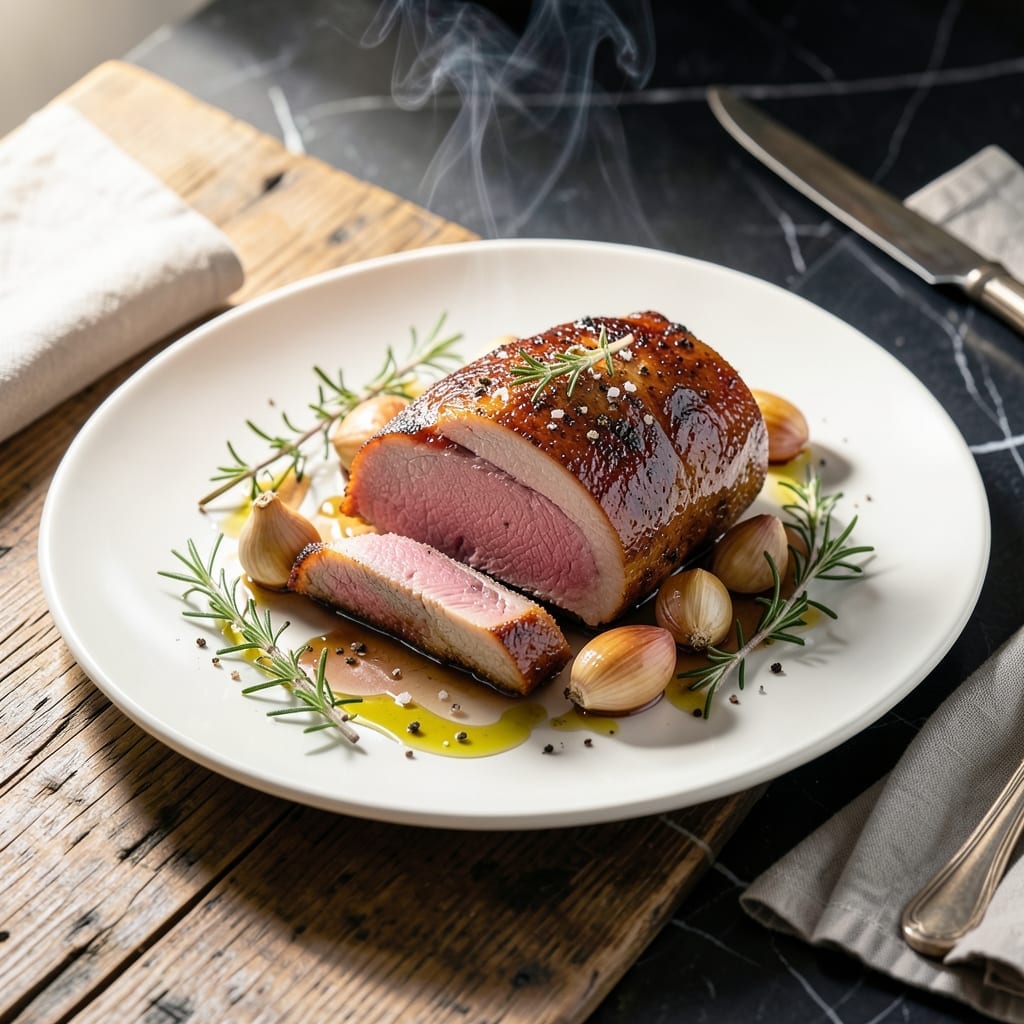
Achieving perfectly cooked duck breast without skin requires precision and patience. This method delivers tender, rosy medium-rare meat with rich, deep flavor in every bite.
The key is controlling the heat and timing carefully. Start with a hot pan to develop a beautiful crust, then finish at lower heat to cook the meat evenly without drying it out.
You’ll end up with juicy, flavorful duck breast that rivals any restaurant version. The meat will be tender and moist, with a delicate pink center that melts in your mouth.
Serve sliced against the grain for maximum tenderness. Pair with a simple pan sauce to elevate the dish even further.
Ingredients for Skinless Duck Breast
Elevate your dinner with these refined ingredients for that restaurant-quality experience at home.
| Ingredient | Amount | Notes |
|---|---|---|
| Duck Breast 🦆 | 2 lb | Boneless, skinless, about 1 inch thick |
| Kosher Salt 🧂 | 1 ½ tsp | Diamond Crystal preferred |
| Freshly Ground Black Pepper 🌶️ | 1 tsp | Coarse grind for texture |
| Garlic Cloves 🧄 | 3 cloves | Smashed, peeled |
| Fresh Thyme Sprigs 🌿 | 4 sprigs | Stems removed, chopped |
| Fresh Rosemary Sprig 🌿 | 1 whole | Finely minced |
| Olive Oil 🫒 | 2 tbsp | High smoke point variety |
| Unsalted Butter 🧈 | 3 tbsp | For basting duck |
| Shallot 🧅 | 1 whole | Finely diced for pan sauce |
| Red Wine Vinegar 🍷 | 2 tbsp | For deglazing pan |
| Low-Sodium Chicken Stock 🥫 | ½ cup | Warm for pan sauce |
| Dijon Mustard 🟡 | 1 tsp | Smooth variety preferred |
The duck breast is the star here—sourced from a reputable butcher or the meat counter at Whole Foods ensures quality. Look for pieces with even thickness (about 1 inch) for consistent cooking. Avoid pre-packaged if possible; the texture suffers. I prefer Maple Leaf Farms for mail-order if local options are limited. The fat content should be visible but not excessive.
No fresh thyme or rosemary? Dried at one-third the amount works, but fresh really shines here. Out of shallots? Yellow onion (finely diced) is a fine substitute. For the stock, homemade or high-quality store-bought like Better than Bouillon makes a difference. The vinegar can be swapped for balsamic or apple cider if that’s what you’ve got.
Duck keeps 3-4 days in the fridge (wrapped tightly) or 6 months frozen. The pan sauce is best fresh but reheats gently—don’t boil or it’ll break. Leftovers? Slice thin for sandwiches the next day (trust me on this one).
Why You’ll Love This Recipe
- One Pan Wonder: I sear the duck breast, toss in garlic and thyme, and it’s done in 20 minutes—no messy prep, no extra dishes.
- Crave-Worthy Crust: That salty-peppery crust with the garlic and thyme? I could eat it every night.
- Date Night Ready: It feels fancy, but honestly, it’s my go-to when I want to impress without stressing.
- Leftovers Luxe: Cold slices on salad the next day taste even better—if they last that long.
Step-by-Step Instructions for Pan-Seared Duck Breast
Here’s the method. Straightforward, tested, works every time.
Step 1: Season and Prep the Duck
Pat the 2 lb Duck Breast completely dry with paper towels—this is non-negotiable for achieving a proper sear. Season both sides aggressively with the 1.5 tsp Kosher Salt and 1 tsp Freshly Ground Black Pepper, pressing the seasoning into the meat so it adheres.
Let the duck sit at room temperature for 30 minutes while you prep the aromatics. Finely mince the 1 whole Fresh Rosemary Sprig, chop the leaves from the 4 sprigs Fresh Thyme Sprigs, and smash the 3 cloves Garlic Cloves (peel left on for now). This resting period takes the chill off the meat for more even cooking.
Step 2: Sear the Duck to Medium-Rare
Heat a heavy skillet over medium-high heat until hot, then add the 2 tbsp Olive Oil. When the oil shimmers, place the duck in the pan. Sear undisturbed for 5-6 minutes until a deep brown crust forms—you’ll see the edges turn from translucent to opaque as it cooks.
Flip and add the 3 tbsp Unsalted Butter, along with the smashed garlic, thyme, and rosemary. Tilt the pan and baste the duck with the foaming butter for 3-4 minutes until the internal temperature reaches 130-135°F for perfect medium-rare. Transfer the duck to a cutting board to rest.
Step 3: Build the Pan Sauce
Pour off all but 1 tablespoon of fat from the skillet, then return it to medium heat. Add the finely diced 1 whole Shallot and sauté for 2 minutes until softened and just starting to brown. The shallot should pick up all the fond (browned bits) from the duck—this is pure flavor.
Deglaze with the 2 tbsp Red Wine Vinegar, scraping the bottom of the pan with a wooden spoon. Let it reduce by half, then add the 0.5 cup Low-Sodium Chicken Stock and 1 tsp Dijon Mustard. Simmer for 3-4 minutes until slightly thickened.
Step 4: Slice and Serve
Slice the duck against the grain into ½-inch thick pieces. The meat should be rosy pink in the center with a rich, caramelized crust. Strain the pan sauce through a fine-mesh sieve to remove the garlic and herb solids, then pour it over the sliced duck.
Serve immediately while the sauce is still glossy and warm. The duck should be tender and juicy with a faint pink center, and the sauce should cling to each slice. Any leftovers (if they exist) will keep in the fridge for up to 3 days.
Pro Tips For Making Skinless Duck Breast
- Score the Fat: Even without skin, lightly scoring the fat cap in a crosshatch helps render it out and prevents curling—I learned this the hard way after my first duck breast turned into a sad little puck.
- Rest Before Cooking: Let the duck breast sit at room temperature for 20-30 minutes before cooking. Cold meat seizes up and cooks unevenly, and I used to rush this part and wonder why it was always dry.
- Don’t Overcrowd the Pan: Use a pan big enough to give each breast space, or cook them one at a time. Steaming from crowding ruins the sear, and after burning three batches, I finally figured out the pan wasn’t the problem.
- Crush the Garlic: Instead of mincing, just smash the garlic cloves with the side of your knife and leave them whole—they’ll infuse the oil with flavor without burning, and My grandmother swore by this, and she was right.
Troubleshooting skinless duck breast
Overcooked Duck
If your duck turns out dry, you likely cooked it past 135°F internal temperature. Use a meat thermometer and pull it at 130-135°F—it rises 5-10°F while resting. I always err on the lower side. 🌡️
Poor Sear
A weak crust means the pan wasn’t hot enough or the duck wasn’t dry. Pat it thoroughly dry and heat your skillet until the oil shimmers. Cast iron retains heat best for this.
Tough Texture
Slicing with the grain causes chewiness. Always cut across the grain into ½-inch slices. Also, let it rest 10 minutes before slicing to redistribute juices.
Sauce Breaking
If your pan sauce looks greasy, you may have boiled it too vigorously. Keep it at a gentle simmer. If it separates, whisk in 1 tsp cold butter to bring it back together.
Uneven Cooking
Inconsistent thickness causes uneven doneness. Pound thicker parts gently to 1-inch thickness before cooking. Or fold the thin end under and secure with a toothpick. 💡
Weak Flavor
Bland duck often needs better seasoning. Don’t be shy with the 1.5 tsp salt—duck can handle it. Also, fresh herbs make a noticeable difference over dried.
Nutrition Facts
Frequently Asked Questions
What temperature should I cook duck breast to?
Pull it at 130-135°F internal temperature for perfect medium-rare. It will rise another 5-10°F while resting. Always use a meat thermometer for accuracy.
Can I use dried herbs instead of fresh?
Yes, but use 1/3 the amount since dried herbs are more concentrated. Fresh herbs deliver better flavor, but dried thyme and rosemary will work in a pinch.
How long should the duck rest before slicing?
Let it rest for at least 10 minutes after cooking. This allows the juices to redistribute throughout the meat, ensuring a tender, juicy result.
What if my pan sauce separates?
Whisk in 1 tsp cold butter to bring it back together. Avoid boiling the sauce too vigorously, as this can cause separation.

- 6 Egg Cake Recipe with Oil: Light as Air With Buttery Moisture - October 4, 2026
- 4 Bean Casserole Recipe: One-Pan Heartiness With Smoky Paprika Depth - October 4, 2026
- 3-Ingredient Keto Mug Cake Recipe: Microwave Magic in 2 Minutes - October 4, 2026