
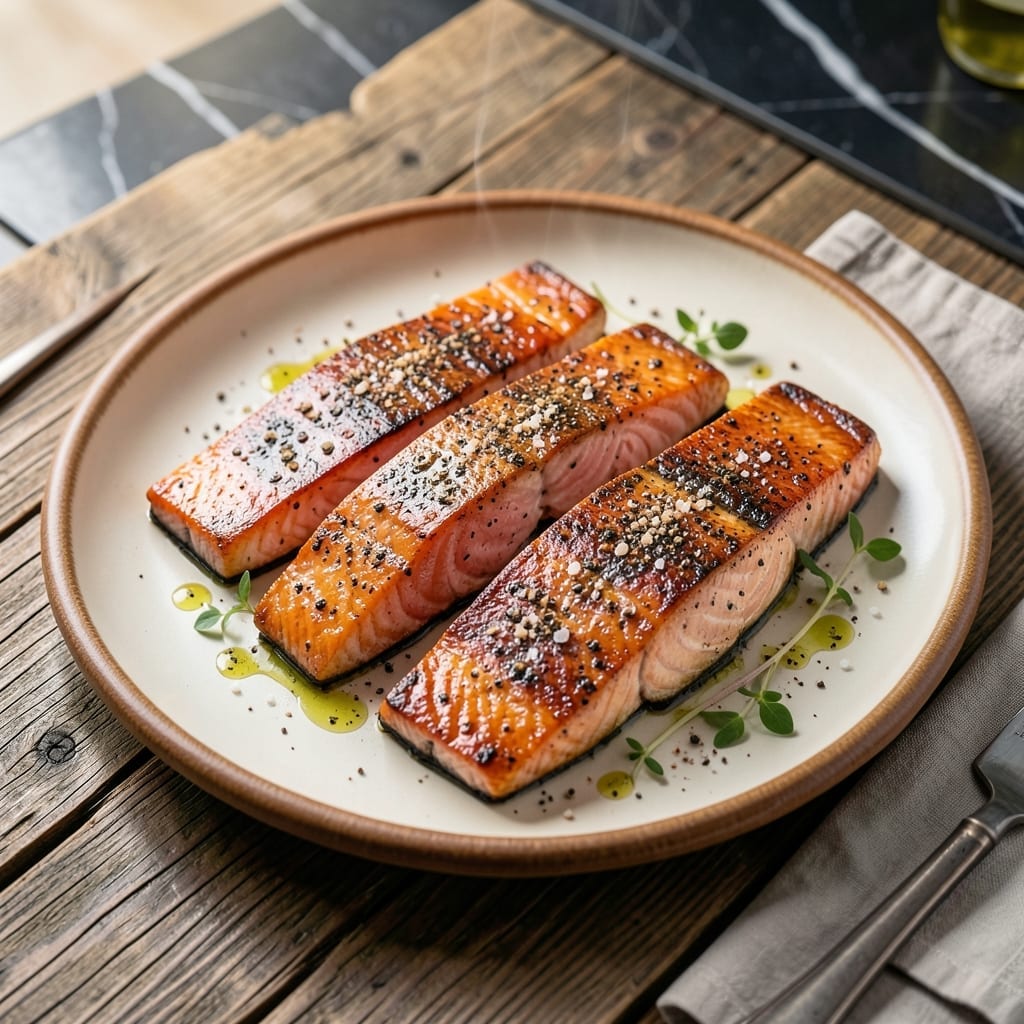
Achieving perfectly flaky sockeye salmon with crispy skin is simpler than you might think. This pan-searing method delivers professional results with minimal effort.
The key lies in patience and technique. Starting with a cold pan ensures even cooking, while skin-side-down placement guarantees that coveted crispy texture. The flesh cooks gently, maintaining its tender, flaky quality.
You’ll end up with salmon that’s golden and shatteringly crispy on the bottom, with moist, buttery flesh that separates effortlessly. A simple seasoning approach lets the fish’s natural richness shine through.
Ready in 15 minutes, this dish proves that restaurant-quality seafood is absolutely achievable at home. The results speak for themselves.
Ingredients for Sockeye Salmon Recipe Pan
High-quality sockeye plus a handful of pantry staples delivers restaurant-worthy results at home.
| Ingredient | Amount | Notes |
|---|---|---|
| Sockeye Salmon Fillets 🐟 | 4 pieces | Skin-on, about 6 oz each |
| Kosher Salt 🧂 | 1 tsp | Diamond Crystal preferred for even distribution |
| Freshly Ground Black Pepper 🌶️ | ½ tsp | Coarse grind for texture |
| Garlic Powder 🧄 | ½ tsp | Not garlic salt |
| Smoked Paprika 🌶️ | ½ tsp | For subtle depth of flavor |
| Olive Oil 🫒 | 2 tbsp | High smoke point variety |
| Unsalted Butter 🧈 | 2 tbsp | Cold, cubed for basting |
| Fresh Lemon 🍋 | 1 whole | For juice and garnish |
| Fresh Dill 🌿 | ¼ cup | Chopped, for garnish |
| Fresh Parsley 🍃 | ¼ cup | Chopped, for color contrast |
The salmon quality is non-negotiable. Wild-caught sockeye from Alaska offers optimal flavor and texture with its higher oil content. Look for fillets with vibrant red-orange color and a fresh, clean scent. Most Whole Foods or high-end seafood counters will have it. The skin should be moist and iridescent—avoid any pieces with dry or discolored patches.
No sockeye available? Coho or king salmon work well too, though cooking times may vary slightly. For the seasoning, freshly cracked pepper is worth the extra minute. If you must use dried dill, cut the amount to one-third. The smoked paprika adds subtle complexity, but regular paprika in a pinch won’t ruin the dish.
Salmon is best cooked immediately, but fillets will keep in the fridge for 1-2 days if wrapped tightly. Leftovers store for 3 days—reheat gently to preserve texture. The fresh herbs? Trim stems and store in water like flowers to extend their life.
Why You’ll Love This Recipe
- One Pan Wonder: I toss the fillets with salt, pepper, garlic powder, and smoked paprika, then let the oven do the rest—no flipping, no fuss.
- Smoky Depth: That smoked paprika gives the sockeye this rich, almost campfire-like flavor that’s way more interesting than plain baked salmon.
- Weeknight Hero: Honestly, it’s my go-to for busy Tuesdays when I need dinner on the table fast but still want something that feels special.
- Leftovers Gold: The salmon holds up beautifully in the fridge, so I pack it for lunch the next day—cold or reheated, it’s still delicious.
Step-by-Step Instructions for Pan-Seared Sockeye Salmon
Master the technique for restaurant-quality results with crispy skin and flaky interior.
Step 1: Season the Sockeye Salmon Fillets
Pat the 4 pieces Sockeye Salmon Fillets completely dry with paper towels—this is essential for achieving crispy skin. Place them skin-side down on a clean surface.
Combine the 1 tsp Kosher Salt, 0.5 tsp Freshly Ground Black Pepper, 0.5 tsp Garlic Powder, and 0.5 tsp Smoked Paprika in a small bowl. Evenly distribute this seasoning blend over the flesh side of each fillet, pressing gently to adhere. The smoked paprika adds subtle depth without overpowering the natural salmon flavor.
Step 2: Preheat and Prepare the Pan
Place a heavy-bottomed skillet (preferably stainless steel or cast iron) over medium-high heat. Add the 2 tbsp Olive Oil and allow it to heat until it shimmers but doesn’t smoke—about 2 minutes.
While the pan heats, cut the 2 tbsp Unsalted Butter into small cubes and keep them cold. The high smoke point of the olive oil prevents burning during the initial sear, while the butter will be added later for basting and flavor.
Step 3: Sear the Salmon Skin-Side Down
Carefully place the seasoned Sockeye Salmon Fillets in the hot pan, skin-side down. Press down gently with a fish spatula for 10 seconds to prevent curling and ensure full contact with the pan. Cook undisturbed for 4-5 minutes until the skin is golden brown and crispy.
You’ll notice the edges turning opaque and rising up the sides of the fillets. This visual cue indicates the salmon is cooking through. Avoid moving the fillets prematurely—this is critical for achieving that perfect crispy skin.
Step 4: Baste and Finish Cooking
Reduce heat to medium. Add the cubed Unsalted Butter to the pan along with the juice of half the Fresh Lemon. Tilt the pan slightly and use a spoon to baste the salmon with the foaming butter and lemon juice for 1-2 minutes.
Flip the fillets and cook for an additional 2-3 minutes until the salmon reaches an internal temperature of 125-130°F and flakes easily with a fork. The basting adds richness and helps cook the top evenly.
Step 5: Rest and Garnish for Service
Transfer the cooked salmon to a warm plate and let it rest for 2 minutes. This brief rest allows the juices to redistribute throughout the fillets, ensuring maximum moisture and flakiness.
Garnish with the remaining lemon cut into wedges, the 0.25 cup Fresh Dill, and the 0.25 cup Fresh Parsley. The fresh herbs add a bright contrast to the rich salmon, while the lemon wedges allow diners to add additional acidity to taste.
Pro Tips For Making Sockeye Salmon Recipe Pan
- Pat It Dry: Blot the sockeye fillets with a paper towel before seasoning—this guarantees a good sear instead of steaming in its own moisture.
- Skin Side First: Start cooking the salmon skin-side down in a hot pan for 3-4 minutes to crisp it up before flipping; this keeps it from sticking and ruining your presentation.
- Skip Cold Salmon: Let the fillets sit at room temperature for 10 minutes before cooking. I learned this the hard way—cold salmon cooks unevenly and ends up dry.
- Double the Spice: Use a heavier hand with the smoked paprika and garlic powder than you think you need; sockeye’s rich flavor can handle it and the crust actually changes the outcome.
Flavor Customization for This Dish
Herb Variations
Swap the dill for fresh tarragon for a subtle anise note that pairs beautifully with salmon. I use 2 tbsp chopped tarragon per fillet. The delicate flavor complements without overpowering the fish. 🌿
Citrus Twists
Replace lemon with lime or orange for a different bright profile. 1 tbsp lime zest mixed into the seasoning adds a vibrant kick. Orange segments make an elegant garnish that looks stunning on the plate.
Spice Infusions
Add ¼ tsp cayenne pepper to the seasoning mix for a subtle heat. For more depth, try ½ tsp ground cumin which pairs exceptionally well with the smoked paprika. These spices add complexity without masking the salmon’s natural flavor.
Butter Upgrades
Infuse your butter with 2 crushed garlic cloves for extra aroma. Or try 1 tbsp capers melted into the butter for a briny, Mediterranean-inspired twist. I often keep a jar of Sicilian capers on hand for this purpose. 💫
Sweet Glazes
In the last 2 minutes of cooking, add 1 tbsp honey or maple syrup to the pan with the butter. This creates a beautiful caramelized glaze that balances the salmon’s richness. Just be careful not to burn it.
Umami Boost
Sprinkle 1 tsp soy sauce over the fillets just before basting. The saltiness enhances the salmon’s natural flavors, while the amino acids create that coveted umami depth. A little goes a long way with this addition.
Nutrition Facts
Frequently Asked Questions
What’s the ideal internal temperature for pan-seared salmon?
Cook until it reaches 125-130°F internally. This ensures moist, flaky flesh while being fully safe to eat. Use a meat thermometer for accuracy.
Can I use a non-stick pan instead of stainless steel?
Yes, but stainless steel gives better crust. If using non-stick, preheat it well and avoid metal utensils. The crispy skin may not develop as deeply.
How do I prevent the skin from sticking?
Ensure the pan is very hot before adding salmon and don’t move it for 4-5 minutes. Press gently at first to maximize skin contact with the pan.
What’s the best way to store leftovers?
Store cooked salmon in an airtight container for up to 3 days. Reheat gently in a pan over low heat to preserve texture.

- 6 Egg Cake Recipe with Oil: Light as Air With Buttery Moisture - October 4, 2026
- 4 Bean Casserole Recipe: One-Pan Heartiness With Smoky Paprika Depth - October 4, 2026
- 3-Ingredient Keto Mug Cake Recipe: Microwave Magic in 2 Minutes - October 4, 2026