
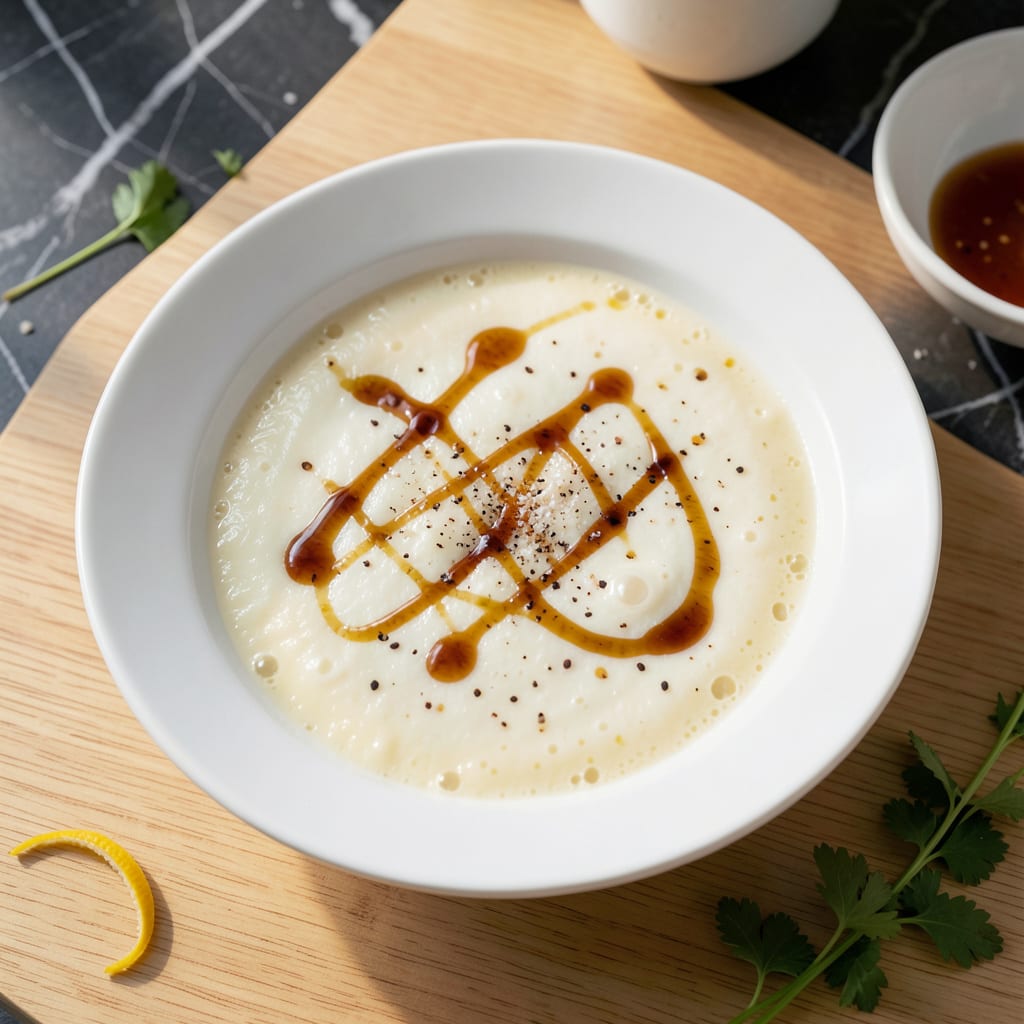
This Cantonese classic transforms simple ingredients into a silky, custard-like delight. The technique requires precision—just the right ratio of eggs to liquid and gentle, even heat.
I perfected this method after years of trial and error. The result is always a smooth, tender texture that melts in your mouth, with no curdling or dryness. Traditional variations include adding century egg or minced pork.
Ingredients for Soft Steam Egg
A handful of humble ingredients creates this Cantonese custard-like dish with perfect precision.
| Ingredient | Amount | Notes |
|---|---|---|
| Large Eggs 🥚 | 4 whole | Room temperature preferred |
| Chicken Stock 🍲 | 2 cups | Low-sodium preferred for control |
| Water 💧 | ½ cup | Filtered for best texture |
| Salt 🧂 | ½ tsp | Diamond Crystal kosher preferred |
| White Pepper 🌶️ | ¼ tsp | Freshly ground for aroma |
| Sesame Oil 🫒 | 1 tsp | Toasted variety for depth |
| Green Onions 🧅 | 2 whole | Thinly sliced for garnish |
| Soy Sauce 🥫 | 1 tbsp | Light or all-purpose variety |
| Neutral Oil 🫒 | 1 tsp | For greasing steaming dish |
| Century Egg 🥚 | 1 whole | Optional traditional addition |
| Minced Pork 🐖 | ¼ cup | Optional traditional addition |
The eggs are the foundation—fresh, high-quality large eggs yield the silkiest texture. Chicken stock should be light in color and mild in flavor (I prefer Swanson or homemade). The water-to-egg ratio is critical; filtered water prevents any off-flavors. For authentic results, white pepper is non-negotiable—it provides a subtle warmth without dark specks in the final dish.
No chicken stock? Vegetable stock works in a pinch. Swap white pepper for black if needed (texture will differ slightly). The sesame oil can be omitted for a plainer version, but adds essential aroma. For a vegetarian take, skip the pork and use mushrooms. Traditionalists might add dried shrimp or scallops to the stock for umami depth.
Steam immediately after mixing to prevent separation. This keeps 2-3 days refrigerated but is best enjoyed fresh. Reheat gently in a double boiler to maintain that signature silky texture (microwaving can cause curdling). Always bring ingredients to room temperature before combining.
Why You’ll Love This Recipe
- 5-Minute Magic: I crack the eggs, mix with stock, and steam—no fancy steps, just silky results every time.
- Silky Savory Bites: The chicken stock and white pepper give it this warm, cozy depth that’s way more than just eggs.
- Breakfast to Dinner: Honestly, it’s my go-to for lazy mornings or a light dinner when I’m not in the mood to cook.
- Pocket-Friendly Protein: Three eggs, basic pantry staples, and it stretches to feed two without breaking the bank.
Step-by-Step Instructions for Soft Steamed Egg
Achieving the perfect silky texture requires precise technique and careful temperature control.
Step 1: Prepare the Steaming Liquid and Base
In a heatproof bowl that fits inside your steamer, combine the 2 cups Chicken Stock and 0.5 cup Water. I prefer using a wide, shallow dish for even heating. Add the 0.5 tsp Salt, 0.25 tsp White Pepper, and 1 tsp Sesame Oil, stirring until the salt fully dissolves.
The liquid should be at room temperature before adding the eggs. This prevents the eggs from seizing up when they hit hot liquid. For the optional variations, finely dice the 1 whole Century Egg and lightly cook the 0.25 cup Minced Pork in a separate pan first—this ensures both additions are fully heated through before steaming.
Step 2: Temper and Incorporate the Eggs
Crack the 4 whole Large Eggs into a separate bowl and beat them just until the yolks and whites are combined—avoid overmixing, which would incorporate too much air and create a spongy texture. Slowly pour the beaten eggs into the stock mixture while gently stirring in a circular motion.
Strain the mixture through a fine-mesh sieve into your steaming dish to remove any lumps. This step is non-negotiable for achieving the signature smooth consistency. The liquid should look completely homogeneous with no visible egg streaks.
Step 3: Steam with Precise Heat Control
Bring 2 inches of water to a rolling boil in your steamer. Place the dish inside, then immediately reduce the heat to maintain a gentle, steady simmer—you should see small bubbles breaking the surface, not a vigorous boil. Cover with a tight-fitting lid.
Steam for 12-15 minutes until the surface is just set but still slightly jiggly in the center, like a firm custard. Avoid lifting the lid during steaming, as the sudden temperature drop can cause the eggs to weep. The edges should pull away slightly from the dish when done.
Step 4: Add Finishing Touches and Serve
Carefully remove the dish from the steamer and let it rest for 2 minutes. Drizzle with 1 tbsp Soy Sauce and the 1 tsp Neutral Oil—this adds a glossy sheen and enhances the umami depth. Garnish with the thinly sliced 2 whole Green Onions, distributing them evenly across the surface.
The texture should be silky and spoonable, with the custard barely holding its shape. Serve immediately while still hot, as the eggs will continue to set slightly as they cool. For best results, use a wide, shallow spoon to portion, ensuring each serving captures the full custard-like consistency.
Pro Tips For Making Soft Steam Egg
- Use room temperature eggs: Cold eggs straight from the fridge can cause uneven cooking and a less silky texture. I learned this the hard way—pull your eggs out 20-30 minutes before steaming.
- Strain the egg mixture: Sounds weird, but it works: straining the beaten eggs through a fine mesh sieve removes any tough strands, giving you that ultra-smooth finish.
- Skip boiling stock: Resist the urge to use boiling hot chicken stock—it can curdle the eggs. Warm stock (about 160°F/70°C) blends better and steams gently.
- Cover with a towel: After placing the lid on your steamer, drape a clean kitchen towel over it to absorb excess condensation. This prevents water droplets from falling back into the eggs and creating dimples.
Flavor Customization for soft steam egg
Umami Depth Boosters
For richer flavor, swap the chicken stock for dashi stock or add 1 tsp fish sauce to the liquid. I find this adds a subtle oceanic note that pairs beautifully with the eggs. The umami enhancement is noticeable without overpowering the delicate egg flavor.
Herbal Infusions
Add 3-4 slices of fresh ginger to the stock while heating, then remove before mixing with eggs. For a floral touch, steep 2-3 dried shiitake mushrooms in the warm stock for 10 minutes before straining and combining with eggs. 💡
Spicy Kick
For heat lovers, stir in ½ tsp chili crisp or a few drops of Sriracha into the finished dish. I prefer adding it at the end so the heat doesn’t alter the egg texture during cooking. The contrast of spicy and silky is divine.
Vegetable Additions
Finely dice ¼ cup shiitake mushrooms or ¼ cup spinach and mix into the egg-stock mixture before steaming. For a pop of color and sweetness, add 2 tbsp finely diced red bell pepper. These add texture without compromising the custard-like consistency.
Dairy Twist
For a creamy variation, replace ¼ cup of the stock with ¼ cup whole milk or ¼ cup heavy cream. This creates an even richer texture while maintaining the silky mouthfeel. I’ve also successfully used coconut milk for a dairy-free version. ✨
Citrus Brightness
Zest ½ lemon or ½ lime into the egg mixture before steaming for a subtle citrus note. Alternatively, add 1 tsp lime juice after cooking to brighten the flavors. The acidity cuts through the richness beautifully.
Nutrition Facts
Frequently Asked Questions
Why does my egg custard turn out lumpy?
Lumps usually mean the eggs weren’t strained properly or the heat was too high. Always strain through a fine-mesh sieve and maintain a gentle simmer, not a boil.
Can I use water instead of stock?
Yes, but the flavor will be milder. Use 2.5 cups filtered water with 1 tsp salt to compensate. Stock adds depth that plain water can’t match.
How do I know when it’s done?
The surface should be just set with a slight jiggle in the center, like custard. It will firm up as it rests for 2 minutes after steaming.
Can I make this without a steamer?
Use a heatproof dish in a pot with 1-2 inches of boiling water. Cover tightly and keep the heat low to maintain steady steam.

- 6 Egg Cake Recipe with Oil: Light as Air With Buttery Moisture - October 4, 2026
- 4 Bean Casserole Recipe: One-Pan Heartiness With Smoky Paprika Depth - October 4, 2026
- 3-Ingredient Keto Mug Cake Recipe: Microwave Magic in 2 Minutes - October 4, 2026