
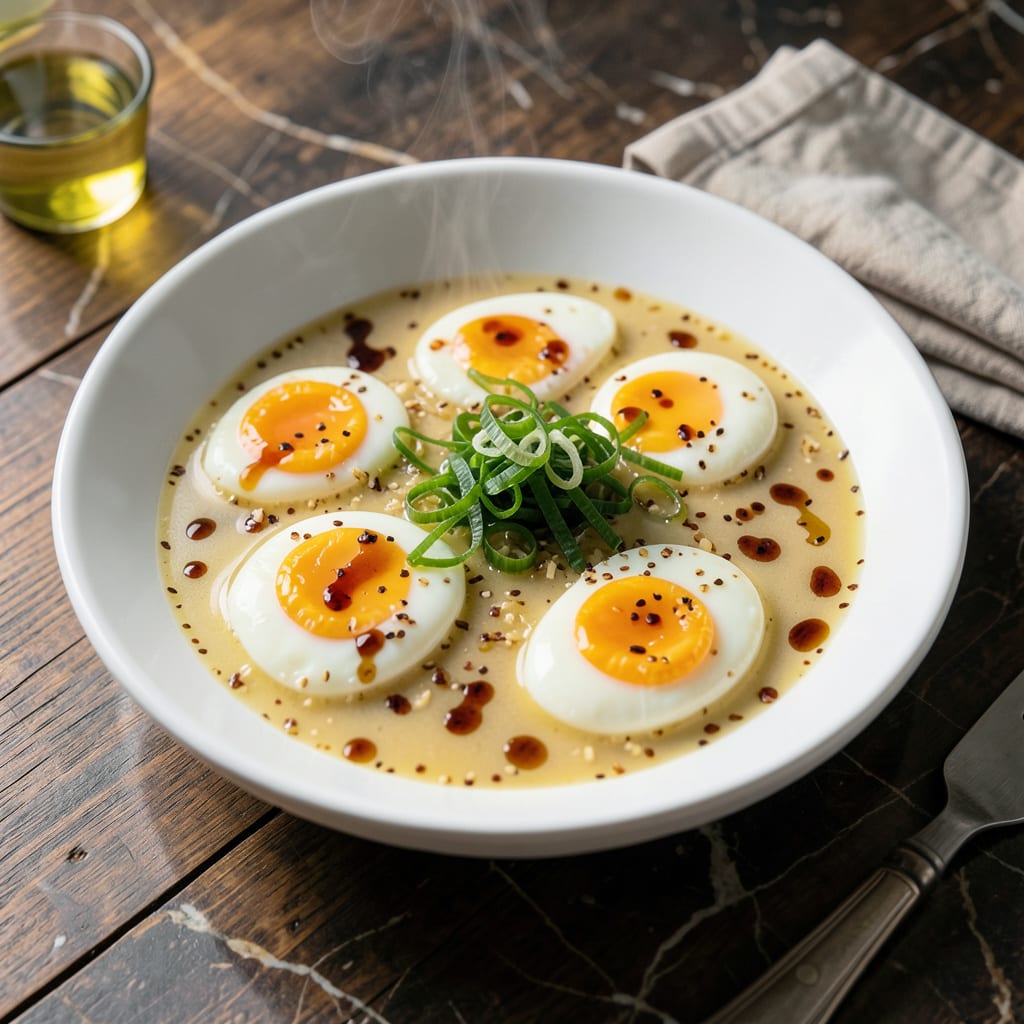
Achieving that perfect silky smooth texture in steamed eggs requires precise timing and gentle heat. This method transforms simple ingredients into a custard-like consistency that’s both delicate and rich.
I’ve refined this technique to ensure perfectly soft eggs every time, with a velvety finish that melts on your tongue. No fancy equipment needed—just a steamer and a bit of patience.
Ingredients for Soft Steamed Eggs
Transform simple eggs into silky custard with gentle heat and precise timing.
| Ingredient | Amount | Notes |
|---|---|---|
| Large Eggs 🥚 | 6 whole | Room temperature for even cooking |
| Water 💧 | 4 cups | For steaming in pot |
| Salt 🧂 | ½ tsp | Diamond Crystal kosher preferred |
| Sesame Oil 🫒 | 1 tsp | Toasted for aroma |
| Soy Sauce 🥢 | 1 tbsp | Low-sodium recommended |
| Green Onions 🧅 | 2 whole | Thinly sliced for garnish |
| Fresh Cilantro 🌿 | ¼ cup | Chopped, stems removed |
| Garlic Cloves 🧄 | 2 cloves | Minced for flavor base |
| Ginger Root 🌿 | 1 tbsp | Finely grated fresh |
| White Pepper 🌶️ | ¼ tsp | Ground for subtle heat |
| Shaoxing Wine 🍶 | 1 tbsp | Chinese cooking wine |
| Vegetable Oil 🫒 | 1 tsp | Neutral flavor for greasing |
The eggs are everything here. Room temperature eggs steam more evenly than cold ones straight from the fridge. For best texture, use fresh, high-quality eggs—the fresher, the better the custard-like consistency. Most supermarkets carry decent options, but farmers market eggs often have richer yolks that elevate the final dish. Don’t overcrowd your steamer basket—give each egg space to cook properly.
No Shaoxing wine? Dry sherry makes an excellent substitute at a one-to-one ratio. Green onions can be swapped for chives or scallions if that’s what you have on hand. For a gluten-free version, tamari instead of soy sauce works perfectly. The ginger can be omitted if necessary, but fresh is essential—powdered ginger won’t give the same bright, aromatic quality.
Steamed eggs are best served immediately, but leftovers keep for 2 days in the fridge. Reheat gently in a steamer to maintain the silky texture. The garnishes (cilantro, green onions) can be prepped ahead and stored separately in the fridge for 3-4 days.
Why You’ll Love This Recipe
- 5-Minute Magic: I can have this ready before the kettle boils—just eggs, water, and a quick steam.
- Umami Bomb: The soy-sesame drizzle turns simple eggs into a savory masterpiece.
- Breakfast or Dinner: Honestly, I serve this for lazy mornings or a light supper with rice.
Step-by-Step Instructions for Soft Steamed Eggs
Achieve the perfect silky texture with this precise steaming method for custard-like results.
Step 1: Prepare the Steaming Base and Aromatics
In a large pot, combine the 4 cups Water, 0.5 tsp Salt, 1 tsp Sesame Oil, 1 tbsp Soy Sauce, 2 cloves minced Garlic Cloves, 1 tbsp grated Ginger Root, and 0.25 tsp White Pepper. Bring this mixture to a rolling boil over high heat.
The aromatics infuse the steaming liquid with subtle flavor that will penetrate the eggs. I use Diamond Crystal kosher salt here for its clean taste and precise measurement. The sesame oil adds a toasted depth, while the ginger and garlic create a fragrant foundation.
Step 2: Prepare the Eggs for Steaming
While the water heats, crack all 6 whole Large Eggs into a heatproof dish that will fit inside your pot—ideally a shallow glass or ceramic dish. I prefer room temperature eggs as they steam more evenly. Gently beat the eggs just enough to combine the yolks and whites without incorporating air.
Drizzle the 1 tbsp Shaoxing Wine over the beaten eggs and stir lightly to incorporate. This Chinese cooking wine adds a subtle complexity to the custard. The mixture should be smooth but not frothy—over-beating would create a spongy texture rather than the desired silky finish.
Step 3: Steam the Eggs to Custard Perfection
Once the water mixture reaches a full boil, reduce the heat to medium-low to maintain a steady simmer. Place your dish of eggs into the pot, ensuring the water level comes at least halfway up the sides of the dish. Cover immediately with a tight-fitting lid.
Steam the eggs undisturbed for 12-15 minutes. The exact time depends on your pot size and heat source—you’re aiming for eggs that are just set with a slight jiggle in the center. The texture should resemble soft custard, not firm tofu. Avoid lifting the lid during steaming as this releases critical heat and steam.
Step 4: Finish and Garnish
Carefully remove the dish from the pot using oven mitts. The eggs will continue to set slightly as they cool. Drizzle the 1 tsp Vegetable Oil over the surface—this adds a subtle sheen and prevents a skin from forming as they cool.
Finely slice the 2 whole Green Onions and chop the 0.25 cup Fresh Cilantro. Sprinkle these fresh garnishes over the steamed eggs just before serving. The vibrant green contrasts beautifully with the pale egg custard and adds a bright, fresh note to each bite. Serve immediately while still warm for the best texture.
Pro Tips For Making Soft Steamed Eggs
- Use Room-Temp Eggs: I learned this the hard way—cold eggs straight from the fridge crack when hit with hot steam. Let them sit out for 15 minutes first.
- Cover Tightly: Sounds obvious, but a loose lid lets steam escape, leaving you with unevenly cooked eggs. Seal it tight for that silky texture.
- Whisk Gently: Over-beating incorporates too much air, making the eggs rubbery. Just whisk until the yolks and whites are combined, no more.
- Add Water Last: After burning a batch, I now pour the water into the egg mixture just before steaming—prevents the eggs from cooking prematurely in the bowl.
Wine and Beer Pairings for This Recipe
Light Beer Pairings
Crisp lagers like Tsintgtao or Asahi complement the delicate custard texture beautifully. Their mild maltiness balances the savory aromatics without overpowering the eggs. I prefer these with a slight chill—around 45°F. 🍺
White Wine Options
An off-dry Riesling with its subtle sweetness enhances the ginger and garlic notes in this dish. Look for a German Kabinett style for the perfect acidity to cut through the richness. Serve at 50°F for optimal flavor.
Rosé Selections
Dry rosé with its berry notes pairs surprisingly well with the sesame and soy flavors. I recommend a Provence rosé for its crisp finish that cleanses the palate between bites. Chill to 48°F before serving.
Sake Pairing
For an authentic touch, serve with Junmai sake. The rice wine’s subtle umami notes echo the Shaoxing wine in the eggs. I find Dassai 39 particularly complementary. Serve slightly chilled at 50°F. ✨
Non-Alcoholic Option
Sparkling jasmine tea with a hint of honey offers a refreshing alternative. The floral aroma complements the ginger and garlic while the effervescence cleanses the palate. Serve cold over ice.
Nutrition Facts
Frequently Asked Questions
What dish can I use for steaming?
Use a shallow heatproof dish like glass or ceramic that fits in your pot. Ensure it’s wide enough to hold all eggs in a single layer for even cooking.
How do I know when they’re done?
The eggs should jiggle slightly in the center and look set but soft, like custard. Overcooking turns them firm and rubbery.
Can I make this without Shaoxing wine?
Yes, substitute with dry sherry or skip it entirely. The wine adds depth but isn’t essential.
Why use room temperature eggs?
They steam more evenly than cold eggs, ensuring a consistent silky texture throughout. Cold eggs can create uneven doneness.

- 6 Egg Cake Recipe with Oil: Light as Air With Buttery Moisture - October 4, 2026
- 4 Bean Casserole Recipe: One-Pan Heartiness With Smoky Paprika Depth - October 4, 2026
- 3-Ingredient Keto Mug Cake Recipe: Microwave Magic in 2 Minutes - October 4, 2026