
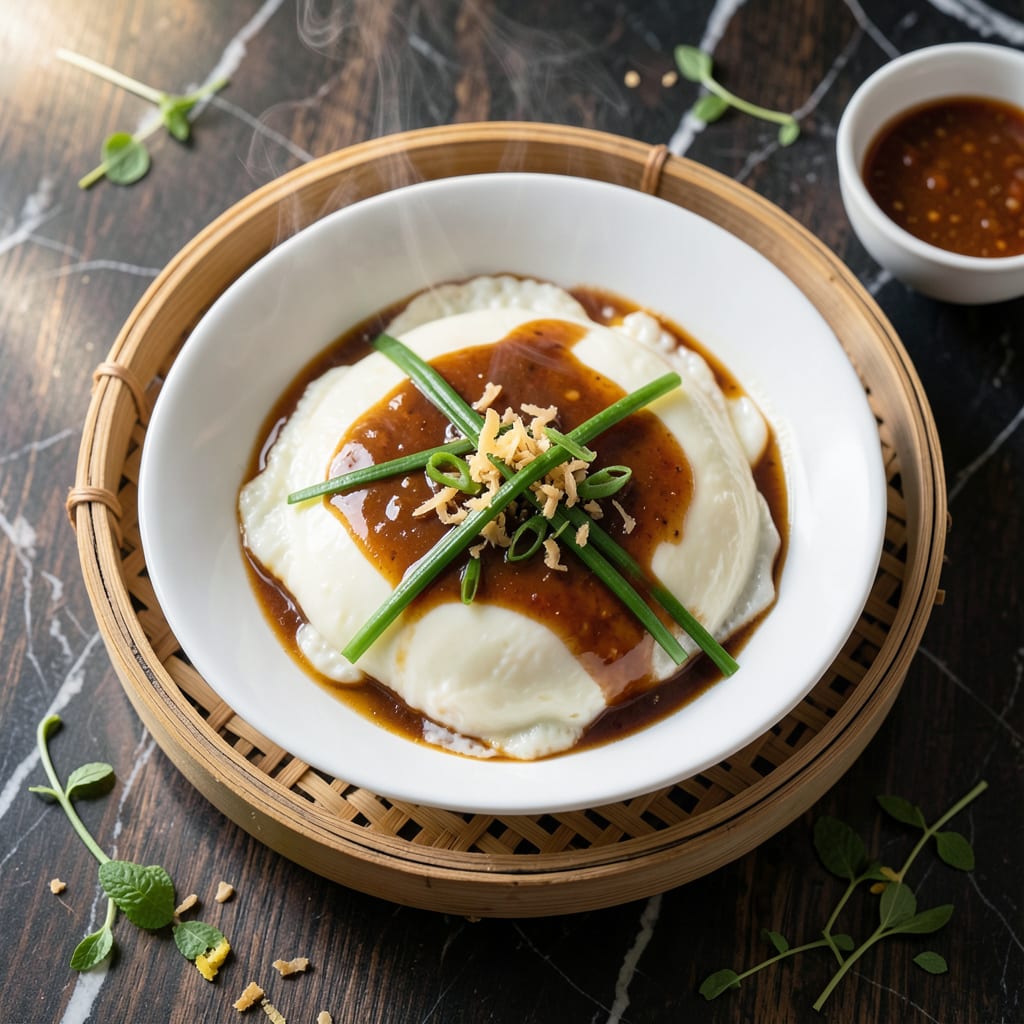
This traditional Malaysian steamed egg delivers a silky-smooth texture with delicate ginger aromatics. I’ve perfected the ratio of eggs to liquid to ensure a custard-like consistency every time.
Steamed gently until just set, this dish pairs beautifully with rice or toast. The key is patience—low heat and careful timing prevent curdling for that signature velvety finish.
Ingredients for Malaysian Steamed Egg
Simple ingredients create this velvety, aromatic custard with minimal effort and maximum flavor.
| Ingredient | Amount | Notes |
|---|---|---|
| Large Eggs 🥚 | 6 whole | Room temperature for smooth texture |
| Water 💧 | 2 cups | Filtered or spring preferred |
| Fresh Ginger Root 🌿 | 1 ½ tbsp | Finely grated for aroma |
| Scallions 🧅 | 3 whole | Thinly sliced for garnish |
| Soy Sauce 🫒 | 1 ½ tbsp | Light or all-purpose variety |
| Sesame Oil 🫒 | 1 tsp | Toasted for depth of flavor |
| Salt 🧂 | ½ tsp | Fine sea salt preferred |
| White Pepper 🌶️ | ¼ tsp | Ground, for subtle warmth |
| Shaoxing Wine 🍶 | 1 tbsp | Chinese cooking wine, optional |
| Chicken Stock 🍲 | ½ cup | Low-sodium preferred |
| Vegetable Oil 🫒 | 1 tsp | Neutral flavor for cooking |
| Cilantro 🌿 | ¼ cup | Fresh, chopped for garnish |
[recipeingredientscaler]
The eggs are the foundation here. Fresh, high-quality eggs from local farmers markets or reputable brands like Organic Valley yield the smoothest texture. Room temperature is non-negotiable—cold eggs seize up. The ginger must be freshly grated; pre-ground lacks the vibrant aroma that defines this dish. For the stock, homemade chicken stock is ideal, but low-sodium store-bought works in a pinch.
No Shaoxing wine? Dry sherry or mirin are excellent substitutes at a 1:1 ratio. Scallions can be swapped for chives or green onions—same family, similar mild bite. If you’re avoiding soy, coconut aminos offer a comparable umami profile. The sesame oil is irreplaceable for authenticity, but in a true emergency, a few drops of toasted peanut oil can mimic its nuttiness.
This keeps 2-3 days in the fridge, though it’s best eaten fresh. Reheat gently in a steamer or microwave at 50% power to preserve the silky texture. Don’t freeze—eggs separate and turn rubbery when thawed (not worth the effort).
Why You’ll Love This Recipe
- Five Minute Prep: I crack the eggs, whisk with water, and steam—no fancy steps, just simple ingredients like ginger and scallions doing the work.
- Umami in Every Bite: The soy sauce and ginger create this silky, savory custard that’s ridiculously good with rice or on its own.
- Breakfast to Dinner: Honestly, I make this for lazy Sunday breakfasts or pair it with stir-fry for a quick weeknight dinner.
- Pennies per Serving: Between us, a handful of eggs and pantry staples stretch into a meal that’s as budget-friendly as it is delicious.
Step-by-Step Instructions for Malaysian Steamed Egg
Master the technique for achieving that signature silky texture with aromatic depth in every bite.
Step 1: Prepare the Ginger-Infused Liquid Base
In a small saucepan, combine the 2 cups Water and 0.5 cup Chicken Stock. Add the 1.5 tbsp Fresh Ginger Root (finely grated) and bring to a gentle simmer over medium heat for 3-4 minutes until fragrant.
This infusion step is crucial—it extracts the ginger’s aromatic oils into the liquid, which will perfume the entire dish. Remove from heat and let it steep for 5 minutes while you prepare the remaining ingredients. Strain out the ginger pieces before using the liquid.
Step 2: Create the Silky Egg Mixture
In a large bowl, whisk the 6 whole Large Eggs until completely homogeneous. Gradually pour in the warm ginger-infused liquid while whisking constantly to temper the eggs and prevent curdling. This gradual incorporation is the secret to the dish’s signature silky texture.
Add the 0.5 tsp Salt, 0.25 tsp White Pepper, 1.5 tbsp Soy Sauce, 1 tbsp Shaoxing Wine, and 1 tsp Sesame Oil. Whisk thoroughly for 1-2 minutes until the mixture is completely smooth with no visible streaks of egg or oil.
Step 3: Steam the Mixture to Perfection
Pour the egg mixture through a fine-mesh strainer into a heatproof dish that fits inside your steamer. This straining step removes any potential lumps and ensures the final texture is perfectly smooth. Cover the dish with aluminum foil to prevent water droplets from falling onto the surface.
Place the dish in a steamer over simmering water (not boiling vigorously) and steam for 15-18 minutes until the mixture is just set but still slightly jiggly in the center. The surface should look smooth and glossy, like fine porcelain, with no cracks or bubbles.
Step 4: Add the Finishing Touches
While the egg steams, prepare the garnishes. Thinly slice the 3 whole Scallions and chop the 0.25 cup Cilantro. These fresh elements will add brightness and color contrast to the finished dish.
Once the egg is set, carefully remove it from the steamer. Drizzle the surface with an additional ½ tsp Sesame Oil (from your remaining portion) and sprinkle with the scallions and cilantro. The residual heat will gently wilt the herbs, releasing their aromas into the dish.
Let it rest for 3-5 minutes before serving to allow the texture to fully set. The final result should be tremulous yet firm, with a delicate sheen on the surface that reflects its silky interior.
Pro Tips For Making Malaysian Steamed Egg
- Use Room Temp Eggs: Crack eggs straight from the fridge and you’ll get a lumpy, uneven texture. I pull mine out 20 minutes before steaming—sounds fussy, but it actually changes the outcome.
- Strain the Mixture: After beating eggs with water, run it through a fine mesh strainer. This removes ginger fibers and gives that silky-smooth custard every Malaysian steamed egg should have.
- Skip Boiling Water: I learned this the hard way—never pour boiling water directly into the egg mix. Use warm or room temp water to avoid cooking the eggs prematurely and ruining the texture.
- Steam on Medium-Low: High heat turns the eggs rubbery. I keep the flame at medium-low for 12-15 minutes—just enough to set the custard without forming bubbles on top.
Health Benefits of This malaysian steamed egg
High-Quality Protein
This dish packs a serious protein punch with 6 large eggs delivering about 36 grams of protein total. Eggs contain all nine essential amino acids, making them a complete protein source that supports muscle repair and immune function. 💪
Digestive Benefits
The 1.5 tbsp fresh ginger root isn’t just for flavor—it’s a natural digestive aid that helps reduce nausea and improves gut motility. Gingerol, the active compound, also has anti-inflammatory properties that can ease digestive discomfort.
Low-Calorie Powerhouse
At only about 250 calories per serving, this dish is surprisingly light yet satisfying. The steaming method preserves nutrients without adding extra fat, making it an excellent option for those watching their calorie intake.
Rich in B Vitamins
Eggs are loaded with B12, riboflavin, and folate, which are essential for energy production and brain health. These vitamins help convert food into fuel and support red blood cell formation.
Heart-Healthy Fats
The 1 tsp sesame oil adds healthy unsaturated fats that support cardiovascular health. These fats help reduce bad cholesterol levels when used in moderation as part of a balanced diet.
Antioxidant Boost
Fresh ginger and cilantro provide antioxidants that combat oxidative stress. The 0.25 cup cilantro alone offers a good dose of vitamin C and flavonoids, which protect cells from damage. 🌿
Nutrition Facts
Frequently Asked Questions
Why do my eggs turn out lumpy?
Uneven texture usually means the eggs weren’t strained or whisked enough. Always strain the mixture through a fine-mesh sieve and whisk vigorously for 1-2 minutes before steaming.
Can I use a different type of stock?
Vegetable or seafood stock work well as substitutes for chicken stock. Just ensure it’s low-sodium to control the dish’s saltiness.
What if I don’t have a steamer?
Improvise with a large pot and a heatproof rack or inverted bowl. Add 1-2 inches of water, bring to a simmer, then place your dish on the rack. Cover tightly.
How do I know when it’s done?
The surface should be smooth with a slight jiggle in the center. It takes 15-18 minutes of gentle steaming. Overcooking causes curdling.

- 6 Egg Cake Recipe with Oil: Light as Air With Buttery Moisture - October 4, 2026
- 4 Bean Casserole Recipe: One-Pan Heartiness With Smoky Paprika Depth - October 4, 2026
- 3-Ingredient Keto Mug Cake Recipe: Microwave Magic in 2 Minutes - October 4, 2026