
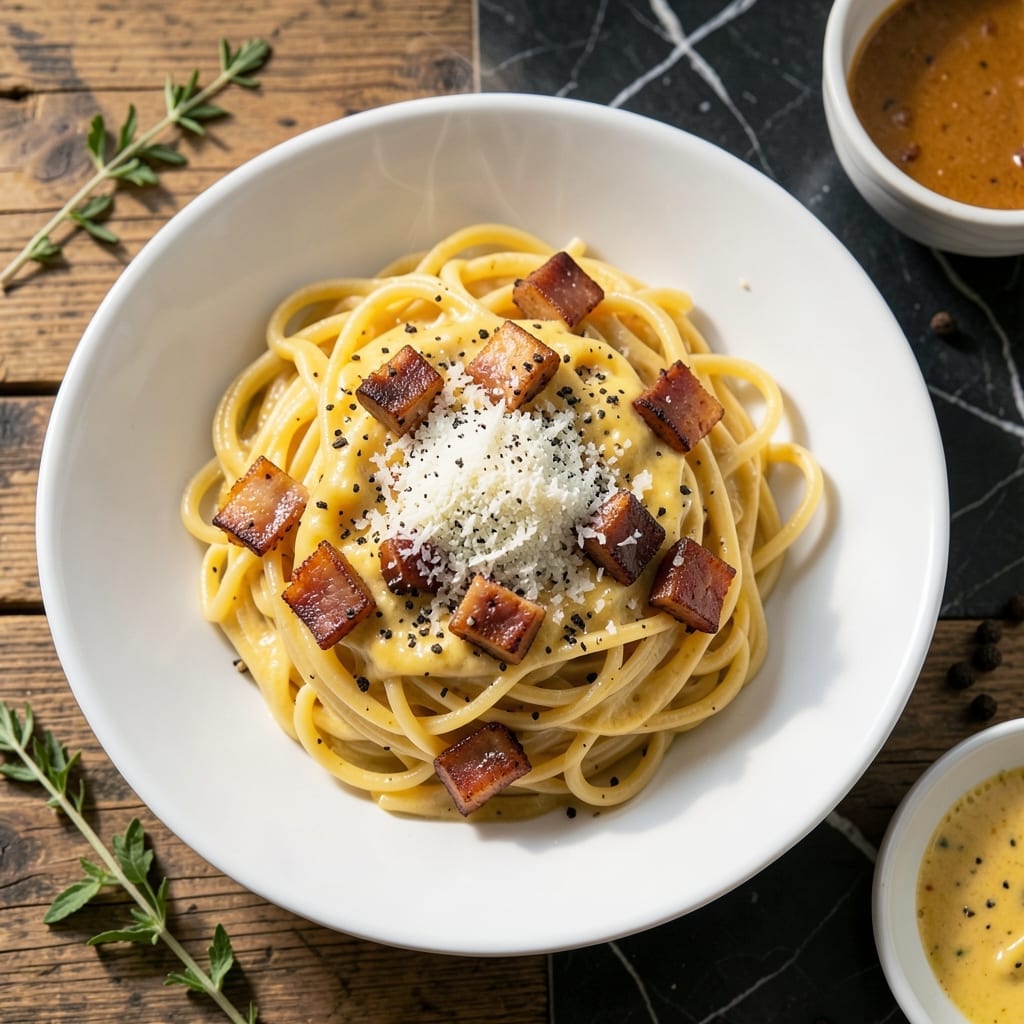
I’ve perfected this Roman classic through years of testing, and the secret lies in the precise balance between eggs, cheese, and pasta water. The result is a creamy sauce that coats every strand without a drop of cream.
This traditional method uses just five ingredients: spaghetti, eggs, pecorino romano, guanciale, and black pepper. The key is tempering the eggs properly to avoid scrambling them when combined with the hot pasta.
What emerges is a dish with silky, creamy sauce clinging to al dente pasta, punctuated by crispy bits of cured pork. The pepper adds just enough bite to cut through the richness.
The technique is simple but requires attention to detail. Timing and temperature control are everything in achieving authentic results at home.
Ingredients for Spaghetti Carbonara
Authentic Roman carbonara relies on these precise, traditional ingredients for its signature creamy texture.
| Ingredient | Amount | Notes |
|---|---|---|
| Spaghetti 🍝 | 1 lb | Dried, high-quality bronze-die |
| Guanciale 🥓 | 6 oz | Diced, or substitute pancetta |
| Large Eggs 🥚 | 4 whole | Room temperature, separated |
| Pecorino Romano Cheese 🧀 | 1 ½ cups | Freshly grated, fine |
| Black Pepper 🌶️ | 2 tsp | Freshly cracked, coarse |
| Sea Salt 🧂 | 1 tbsp | For pasta water, plus more to taste |
| Parmigiano-Reggiano Cheese 🧀 | ½ cup | Freshly grated, optional complement |
The guanciale is non-negotiable for authenticity—Eataly or specialty Italian markets carry it. If unavailable, pancetta (not bacon) is the closest substitute. For cheese, Pecorino Romano must be imported Italian, aged at least 8 months. The eggs should be the freshest possible; room temperature ensures even incorporation into the sauce without shocking the mixture.
No guanciale? Pancetta works in a pinch, though the flavor profile differs slightly. Bacon (while common in adaptations) introduces smoke that’s not traditional. For a lighter version, use 3 whole eggs plus 2 yolks—the extra yolk adds richness. The pasta water is your emulsifier; reserve at least 1 cup before draining. Avoid pre-grated cheese, which contains anti-caking agents that disrupt the sauce.
This dish is best served immediately—sauce thickens as it cools. Leftovers keep for 2 days refrigerated but won’t reheat well. For best results, cook pasta al dente and finish in the pan with a splash of water to revive the sauce. Never add cream; the silkiness comes solely from the egg and cheese emulsion.
Why You’ll Love This Recipe
- One Pot Wonder: That’s it—just boil pasta, crisp the guanciale, and toss with eggs and Pecorino. No juggling multiple pans.
- Rich & Salty: The guanciale renders out this deep, meaty fat that coats every strand, and the Pecorino adds that sharp, tangy bite I crave.
- Weeknight Hero: I’ve served this for last-minute guests and lazy Tuesdays alike. It feels fancy but comes together faster than takeout.
- Leftovers? Yes Please: Honestly, it tastes even better the next day after the flavors meld—if there’s any left, that is.
Step-by-Step Instructions for Spaghetti Carbonara
Master the technique for authentic Roman pasta with a velvety egg and cheese sauce.
Step 1: Render the Guanciale to Crisp Perfection
Heat a large, heavy skillet over medium heat. Add the 6 oz Guanciale and cook, stirring occasionally, for 8-10 minutes until the fat renders and the meat turns golden brown and crispy.
Watch the heat carefully—too high and the guanciale will burn before the fat renders. You want slow, steady rendering that leaves you with crispy bits and about ¼ cup of rendered fat in the pan. This fat is essential for building the sauce later, so don’t drain it.
Step 2: Prepare the Egg and Cheese Mixture
While the guanciale cooks, separate the 4 whole Large Eggs, placing the yolks and 1 whole egg in a bowl. Whisk in the 1.5 cups Pecorino Romano Cheese, 0.5 cup Parmigiano-Reggiano Cheese, and 2 tsp Black Pepper until the mixture is smooth and pale yellow.
The combination of yolks and one whole egg creates the perfect creamy consistency. All yolks would be too rich, while all whole eggs would make the sauce too thin. This ratio ensures a silky texture that clings beautifully to the pasta.
Step 3: Cook the Spaghetti Al Dente
Bring a large pot of water to a rolling boil and add the 1 tbsp Sea Salt. Add the 1 lb Spaghetti and cook according to package directions for 1 minute less than al dente. You want the pasta slightly underdone because it will finish cooking in the sauce.
Reserve 1 full cup of pasta water before draining. The starchy water is crucial for creating the creamy sauce. Drain the pasta but do not rinse it—the surface starch helps the sauce cling to every strand.
Step 4: Combine Everything Off Heat
Remove the skillet with guanciale from the heat and let it cool for 1 minute. Add the drained spaghetti and toss to coat in the rendered fat. Then add ½ cup of reserved pasta water and toss vigorously for 30 seconds.
Now, add the egg and cheese mixture and toss constantly for 1-2 minutes until it forms a creamy sauce. The pan should be off heat—if it’s too hot, you’ll scramble the eggs. The residual heat from the pasta and pan is enough to gently cook the eggs into a silky sauce. If it’s too thick, add more pasta water 1 tablespoon at a time until it reaches your desired consistency.
Step 5: Serve Immediately
Transfer the carbonara to warmed serving plates immediately. Top with additional Pecorino Romano Cheese and Black Pepper if desired. The sauce should cling to every strand of spaghetti with a glossy, creamy coating.
Each bite should deliver rich, salty guanciale, sharp Pecorino, peppery heat, and a velvety egg sauce. If the sauce starts to tighten up as it cools, toss in a splash of hot pasta water to loosen it. Serve with crusty bread and a simple green salad.
Pro Tips For Making Spaghetti Carbonara
- Use Room-Temp Eggs: Crack your eggs into the bowl at least 30 minutes before cooking—cold eggs shock the hot pasta and turn your sauce into scrambled eggs instead of a silky coat.
- Render Guanciale Slow: Cook the guanciale on medium-low until crispy but not burnt, about 8-10 minutes. I learned this the hard way after my first batch tasted bitter from rushing it.
- Save Pasta Water: Scoop out at least 1 cup of starchy pasta water before draining—it’s the only thing that loosens the sauce enough to cling properly to the spaghetti.
- Grate Cheese Fresh: Skip the pre-grated stuff and shred the Pecorino Romano yourself right before mixing. The texture and melt are just better, and after burning three batches with clumpy cheese, I finally figured out why.
Best Sauces and Condiments for This Dish
Classic Roman Sauce
The traditional sauce for this dish comes entirely from the egg and cheese emulsion—no cream needed. I use a mix of 1.5 cups Pecorino Romano and 0.5 cup Parmigiano-Reggiano for depth. The starchy pasta water is the secret to achieving that signature silky texture. 💛
Crushed Red Pepper
For a subtle kick, sprinkle ½ tsp crushed red pepper flakes over the finished dish. This adds warmth without overpowering the delicate egg sauce. I prefer Calabrian chili paste for a more complex heat, using just ¼ tsp mixed into the egg mixture.
Fresh Herb Finish
A handful of chopped fresh parsley (about 2 tbsp) adds a bright, herbaceous note that cuts through the richness. I sometimes use fresh basil instead for a slightly sweeter aroma. Always add herbs at the very end to preserve their freshness.
Garlic Oil Drizzle
Infuse ¼ cup olive oil with 2 minced garlic cloves over low heat for 5 minutes, then drizzle lightly over the plated pasta. This adds a fragrant depth that complements the guanciale beautifully. Be careful not to overpower the dish.
Truffle Elevation
For special occasions, I finish with a few drops of white truffle oil or freshly shaved black truffle. Just ½ tsp of oil or 5-6 thin shavings adds luxurious earthy notes. This pairs especially well with the Pecorino’s sharpness.
Nutrition Facts
Frequently Asked Questions
Can I use bacon instead of guanciale?
You can, but it changes the flavor. Pancetta is a closer substitute. Bacon adds smoke that’s not traditional, while guanciale offers a cleaner, porkier taste.
Why does my sauce turn out scrambled?
This happens when the pan is too hot. Always remove it from heat before adding the egg mixture. The residual heat is enough to create a creamy sauce without cooking the eggs.
How do I make it creamier without cream?
Use an extra egg yolk and reserve more pasta water. The starchy water and extra yolk create a silkier texture. Toss vigorously for 1-2 minutes to emulsify properly.
Can I make this ahead of time?
It’s best served immediately. The sauce thickens as it cools. If needed, undercook pasta slightly and finish in hot water when reheating.

- 6 Egg Cake Recipe with Oil: Light as Air With Buttery Moisture - October 4, 2026
- 4 Bean Casserole Recipe: One-Pan Heartiness With Smoky Paprika Depth - October 4, 2026
- 3-Ingredient Keto Mug Cake Recipe: Microwave Magic in 2 Minutes - October 4, 2026