
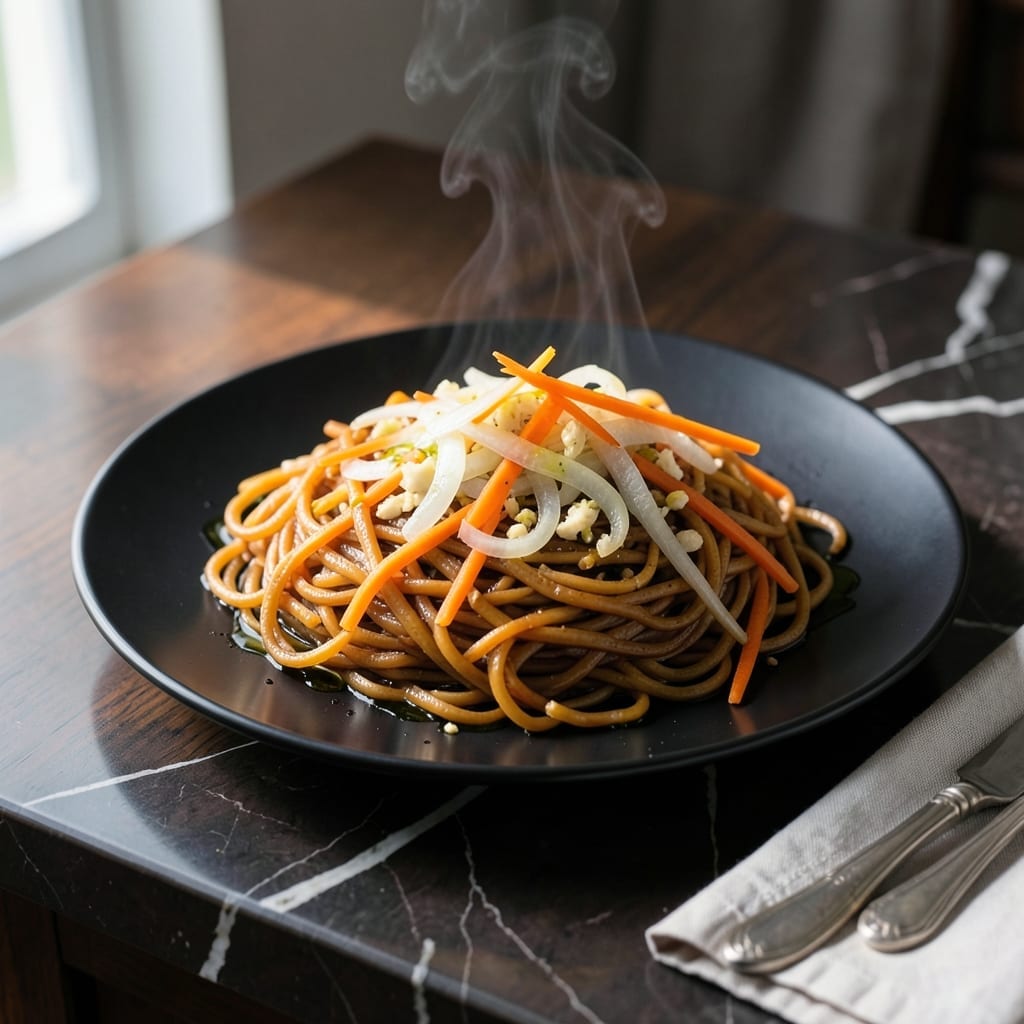
This hibachi-style stir-fry delivers the perfect balance of smoky flavor and tender texture you expect from Benihana’s signature noodles.
I’ve refined this method to capture that restaurant-quality taste at home, using simple ingredients and a hot pan to achieve the characteristic char.
What makes this dish stand out is the combination of chewy noodles, crisp vegetables, and a savory sauce that coats every strand.
The result is a meal that’s quick to prepare but tastes like it came straight from the teppanyaki grill.
Ingredients for Benihana Noodle
Simple ingredients transform into that signature teppanyaki taste you love at home.
| Ingredient | Amount | Notes |
|---|---|---|
| Yakisoba Noodles 🍜 | 14 oz | Fresh or dried, cooked per package |
| Vegetable Oil 🫒 | 3 tbsp | High smoke point preferred |
| Garlic Cloves 🧄 | 4 cloves | Minced finely for even distribution |
| Fresh Ginger 🌿 | 1 tbsp | Peeled and grated |
| Onion 🧅 | 1 whole | Thinly sliced, yellow preferred |
| Carrots 🥕 | 2 whole | Julienned for texture |
| Cabbage 🥬 | 2 cups | Thinly shredded, green or purple |
| Mushrooms 🍄 | 8 oz | Shiitake or white button, sliced |
| Soy Sauce 💧 | ½ cup | Low-sodium recommended for balance |
| Worcestershire Sauce 💧 | 2 tbsp | Vegan version if preferred |
| Sesame Oil 🫒 | 1 tbsp | Toasted for depth of flavor |
| Granulated Sugar 🍚 | 1 tbsp | Balances savory notes |
| Ground Black Pepper 🌶️ | ½ tsp | Freshly ground for best results |
| Green Onions 🧅 | 3 whole | Thinly sliced for garnish |
The noodles are non-negotiable for authenticity. Yakisoba noodles are the gold standard (found in the refrigerated section at Asian markets or H Mart). In a pinch, ramen noodles without seasoning work, but the texture won’t be identical. Look for fresh packs—they’re pre-cooked, so just rinse and drain. The vegetables should be crisp and vibrant in color; avoid pre-shredded cabbage (it wilts too fast).
No yakisoba? Udon or soba noodles can substitute, though they’re thicker. Swap mushrooms for bell peppers or zucchini if needed. The sauce is flexible: tamari for gluten-free or coconut aminos for soy-free. Missing Worcestershire? A dash of fish sauce (or more soy sauce) works. The sugar can be brown sugar or honey—just dissolve it fully.
Cooked noodles hold in the fridge for 3 days if rinsed and drained. The stir-fry itself is best fresh but reheats well with a splash of water. Sauce can be mixed ahead and stored for 1 week refrigerated. Always slice veggies just before cooking (they lose crispness fast).
Why You’ll Love This Recipe
- One Pan Wonder: I toss everything—noodles, garlic, ginger—into a single pan and it’s done in 15 minutes flat.
- Garlic Ginger Magic: The sizzle of fresh ginger and garlic in hot oil hits my nose before the first bite, and honestly, it’s why I keep coming back.
- Feeds the Crew: Between us, this stretches to feed four with leftovers for lunch the next day, no problem.
- Budget Stunner: Yakisoba noodles cost pennies, and with just a few pantry staples, I get a restaurant-worthy dish at home.
Step-by-Step Instructions for Hibachi-Style Noodles
Master this technique for restaurant-quality results with perfectly caramelized vegetables and noodles.
Step 1: Prepare the Noodles and Aromatics
Cook the 14 oz Yakisoba Noodles according to package directions, drain, and rinse under cold water to stop the cooking process. This prevents them from becoming mushy during stir-frying. Toss with 1 tbsp Sesame Oil to prevent sticking.
Meanwhile, mince the 4 cloves Garlic Cloves and grate the 1 tbsp Fresh Ginger. Thinly slice the 1 whole Onion, julienne the 2 whole Carrots, shred the 2 cups Cabbage, and slice the 8 oz Mushrooms. Uniform cutting ensures even cooking and professional presentation.
Step 2: Stir-Fry the Vegetables to Perfection
Heat 2 tbsp Vegetable Oil in a wok or large skillet over high heat until shimmering. Add the onion, carrots, and mushrooms first, as they take longer to cook. Stir-fry for 3-4 minutes until the vegetables begin to soften and develop light char.
Add the garlic, ginger, and cabbage, then stir-fry for another 2-3 minutes until everything is tender-crisp. The cabbage should wilt slightly but retain some bite. Push the vegetables to one side of the pan to make room for the noodles.
Step 3: Combine Noodles and Sauce
Add the remaining 1 tbsp Vegetable Oil to the pan, then add the prepared noodles. Stir-fry for 2 minutes to heat through and allow the noodles to pick up some color. Distribute them evenly across the pan for maximum contact with the heat.
In a small bowl, whisk together the 0.5 cup Soy Sauce, 2 tbsp Worcestershire Sauce, 1 tbsp Granulated Sugar, and 0.5 tsp Ground Black Pepper. Pour this sauce over the noodles and vegetables, tossing everything together for 1-2 minutes until the sauce is fully absorbed and the noodles are evenly coated.
Step 4: Finish and Garnish
Remove from heat and give the mixture a final toss. The noodles should have a glossy sheen and the vegetables should be vibrant with slight charring. Thinly slice the 3 whole Green Onions and sprinkle them over the top for a fresh, crisp finish and pop of color.
Serve immediately while hot. The dish should have a balance of savory, slightly sweet, and umami flavors with a satisfying texture contrast between the tender noodles and crisp-tender vegetables. The sauce should cling to each strand without pooling at the bottom of the plate.
Pro Tips For Making Benihana Noodle
- Pre-Cook the Noodles: Parboil the yakisoba noodles for 1-2 minutes less than the package says—I learned this the hard way after ending up with mushy noodles that turned to paste in the wok.
- Mince the Aromatics: Finely mince the garlic and ginger together, almost to a paste, so they distribute evenly and don’t leave big chunks in the final dish.
- Skip the Cold Oil: Heat the vegetable oil until it shimmers before adding onions, or they’ll absorb too much oil and turn greasy instead of caramelizing.
- Use a Wok: A well-seasoned wok or large skillet is non-negotiable for getting that high-heat sear on the noodles without steaming them.
Essential Equipment for This Recipe
High-Heat Wok
A carbon steel wok is my top pick for achieving that signature hibachi char. Look for one with a flat bottom (like Made In or Joyce Chen brands) for better heat distribution on home stoves. Season it properly before first use to prevent sticking. 🔥
Large Skillet
If you don’t have a wok, a 12-inch stainless steel skillet works well. I use my All-Clad for this—it handles the high heat without warping. Avoid nonstick pans, as they can’t reach the necessary temperatures for proper charring.
Tongs for Tossing
Long stainless steel tongs (about 12 inches) are essential for stirring and flipping. I prefer OXO or Cuisinox for their durability and comfort. They give you the control needed to toss ingredients without breaking them.
Sharp Chef’s Knife
A 8-inch chef’s knife makes quick work of slicing vegetables uniformly. My Wüsthof stays sharp through countless meals. Keep it honed for clean cuts—this affects both presentation and cooking evenness.
Mixing Bowls
Have 2-3 mixing bowls ready for prepping ingredients. I use stainless steel because they’re lightweight and nest for storage. Prep all ingredients before heating the pan—hibachi cooking happens fast once the heat is on.
Gas Stove Ideal
For best results, use a gas stove with high BTU output. Electric stovetops often lack the heat needed for proper wok cooking. If using electric, preheat the pan for 5-10 minutes to compensate for slower heat recovery.
Nutrition Facts
Frequently Asked Questions
Can I use a different type of noodle?
Yes! While yakisoba is traditional, udon or soba work in a pinch. Ramen noodles (without seasoning) are another option, though texture will differ slightly.
What if I don’t have Worcestershire sauce?
Substitute with a dash of fish sauce or extra soy sauce. For a vegetarian version, try mushroom soy sauce or coconut aminos.
How do I prevent my noodles from getting mushy?
Rinse cooked noodles under cold water immediately after boiling. Toss them with 1 tbsp sesame oil before stir-frying to maintain texture.
Can I add protein to this dish?
Chicken, shrimp, or beef work well. Cook protein first, set aside, then add back at the end. High heat ensures proper searing.

- 6 Egg Cake Recipe with Oil: Light as Air With Buttery Moisture - October 4, 2026
- 4 Bean Casserole Recipe: One-Pan Heartiness With Smoky Paprika Depth - October 4, 2026
- 3-Ingredient Keto Mug Cake Recipe: Microwave Magic in 2 Minutes - October 4, 2026