
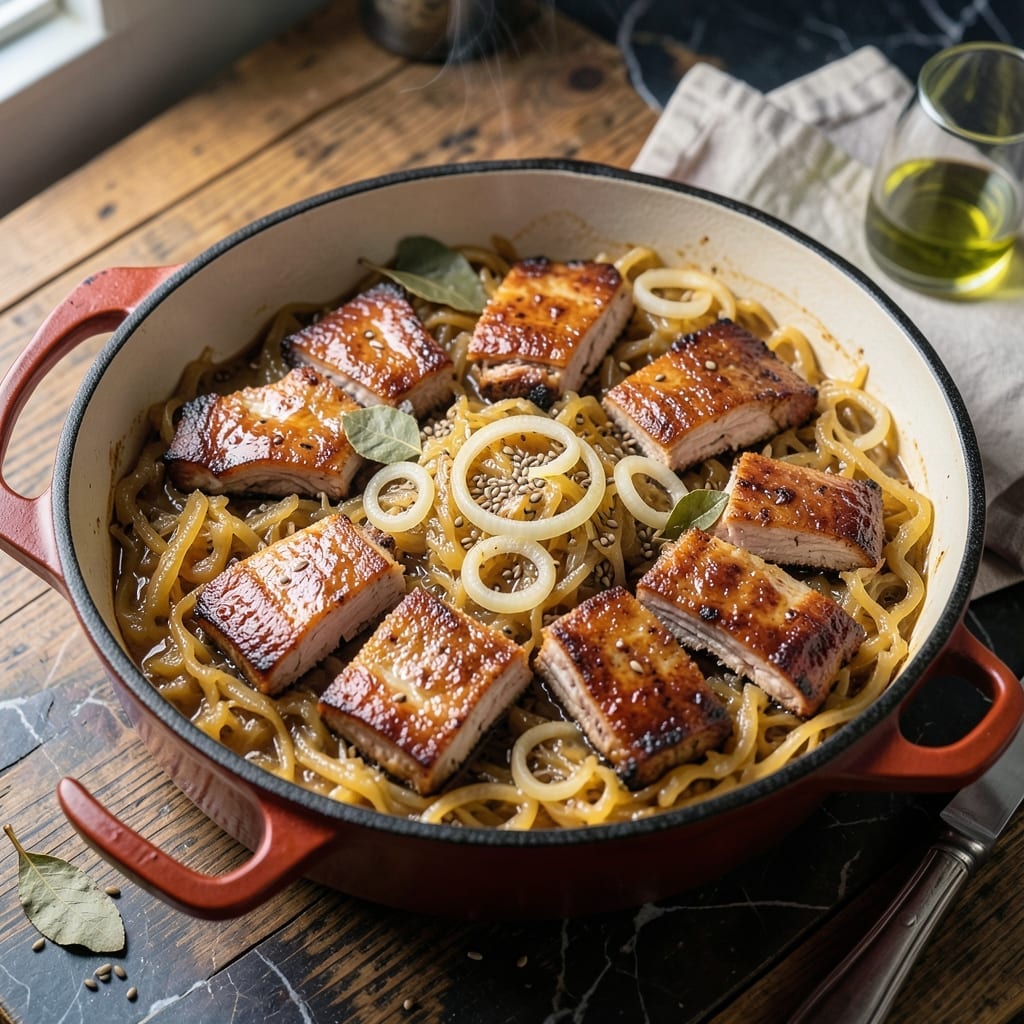
This slow-braised dish transforms humble ingredients into something extraordinary. The spareribs emerge tender and succulent after hours of gentle cooking, while the sauerkraut softens into a tangy, flavorful bed.
The method is straightforward but precise. Brown the ribs first to develop deep flavor, then let them simmer with the sauerkraut until both are perfectly tender. A touch of caraway seeds adds authentic character.
What you get is a hearty, comforting meal with layers of rich and tangy flavors. The ribs fall off the bone, and the sauerkraut absorbs all the savory juices from the cooking process.
Serve with mashed potatoes or crusty bread to soak up every last bit of the aromatic broth. This dish is ideal for a cozy weekend dinner.
Ingredients for Spareribs and Sauerkraut
Pork spareribs and sauerkraut form the heart of this slow-braised comfort dish with tangy depth.
| Ingredient | Amount | Notes |
|---|---|---|
| Pork Spareribs 🥩 | 2 ½ lb | Bone-in, cut into individual ribs |
| Sauerkraut 🥬 | 2 lb | Rinsed and drained |
| Yellow Onion 🧅 | 1 whole | Large, thinly sliced |
| Granulated Sugar 🍚 | 2 tbsp | Balances the tanginess |
| Caraway Seeds 🌿 | 1 tsp | Authentic flavor booster |
| Bay Leaves 🍃 | 2 whole | Dried, for depth |
| Black Peppercorns 🌶️ | 1 tsp | Freshly cracked preferred |
| Juniper Berries 🍇 | 6 whole | Lightly crushed, optional |
| Apple Cider Vinegar 🍏 | ½ cup | Adds brightness to the braise |
| Chicken Stock 🍗 | 1 ½ cups | Low-sodium preferred |
| Olive Oil 🫒 | 2 tbsp | For browning ribs |
| Kosher Salt 🧂 | 1 tbsp | Adjust to taste |
| Dijon Mustard 🟡 | 1 tbsp | Whole grain works too |
The spareribs are the foundation here. Look for well-marbled, meaty ribs—ask your butcher to cut them into individual portions if they aren’t already. Whole Foods or Costco often carry high-quality options. Sauerkraut should be refrigerated (not shelf-stable) for the best texture and flavor. Rinse it well to remove excess brine, but don’t squeeze out all the moisture.
No caraway seeds? Fennel seeds at half the amount work in a pinch. Skip the juniper berries if you can’t find them (they’re subtle). For a richer braise, swap chicken stock for beef stock. Apple cider vinegar can be replaced with white wine vinegar, but reduce it slightly first to mellow the sharpness. Trader Joe’s has great pre-sliced onions if you’re short on time.
This dish tastes even better the next day. Refrigerate in an airtight container for up to 4 days, or freeze for 3 months. Reheat gently on the stove to keep the ribs from drying out. The sauerkraut will soften further over time, deepening the flavors even more.
Why You’ll Love This Recipe
- One Pot Meal: I love that everything—spareribs, sauerkraut, and onions—simmers together in one pot, so I’m not stuck scrubbing a mountain of dishes afterward.
- Tangy and Rich: The sauerkraut’s sourness cuts right through the fatty pork, while the caraway seeds and sugar add this warm, slightly sweet depth that’s just spot-on.
- Feeds the Gang: It’s my go-to for Sunday suppers because it stretches to feed a crowd without breaking the bank, and leftovers taste even better the next day.
- Set and Forget: Once it’s in the oven, I can walk away for hours—no stirring, no fuss. Honestly, it’s the easiest hands-off meal I make.
Step-by-Step Instructions for Spareribs and Sauerkraut
This method delivers fall-off-the-bone ribs with perfectly balanced tangy-sweet sauerkraut.
Step 1: Brown the Spareribs
Pat the 2.5 lb pork spareribs dry with paper towels and season generously with the 1 tbsp kosher salt. Heat the 2 tbsp olive oil in a large Dutch oven over medium-high heat until shimmering.
Working in batches if necessary, brown the ribs on all sides for 8-10 minutes total, turning occasionally. You’re looking for a deep golden brown crust—this builds the flavor foundation for the braise. Remove the ribs and set aside.
Step 2: Build the Aromatic Base
In the same pot, add the 1 whole yellow onion (thinly sliced) and cook for 4-5 minutes until softened and just beginning to caramelize. Stir in the 1 tbsp Dijon mustard, 2 tbsp granulated sugar, 1 tsp caraway seeds, 1 tsp black peppercorns, and 6 whole juniper berries (lightly crushed).
Cook for 1 minute until fragrant, then add the 2 lb sauerkraut (rinsed and drained), 2 whole bay leaves, 0.5 cup apple cider vinegar, and 1.5 cups chicken stock. Stir to combine, scraping up any browned bits from the bottom of the pot.
Step 3: Braise Low and Slow
Return the browned ribs to the pot, nestling them into the sauerkraut mixture. The liquid should come about halfway up the ribs—if it doesn’t, add a splash more chicken stock. Bring to a gentle simmer, then reduce the heat to low, cover, and braise for 2 to 2.5 hours.
Check occasionally to ensure the liquid hasn’t evaporated too much; the ribs should be fork-tender but not falling apart when done. The sauerkraut will soften and absorb the rich, spiced braising liquid, transforming into a melt-in-your-mouth accompaniment.
Step 4: Rest and Serve
Once the ribs are tender, remove the pot from heat and let it sit covered for 10 minutes. This allows the flavors to meld and the juices to redistribute throughout the meat. Discard the bay leaves before serving.
Serve the ribs directly from the pot, spooning the sauerkraut and braising liquid generously over the top. The meat should pull away from the bone with minimal effort, and the sauerkraut will have a perfect balance of tangy, sweet, and savory notes.
Pro Tips For Making Spareribs And Sauerkraut
- Parboil the Ribs: Simmer the spareribs in water for 10-15 minutes first to remove excess fat and help tenderize them—I learned this the hard way after my first batch came out greasy.
- Rinse the Kraut: Drain and rinse the sauerkraut under cold water to cut the acidity, unless you want that sharp tang to dominate the dish.
- Skip Overcrowding: Brown the ribs in batches if needed—crowding the pan steams them instead of searing, and you’ll lose that rich crust.
- Add Sugar Late: Stir in the granulated sugar during the last 30 minutes of cooking to prevent it from caramelizing too early and burning.
Health Benefits of This spareribs and sauerkraut
Probiotic Powerhouse
Sauerkraut brings serious gut health benefits to this dish, packed with live probiotics from fermentation. Just ½ cup provides billions of beneficial bacteria that support digestion and immune function. I always feel lighter after eating fermented foods like this. 💪
Rich in Essential Vitamins
This meal delivers vitamin C from sauerkraut and B vitamins from pork, particularly B12 for energy metabolism. The 2.5 lb spareribs provide a significant portion of your daily protein needs, while the cabbage offers fiber for digestive health.
Mineral Boost
Pork spareribs are an excellent source of iron and zinc, essential for blood health and immune support. The 2 lb sauerkraut contributes potassium and magnesium. Together, they create a nutritionally balanced meal that fuels your body.
Low-Calorie Comfort
Despite its hearty nature, this dish is surprisingly moderate in calories. The sauerkraut adds volume with minimal calories—about 50 calories per cup. The slow cooking method preserves nutrients that might be lost with quicker, high-heat preparations. 🌱
Antioxidant Properties
Sauerkraut contains isothiocyanates, compounds formed during fermentation that have antioxidant properties. These help combat inflammation in the body. The caraway seeds add additional antioxidants, making this dish as healthful as it is delicious.
Balanced Macros
The combination of protein from ribs and fiber from sauerkraut creates a satisfying meal. The 1.5 cups chicken stock adds hydration without excess fat. I find this balance keeps me full and energized for hours after eating. ✨
Nutrition Facts
Frequently Asked Questions
Can I use baby back ribs instead?
Yes! Baby back ribs work well, but reduce braising time to 1.5-2 hours since they’re smaller. They’ll cook faster than spareribs, so check for tenderness earlier to avoid overcooking.
Why rinse the sauerkraut?
Rinsing removes excess brine, preventing the dish from becoming too salty. It also mellows the sharpness, allowing the other flavors to shine through during the long braise.
Can this be made in a slow cooker?
Brown the ribs first, then transfer everything to a slow cooker and cook on low for 6-8 hours. The ribs will be just as tender, though you may miss some caramelization from stovetop cooking.
What if my braising liquid evaporates too much?
Add more chicken stock or water as needed to keep the liquid at about halfway up the ribs. This prevents the sauerkraut from drying out and ensures even cooking.

- 6 Egg Cake Recipe with Oil: Light as Air With Buttery Moisture - October 4, 2026
- 4 Bean Casserole Recipe: One-Pan Heartiness With Smoky Paprika Depth - October 4, 2026
- 3-Ingredient Keto Mug Cake Recipe: Microwave Magic in 2 Minutes - October 4, 2026