
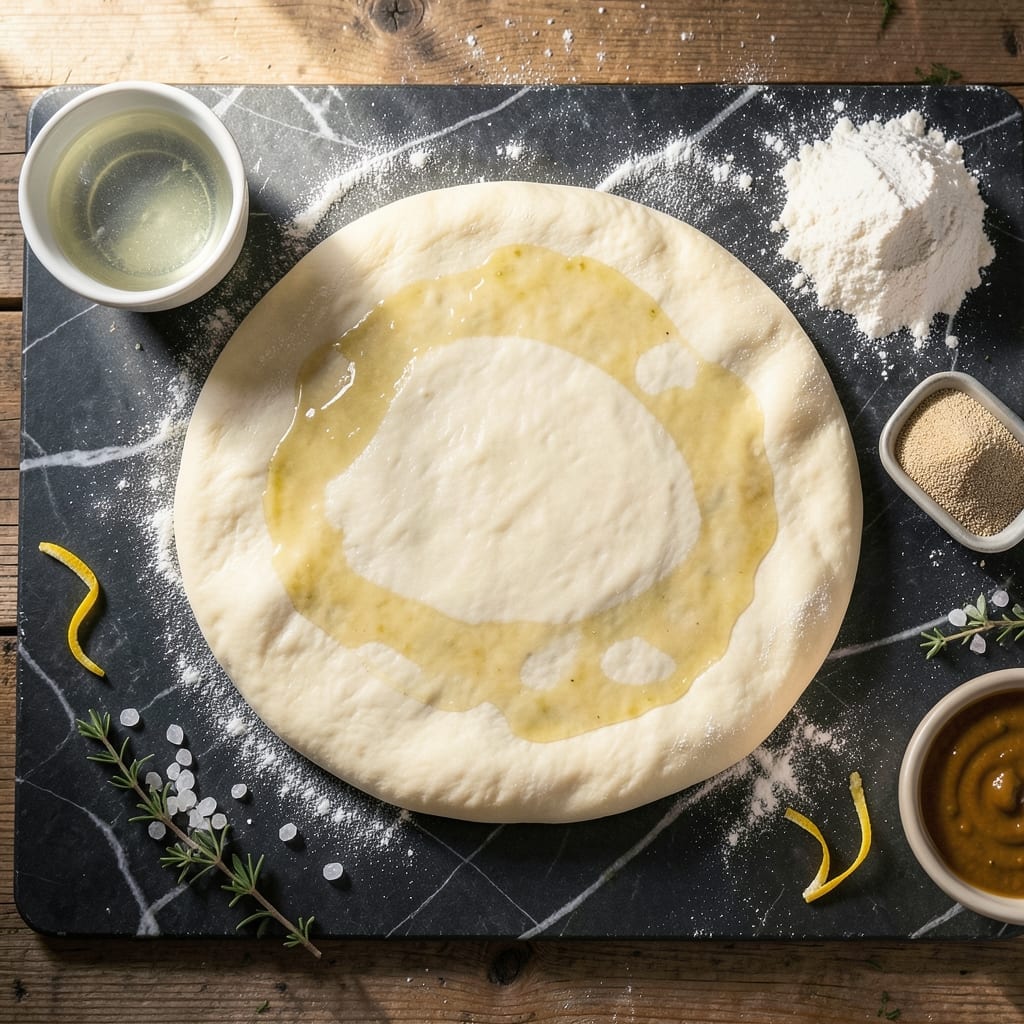
Achieving authentic Neapolitan pizza crust at home is simpler than you might expect. This method delivers a thin, elastic base with the perfect chew and slight char that defines traditional Italian pizza.
The secret lies in a slow fermentation process that develops complex flavors. With just 5 ingredients and 24 hours of resting time, you’ll create a dough that rivals your favorite pizzeria.
What emerges from your oven will be a golden, puffed crust with leopard-spotted char and a tender interior. The extended rise time ensures a light, airy texture that’s both crisp and chewy.
This foundation works for any topping combination you love. Here’s how to make it perfectly every time.
Ingredients for Stanley Tucci Pizza Dough
Five simple ingredients transform into golden, airy Neapolitan-style pizza dough with perfect chew.
| Ingredient | Amount | Notes |
|---|---|---|
| Bread Flour 🌾 | 3 ½ cups | High-protein for chewy texture |
| Sea Salt 🧂 | 2 tsp | Fine grain for even distribution |
| Active Dry Yeast 🍞 | ¼ tsp | Or 1/4 cube fresh yeast |
| Water 💧 | 1 ½ cups | lukewarm, about 105°F |
| Extra-Virgin Olive Oil 🫒 | 1 tbsp | For bowl and dough elasticity |
The flour is non-negotiable here. King Arthur Bread Flour or Caputo Tipo 00 (if you want to go full Italian) deliver that elastic, chewy texture. Look for high-protein content—at least 12%—on the label. Most Whole Foods or Williams Sonoma locations carry both. Yeast freshness matters too—check the expiration date and store it in the freezer if you won’t use it within a month.
No bread flour? All-purpose in a pinch (though your crust won’t be as chewy). Out of yeast? Sourdough starter at 20% of the flour weight works but adds a tang. For a more authentic Neapolitan flavor, swap the olive oil for a splash of white wine (1 tbsp). The water temperature is key—too hot kills the yeast, too cold slows fermentation.
Dough can rest in the fridge for up to 3 days—flavor improves with time. For longer storage, freeze the dough ball in an airtight bag for up to 1 month. Thaw overnight in the fridge before shaping. Always bring to room temperature before stretching.
Why You’ll Love This Recipe
- No-Fuss Mixing: Honestly, it’s just flour, water, yeast, olive oil, and salt—no fancy steps, no standing mixer required.
- Crisp Yet Chewy: That bread flour gives it a perfect bite, and the olive oil adds a subtle richness that’s just right.
- Endless Topping Playground: I’ve done margarita, loaded veggie, even breakfast pizza—this dough handles it all without complaint.
- Budget Stretch: A few cents’ worth of ingredients makes enough for two large pizzas. I’ll be real: my wallet thanks me.
Step-by-Step Instructions for Neapolitan-Style Pizza Dough
This method delivers authentic texture and flavor with minimal effort on your part.
Step 1: Activate the Yeast in Lukewarm Water
Begin by combining the 0.25 tsp Active Dry Yeast with the 1.5 cups Water in a large mixing bowl. The water should be lukewarm, around 105°F—warm to the touch but not hot enough to kill the yeast. Let this sit for 5-10 minutes until the surface becomes frothy and bubbly.
This visual confirmation tells you the yeast is alive and active. If you don’t see bubbles, your water may have been too hot or the yeast too old. I always use a thermometer for precision, as water temperature can make or break your dough’s rise.
Step 2: Combine Dry Ingredients and Form the Dough
Add the 3.5 cups Bread Flour and 2 tsp Sea Salt to the yeast mixture. The high-protein content in bread flour is non-negotiable—it gives the dough its chewy, elastic structure. Use a wooden spoon or your hands to mix until the ingredients come together into a shaggy mass.
Turn the dough out onto a clean surface and knead for 8-10 minutes until smooth and supple. You’ll notice the dough transforms from rough and sticky to silky and elastic. This development of gluten is what gives your crust that perfect Neapolitan-style chew.
Step 3: Incorporate Olive Oil and First Rise
Lightly oil a large bowl with the 1 tbsp Extra-Virgin Olive Oil, then place the dough inside, turning to coat it evenly. The oil prevents the dough from sticking to the bowl and adds a subtle richness to the flavor. Cover the bowl with a damp towel or plastic wrap.
Let the dough rise in a warm, draft-free spot for 1.5 to 2 hours, or until it has doubled in size. I like to place mine near a sunny window or on top of the fridge where it’s slightly warmer. The dough should spring back slowly when poked with a finger—if it springs back quickly, it needs more time.
Step 4: Shape and Second Rise
Once doubled, punch down the dough to release the air, then divide it into 4 equal portions for individual pizzas. Shape each piece into a tight ball by tucking the edges under and rolling it gently on the counter. This creates surface tension, which helps the dough hold its shape during baking.
Place the balls on a lightly floured surface, cover them, and let them rest for another 30-60 minutes. This second rise allows the gluten to relax, making the dough easier to stretch. You’ll know they’re ready when they’ve puffed up slightly and feel soft to the touch.
At this point, your dough is ready to be stretched, topped, and baked into perfect Neapolitan-style pizzas with a crisp yet chewy crust.
Pro Tips For Making Stanley Tucci Pizza Dough
- Proof Properly: Give the dough a full 2 hours at room temperature to rise—rushing it with heat will ruin the texture. I learned this the hard way after ending up with dense, chewy crusts.
- Use Bread Flour: Skip all-purpose flour; bread flour’s higher protein content actually changes the outcome for that chewy, elastic texture Tucci’s recipe is known for.
- Salt the Yeast: Dissolve the sea salt in the water before adding yeast—this prevents direct contact, which can kill the yeast and leave you with a dough that never rises.
- Oil the Bowl: Coat the mixing bowl with about 1 tablespoon of extra-virgin olive oil before the first rise so the dough doesn’t stick and you don’t lose half of it to the bowl.
Serving Suggestions for This Dish
Classic Margherita
Keep it simple with San Marzano tomatoes, fresh mozzarella di bufala, and basil. The quality of your ingredients shines through with this dough. Drizzle with extra-virgin olive oil after baking for authentic Italian flavor. 🌟
White Pizza Elegance
Skip the tomato sauce and use ricotta and fontina cheese with garlic and rosemary. This variation highlights the dough’s subtle flavors. Finish with a sprinkle of Parmigiano-Reggiano for depth.
Prosciutto Arugula
After baking, top your pizza with thin slices of prosciutto and fresh arugula. The salty meat and peppery greens complement the chewy crust perfectly. Add a drizzle of balsamic glaze for contrast.
Breakfast Pizza
Use this dough for a morning treat with scrambled eggs, crispy bacon, and shredded cheddar. The sturdy crust holds up to hearty breakfast toppings. Add chives for a fresh finish.
Dessert Pizza
Sweet applications work too—try Nutella and sliced strawberries or cinnamon sugar with apple slices. The slightly crisp crust balances the sweet toppings beautifully. 💫
Serving Tips
Let your pizza rest for 2-3 minutes after baking before slicing. This allows the cheese to set and prevents toppings from sliding off. Use a pizza wheel for clean, even cuts.
Nutrition Facts
Frequently Asked Questions
Can I use all-purpose flour instead of bread flour?
Yes, but the crust won’t be as chewy. Bread flour’s higher protein content creates the elastic texture. For best results, stick with the recommended bread flour or Tipo 00.
How long should the dough rest?
Let it rise for 1.5-2 hours at room temperature, then 30-60 minutes after shaping. For deeper flavor, refrigerate for up to 3 days.
Why isn’t my dough rising properly?
Check your yeast’s expiration date and ensure water is 105°F. Too hot kills yeast; too cold slows activation. Also, avoid drafty spots during rising.
Can I make this dough ahead of time?
Prepare the dough, then refrigerate for up to 3 days or freeze for 1 month. Thaw overnight in the fridge before using.

- 6 Egg Cake Recipe with Oil: Light as Air With Buttery Moisture - October 4, 2026
- 4 Bean Casserole Recipe: One-Pan Heartiness With Smoky Paprika Depth - October 4, 2026
- 3-Ingredient Keto Mug Cake Recipe: Microwave Magic in 2 Minutes - October 4, 2026