
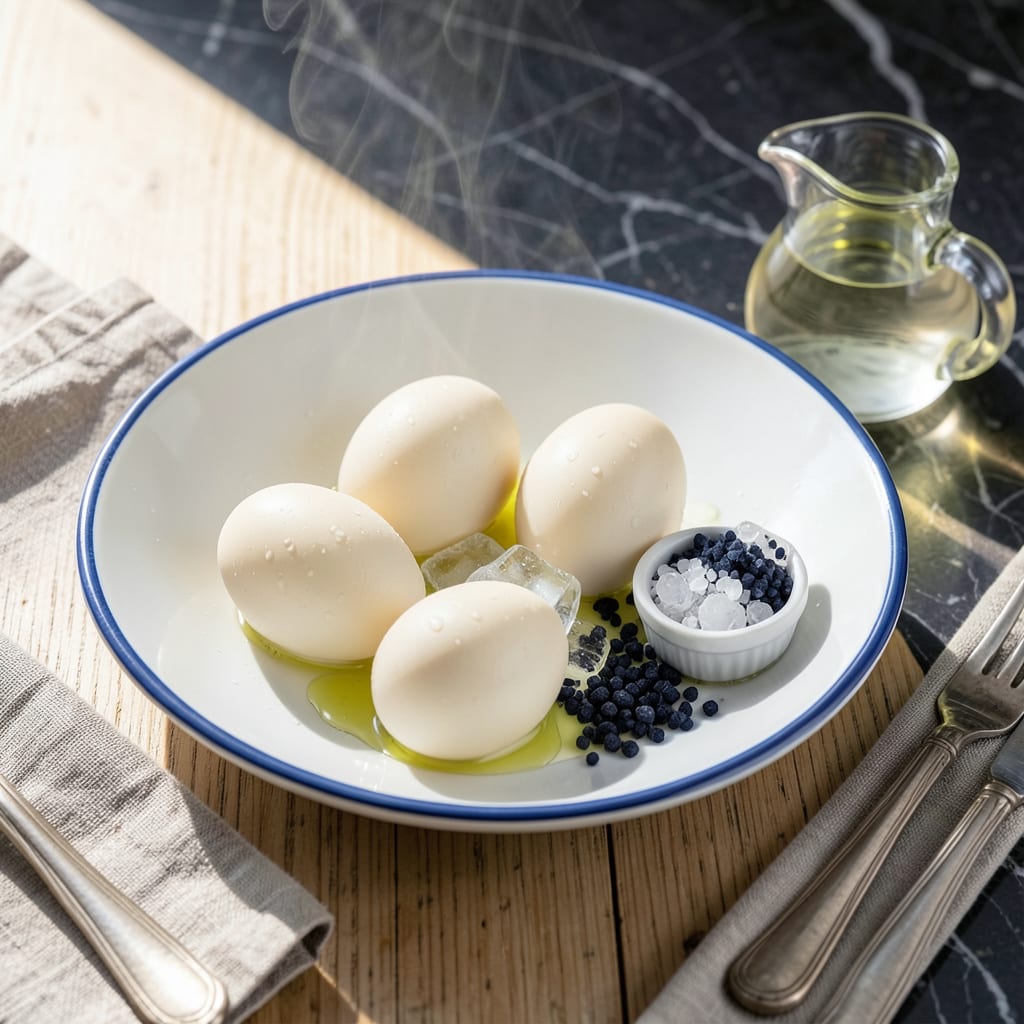
Achieving silky whites and runny yolks consistently requires a precise steaming method that eliminates the guesswork of traditional boiling. This technique delivers control over doneness without the risk of cracked shells or overcooking.
The process involves bringing water to a rolling boil, then placing eggs in a steamer basket above it. Timing becomes predictable—6 minutes for soft-boiled, 9 for medium—with perfectly set textures every time.
Ingredients for Steam Boiled Eggs
Minimal ingredients deliver perfect results every time with this precise steaming method.
| Ingredient | Amount | Notes |
|---|---|---|
| Large Eggs 🥚 | 4 whole | Room temperature preferred |
| Water 💧 | 4 cups | For boiling in pot |
| Ice Cubes ❄️ | 2 cups | For ice bath cooling |
| White Vinegar 🍶 | 1 tbsp | Prevents cracking, optional |
| Kosher Salt 🧂 | 1 tsp | For seasoning water |
The eggs are the star here—fresh, high-quality large eggs yield the best texture. Room temperature eggs prevent cracking when they hit the steam. Most supermarkets carry reliable options, but farmers market eggs often have richer yolks. If using store-bought, check the carton date for freshness. The steamer basket must fit snugly in your pot to trap steam effectively.
No steamer basket? A heatproof colander over boiling water works in a pinch. The vinegar is optional but helps prevent cracks—apple cider vinegar at the same amount substitutes fine. For extra flavor, swap the water for vegetable broth. Timing is everything: even 30 seconds can change the yolk consistency from runny to jammy.
Steamed eggs peel easiest when cooled in an ice bath for 5 minutes. Store unpeeled in the fridge for up to 1 week, but they’re best eaten fresh. Reheat gently in warm water if serving later—don’t microwave, as this can turn yolks green.
Why You’ll Love This Recipe
- 5-Minute Method: I can steam a whole batch of eggs while my coffee brews—no babysitting required.
- Silky Every Time: That hint of vinegar in the water keeps the whites tender, not rubbery.
- Meal Prep MVP: Hard-boiled eggs stay fresh for a week, so I grab-and-go all week long.
- Pennies Per Egg: A dozen large eggs cost less than my morning latte, and they feed us for days.
Step-by-Step Instructions for Steam Boiled Eggs
This method delivers perfectly silky whites and runny yolks with precise timing and technique.
Step 1: Prepare the Boiling Water
In a medium saucepan, combine the 4 cups Water and 1 tsp Kosher Salt. Add the 1 tbsp White Vinegar if using—this helps prevent cracking by strengthening the egg whites. Bring the water to a full rolling boil over high heat.
I always use a pot with a tight-fitting lid to maintain consistent steam. The water should be at a vigorous boil before adding the eggs—this ensures the cooking process begins immediately and evenly. Watch for large, rapid bubbles breaking the surface.
Step 2: Lower Eggs Gently and Maintain Boil
Using a slotted spoon, carefully lower the 4 whole Large Eggs into the boiling water one at a time. Avoid dropping them from a height, as this increases the risk of cracking. Once all eggs are in the pot, reduce the heat to medium-high to maintain a steady boil.
The water should continue to bubble actively but not so violently that the eggs bounce around. If the boiling becomes too aggressive, the eggs may crack or cook unevenly. I keep the lid off during this initial phase to monitor the activity.
Step 3: Cover and Steam Boil for Precise Timing
Cover the pot with the lid and set a timer for 6 minutes for runny yolks and fully set whites. The steam created by the boiling water gently cooks the eggs from all sides, resulting in a more even texture than traditional boiling.
If you prefer firmer yolks, extend the cooking time by 1-2 minutes, but don’t exceed 9 minutes total or the whites may become rubbery. The lid traps steam, so resist the urge to peek—every time you open it, you lose heat and extend the cooking time.
Step 4: Shock in Ice Bath to Stop Cooking
While the eggs cook, prepare an ice bath by filling a large bowl with the 2 cups Ice Cubes and enough cold water to cover the eggs. As soon as the timer sounds, use the slotted spoon to transfer the eggs directly from the boiling water to the ice bath.
Let them cool for at least 5 minutes in the ice water. This rapid cooling stops the cooking process immediately, ensuring the yolks stay runny and the whites remain tender. The eggs will feel cool to the touch when fully chilled.
Step 5: Peel and Serve Immediately
Remove the eggs from the ice bath and peel under a thin stream of running water if desired—this helps remove any stubborn shell fragments. The vinegar in the cooking water should have made peeling easier by slightly softening the shells.
Serve the eggs warm for the best texture. Each one should have a fully set but silky white and a rich, liquid yolk that flows when cut. If storing, keep them unpeeled in the refrigerator in a bowl of water for up to 3 days, but the texture is best fresh.
Pro Tips For Making Steam Boiled Eggs
- Use Room Temp Eggs: I learned this the hard way—cold eggs straight from the fridge crack when they hit boiling water. Let them sit out for 10-15 minutes first to prevent that.
- Add Vinegar to Water: Sounds weird, but it works: a tablespoon of white vinegar in the water helps coagulate the whites faster if a crack does happen.
- Ice Bath Immediately: The moment they’re done, plunge them into ice water for at least 5 minutes. This stops the cooking and makes peeling way easier.
- Salt the Boil: About a teaspoon of kosher salt in the water raises the boiling point slightly, which helps set the whites before they spread too much.
Storing and Reheating Leftovers
Refrigerator Storage
Let your steamed eggs cool completely in the ice bath before storing. Place unpeeled eggs in an airtight container with a damp paper towel to maintain moisture. Store at 40°F or below for up to 5 days for best quality. 💡
Freezer Storage
For longer storage, peel the eggs first and place them in a single layer on a tray. Freeze until solid, then transfer to a freezer bag. They’ll keep for up to 3 months, though the texture may change slightly. Thaw in the fridge overnight before reheating.
Stovetop Reheating
Gently place unpeeled eggs in a pot of warm water over low heat for 3-5 minutes. This method preserves the silky whites and runny yolks. Avoid boiling, as it can overcook the eggs. For peeled eggs, submerge in warm water for 2 minutes to warm through. 🔥
Microwave Reheating
Peel the eggs and place them in a microwave-safe bowl with 1 tbsp water. Cover with a damp paper towel and heat on 50% power in 20-second intervals until warm. This prevents rubbery whites. Always check the temperature between intervals.
Serving After Storage
Reheated steamed eggs work beautifully in salads, ramen, or as a protein boost for grain bowls. If the yolks firm up too much, a drizzle of olive oil or a sprinkle of flaky salt can revive the richness. Serve warm for the best experience. ❄️
Nutrition Facts
Frequently Asked Questions
Why use steam instead of boiling?
Steam cooks eggs more gently, preventing cracks and rubbery whites. The consistent heat ensures even doneness without overcooking the yolks.
How do I know when they’re done?
6 minutes yields runny yolks, while 9 minutes gives firmer ones. The whites should be fully set but still silky when peeled.
Can I skip the ice bath?
No—it stops the cooking process instantly. Without it, residual heat will overcook the eggs, turning yolks greenish-gray.
What if my eggs crack while cooking?
Add 1 tbsp vinegar to the water next time—it strengthens the whites. Also, use room temperature eggs to reduce thermal shock.

- 6 Egg Cake Recipe with Oil: Light as Air With Buttery Moisture - October 4, 2026
- 4 Bean Casserole Recipe: One-Pan Heartiness With Smoky Paprika Depth - October 4, 2026
- 3-Ingredient Keto Mug Cake Recipe: Microwave Magic in 2 Minutes - October 4, 2026