
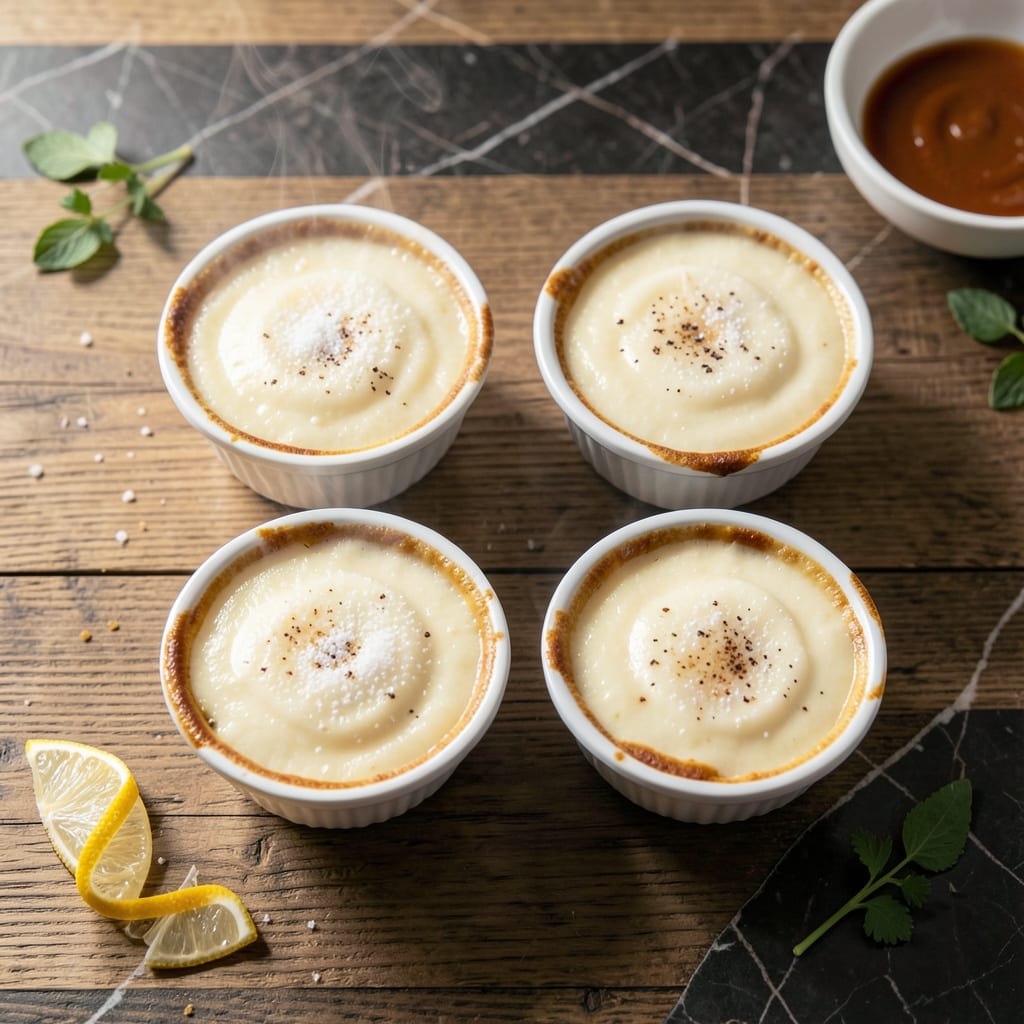
This Cantonese-style creation delivers a silky smooth texture that’s both delicate and deeply satisfying. The secret lies in the precise ratio of eggs to liquid and a gentle steaming process.
With just a handful of pantry staples and 20 minutes of steaming, you’ll achieve a custard so tender it practically melts on the tongue. Perfect as a light dessert or comforting snack.
Ingredients for Steam Egg Pudding
A few humble ingredients transform into this silky, delicate custard with minimal effort.
| Ingredient | Amount | Notes |
|---|---|---|
| Large Eggs 🥚 | 4 whole | Room temperature for even texture |
| Whole Milk 🥛 | 2 cups | Full-fat for creamiest results |
| Granulated Sugar 🍚 | ½ cup | Adjust to taste preference |
| Vanilla Extract 🌿 | 1 tsp | Pure extract for best flavor |
| Cornstarch 🌾 | 2 tbsp | Ensures silky smooth texture |
| Cold Water 💧 | ½ cup | For steaming mixture |
| Sweetened Condensed Milk 🥛 | ¼ cup | Adds rich sweetness |
| Butter 🧈 | 1 tbsp | Melted for greasing ramekins |
| Salt 🧂 | ¼ tsp | Balances sweetness |
| Pandan Extract 🌿 | ½ tsp | Optional for authentic flavor |
The eggs are the foundation here. Use the freshest you can find—older eggs lose their ability to hold air, which affects texture. Whole Foods or local farmers markets often have the best selection. Milk matters too: the higher the fat content, the richer your pudding (trust me on the full-fat version). Cornstarch is your secret weapon for that signature smoothness—Bob’s Red Mill is my go-to brand.
No whole milk? Half-and-half at half the quantity works in a pinch. Swap vanilla for almond extract if you want a different flavor profile. The condensed milk can be left out if you prefer less sweetness, but add an extra tablespoon of sugar to compensate. For a dairy-free version, coconut milk makes a great substitute (though the taste will differ slightly).
Pudding keeps beautifully in the fridge for 3-4 days. Store in an airtight container with plastic wrap pressed directly on the surface to prevent a skin from forming. Serve chilled or at room temperature—both are delicious.
Why You’ll Love This Recipe
- 5-Minute Prep: I crack the eggs, whisk in milk and sugar, and it’s ready for the steamer—no fuss, no fancy steps.
- Silky Vanilla Comfort: The cornstarch makes it so smooth, and that hint of vanilla? It’s like a warm hug in dessert form.
- Breakfast or Dessert: Honestly, I serve it chilled for breakfast or warm after dinner—it works both ways.
- Pocket-Friendly Treat: Eggs, milk, a touch of sugar—this is my go-to when I need something sweet without breaking the bank.
Step-by-Step Instructions for Silky Steamed Egg Pudding
This technique guarantees a velvety texture that melts in your mouth every time.
Step 1: Prepare the Steaming Setup and Ramekins
First, melt the 1 tablespoon Butter and use it to thoroughly grease four ramekins. This ensures the pudding releases cleanly after steaming. Place the ramekins in a steamer basket or on a rack that fits inside a large pot with a tight-fitting lid.
Pour the 0.5 cup Cold Water into the bottom of the pot—this creates the steam that will gently cook the pudding. Bring the water to a gentle simmer over medium heat while you prepare the custard mixture. The water should be hot but not at a rolling boil when you add the ramekins.
Step 2: Whisk the Egg Base Until Smooth
In a large bowl, whisk together the 4 whole Large Eggs, 0.5 cup Granulated Sugar, and 0.25 tsp Salt until the mixture is pale and slightly thickened, about 2-3 minutes. I use a hand whisk for this—it gives me better control than an electric mixer.
Gradually pour in the 2 cups Whole Milk, 0.25 cup Sweetened Condensed Milk, 1 tsp Vanilla Extract, and 0.5 tsp Pandan Extract while continuing to whisk. This slow incorporation prevents curdling and ensures a uniform, silky base. The mixture should look smooth and slightly frothy on top.
Step 3: Thicken the Mixture with Cornstarch
Sprinkle the 2 tbsp Cornstarch evenly over the surface of the egg mixture. Whisk vigorously for 1-2 minutes until the cornstarch is fully dissolved and no lumps remain. This step is crucial—it stabilizes the custard and gives it that signature smooth, jiggly texture.
Strain the mixture through a fine-mesh sieve into a large measuring cup or pitcher. This removes any stubborn lumps and aerates the mixture for an even lighter texture. I’ve found that straining makes a noticeable difference in the final product, especially if you’re aiming for that restaurant-quality finish.
Step 4: Steam Until Just Set
Carefully pour the strained mixture into the prepared ramekins, filling each about ¾ full. Place the ramekins in the steamer basket, cover the pot with the lid, and steam over medium-low heat for 20-25 minutes.
Check for doneness by gently shaking a ramekin—the center should jiggle slightly but not be liquid. If the surface looks dull or has small bubbles, it needs more time. Remove the ramekins from the steamer and let them cool to room temperature. The pudding will continue to set as it cools.
Serve warm or chilled, with a drizzle of sweetened condensed milk if desired.
Pro Tips For Making Steam Egg Pudding
- Strain the Mixture: After whisking the eggs, milk, and cornstarch, strain it through a fine-mesh sieve—I learned this the hard way after finding lumps in my pudding that just wouldn’t smooth out.
- Use Low Heat: Steam over the lowest possible heat, or the eggs will curdle into a sad, lumpy mess. About 10-12 minutes is perfect for a silky texture.
- Preheat the Steamer: Always bring the water to a gentle simmer before adding the pudding cups. Sounds weird, but it works: this prevents sudden temperature shocks that can crack the custard.
- Warm the Milk: Take the chill off the whole milk before mixing it with the eggs—about 30 seconds in the microwave. My grandmother swore by this, and she was right: it helps everything blend seamlessly.
Troubleshooting This Dish
Overcooked Texture
If your pudding turns out rubbery or dense, it likely overcooked. Steam for exactly 20-25 minutes—no more. I check at 20 minutes by gently shaking the ramekin; it should jiggle slightly in the center. Remove immediately if done. 🌡️
Grainy Custard
Graininess usually means the cornstarch wasn’t fully dissolved. Whisk the 2 tbsp cornstarch into a small amount of cold milk first to create a slurry, then gradually add to the egg mixture. Straining through a fine-mesh sieve catches any remaining lumps.
Watery Pudding
Understeaming causes a runny texture. Ensure your water is at a gentle simmer before adding ramekins. Also, use full-fat milk—low-fat versions can result in a thinner custard. If it’s still watery after 25 minutes, steam for 3-5 more minutes.
Surface Bubbles
Small bubbles on top appear when the heat is too high. Keep the steamer at medium-low heat and maintain a gentle, steady simmer. Cover the pot with a clean kitchen towel before adding the lid to catch condensation drips.
Uneven Cooking
If some puddings set while others don’t, your steamer may have hot spots. Rotate the ramekins halfway through steaming. Also, ensure they’re all the same size and filled to ¾ capacity for even heat distribution.
Sticking to Ramekins
Proper greasing prevents sticking. Use 1 tbsp melted butter to thoroughly coat the inside of each ramekin, including the rim. Let the pudding cool for 10 minutes before attempting to remove—this helps it release cleanly. 💡
Nutrition Facts
Frequently Asked Questions
Why does my pudding have bubbles on top?
Bubbles appear when heat is too high. Maintain medium-low heat and a gentle simmer. Cover the pot with a towel before the lid to catch condensation drips.
Can I use a different milk?
Full-fat milk works best for creaminess. For dairy-free, try coconut milk—just expect a slight flavor change. Avoid low-fat options as they can make the texture thin.
How do I prevent sticking?
Grease ramekins thoroughly with 1 tablespoon melted butter. Let pudding cool for 10 minutes before removing to help it release cleanly.

- 6 Egg Cake Recipe with Oil: Light as Air With Buttery Moisture - October 4, 2026
- 4 Bean Casserole Recipe: One-Pan Heartiness With Smoky Paprika Depth - October 4, 2026
- 3-Ingredient Keto Mug Cake Recipe: Microwave Magic in 2 Minutes - October 4, 2026