
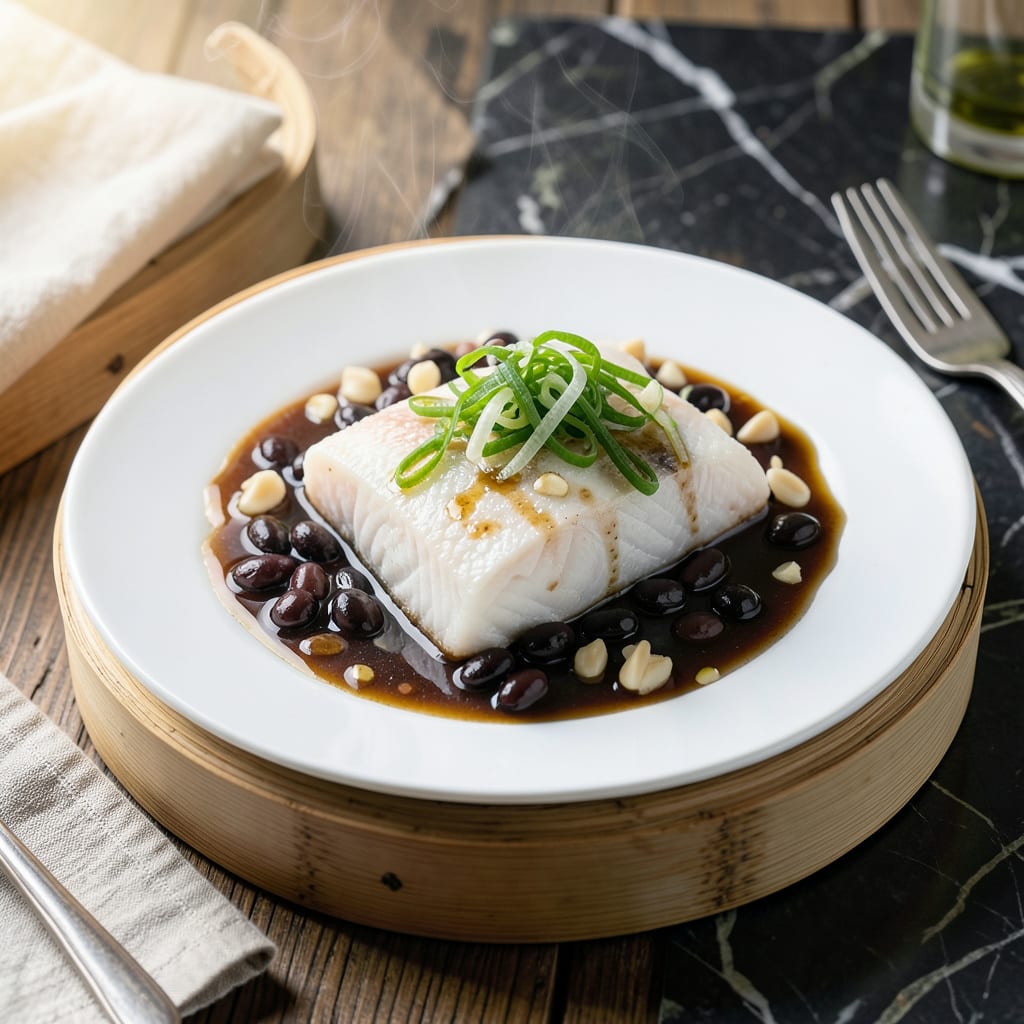
This Cantonese classic brings restaurant-quality results to your home kitchen with traditional steaming techniques. The black bean sauce adds a salty, umami depth that perfectly complements the tender fish.
I’ve refined this method to ensure the fish stays moist while the sauce develops rich, complex flavors. The key is proper timing and layering the ingredients for maximum impact.
Ingredients for Steam Fish Black Bean Sauce
Traditional Cantonese ingredients deliver restaurant-quality flavor at home with minimal effort.
| Ingredient | Amount | Notes |
|---|---|---|
| White Fish Fillets 🐟 | 1 ½ lb | Cod, sea bass, or snapper preferred |
| Fermented Black Beans ⚫ | 2 tbsp | Rinsed and drained |
| Garlic Cloves 🧄 | 4 cloves | Minced finely |
| Fresh Ginger 🌿 | 1 tbsp | Julienned or minced |
| Green Onions 🧅 | 3 whole | Thinly sliced, whites and greens separated |
| Soy Sauce 🫒 | 2 tbsp | Light or all-purpose |
| Shaoxing Wine 🍶 | 1 tbsp | Or dry sherry as substitute |
| Sesame Oil 🫒 | 1 tsp | Toasted preferred |
| Sugar 🍚 | ½ tsp | Balances saltiness |
| Chili Peppers 🌶️ | 1 whole | Optional, for heat |
| Cilantro 🌿 | ¼ cup | Fresh, for garnish |
| Vegetable Oil 🫒 | 1 tbsp | Neutral flavor for cooking |
For authentic results, fermented black beans are non-negotiable—look for them in the Asian aisle at H Mart or 99 Ranch Market. The fish should be as fresh as possible; whole fish works too if you prefer, but fillets simplify the steaming process. Choose firm white fish like cod or sea bass, avoiding anything with a strong fishy odor. Wild-caught is preferable for both flavor and sustainability.
No Shaoxing wine? Dry sherry is the closest substitute, or use mirin with a splash of rice vinegar for a similar depth. Fresh ginger and garlic are essential—pre-minced versions lack the aromatic punch. If fermented black beans aren’t available, douchi (Chinese fermented black beans in sauce) works in a pinch, though the texture differs slightly.
Prep all ingredients before steaming—mise en place is critical. The fish stays tender for 2 days in the fridge, but the sauce is best fresh. Leftovers reheat gently in a steamer or microwave with a damp paper towel cover to prevent drying. Freezing isn’t recommended, as it alters the fish texture.
Why You’ll Love This Recipe
- One Pan Wonder: I just plop the fish on a heatproof plate, drizzle with the black bean-garlic-ginger mix, and let the steamer do the work.
- Umami Bomb: The fermented black beans and fresh ginger create this deep, salty-sweet punch that soaks right into the tender fish.
- Weeknight Hero: Honestly, it’s my go-to for busy evenings—ready in 20 minutes and fancy enough for company.
- Budget Stretcher: A few affordable fillets and pantry staples feed four, and leftovers taste even better the next day.
Step-by-Step Instructions for Steamed Fish with Black Bean Sauce
This traditional Cantonese method delivers tender fish with a deeply savory, aromatic sauce.
Step 1: Prepare the Fish and Aromatics
Pat the 1.5 lb white fish fillets completely dry with paper towels—this prevents the steam from making the flesh watery. Place them on a heatproof plate that fits inside your steamer. I use cod or sea bass for their firm texture that holds up well to steaming.
Thinly slice the 3 whole green onions, separating the whites from the greens. Mince the 4 cloves garlic cloves and julienne the 1 tbsp fresh ginger. Rinse the 2 tbsp fermented black beans under cold water and drain well to remove excess salt. This preparation ensures even cooking and balanced flavors.
Step 2: Create the Black Bean Sauce Base
Heat 1 tbsp vegetable oil in a small saucepan over medium heat. Add the minced garlic, julienned ginger, and white portions of the green onions. Stir-fry for 30-45 seconds until the aromatics become fragrant but haven’t browned.
Add the rinsed fermented black beans and cook for another 30 seconds, mashing them slightly with the back of your spoon to release their briny depth. This quick cook intensifies the beans’ umami while softening their texture for the sauce.
Step 3: Steam the Fish to Perfection
Bring 2 inches of water to a rolling boil in your wok or steamer base. Place the fish plate on the steamer rack, ensuring the water doesn’t touch the plate. Cover tightly and steam over high heat for 8-10 minutes depending on thickness.
The fish is done when it turns opaque and flakes easily with a fork. Be careful not to oversteam—you want the flesh to remain moist and tender. While the fish steams, keep the sauce base warm over low heat.
Step 4: Finish with the Sauce and Garnish
Once the fish is cooked, carefully remove the plate from the steamer. Pour off any accumulated liquid from the plate. In your saucepan, add the 2 tbsp soy sauce, 1 tbsp Shaoxing wine, 0.5 tsp sugar, and 1 tsp sesame oil to the aromatics and black beans. Simmer for 1 minute until slightly thickened.
Pour the hot sauce evenly over the fish. If using, slice the 1 whole chili peppers thinly and scatter over the top with the green onion greens. Finish with 0.25 cup cilantro for freshness. The sauce should cling to the fish with its glossy, aromatic sheen intact.
Pro Tips For Making Steam Fish Black Bean Sauce
- Rinse the Black Beans: Soak fermented black beans in water for 10 minutes, then rinse to reduce excess saltiness—this keeps the sauce balanced without overpowering the fish.
- Score the Fish: Lightly score the fish fillets in a crosshatch pattern so the black bean sauce seeps in deeper, adding flavor to every bite.
- Steam Over Boiling Water: Place the fish on a heatproof plate over already boiling water, not just hot, to ensure even cooking and prevent a soggy texture.
- Add Aromatics Last: Toss in half the green onions and ginger slices after steaming to keep their fresh, bright flavor instead of cooking them into mush.
Wine and Beer Pairings for This Dish
Crisp White Wines
A dry Riesling from Germany or Alsace cuts through the dish’s saltiness with its bright acidity and citrus notes. I recommend Dr. Loosen Blue Slate for its mineral complexity that complements the fermented black beans. 🍷
Light-Bodied Reds
For red wine lovers, a chilled Beaujolais from France offers red fruit flavors without overpowering the delicate fish. The Louis Jadot Beaujolais Villages has just enough body to stand up to the umami-rich sauce.
Chinese Beer Pairings
Tsintgtao or Snow Beer – these light Chinese lagers cleanse your palate between bites. Their crisp, slightly sweet profile balances the salty-savory sauce beautifully. Serve ice cold for maximum refreshment. 🍺
Asian-Inspired Cocktails
A lychee martini with vodka and a splash of lime juice adds a floral contrast to the dish’s deep umami. For something simpler, try sake – a dry junmai like Dassai 39 enhances the Cantonese flavors.
Non-Alcoholic Options
Jasmine tea’s delicate floral notes complement the ginger and garlic in the sauce. For a refreshing option, try calamansi juice – this Filipino citrus drink cuts through the richness while respecting the dish’s Asian roots.
Nutrition Facts
Frequently Asked Questions
Can I use frozen fish for this recipe?
Yes, but thaw it completely in the fridge overnight first. Pat it very dry before steaming to prevent a watery texture. Fresh fish yields better results, but frozen works in a pinch.
What can I substitute for fermented black beans?
Try douchi (Chinese fermented black beans in sauce) as the closest alternative. Soaked and chopped black olives can work in emergencies, though the flavor will differ significantly.
How do I prevent the fish from sticking to the plate?
Lightly grease your heatproof plate with oil before placing the fish. Alternatively, line it with parchment paper with slits cut for steam circulation. This ensures easy removal.
Can I make the sauce ahead of time?
The sauce is best made fresh, but you can prep the base (aromatics + black beans) up to 1 day ahead. Store refrigerated and reheat gently before adding remaining ingredients.

- 6 Egg Cake Recipe with Oil: Light as Air With Buttery Moisture - October 4, 2026
- 4 Bean Casserole Recipe: One-Pan Heartiness With Smoky Paprika Depth - October 4, 2026
- 3-Ingredient Keto Mug Cake Recipe: Microwave Magic in 2 Minutes - October 4, 2026