
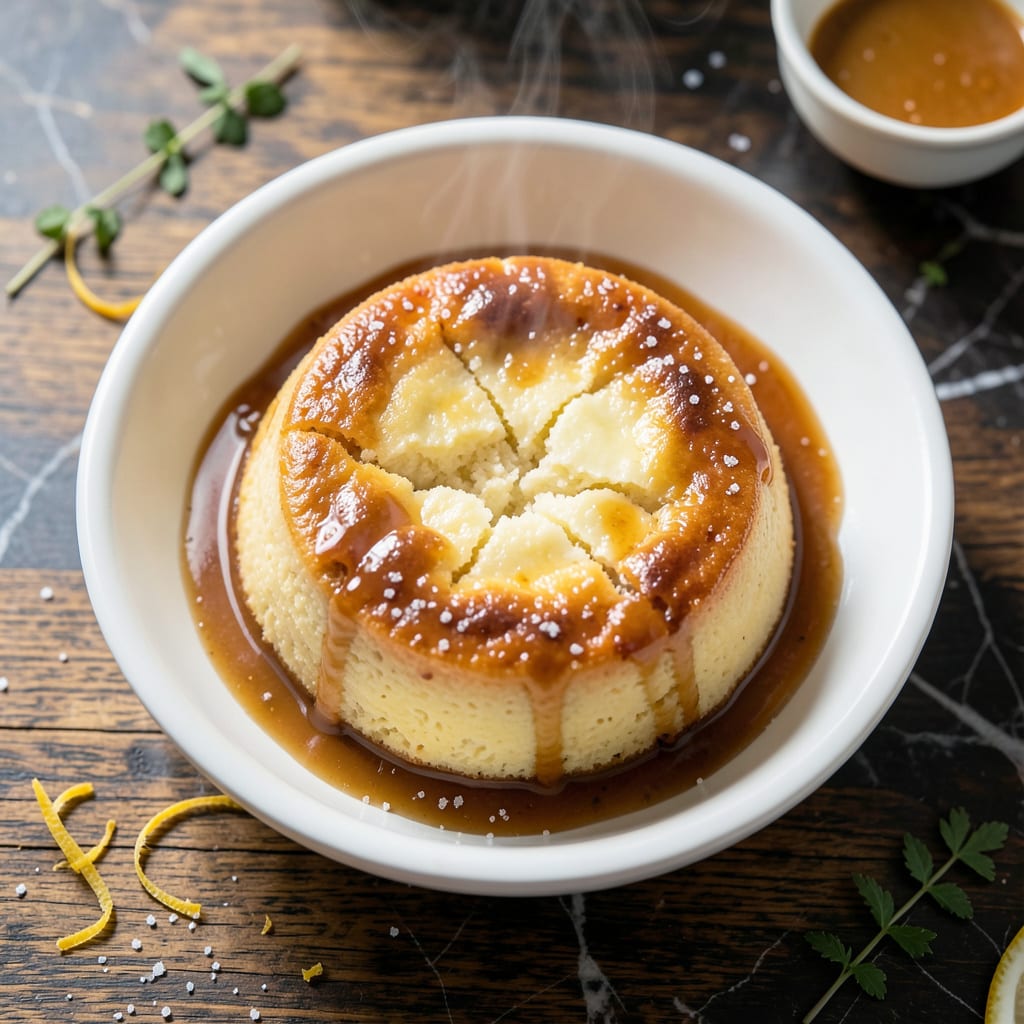
This classic dessert brings old-world charm to your kitchen with its moist texture and rich treacle swirls. The steaming process locks in moisture, creating a pudding that’s tender and decadent.
With simple ingredients and precise timing, you’ll achieve a dessert that’s both comforting and impressive. The treacle adds a deep, caramelized sweetness that pairs perfectly with the soft, steamed pudding.
Ingredients for Steam Pudding
Simple pantry staples plus a few special touches for that old-world magic.
| Ingredient | Amount | Notes |
|---|---|---|
| All-Purpose Flour 🌾 | 2 cups | Sifted for lighter texture |
| Granulated Sugar 🍚 | ¾ cup | Fine white sugar preferred |
| Unsalted Butter 🧈 | ½ cup | Softened to room temperature |
| Large Eggs 🥚 | 2 whole | Room temperature for even mixing |
| Milk 🥛 | ½ cup | Whole milk for richness |
| Baking Powder 🧂 | 2 tsp | Fresh for best rise |
| Vanilla Extract 🌿 | 1 tsp | Pure extract for depth |
| Golden Syrup 🍯 | ½ cup | Or dark treacle for intensity |
| Salt 🧂 | ¼ tsp | Fine sea salt preferred |
| Ground Cinnamon 🌶️ | ½ tsp | Optional for warmth |
| Lemon Zest 🍋 | 1 tsp | Finely grated for brightness |
| Raisins 🍇 | ½ cup | Soaked if very dry |
The golden syrup is non-negotiable here—it’s what gives that molten treacle swirl its signature depth. Lyle’s Golden Syrup is the gold standard (literally), but dark molasses works in a pinch. Look for it in the international aisle or World Market. For the butter, Plugrá or Kerrygold give that rich, old-world flavor the recipe promises. Always use room-temperature eggs and butter—they emulsify better and prevent a dense pudding.
No golden syrup? Honey or maple syrup can stand in, though the flavor will be different. Out of raisins? Dried currants or chopped dates add a similar chewy texture. Want to skip the cinnamon? Nutmeg at half the amount adds warmth without overpowering. The milk can be swapped for oat or almond milk if needed, but whole milk gives the tenderest crumb.
This keeps 3-4 days wrapped tight at room temperature, but it’s best served fresh. Reheat by steaming again for 10-15 minutes (don’t microwave—it’ll dry out). The batter can be mixed a day ahead, but add baking powder just before steaming for maximum lift.
Why You’ll Love This Recipe
- Unfussy Mix: It’s just flour, sugar, butter, eggs, and milk—no fancy gadgets or hard-to-find ingredients.
- Warm Vanilla Hug: The butter and sugar melt into this cozy, sweet steam that feels like dessert in a bowl.
- Sunday or Tuesday: I’ll serve it after roast dinner or just because it’s drizzling outside.
- Leftovers? Doubt it: Honestly, mine disappears the same day, but it reheats beautifully in the microwave.
Step-by-Step Instructions for Steam Pudding
Here’s the method I’ve perfected for that signature old-world texture you’re after.
Step 1: Cream Butter and Sugars for a Light Base
In a large bowl, beat the 0.5 cup unsalted butter with the 0.75 cup granulated sugar until pale and fluffy—about 3-4 minutes with an electric mixer. You want to see the mixture lighten in color and increase in volume, which indicates proper aeration.
This step creates the foundation for a moist crumb. I always use room temperature butter because cold butter won’t cream properly and can lead to a dense pudding. Stop mixing when the sugar is fully incorporated and the texture resembles whipped cream.
Step 2: Incorporate Eggs and Flavorings
Add the 2 whole large eggs one at a time, beating well after each addition. Then mix in the 1 tsp vanilla extract, 1 tsp lemon zest, and 0.5 tsp ground cinnamon. The batter will look slightly curdled at this stage—that’s normal.
I prefer adding the lemon zest here rather than with the dry ingredients because the essential oils in the zest bloom in the fat, creating a brighter, more pronounced citrus note. Make sure to scrape down the bowl sides to catch any clinging butter or sugar.
Step 3: Combine Dry Ingredients and Alternate with Milk
In a separate bowl, whisk together the 2 cups all-purpose flour, 2 tsp baking powder, and 0.25 tsp salt. With the mixer on low, add about a third of the dry ingredients to the butter mixture, then pour in half the 0.5 cup milk.
Repeat, ending with the dry ingredients. The batter should be thick but pourable. Overmixing at this stage develops gluten, which can make your pudding tough. Fold in the 0.5 cup raisins at the very end to avoid crushing them.
Step 4: Layer with Golden Syrup and Prepare for Steaming
Spoon half the batter into a well-greased 1.5-quart pudding basin or heatproof bowl. Drizzle 0.25 cup golden syrup over the top, then add the remaining batter. Drizzle the remaining 0.25 cup golden syrup on top—this creates those irresistible molten swirls.
Cover tightly with greased parchment paper and foil, securing with string. This seal prevents water from seeping into the pudding during steaming. Place an upturned saucer in the bottom of a large pot to elevate the basin above the water level.
Step 5: Steam to Perfection
Bring water in the pot to a gentle simmer, then carefully lower in the pudding basin. The water should come halfway up the sides. Cover the pot and steam for 2 to 2.5 hours, checking occasionally to ensure the water hasn’t evaporated.
You’ll know it’s done when the pudding is firm to the touch and a toothpick inserted comes out clean. Let it rest for 10 minutes before turning out. The result should be a beautifully moist pudding with ribbons of golden syrup throughout.
Pro Tips For Making Steam Pudding
- Preheat the Steamer: I learned this the hard way—always bring your steamer to a full, rolling boil before adding the pudding basin, or you’ll end up with a dense, undercooked center.
- Room-Temp Ingredients: Pull your eggs, butter, and milk out 30 minutes before mixing; cold ingredients make the batter clump and the texture uneven.
- Don’t Overfill Basin: Leave at least an inch of space at the top of your basin—steam puddings rise more than you expect, and overflow makes a messy, soggy disaster.
- Use a Coin Test: After 2.5 hours, press a clean coin to the top—if it sticks briefly then falls off clean, it’s done; if it stays, give it another 20 minutes.
Common Mistakes When Making This Dish
Overmixing the Batter
Once you add the dry ingredients, mix just until combined. Overmixing develops gluten, which turns your pudding dense and tough. I stop as soon as the flour streaks disappear—usually after 15-20 gentle folds with a spatula. 💡
Skipping Room Temperature
Cold butter and eggs won’t emulsify properly, leading to a grainy texture. I set mine out 1-2 hours before starting. If in a hurry, place eggs in warm water for 10 minutes and cut butter into small cubes.
Improper Basin Prep
Grease your pudding basin thoroughly with butter or nonstick spray. I also dust it with 1 tbsp flour to ensure easy release. Skipping this step risks the pudding sticking and tearing when unmolded.
Insufficient Steaming Time
Understeaming leaves the center gummy. I check at 2 hours, but often need the full 2.5 hours. Test with a toothpick—it should come out clean with no wet batter clinging to it.
Water Seeping In
Secure the parchment and foil cover tightly with string. I double-wrap for insurance. If water gets in, it dilutes the syrup swirls and creates a soggy top layer. The basin should stay above water level at all times.
Rushing the Rest
Let your pudding rest for 10 minutes after steaming. This allows the structure to set, making it easier to turn out cleanly. I place a warm plate on top, then flip confidently in one motion. 🔥
Nutrition Facts
Frequently Asked Questions
What can I use instead of golden syrup?
Dark molasses or honey work well as substitutes. Molasses gives a deeper flavor, while honey adds floral notes.
How do I know when it’s done?
Insert a toothpick into the center—it should come out clean after 2 to 2.5 hours. The pudding will also feel firm to the touch.
Can I make this without a pudding basin?
Use a heatproof bowl or even a large ramekin, but ensure it’s well-greased and covered tightly. An upturned saucer in the pot keeps it above water.
Why did my syrup sink to the bottom?
This happens if the batter is too thick. Fold in an extra 1-2 tbsp milk next time to help distribute the syrup evenly.

- 6 Egg Cake Recipe with Oil: Light as Air With Buttery Moisture - October 4, 2026
- 4 Bean Casserole Recipe: One-Pan Heartiness With Smoky Paprika Depth - October 4, 2026
- 3-Ingredient Keto Mug Cake Recipe: Microwave Magic in 2 Minutes - October 4, 2026