
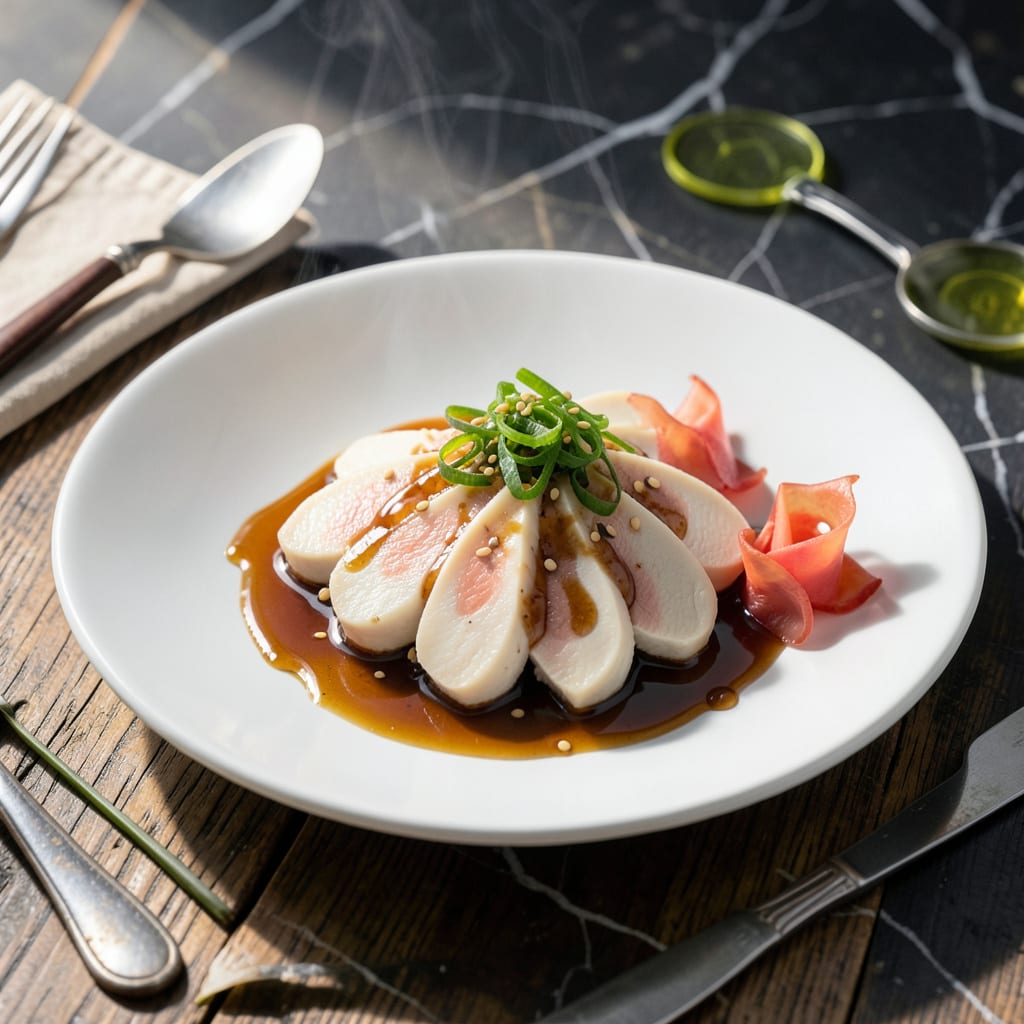
This traditional Japanese preparation transforms monkfish liver into a silky, melt-in-your-mouth delicacy through gentle steaming. The process preserves its natural richness while creating a delicate, custard-like texture.
Served chilled with a bright ponzu sauce and fresh garnishes, this dish showcases the liver’s buttery depth. The contrast between the velvety ankimo and the citrusy sauce makes every bite unforgettable.
Ingredients for Steamed Ankimo
This elegant dish requires monkfish liver and a few Japanese pantry staples to create a luxurious experience.
| Ingredient | Amount | Notes |
|---|---|---|
| Monkfish Liver 🐟 | 1 ½ lb | Fresh, sushi-grade, membranes removed |
| Sake 🍶 | ½ cup | Dry variety preferred |
| Mirin 🍶 | 2 tbsp | Sweet cooking rice wine |
| Soy Sauce 🥢 | 2 tbsp | Low-sodium for balance |
| Dashi Stock 🍜 | 1 cup | Homemade or high-quality instant |
| Ponzu Sauce 🍋 | ½ cup | Freshly made or bottled |
| Yuzu Juice 🍊 | 2 tbsp | Fresh or bottled substitute |
| Scallions 🧅 | 2 whole | Thinly sliced for garnish |
| Daikon Radish 🥬 | ½ whole | Julienned for garnish |
| Fresh Ginger 🌿 | 1 tbsp | Peeled and grated |
| Sugar 🧂 | 1 tsp | For balancing ponzu |
| Sea Salt 🧂 | ½ tsp | Fine grain for seasoning |
| Neutral Oil 🫒 | 1 tsp | For greasing steaming vessel |
The monkfish liver is non-negotiable here—sushi-grade quality from a reputable seafood purveyor like True World Foods or a trusted local fishmonger is essential. Look for vibrant color and firm texture; avoid any with a fishy odor. Dashi stock can be made from scratch with kombu and bonito flakes, but high-quality instant dashi from brands like Hondashi works perfectly for most home cooks.
No yuzu juice? Substitute with a mix of lime and orange juice (1:1 ratio) for similar citrus brightness. Mirin can be replaced with 1 tbsp sugar mixed with 1 tbsp water per tbsp of mirin. If ponzu sauce isn’t available, combine soy sauce with citrus juice for a quick alternative. The scallions and daikon can be swapped for microgreens or cucumber for garnish.
Steamed ankimo keeps in the fridge for 2-3 days but is best served fresh. Store the liver submerged in its cooking liquid to maintain moisture. The ponzu sauce can be made 1 week ahead and refrigerated—flavors deepen with time. Always bring ingredients to room temperature before serving for optimal texture.
Why You’ll Love This Recipe
- One Pot Wonder: I just toss monkfish liver with sake, mirin, and dashi in a steamer—no fancy techniques, no stress.
- Umami Bomb: That first bite of silky liver soaked in soy-dashi broth? Ridiculously rich and savory.
- Dinner Party Star: Honestly, it feels fancy but takes minutes—my guests always think I slaved for hours.
- Budget Luxury: A little monkfish liver goes a long way, and the leftovers taste even better the next day.
Step-by-Step Instructions for Steamed Ankimo
Master the technique that transforms monkfish liver into a delicate, melt-in-your-mouth delicacy.
Step 1: Prepare the Monkfish Liver
Begin by gently rinsing the 1.5 lb monkfish liver under cold water to remove any residual blood or membranes. Pat it completely dry with paper towels—this ensures the steaming process works evenly and the texture remains silky.
With a sharp knife, carefully remove any remaining connective tissue or veins, taking care not to tear the liver. The liver should be in one intact piece if possible. Season lightly with 0.5 tsp sea salt on all sides, pressing it gently into the surface for even distribution.
Step 2: Create the Steaming Liquid
In a small saucepan, combine the 1 cup dashi stock, 0.5 cup sake, 2 tbsp mirin, and 2 tbsp soy sauce. Bring to a gentle simmer over medium heat and remove from the heat immediately—this prevents the alcohol from evaporating completely, which is essential for flavor.
Add the 1 tbsp fresh ginger and 1 tsp sugar to the warm liquid, stirring until the sugar dissolves. This aromatic broth will infuse the liver with subtle depth as it steams. Let the mixture cool slightly for 5 minutes before using.
Step 3: Steam the Liver to Perfection
Lightly grease a heatproof dish that fits inside your steamer with the 1 tsp neutral oil. Place the prepared monkfish liver in the dish, then pour the cooled steaming liquid around it—do not submerge the liver. The liquid should come about halfway up the sides of the dish.
Set up your steamer with water at a rolling boil. Place the dish inside, cover tightly, and steam over medium-high heat for 12-15 minutes. The liver is done when it turns opaque and jiggles slightly when shaken—overcooking will make it grainy.
Step 4: Prepare the Ponzu Sauce and Garnishes
While the liver steams, combine the 0.5 cup ponzu sauce and 2 tbsp yuzu juice in a small bowl. Taste and adjust the balance if needed—the sauce should be bright and tangy with a hint of sweetness from the ponzu.
Thinly slice the 2 whole scallions and julienne the 0.5 whole daikon radish into fine matchsticks. Soak the daikon in ice water for 5 minutes to crisp it up, then drain well before serving. These garnishes add freshness and crunch to contrast the liver’s richness.
Step 5: Serve Immediately with Sauce and Garnishes
Carefully transfer the steamed monkfish liver to a serving platter, leaving the steaming liquid behind. Slice the liver into ½-inch thick pieces—it should be custard-like and barely hold its shape.
Drizzle the ponzu-yuzu sauce generously over the liver and scatter the scallions and daikon radish on top. Serve immediately while warm, accompanied by small spoons for scooping up the tender liver with its bright, citrusy sauce.
Pro Tips For Making Steamed Ankimo
- Soak the Liver: Rinse the monkfish liver in cold water for 5-10 minutes to remove any bitterness—I learned this the hard way after my first attempt tasted harsh.
- Steam on High: Use a rolling boil in your steamer and cook for exactly 8-10 minutes. Any less and it’s underdone, any more and it turns grainy.
- Strain the Marinade: After poaching in sake, mirin, and soy, strain the liquid before reducing it into a glaze to avoid any lingering impurities.
- Chill Before Serving: Let the ankimo cool completely in the fridge for at least 30 minutes—it firms up nicely and makes slicing cleaner.
Make-Ahead Tips for Leftovers
Ponzu Preparation
I always make the ponzu sauce 1-2 days ahead—the flavors meld beautifully with time. Combine the 0.5 cup ponzu and 2 tbsp yuzu juice in a jar, then refrigerate. The acidity softens while the citrus brightens. 💡
Liver Storage
Store the monkfish liver in its steaming liquid in an airtight container for up to 24 hours before serving. This keeps it moist and preserves the delicate texture. Avoid longer storage as the liver can turn grainy.
Garnish Prep
Slice the 2 scallions and julienne the 0.5 daikon radish up to 4 hours ahead. Keep them in separate containers with damp paper towels to maintain crispness. Soak the daikon in ice water just before serving.
Steaming Liquid
The dashi-based steaming liquid can be made 1 day in advance and refrigerated. Reheat gently before using—don’t boil, as this would cook off the alcohol and concentrate the flavors too much.
Serving Temperature
Bring the steamed liver to room temperature before serving—about 20-30 minutes out of the fridge. This ensures the silky texture shines. Serve the ponzu sauce chilled for the best contrast.
Equipment Prep
Set up your steamer and heatproof dish the night before. I use a bamboo steamer lined with parchment for easy cleanup. This small step saves time on the day of serving. ⏰
Nutrition Facts
Frequently Asked Questions
What can I use if I can’t find monkfish liver?
Look for fresh cod or halibut liver as the closest alternatives. They have a similar mild flavor and creamy texture when steamed. Avoid stronger-tasting livers like beef or chicken.
How do I know when it’s perfectly cooked?
The liver is done when it turns opaque and jiggles like soft gelatin when shaken. Overcooking makes it grainy—stick to the 12-15 minutes steaming time.
Can I make this without a steamer?
Yes! Use a heatproof bowl set over a pot of boiling water. Cover tightly with foil to trap steam. Just ensure the bowl doesn’t touch the water below.
What’s the best way to serve leftovers?
Store in its cooking liquid for up to 24 hours. Reheat gently in the liquid over low heat for 2-3 minutes to restore its silky texture.

- 6 Egg Cake Recipe with Oil: Light as Air With Buttery Moisture - October 4, 2026
- 4 Bean Casserole Recipe: One-Pan Heartiness With Smoky Paprika Depth - October 4, 2026
- 3-Ingredient Keto Mug Cake Recipe: Microwave Magic in 2 Minutes - October 4, 2026