
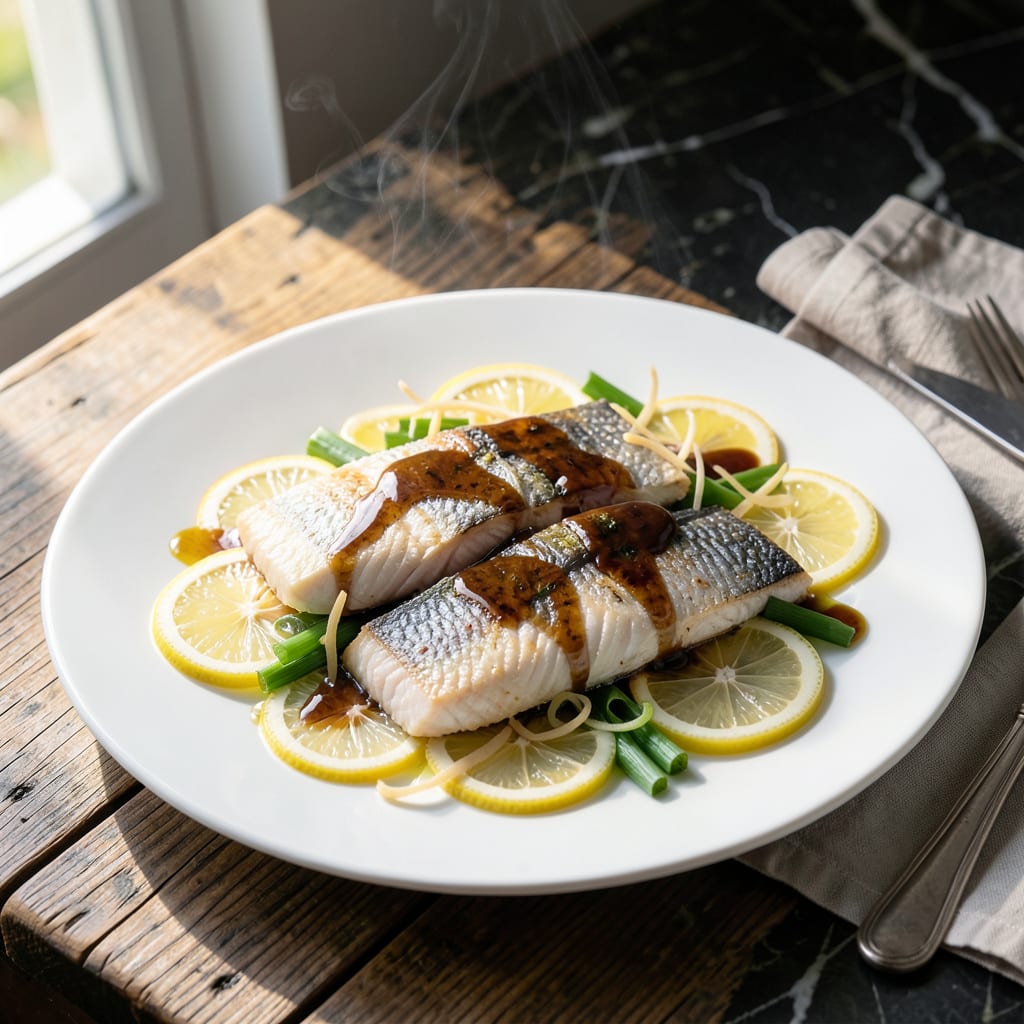
This steaming method guarantees flaky red snapper with delicate texture and vibrant flavor. The gentle cooking process preserves the fish’s natural moisture while infusing it with bright lemon and warm ginger aromas.
Perfect for a light yet satisfying main course, this technique requires minimal effort but delivers professional results. The fish emerges tender and perfectly cooked, with the citrus and spice creating a harmonious balance in every bite.
Ingredients for Steam Red Snapper
Fresh red snapper, bright lemon, and warm ginger create this delicate, flaky dish.
| Ingredient | Amount | Notes |
|---|---|---|
| Red Snapper Fillets 🐟 | 1 ½ lb | Skin-on or skinless, fresh |
| Fresh Ginger 🌿 | 2 tbsp | Peeled and julienned |
| Garlic Cloves 🧄 | 4 cloves | Thinly sliced |
| Lemon 🍋 | 1 whole | Thinly sliced for steaming |
| Green Onions 🧅 | 4 whole | Cut into 2-inch pieces |
| Soy Sauce 💧 | 2 tbsp | Low-sodium preferred |
| Sesame Oil 🫒 | 1 tsp | Toasted for depth |
| Shaoxing Wine 🍶 | 2 tbsp | Or dry sherry substitute |
| Red Pepper Flakes 🌶️ | ½ tsp | Optional for heat |
| Cilantro 🍃 | ¼ cup | Fresh, roughly chopped |
| Neutral Oil 🛢️ | 1 tbsp | For greasing steamer |
| Salt 🧂 | ½ tsp | Kosher or sea salt |
| White Pepper 🌶️ | ¼ tsp | Ground, for subtle heat |
The snapper quality is non-negotiable for optimal texture. Whole Foods or local fishmongers typically carry the freshest red snapper—look for clear, bright eyes and a mild ocean scent (never fishy). Skin-on fillets hold up better during steaming, but skinless works if that’s what’s available. The ginger should be firm and smooth, not shriveled, for maximum aroma.
No Shaoxing wine? Dry sherry at an equal amount provides similar depth. Fresh cilantro can be swapped for Thai basil if you prefer a different herbal note. For a milder flavor, reduce the green onions by half. The soy sauce can be tamari for gluten-free needs. If you’re avoiding alcohol entirely, chicken or vegetable broth with a pinch of sugar works as a substitute.
Best consumed immediately for peak texture and flavor. Leftovers keep in the fridge for 1-2 days but may lose some flakiness. Reheat gently in a steamer or microwave with a damp paper towel to preserve moisture.
Why You’ll Love This Recipe
- One Pan Wonder: I just toss the snapper, ginger, garlic, and lemon on a plate and steam—no fancy equipment, no mess.
- Zingy Freshness: That combo of lemon, ginger, and green onions makes every bite bright and flavorful without overpowering the fish.
- Weeknight Hero: Honestly, it’s my go-to when I need a healthy dinner that feels special but takes less time than ordering takeout.
- Budget-Friendly Luxe: Red snapper feels fancy, but it’s surprisingly affordable, and leftovers reheat beautifully for lunch the next day.
Step-by-Step Instructions for Steamed Red Snapper
Master this gentle cooking technique to preserve the delicate texture and natural sweetness of the fish.
Step 1: Prepare the Aromatic Steaming Base
Thinly slice the lemon and cut the green onions into 2-inch pieces. Peel and julienne the 2 tbsp fresh ginger, then thinly slice the 4 cloves garlic cloves. This combination creates a fragrant foundation that infuses the fish with bright, complex flavors as it steams.
In a small bowl, combine the 2 tbsp soy sauce, 1 tsp sesame oil, 2 tbsp Shaoxing wine, 0.5 tsp red pepper flakes, 0.5 tsp salt, and 0.25 tsp white pepper. The sesame oil adds depth, while the Shaoxing wine provides a subtle nutty aroma that complements the fish beautifully.
Step 2: Set Up the Steamer and Prep the Fish
Fill a large pot or wok with 2 inches of water and bring to a rolling boil. Place a bamboo steamer or heatproof plate on top, ensuring it sits above the water level. Lightly grease the steamer surface with the 1 tbsp neutral oil to prevent sticking.
Rinse the 1.5 lb red snapper fillets and pat them completely dry. Place them on a heatproof plate that fits inside your steamer. Drizzle half of the soy sauce mixture evenly over the fillets, then scatter half of the ginger, garlic, lemon slices, and green onions on top. The acidity from the lemon will brighten the fish’s natural sweetness.
Step 3: Steam the Fillets to Flaky Perfection
Carefully place the plate with the fillets into the steamer, cover with a tight-fitting lid, and steam over medium-high heat for 10-12 minutes. Avoid lifting the lid during cooking, as the sudden temperature change can cause the fish to seize and lose its tender texture.
Check for doneness by inserting a fork into the thickest part of a fillet. The fish is ready when it flakes easily and turns opaque throughout. If using thicker fillets, extend the steaming time by 2-3 minutes, but monitor closely to avoid overcooking.
Step 4: Finish with Fresh Aromatics and Serve
Once the fillets are cooked, carefully transfer them to a serving platter. Drizzle the remaining soy sauce mixture over the top, then garnish with the remaining ginger, garlic, lemon slices, and green onions. The residual heat will gently warm these aromatics, enhancing their fragrance.
Sprinkle the 0.25 cup cilantro over the dish just before serving. The fresh cilantro adds a vibrant, citrusy note that balances the rich, savory flavors of the fish and steaming liquid. Serve immediately with steamed rice to soak up the delicious juices.
Pro Tips For Making Steam Red Snapper
- Pat Fillets Dry: I learned this the hard way—damp fish steams unevenly, so blot the fillets with paper towels before adding to the steamer. Sounds tedious, but it actually changes the outcome.
- Slice Ginger Thin: Fresh ginger releases more flavor when cut into paper-thin slices rather than thick chunks. I used to rush this part and wondered why the aroma was so weak.
- Skip Overcrowding: Resist the urge to cram all fillets into one layer—leave space between them so the steam circulates properly. My first few batches stuck together; now I use a bamboo steamer with gaps.
- Lemon Last Minute: Add lemon slices or juice right before serving, not during steaming. After burning three batches with bitter lemon pulp, I finally figured out the acidity toughens the fish if cooked too long.
Regional Styles of steam red snapper
Cantonese Tradition
In Southern China, red snapper is often steamed whole with fermented black beans and chili peppers. The fish is scored lightly on both sides to allow the bold flavors to penetrate deeply. This version uses a clay pot for even heat distribution.
Thai-Inspired Variation
Thai cooks add lemongrass stalks and kaffir lime leaves to the steaming liquid. The citrusy, floral notes pair perfectly with snapper’s sweetness. I love how the fish sauce in the marinade adds umami depth without overpowering.
Vietnamese Style
Vietnamese steamed snapper often includes dill fronds and turmeric in the steaming liquid. The dill adds a fresh, slightly sweet note that complements the fish beautifully. Serve with nuoc cham dipping sauce on the side. 💛
Japanese Approach
Japanese chefs steam snapper with shiso leaves and sudachi citrus. The shiso’s minty-anise flavor and sudachi’s tart juiciness create a refreshing combination. I use a donabe clay pot for authentic results.
Mediterranean Twist
For a Mediterranean take, add olive oil, Kalamata olives, and cherry tomatoes to the steamer. The briny olives and sweet tomatoes balance the fish’s richness. Finish with fresh oregano and a squeeze of lemon.
Caribbean Flare
Caribbean cooks use scotch bonnet peppers and thyme sprigs in the steaming liquid. The heat from the peppers and earthy thyme create a vibrant flavor profile. Serve with coconut rice to complete the island experience. 🔥
Nutrition Facts
Frequently Asked Questions
What’s the ideal steaming time for thick fillets?
For fillets thicker than 1 inch, extend steaming to 12-15 minutes. Always check for doneness by testing flakiness with a fork. Overcooking dries out the delicate flesh.
Can I use a metal colander instead of a bamboo steamer?
Yes! A metal colander works if it fits securely above boiling water. Line it with parchment paper and poke holes for steam circulation. Avoid aluminum, as it can react with acidic ingredients.
Why did my fish turn out rubbery?
Rubbery texture usually means overcooking or insufficient steam. Use medium-high heat only, and never lift the lid during the first 10 minutes. Steam escapes cause temperature drops.
Can I prepare this ahead of time?
Prep aromatics and sauce up to 24 hours ahead, but steam just before serving. The fish loses texture if held after cooking. Reheat gently in a steamer if necessary.

- 6 Egg Cake Recipe with Oil: Light as Air With Buttery Moisture - October 4, 2026
- 4 Bean Casserole Recipe: One-Pan Heartiness With Smoky Paprika Depth - October 4, 2026
- 3-Ingredient Keto Mug Cake Recipe: Microwave Magic in 2 Minutes - October 4, 2026