
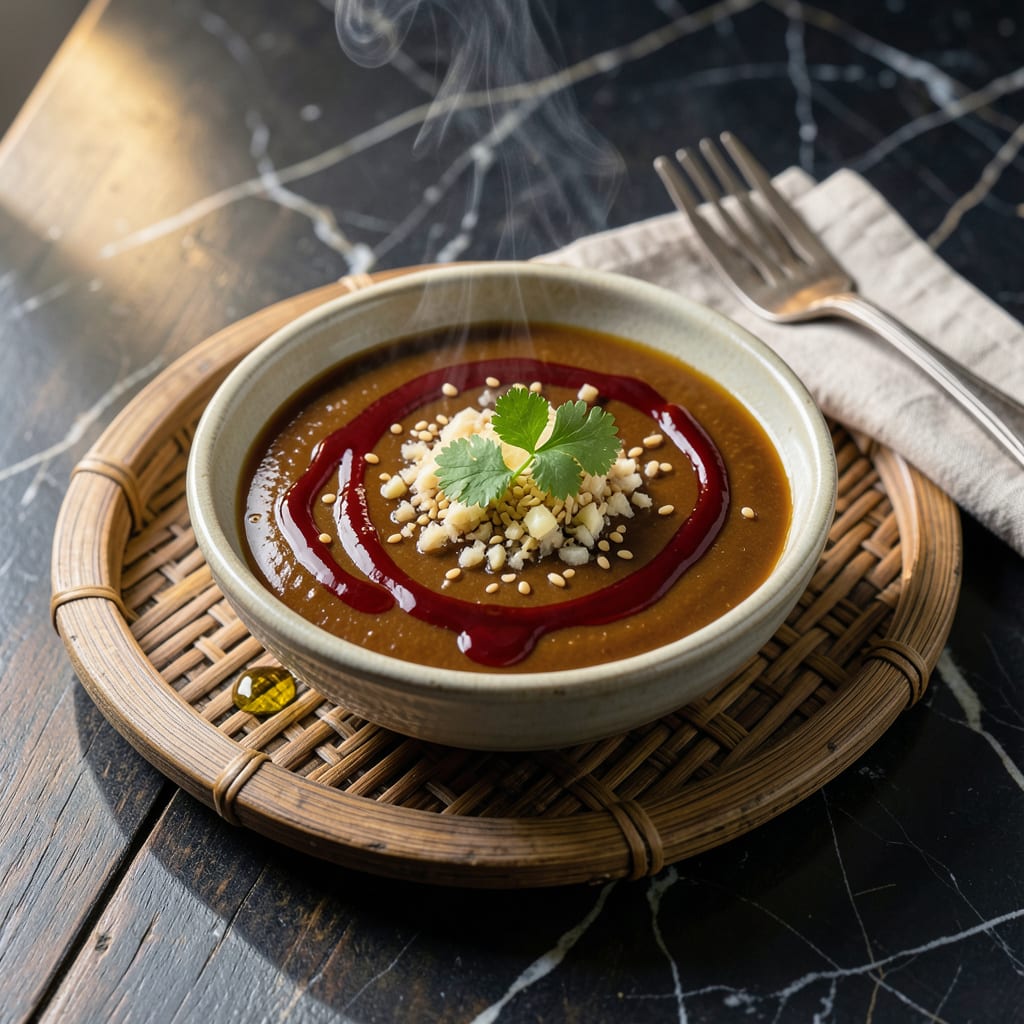
This sauce transforms plain steamed dumplings into a flavor explosion. A perfect balance of savory, tangy, and slightly sweet notes enhances every bite.
With just a few pantry staples, you’ll create a umami-rich dipping sauce that’s ready in 5 minutes. The secret lies in the precise ratio of soy sauce, vinegar, and aromatic oils.
Ingredients for Steamed Dumpling Sauce
Eight pantry staples create that flavor explosion for your dumplings.
| Ingredient | Amount | Notes |
|---|---|---|
| Low-Sodium Soy Sauce 🥢 | ½ cup | Foundation for umami depth |
| Rice Vinegar 🍚 | 3 tbsp | Bright tangy contrast |
| Toasted Sesame Oil 🫒 | 1 tbsp | Deep nutty aroma |
| Chili Oil 🌶️ | 1 tsp | Adjust for heat preference |
| Granulated Sugar 🍚 | 1 tsp | Balances acidity |
| Garlic Cloves 🧄 | 2 cloves | Minced for aromatic bite |
| Fresh Ginger 🌿 | 1 tbsp | Finely grated for warmth |
| Green Onions 🧅 | 2 whole | Thinly sliced for garnish |
The soy sauce is non-negotiable here. Kikkoman low-sodium gives you clean umami without overpowering saltiness. Trader Joe’s has a solid rice vinegar that won’t break the bank. For sesame oil, Kadoya is the gold standard—small bottle, big impact. Don’t substitute regular oil; the toasted variety adds a depth you can’t fake (worth the splurge).
No rice vinegar? Apple cider vinegar at half the amount works in a pinch. Skip the chili oil if you’re heat-averse—a pinch of red pepper flakes gives similar kick. Brown sugar can replace granulated, but reduce by a quarter (it’s sweeter). Fresh ginger is ideal, but ground ginger at one-third the amount saves time without sacrificing too much flavor.
This keeps for 2 weeks in the fridge—olive oil on top prevents separation. The flavors actually improve after 24 hours as everything marries. Freezing isn’t ideal (texture changes), but a small batch disappears fast anyway.
Why You’ll Love This Recipe
- 5-Minute Mix: I stir these five ingredients together faster than my kettle boils—no chopping, no fuss, just a bowl and a spoon.
- Sweet-Spicy Balance: The sugar rounds out the chili oil’s heat while the rice vinegar keeps it bright, so every dumpling gets that addictive contrast.
- Dips Beyond Dumplings: Honestly, I slather it on roasted veggies, noodles, even scrambled eggs when no one’s looking.
- Pantry Stable: Between us, the sauce keeps for weeks in the fridge, so I make a double batch and forget about it until the craving hits.
Step-by-Step Instructions for Steamed Dumpling Sauce
This method guarantees a perfectly balanced sauce with layers of flavor in every bite.
Step 1: Mince the Aromatics
Finely mince the 2 cloves Garlic Cloves and grate the 1 tbsp Fresh Ginger until you have a paste-like consistency. I use a microplane for the ginger—it extracts maximum juice and flavor. The key is to get these aromatics as fine as possible so they disperse evenly throughout the sauce.
Thinly slice the 2 whole Green Onions on a sharp diagonal, creating delicate ribbons. These will add a fresh, oniony bite to finish the sauce. Set all your minced aromatics aside in a small pile—they’ll go in together later.
Step 2: Combine the Liquid Foundation
In a medium bowl, whisk together the 0.5 cup Low-Sodium Soy Sauce and 3 tbsp Rice Vinegar until fully combined. The soy sauce provides that deep umami base we’re after, while the rice vinegar adds the bright, tangy contrast that makes this sauce so addictive.
Add the 1 tbsp Toasted Sesame Oil in a slow stream while whisking vigorously. This creates a temporary emulsion that carries the nutty aroma throughout the mixture. You’ll notice the sauce takes on a slightly glossy appearance—this is exactly what we want.
Step 3: Incorporate Sweetness and Heat
Sprinkle in the 1 tsp Granulated Sugar and 1 tsp Chili Oil. The sugar might seem like a small amount, but it’s crucial for balancing the acidity from the vinegar and the saltiness from the soy sauce. Whisk until the sugar fully dissolves—this usually takes about 15-20 seconds of vigorous mixing.
The chili oil adds just enough heat to wake up your taste buds without overpowering the other flavors. If you’re sensitive to spice, start with ½ tsp and taste before adding more. Remember, you can always add more heat, but you can’t take it out.
Step 4: Add Aromatics and Let Marry
Add your minced garlic and ginger to the bowl. Stir everything together and let the mixture sit for 5-10 minutes. This resting time allows the raw edge of the garlic and ginger to mellow slightly while their flavors begin to infuse the liquid.
You’ll notice the sauce takes on a slightly more complex aroma during this time. The garlic’s pungency will soften, and the ginger’s warmth will become more pronounced. This is the moment when all the components start working together.
Step 5: Finish and Serve
Give the sauce one final stir, then taste and adjust the seasoning if needed. Some prefer a touch more sweetness or acidity—this is your chance to perfect it. Stir in the sliced green onions just before serving to preserve their fresh, crisp texture.
Transfer to small dipping bowls and serve alongside your steamed dumplings. The sauce should have a beautiful balance: salty from the soy, tangy from the vinegar, with underlying warmth from the ginger and a subtle nutty finish from the sesame oil. Each dumpling should be coated in this flavor-packed liquid for maximum impact.
Pro Tips For Making Steamed Dumpling Sauce
- Warm the Soy Sauce: Gently heat the low-sodium soy sauce for 10-15 seconds in the microwave before mixing—it helps the sugar dissolve faster and blends the flavors more smoothly.
- Balance the Vinegar: Use a 2:1 ratio of soy sauce to rice vinegar; I learned this the hard way after my first batch tasted like straight-up vinegar.
- Add Sugar Last: Stir in the granulated sugar only after combining the liquids, or you’ll end up with a grainy sauce that never fully incorporates.
- Drizzle Oil Last: Toasted sesame oil and chili oil go in at the very end—adding them early dulls their aroma and makes the sauce taste flat.
Health Benefits of This Dish
Low Sodium Benefits
Using low-sodium soy sauce helps control your daily salt intake while still delivering that essential umami depth. A 2-tbsp serving of this sauce contains about 300mg sodium, significantly less than traditional recipes. I appreciate being able to enjoy bold flavors without the blood pressure concerns. 💪
Digestive Support
The fresh ginger in this sauce isn’t just for flavor—it contains gingerol, a compound that aids digestion and helps settle your stomach. This makes it perfect for pairing with rich dumpling fillings. Just 1 tbsp provides noticeable benefits.
Antioxidant Boost
Garlic and green onions bring more than just taste—they’re packed with antioxidants like allicin and quercetin. These compounds help combat oxidative stress in your body. The sauce lets you enjoy these benefits in a delicious, easy-to-absorb form.
Healthy Fats
Toasted sesame oil contributes heart-healthy polyunsaturated fats, including sesamol, which has anti-inflammatory properties. A 1-tbsp serving provides these benefits without overwhelming calories. The nutty flavor makes it a nutritious addition you’ll actually look forward to.
Blood Sugar Balance
The small amount of granulated sugar works with the vinegar to help moderate blood sugar spikes. This balance is particularly helpful when enjoying dumplings with higher-carb fillings. The sauce’s acidity slows carbohydrate absorption, creating a more stable energy release.
Metabolism Support
Rice vinegar contains acetic acid, which may help boost metabolism. Combined with the capsaicin in chili oil, this sauce gives your metabolic rate a gentle nudge. I notice I feel more energized after meals that include these ingredients. ✨
Nutrition Facts
Frequently Asked Questions
Can I make this ahead of time?
The flavors actually improve after 24 hours as they meld together. Store in an airtight container in the fridge for up to 2 weeks. Stir before using, as ingredients may separate.
What if I don’t have rice vinegar?
Apple cider vinegar works in a pinch—use half the amount. For best results, stick with rice vinegar for its mild, slightly sweet profile that complements dumplings perfectly.
How do I adjust the spice level?
Start with ½ tsp chili oil if you’re heat-sensitive. Taste and add more gradually. For extra kick, include a pinch of red pepper flakes or a dash of sriracha.
Is there a gluten-free version?
Swap regular soy sauce for tamari or a certified gluten-free soy sauce. All other ingredients are naturally gluten-free. Always check labels to avoid cross-contamination.

- 6 Egg Cake Recipe with Oil: Light as Air With Buttery Moisture - October 4, 2026
- 4 Bean Casserole Recipe: One-Pan Heartiness With Smoky Paprika Depth - October 4, 2026
- 3-Ingredient Keto Mug Cake Recipe: Microwave Magic in 2 Minutes - October 4, 2026