
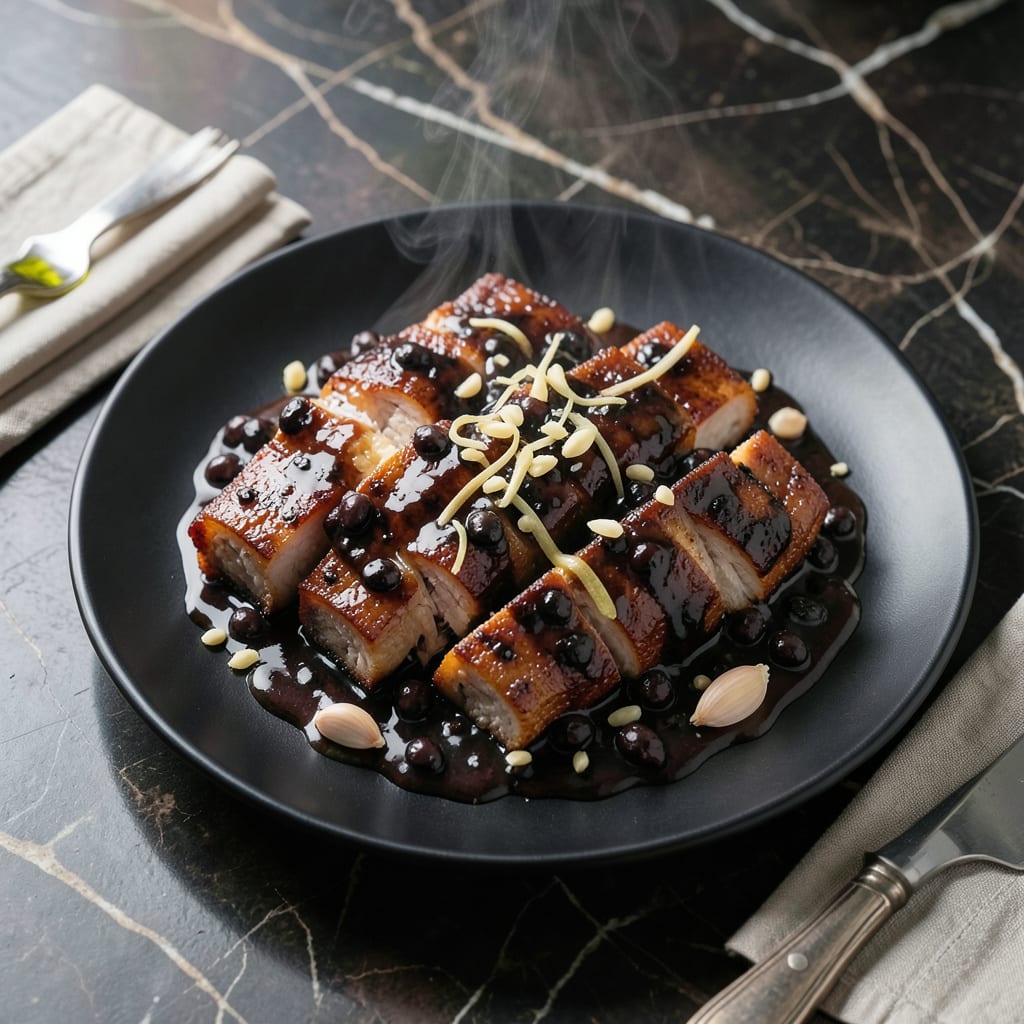
This Cantonese classic delivers tender, fall-off-the-bone spareribs coated in a rich, savory black bean sauce that’s packed with umami depth.
The traditional steaming method ensures the meat stays juicy while allowing the bold flavors of fermented black beans, garlic, and ginger to penetrate every bite.
Ingredients for Steamed Spareribs with Black Bean Sauce
Tender spareribs meet bold fermented black beans in this Cantonese classic with deep umami flavor.
| Ingredient | Amount | Notes |
|---|---|---|
| Pork Spareribs 🥩 | 2 lb | Cut into individual ribs |
| Fermented Black Beans ⚫ | ¼ cup | Rinsed and drained |
| Garlic Cloves 🧄 | 6 cloves | Minced finely |
| Fresh Ginger 🌿 | 1 tbsp | Grated or minced |
| Soy Sauce 💧 | 3 tbsp | Low-sodium preferred |
| Oyster Sauce 🫒 | 2 tbsp | Essential for umami depth |
| Shaoxing Wine 🍷 | 2 tbsp | Or dry sherry as substitute |
| Granulated Sugar 🍚 | 1 tsp | Balances savory flavors |
| Cornstarch 🌾 | 1 tbsp | Mixed with water for slurry |
| Green Onions 🧅 | 3 whole | Thinly sliced for garnish |
| Vegetable Oil 🫒 | 1 tbsp | For sautéing aromatics |
| Water 💧 | ¼ cup | For steaming and slurry |
The spareribs are the foundation—look for meaty, well-marbled ribs at your butcher or Asian grocery store. Fermented black beans are non-negotiable; Lee Kum Kee or Koon Chun brands are reliable and widely available. Fresh ginger and garlic should be firm and aromatic (avoid any with soft spots or sprouting). The quality of soy and oyster sauces directly impacts the final flavor—avoid cheap, overly salty brands.
No Shaoxing wine? Dry sherry works in a pinch, or skip it entirely if needed. For a vegetarian twist, swap oyster sauce for vegetarian oyster sauce (made from mushrooms). If fermented black beans are hard to find, douchi (Chinese fermented black beans) is the same thing—just check the label. The cornstarch slurry can be made with potato starch for a gluten-free option.
Spareribs keep in the fridge for 2-3 days or freeze for up to 3 months. Fermented black beans and sauces store indefinitely in a cool, dark place. Leftovers reheat well—steam for 5-7 minutes to revive tenderness. Always slice green onions fresh for the best texture and color.
Why You’ll Love This Recipe
- One Pot Wonder: I just toss the spareribs with fermented black beans, garlic, and ginger in a steamer—no fancy techniques, no mess.
- Umami Bomb: The salty fermented black beans and soy sauce soak into the ribs, giving every bite that deep, savory punch I crave.
- Weeknight Hero: Between us, this is my Tuesday night lifesaver—ready in 30 minutes and fancy enough for guests.
- Budget Stretcher: Pork spareribs are cheap, and this recipe makes them taste like a restaurant dish. Leftovers? Even better the next day.
Step-by-Step Instructions for Steamed Spareribs With Black Bean Sauce
Master the technique for tender ribs with a rich, aromatic sauce every time.
Step 1: Prepare and Blanch the Pork Spareribs
Cut the 2 lb Pork Spareribs into individual ribs, trimming any excess fat. I always make sure each piece is roughly the same size for even cooking. This step ensures uniform heat penetration during steaming.
Blanch the ribs in boiling water for 2 minutes to remove impurities and tighten the meat fibers. Drain thoroughly and pat dry with paper towels. You’ll notice the ribs take on a slightly firmer texture—this prevents them from turning mushy during the longer steaming process.
Step 2: Sauté Aromatics and Fermented Black Beans
Heat the 1 tbsp Vegetable Oil in a wok or deep skillet over medium-high heat. Add the 6 cloves Garlic Cloves and 1 tbsp Fresh Ginger, stirring for 30 seconds until the garlic turns light golden and releases its fragrance. Be careful not to let it brown too deeply, as it can turn bitter.
Add the 0.25 cup Fermented Black Beans and stir-fry for 1 minute. The beans should become slightly crispy at the edges. This step intensifies their salty, umami-rich flavor, which forms the backbone of the sauce.
Step 3: Create the Black Bean Sauce Base
Pour in the 2 tbsp Shaoxing Wine to deglaze the wok, scraping up any browned bits. Add the 3 tbsp Soy Sauce, 2 tbsp Oyster Sauce, and 1 tsp Granulated Sugar. Stir well and let the mixture simmer for 2 minutes until slightly thickened.
The sauce should turn a deep, glossy brown and coat the back of a spoon. This reduction concentrates the flavors, ensuring every rib gets a bold, savory glaze. The sugar balances the saltiness of the fermented black beans and soy sauce.
Step 4: Steam the Spareribs to Tenderness
Place the blanched ribs in a heatproof dish that fits inside your steamer. Pour the prepared black bean sauce over the ribs, ensuring they are well coated. Add the 0.25 cup Water to the steamer base and bring to a rolling boil.
Steam the ribs covered for 45-50 minutes until the meat is fall-off-the-bone tender. Check the water level halfway through and add more boiling water if needed. The steam should be consistent and vigorous to cook the ribs evenly.
Step 5: Thicken the Sauce and Garnish
Transfer the ribs to a serving platter. Pour the steaming liquid from the dish into a small saucepan. Mix the 1 tbsp Cornstarch with an equal amount of water to create a slurry, then whisk it into the sauce. Simmer for 1-2 minutes until the sauce thickens to a glossy consistency.
Drizzle the thickened sauce over the ribs and garnish with the 3 whole Green Onions, thinly sliced. The sauce should cling to each rib, creating a beautiful, appetizing sheen. Serve immediately while hot.
Pro Tips For Making Steamed Spareribs With Black Bean Sauce
- Parboil the Ribs: Blanch the spareribs in boiling water for 3-5 minutes first to remove impurities and excess fat—Sounds tedious, but it keeps the steamed sauce clean and flavorful.
- Rinse the Beans: Soak the fermented black beans in water for 10 minutes, then rinse to reduce excess saltiness—I learned this the hard way after my first batch came out way too salty.
- Don’t Overcrowd: Arrange the ribs in a single layer in the steamer, leaving space between pieces, or they’ll steam unevenly and stick together.
- Use Fresh Ginger: Grate the ginger just before cooking—it releases more aroma than pre-grated or powdered, and it actually changes the outcome of the sauce.
Common Mistakes When Making steamed spareribs with black bean sauce
Overcooking the Ribs
Steaming for more than 50 minutes can make the meat dry and stringy. I check at 45 minutes by piercing a rib with a fork—it should slide out easily. The meat will continue cooking slightly after removing from steam.
Skipping the Blanch
Always blanch the ribs for 2 minutes before steaming. This removes blood and impurities that would otherwise cloud your sauce. Without this step, your dish may have a metallic taste and less appetizing appearance.
Sauce Too Thin
If your sauce doesn’t thicken, your cornstarch slurry might need more time. Simmer for 1-2 additional minutes after adding it. I use ice-cold water for the slurry—it helps prevent lumps and activates properly. 💡
Uneven Rib Sizes
Cut all ribs to similar sizes (2-3 inches long) for even cooking. Smaller pieces may overcook while larger ones remain tough. I use kitchen shears for cleaner cuts through the bone.
Dry Steamer
Check your steamer’s water level every 15 minutes. If it runs dry, your ribs will steam unevenly or burn. I keep a kettle of boiling water nearby for quick refills without losing heat.
Overcrowding the Steamer
Leave space between ribs so steam can circulate freely. Overcrowding leads to uneven cooking and soggy results. I steam in batches if needed to maintain quality.
Nutrition Facts
Frequently Asked Questions
Can I use baby back ribs instead of spareribs?
Yes, baby back ribs work well but cook faster. Reduce steaming time to 35-40 minutes to prevent drying out. Spareribs have more fat and connective tissue, which makes them ideal for this method.
Why do I need to blanch the ribs first?
Blanching removes impurities and tightens the meat, ensuring a cleaner sauce and better texture. Skip this and your dish may have a metallic taste and cloudy appearance.
How do I store leftovers?
Keep in an airtight container in the fridge for up to 3 days. Reheat by steaming for 5-7 minutes to restore tenderness. Avoid microwaving as it can dry out the meat.
What can I substitute for Shaoxing wine?
Dry sherry is the best alternative. In a pinch, use water with a splash of rice vinegar. The wine adds depth, but the dish will still be flavorful without it.

- 6 Egg Cake Recipe with Oil: Light as Air With Buttery Moisture - October 4, 2026
- 4 Bean Casserole Recipe: One-Pan Heartiness With Smoky Paprika Depth - October 4, 2026
- 3-Ingredient Keto Mug Cake Recipe: Microwave Magic in 2 Minutes - October 4, 2026