
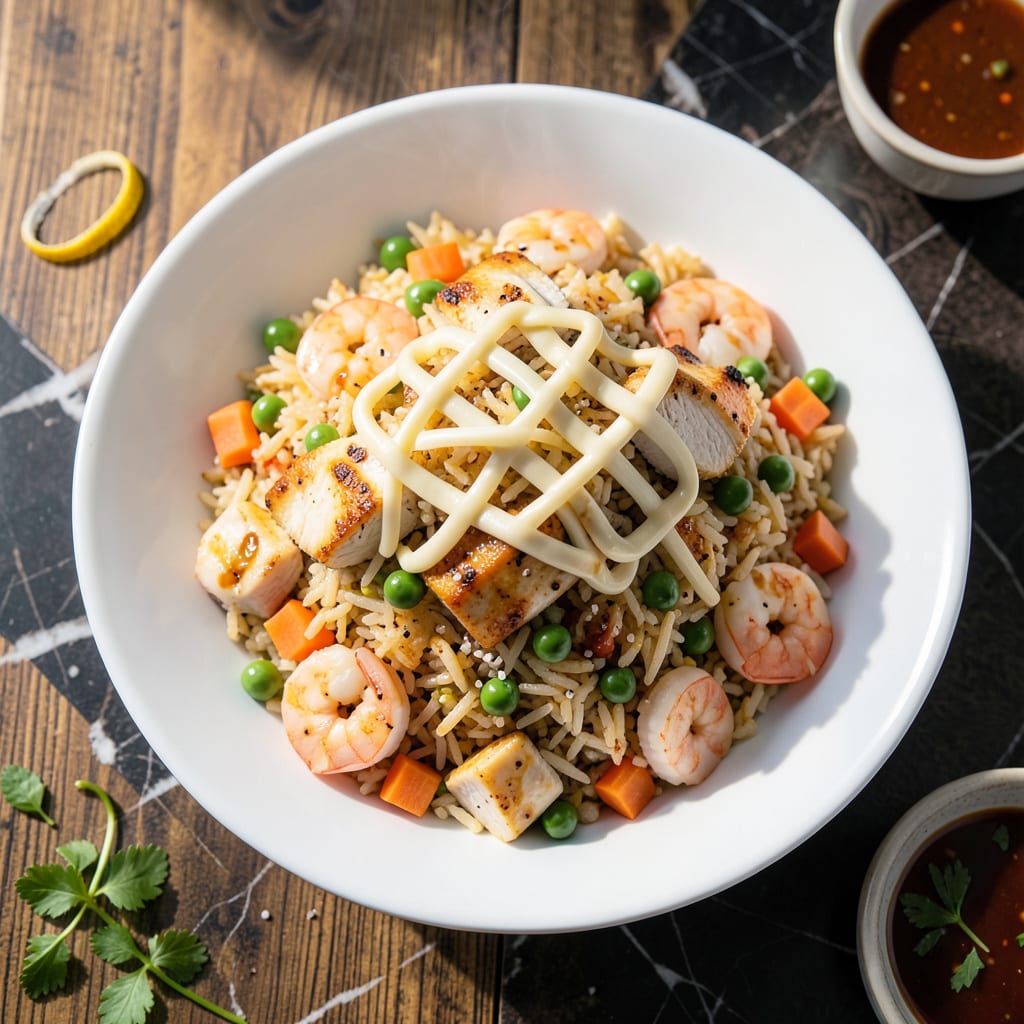
This technique delivers restaurant-quality fried rice with a fraction of the oil by using steam to cook the dish. The method preserves the distinct wok hei flavor while keeping the texture light and separate.
You’ll achieve perfectly cooked rice with minimal grease, maintaining the classic taste and appearance of traditional fried rice. The process requires careful temperature control and precise timing.
Ingredients for Steamed Fried Rice
Restaurant-quality results start with day-old rice and a handful of fresh ingredients ready for the wok.
| Ingredient | Amount | Notes |
|---|---|---|
| Jasmine Rice 🍚 | 2 cups | Day-old, cooked and chilled |
| Eggs 🥚 | 2 whole | Large, beaten lightly |
| Chicken Breast 🍗 | ½ lb | Boneless, skinless, diced small |
| Shrimp 🍤 | ¼ lb | Peeled, deveined, chopped |
| Carrots 🥕 | ½ cup | Finely diced, small uniform pieces |
| Green Peas 🌱 | ½ cup | Fresh or frozen, thawed |
| Green Onions 🧅 | 3 whole | Thinly sliced, green parts only |
| Garlic Cloves 🧄 | 3 cloves | Minced finely for even distribution |
| Soy Sauce 🫒 | 2 tbsp | Low-sodium preferred for control |
| Oyster Sauce 🫒 | 1 tbsp | Vegan oyster sauce if needed |
| Sesame Oil 🫒 | 1 tsp | Toasted, for finishing aroma |
| Vegetable Oil 🛢️ | 1 tbsp | High smoke point, divided use |
| Water 💧 | ¼ cup | For steam generation |
| White Pepper 🌶️ | ½ tsp | Freshly ground for authenticity |
| Salt 🧂 | ½ tsp | To taste, Diamond Crystal preferred |
[recipeingredientscaler]
The rice is critical—jasmine rice provides the authentic texture, and it must be day-old and chilled to prevent mushiness. For proteins, Costco offers excellent frozen shrimp, while chicken breast from Whole Foods ensures quality. The oyster sauce adds depth; Lee Kum Kee is the standard. Vegetable oil with a high smoke point is essential for achieving proper wok hei without excess grease.
No shrimp? Firm tofu or additional chicken works well. Oyster sauce can be replaced with hoisin or vegetarian oyster sauce at a 1:1 ratio. Fresh peas not available? Frozen are perfectly acceptable. For a gluten-free version, substitute tamari for soy sauce. The sesame oil should always be added last to preserve its aromatic qualities.
Cooked rice can be made 1 day ahead and refrigerated. The completed dish stores well for 3-4 days refrigerated, though it’s best enjoyed fresh. For longer storage, freeze portions for up to 3 months in airtight containers.
Why You’ll Love This Recipe
- One Pan Wonder: I can steam the rice and stir-fry everything in the same wok—no extra pots, no mess.
- Umami Bomb: The shrimp and chicken soak up that garlic and soy sauce like a flavor sponge.
- Lunchbox Hero: I pack leftovers for work, and it tastes even better the next day.
- Budget Stretcher: Jasmine rice, a few eggs, and whatever protein’s on sale—feeds four for under ten bucks.
Step-by-Step Instructions for Steamed Fried Rice
Master this technique for perfectly tender grains with wok-tossed depth and minimal oil.
Step 1: Prepare the Protein and Aromatics
Begin by dicing the 0.5 lb Chicken Breast into small, uniform pieces and chopping the 0.25 lb Shrimp into similar-sized bits. I keep the pieces small to ensure even cooking in the high-heat wok environment. Place both proteins in a bowl and season lightly with 0.5 tsp Salt and 0.5 tsp White Pepper.
Next, mince the 3 cloves Garlic Cloves finely and slice the 3 whole Green Onions thinly, using only the green parts. Finely dice the 0.5 cup Carrots into small, even pieces. This uniform prep ensures every bite contains balanced flavor and texture. Have all ingredients measured and within reach before heating the wok.
Step 2: Scramble the Eggs to Silky Perfection
Heat ½ tbsp Vegetable Oil in a well-seasoned wok over high heat until it shimmers. Pour in the 2 whole Eggs (beaten lightly) and let them set for 10 seconds before gently pushing them with a spatula. The goal is to create soft, barely set curds—this adds richness without heaviness.
Cook for 30-45 seconds until the eggs are just set but still slightly runny. Remove them from the wok and set aside. They’ll finish cooking when reintroduced later. Wipe the wok clean with a paper towel to prevent residue from burning in subsequent steps.
Step 3: Veloute the Proteins and Vegetables
Return the wok to high heat and add the remaining ½ tbsp Vegetable Oil. Add the chicken and shrimp, spreading them in a single layer. Let them sear undisturbed for 1 minute to develop color, then stir-fry for 2-3 minutes until the chicken is no longer pink and the shrimp turns opaque.
Add the minced garlic and stir for 10 seconds until fragrant but not browned. Immediately add the diced carrots and cook for 1 minute, then incorporate the 0.5 cup Green Peas and 3 whole Green Onions. The vegetables should remain vibrant and slightly crisp—this preserves their texture in the final dish.
Step 4: Combine Rice and Sauces with Steam Finish
Add the 2 cups Jasmine Rice to the wok, breaking up any clumps with your spatula. The day-old, chilled rice should be dry and separate easily—this prevents mushiness. Pour the 2 tbsp Soy Sauce and 1 tbsp Oyster Sauce evenly over the rice. Toss everything together for 2 minutes to coat the grains uniformly.
Create a well in the center and add the 0.25 cup Water. Cover the wok immediately with a lid to trap steam. Let it cook for 2-3 minutes until the rice absorbs the liquid and becomes tender. The steam softens the grains while allowing them to retain individual texture.
Step 5: Finish with Aromatic Touch and Serve
Return the scrambled eggs to the wok and toss everything together. Drizzle the 1 tsp Sesame Oil over the mixture and fold gently to distribute. The sesame oil adds a fragrant, nutty finish that defines this dish.
Taste and adjust the seasoning if needed, though the soy and oyster sauces typically provide sufficient depth. Serve immediately while hot, with each grain distinct yet coated in the savory, umami-rich sauce. The proteins should be tender, the vegetables vibrant, and the rice perfectly steamed with a subtle wok hei aroma.
Pro Tips For Making Steamed Fried Rice
- Use Day-Old Rice: Fresh rice turns to mush when frying. I learned this the hard way—spread leftover jasmine rice on a tray and refrigerate overnight so it dries out and fries up fluffy.
- Pre-Cook Proteins Separately: Chicken breast and shrimp cook at different speeds. Sear the chicken first, remove it, then quickly cook the shrimp—this guarantees both are perfectly done, not rubbery or dry.
- Scramble Eggs First: Push scrambled eggs to one side of the wok before adding veggies. Sounds weird, but it works: you get soft, distinct egg bits instead of a yellow film coating everything.
- High Heat, Small Batches: Crank the heat to max and fry in small batches. After burning three batches, I finally figured out that overcrowding steams the rice instead of searing it.
Pro Cooking Tips for Great steamed fried rice
Wok Selection Matters
I always use a 14-inch carbon steel wok for this dish—it heats evenly and provides ample surface area. Season it well beforehand to create a natural non-stick surface. Avoid non-stick woks as they can’t reach the high heat needed for proper wok hei. 🔥
Rice Temperature Trick
Day-old chilled rice is non-negotiable, but here’s my pro tip: spread it on a sheet pan and refrigerate uncovered for 1 hour before cooking. This dries the surface, preventing steaming in the wok. The grains will separate beautifully when tossed.
Steam Control Technique
When adding the 0.25 cup water, pour it around the edges of the wok, not directly onto the rice. This creates even steam distribution. Cover immediately with a tight-fitting lid to trap all moisture. I use a glass lid to monitor without lifting.
Sauce Layering
Add the 2 tbsp soy sauce and 1 tbsp oyster sauce in two stages. First, pour half over the proteins and vegetables, then the rest with the rice. This builds flavor depth. Lee Kum Kee oyster sauce is my go-to brand.
Egg Timing Secret
Cook the eggs separately first, but keep them slightly underdone. When you reintroduce them at the end, their residual heat finishes the cooking. This prevents rubbery eggs and maintains that silky texture. I beat mine with a pinch of white pepper for extra flavor.
Final Texture Check
Before serving, do the “spatula test”: press down on the rice with your spatula. If it springs back and grains separate easily, it’s perfect. If it sticks, cook uncovered for 30 more seconds to evaporate excess moisture. ✨
Nutrition Facts
Frequently Asked Questions
Why use day-old rice for this method?
Day-old, chilled rice has lower moisture content, preventing mushiness. Fresh rice steams instead of frying, losing its distinct texture. Spread it out for 1 hour before cooking for best results.
Can I substitute other rice types?
Jasmine is ideal, but long-grain white rice works too. Avoid sticky varieties like sushi rice—they clump together. Always use 2 cups of day-old cooked rice for proper texture.
How do I prevent soggy fried rice?
Use high heat and avoid overcrowding the wok. The steam step should last only 2-3 minutes. Uncover immediately after to let excess moisture evaporate.
What if I don’t have a wok?
A large, heavy skillet with high sides works as a substitute. Heat it over medium-high heat and cook in batches if needed. The result won’t have wok hei but will still taste great.

- 6 Egg Cake Recipe with Oil: Light as Air With Buttery Moisture - October 4, 2026
- 4 Bean Casserole Recipe: One-Pan Heartiness With Smoky Paprika Depth - October 4, 2026
- 3-Ingredient Keto Mug Cake Recipe: Microwave Magic in 2 Minutes - October 4, 2026