
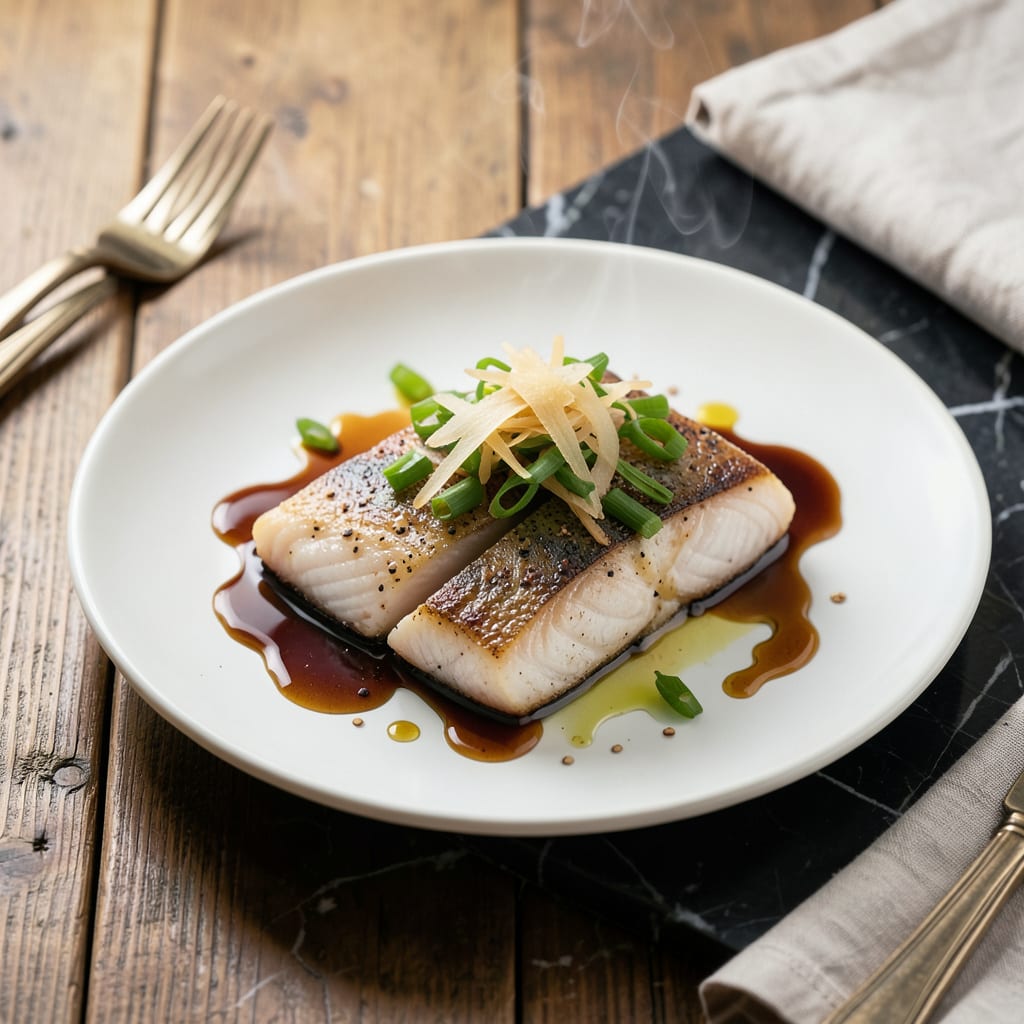
This method delivers silky, perfectly cooked halibut every time. The gentle steam preserves the fish’s delicate texture while infusing it with aromatic ginger and scallion flavors.
With just a few simple ingredients and 15 minutes of cooking time, you’ll have a restaurant-quality dish that highlights the natural sweetness of fresh halibut. The technique is foolproof and requires minimal effort.
Ingredients for Steamed Halibut
Silky halibut meets aromatic ginger and scallions for a restaurant-worthy dish with minimal effort.
| Ingredient | Amount | Notes |
|---|---|---|
| Halibut Fillets 🐟 | 1 ½ lb | Skinless, fresh or thawed |
| Fresh Ginger 🌿 | 2 tbsp | Peeled and julienned |
| Scallions 🧅 | 6 whole | Thinly sliced, white and green parts separated |
| Soy Sauce 🫙 | 2 tbsp | Low-sodium preferred |
| Sesame Oil 🫒 | 1 tsp | Toasted for depth |
| Shaoxing Wine 🍶 | 2 tbsp | Or dry sherry as substitute |
| Fresh Cilantro 🌿 | ¼ cup | Chopped, for garnish |
| Neutral Oil 🫒 | 1 tbsp | Such as vegetable or canola |
| Garlic Cloves 🧄 | 3 cloves | Thinly sliced |
| Red Pepper Flakes 🌶️ | ¼ tsp | Optional, for heat |
| Kosher Salt 🧂 | ½ tsp | Plus more to taste |
| White Pepper 🧂 | ¼ tsp | Freshly ground |
The halibut is non-negotiable here—fresh, wild-caught from a trusted fishmonger or high-turnover market is ideal. Whole Foods or local seafood counters are solid bets. Look for fillets that are firm, translucent, and smell like the ocean (not fishy). Skinless is easier for steaming, but skin-on works if you score it first. Ginger should be firm and smooth—old ginger gets fibrous.
No Shaoxing wine? Dry sherry is the classic swap, but a splash of dry white wine works too. For a non-alcoholic option, use low-sodium chicken broth with a pinch of sugar. Fresh cilantro can be replaced with Thai basil or parsley. If you’re avoiding soy, tamari or coconut aminos are great alternatives—just adjust saltiness to taste.
Halibut is best cooked the day it’s purchased, but it’ll keep in the fridge for 24 hours if wrapped tightly. Leftovers? Rare with this dish, but they’ll hold for 1-2 days. Reheat gently in a steamer or with a splash of water in a pan—don’t microwave, or the texture suffers.
Why You’ll Love This Recipe
- 20-Minute Meal: I can steam the halibut while the rice cooks—dinner’s done before the kids finish their homework.
- Ginger-Soy Magic: The fresh ginger and soy sauce create this warm, savory depth that makes the fish taste like it came from a restaurant.
- Weeknight Hero: It’s my go-to for busy evenings, but honestly, it’s fancy enough for company too.
- Leftovers? Yes Please: The fillets reheat beautifully, and I love the cold leftovers flaked into a quick salad the next day.
Step-by-Step Instructions for Steamed Halibut
This method delivers perfectly tender fish with a fragrant ginger-scallion sauce every time.
Step 1: Prepare the Halibut and Aromatics
Pat the 1.5 lb Halibut Fillets thoroughly dry with paper towels to ensure even steaming. Season both sides with 0.5 tsp Kosher Salt and 0.25 tsp White Pepper, pressing gently so the seasoning adheres. This simple step enhances the fish’s natural sweetness and creates a balanced foundation for the aromatic flavors.
Thinly slice the 3 cloves Garlic Cloves and julienne the 2 tbsp Fresh Ginger. Separate the white and green parts of the 6 whole Scallions and slice them thinly—you’ll use the whites for steaming and the greens for garnish. Having all components ready before cooking ensures a seamless process.
Step 2: Create the Steaming Base
Heat 1 tbsp Neutral Oil in a large skillet or wok over medium-high heat. Add the sliced garlic, julienned ginger, and the white parts of the scallions. Sauté for 1-2 minutes until the mixture becomes fragrant and the garlic just begins to turn light golden brown—be careful not to burn it, as bitterness will overpower the dish.
Pour in the 2 tbsp Shaoxing Wine and 2 tbsp Soy Sauce, stirring to deglaze the pan. Add 0.25 tsp Red Pepper Flakes if using, then arrange the halibut fillets in a single layer over the aromatics. The liquid should come about halfway up the fish to infuse it with flavor as it steams.
Step 3: Steam the Halibut to Perfection
Cover the skillet tightly with a lid to trap the steam. Cook for 8-10 minutes on medium heat—the halibut is done when it turns opaque white throughout and flakes easily with a fork. Avoid lifting the lid during cooking, as this releases essential steam and interrupts the gentle cooking process.
If your skillet isn’t large enough to cover all the fillets in a single layer, cook them in batches. Overcrowding the pan will cause uneven cooking and may result in some pieces being underdone while others overcook.
Step 4: Finish and Garnish
Once the halibut is cooked, carefully transfer the fillets to a serving plate using a wide spatula to keep them intact. Drizzle the hot steaming liquid from the pan over the fish, ensuring each portion gets an equal share of the aromatic broth.
Garnish with the green parts of the scallions and the 0.25 cup Fresh Cilantro. Finish with a final drizzle of 1 tsp Sesame Oil for depth and a subtle nutty aroma. The residual heat from the fish will gently wilt the herbs, releasing their essential oils and enhancing the dish’s fragrance.
Pro Tips For Making Steamed Halibut
- Steam Just Right: Use medium-high heat and steam for 8-10 minutes—any longer and the halibut turns dry. I learned this the hard way after overcooking my first three batches.
- Slice Ginger Thin: Cut the ginger into paper-thin slices so it infuses the fish fully during steaming. Sounds fussy, but it actually changes the outcome.
- Skip the Overcrowding: Make sure the halibut fillets have space in the steamer—crowding them leads to uneven cooking and soggy edges.
- Drizzle Last: Add the soy sauce and sesame oil after steaming, not before, to keep the fish from getting watered down. My grandmother swore by this, and she was right.
Storing and Reheating steamed halibut
Refrigerator Storage
Let your halibut cool for no more than 2 hours before transferring to an airtight container. I use glass containers with snap-tight lids to preserve freshness. Store at 40°F or below for up to 2 days maximum. ❄️
Freezer Storage
For longer storage, wrap individual portions tightly in plastic wrap then place in a freezer-safe bag. Squeeze out excess air to prevent freezer burn. Your halibut will maintain good quality for up to 3 months at 0°F or below.
Stovetop Reheating
This is my preferred method. Place the fish in a skillet with 2 tbsp water or broth over medium-low heat. Cover tightly and warm for 3-4 minutes until just heated through. This gentle method prevents drying out. 🔥
Steamer Reheating
Arrange the halibut in your steamer basket over 1 inch of boiling water. Cover and steam for 4-5 minutes until the fish reaches 145°F internally. This reproduces the original cooking method beautifully.
Serving Leftovers
Reheated halibut works great in tacos or over rice bowls. I love flaking it into miso soup for a quick lunch. Always check that the internal temperature reaches 145°F before serving.
Nutrition Facts
Frequently Asked Questions
What if I don’t have Shaoxing wine?
Dry sherry makes the best substitute. A splash of dry white wine works too, or use low-sodium chicken broth with a pinch of sugar for a non-alcoholic option.
Can I use frozen halibut for this?
Yes, but thaw it completely first in the fridge overnight. Pat it very dry before cooking to prevent steaming in its own moisture.
How do I know when it’s done?
The fish turns opaque white and flakes easily with a fork after 8-10 minutes. For perfect results, check that it reaches 145°F internally.
What’s the best way to prevent overcooking?
Use a timer and avoid lifting the lid. Remove from heat immediately once done, as residual heat will continue cooking slightly.

- 6 Egg Cake Recipe with Oil: Light as Air With Buttery Moisture - October 4, 2026
- 4 Bean Casserole Recipe: One-Pan Heartiness With Smoky Paprika Depth - October 4, 2026
- 3-Ingredient Keto Mug Cake Recipe: Microwave Magic in 2 Minutes - October 4, 2026